How Long Does a Timing Belt Last? The Age Limit Most Drivers Miss


Most timing belts are due for replacement every 60,000 to 100,000 miles or every four to six years, whichever comes first, according to the RAC. The exact figure is set by the car’s manufacturer, and some allow up to 10 years. The time limit still applies to a car that has barely turned a wheel, so a low-mileage car that has spent years on a driveway is just as due as one that has covered the full distance. A number of the most common engines on British roads have also had their official limits cut after belts failed early, which leaves plenty of owners working from a figure that no longer holds true…
Key takeaways:
- The RAC puts most timing belts at 60,000 to 100,000 miles or four to six years, whichever comes first. A car that covers few miles still needs a new belt once the age limit arrives.
- A planned change typically costs £300 to £600, according to the RAC. If a belt snaps on an interference engine, UK price guides put a cylinder head rebuild at £1,500 to £3,000, and wider damage commonly costs £2,000 to £5,000.
- Check the service history tonight for the date and mileage of the last belt change. If there is no record, a garage can look up the correct interval for your car from the registration.
What a Timing Belt Does, and Why Its Failure Costs So Much
The timing belt is a toothed rubber belt, usually hidden behind a plastic cover at one end of the engine. It is cheap to buy and awkward to fit, and it is one of the few parts on a car where a failure costs many times more than a timely replacement.
Changing one is a garage job. The engine has to be locked in position with special tools while the old belt comes off and the new one goes on, and an error of a single tooth can damage the engine on the first start.
Cam Belt or Timing Belt: One Part, Two Names
Cam belt and timing belt are two names for the same component. British garages and service books tend to say cam belt, while timing belt appears more often online, and a quote for either covers the same job.
Its job is to keep the crankshaft and camshafts turning in step. The crankshaft converts the up and down motion of the pistons into rotation, and the camshafts open and close the valves. The belt links them so each valve opens and closes at the correct moment relative to its piston, on every rotation and at every engine speed.
It is a different part from the auxiliary belt, the visible belt on the outside of the engine that drives the alternator and air conditioning compressor, which has its own replacement schedule.
Not every engine has a timing belt. Many use a metal timing chain instead, which runs inside the engine in oil and is generally intended to last the life of the engine. A car with a chain has no scheduled belt change at all.
Interference Engines and the Cost of a Snapped Belt
In most modern engines, the valves and pistons use the same space at different moments. When a valve opens, it reaches down into the cylinder, and the piston only rises into that space once the valve has closed. Engineers call this an interference design, and it allows higher compression and better fuel economy from a compact engine.
The timing belt is the only thing keeping those parts apart. If it snaps, the crankshaft keeps spinning on the car’s momentum while the camshafts stop dead, leaving some valves held open. The next piston to rise hits them at speed.
The result is usually bent valves, and in worse cases damaged pistons, a damaged cylinder head or a broken camshaft. The engine stops instantly and will not restart. There is rarely any warning beyond a sudden silence or a single hard knock, and on a motorway the car loses all power at once.
Older non-interference engines left enough clearance for the valves to survive a snapped belt, and a new belt was often the only repair needed. Those engines are now the exception. The safest assumption for any car with a belt is that a failure will mean engine damage.
The Real Rule Is Mileage and Age, Whichever Comes First
The mileage figure is the one most drivers know, and it is only half the rule. Every manufacturer that fits a belt also sets a time limit, and the belt is due at whichever arrives first. The RAC says some carmakers set age limits of anywhere from five to 10 years.
Low-mileage cars are the ones most likely to be caught out. A car used for the weekly shop and little else can reach its age limit with half its belt mileage unused, and the belt is due all the same.
Why a Belt Ages Even When the Car Sits Still
A timing belt is made from rubber compounds reinforced with fibre cords, and rubber degrades with time, not just use. Every time the engine warms up and cools down, the belt goes through a heat cycle. Over years, those cycles harden the rubber and weaken the bond between the teeth and the backing.
The effect is much the same on a car that covers a few thousand miles a year as on one used every day. Short trips add heat cycles without adding many miles, so a car that rarely goes far can age its belt faster than the odometer suggests.
Contamination speeds up the process. A conventional belt is meant to run dry, and oil or coolant leaking onto it from a failed seal or water pump softens the rubber and can strip the teeth. A belt that looks sound can fail well short of its interval if a leak has been left unfixed.
The same logic explains why the water pump is usually changed with the belt on engines where the belt drives it. A leaking pump will contaminate a new belt, and replacing it later means paying for the same labour twice.
Why the Official Figure Keeps Changing
The figure in a car’s handbook reflects what the manufacturer believed when the car was built. On several popular engines, that belief turned out to be optimistic, and official intervals were cut sharply in the years that followed.
Two examples show the scale of it. Stellantis first set the belt on its 1.2 PureTech petrol engine at 10 years or 175,000 km, roughly 109,000 miles, and later cut it to 6 years or 100,000 km, roughly 62,000 miles. That takes four years off the age limit and nearly halves the mileage, and an owner following a handbook printed before the change could be more than 40,000 miles overdue without knowing it. Ford’s 2.0 EcoBlue diesel, used in the Transit among others, went the same way, from 10 years or 150,000 miles to 6 years or 100,000 miles.
Some manufacturers have stopped publishing the figure at all. Ford UK’s owner pages once sent drivers to an online lookup, which has now closed, and its current advice is to contact a Ford dealer with the car’s VIN. Volkswagen UK spent years recommending a new cambelt every four years for cars registered before September 2009 and every five years for later cars; its current advice mentions only the recommended mileage, with no time limit stated. Vauxhall’s handbooks say the up-to-date service schedule is available at the workshop.
The practical step is to set the printed handbook aside and ask a franchised dealer for the current interval for your car, using the registration. Dealers work from the manufacturer’s current service data, which reflects any revision. General ranges are a useful guide, but the figure that counts is the one the manufacturer sets for your engine today.
The Engines That Broke the Rule
A wet belt is a timing belt that runs inside the engine in engine oil, rather than behind a dry cover on the outside. Manufacturers adopted them on small petrol and diesel engines to cut friction and noise, which helped lower fuel consumption and emissions figures in official testing.
The oil was supposed to protect the belt and extend its life, which is why some early intervals ran to 10 years. In service, the belts degraded faster than expected. Oil that is the wrong specification, overdue for a change or diluted with fuel attacks the rubber, and fragments of the degrading belt then circulate through the engine’s oiling system.
Ford’s 1.0 EcoBoost and a Shrinking Belt Interval
Ford’s three-cylinder 1.0 EcoBoost petrol engine went into the Fiesta, the Focus and a long list of other Fords, and for years its US maintenance schedule set the belt at 150,000 miles, with no time limit at all. Department for Transport figures show 1,275,084 Fiestas and 877,721 Focuses licensed in the UK at the end of March 2026. Not all of them have this engine, but it was one of the most common choices in both. In June 2026, Ford told the US safety regulator, the National Highway Traffic Safety Administration, that it would cut the interval to six years or 100,000 miles under a global programme. In a letter dated 18 September 2026, the regulator asked Ford to explain why the original schedule set no time limit.
Ford described the programme as global, with owners to be notified of the new interval and eligible owners reimbursed for past engine repairs, but UK sources currently disagree on the official UK interval for this engine. UK owners should ask a Ford dealer for the current interval for their car, using the registration, rather than relying on the handbook or the US announcement.
The failure mode is what makes this serious. As the belt breaks down, debris collects on the mesh screen of the oil pump pickup, the inlet the pump draws oil through. As the screen clogs, oil pressure falls and the engine is starved of lubrication, which can cause severe damage before the belt itself ever snaps. The first sign is often an oil pressure warning light. The regulator’s investigation into the engine puts the average reported failure at about 70,000 miles, with 98 per cent of failures arriving before the original 150,000-mile interval, including on engines with a record of routine oil changes.
Ford moved later versions of the engine to a timing chain. Ford’s own technical specifications show the wet belt in the Focus until the new model of 2018, which switched to a chain, and a chain in the Puma from its 2019 launch. The EcoSport used the wet belt engine. The Fiesta kept the wet belt into its 2017 redesign and had a chain by the 2021 model year. Ford has not published the exact switch date, so on a Fiesta built in between, a VIN check is the only way to be certain.
Vauxhall, Peugeot and Citroën PureTech Engines
Stellantis fitted its 1.0 and 1.2 PureTech petrol engines to a wide spread of Peugeot, Citroën, DS and Vauxhall models, including the 208, the C3 and the Corsa. Department for Transport figures show 919,683 Corsas, 259,074 Peugeot 208s and 258,955 Citroën C3s licensed in the UK at the end of March 2026, across all generations. The wet belt problems on these engines are well documented, and Stellantis has responded with two separate measures.
The first is an extended warranty. For qualifying faults, Stellantis covers 100 per cent of parts and labour up to 10 years or 112,000 miles, subject to its conditions. Owners should confirm eligibility with a franchised dealer before any work begins.
The second is a compensation scheme for owners who have already paid for repairs. It covers only costs incurred between 1 January 2022 and 31 December 2024. The car must have been serviced to the maintenance plan, with diagnosis and repair carried out through the authorised network. The claims page was still open in September 2026 with no published deadline, but the scheme does not cover new work. Owners with a qualifying bill from that period can check eligibility on the official PureTech compensation platform.
Driving habits play a part. Short trips leave the engine running cool, and fuel that slips past the piston rings dilutes the oil. Diluted oil is harder on a wet belt, and a car used mainly for short hops can see its belt degrade faster than one that regularly covers longer distances.
How to Check Whether Your Car Has a Wet Belt
The model name alone will not tell you. The same car can have been sold with a wet belt, a dry belt or a chain, according to its engine and build date, so the engine code is the starting point. It is often printed in the handbook or service book, and a franchised dealer can confirm it from the VIN, the 17-character vehicle identification number on the V5C logbook.
The simplest route is to phone a franchised dealer for the brand, give them the registration and ask three questions: whether the engine has a wet belt, dry belt or chain, what the current replacement interval is, and whether the car is covered by any manufacturer programme. Dealers can see the build specification and any outstanding campaigns against the VIN.
Later engines have moved away from wet belts. Ford’s later 1.0 EcoBoost uses a chain. Citroën says the hybrid version of its 1.2 engine, fitted to the C3 from late 2024, now has a timing chain, and Peugeot has fitted a chain-driven Turbo 100 engine to the 208 from March 2026 and the 2008 from May 2026. Stellantis has not said what changed on non-hybrid engines built between mid-2022 and 2026, so a newer car is not a guarantee, and the only reliable answer comes from the VIN.
Used buyers should check the build date rather than the registration year. A car can be built many months before it is registered, and manufacturers changed engines partway through production, so two cars on the same plate can carry different engines. A franchised dealer can give the build date from the VIN.
What It Costs: A Planned Change Against a Snapped Belt
The price gap between a planned belt change and a snapped belt is the reason the interval deserves attention. A planned change is routine maintenance measured in hundreds of pounds. A snapped belt on an interference engine is a major repair measured in thousands, and on an older car it can end the car’s life.
Why Quotes Range From £200 to Over £1,000
Published price guides disagree by hundreds of pounds for the same job. The RAC puts the average cam belt change at £300 to £600. Other UK guides give averages from £300 at the low end to just under £680 at the top, with ranges starting at £200, and several put luxury or complex engines at over £1,000.
Most of the difference is labour. On some engines the belt is easy to reach. On others, the mechanic has to remove an engine mount, ancillary components and covers before the belt is even visible, and the labour time multiplies. Wet belt engines add further work, with the belt sitting inside the engine behind the timing cover.
The water pump accounts for more of the spread. On engines where the belt drives the pump, most garages recommend replacing both together, along with the tensioner and idler pulleys, and a belt and water pump job typically comes to around £700 in total. Quotes that look cheap often cover the belt alone, so a fair comparison needs each garage to confirm whether the price includes the water pump, tensioner, pulleys and coolant.
Dealer against independent is the final variable. Franchised dealers generally charge higher labour rates, while independents and mobile mechanics tend to sit at the lower end of the published ranges. On a wet belt engine, a dealer service record can also support a manufacturer warranty claim, as the PureTech conditions show.
The Bill When a Belt Lets Go
When a belt snaps on an interference engine, the minimum repair is usually new valves and a rebuilt cylinder head. UK price guides put a cylinder head rebuild at an independent garage at £1,500 to £3,000.
Damage often goes further. Pistons, camshafts and the head itself can be damaged beyond repair, and bills of £2,000 to £5,000 are common once the wider damage is included. Beyond that point, the usual repair is a replacement engine.
These are typical estimates rather than fixed figures, and the final bill varies with the engine and the extent of the damage. The comparison is stark all the same. A planned change at £300 to £600 protects against a repair that can cost five times as much or more.
Many older cars are written off after a belt failure, with the repair bill exceeding the value of the car. An owner facing that choice should get a written quote and set it against the car’s market value before authorising work.
Warning Signs, Buying Used and the Exceptions
A timing belt gives little notice before it fails, which makes the paperwork more reliable than any symptom. Chain engines and electric cars sit outside the rule altogether, and that changes the checks a buyer needs to make.
The Signs a Belt Is in Trouble
Many belts snap with no warning at all. A belt can look and sound normal on the morning it fails, which is the main reason the interval exists.
Where there is warning, a ticking or slapping noise from the belt end of the engine is the most common sign, often from a worn tensioner or a belt that has lost tension. A whine can point to a failing tensioner, idler pulley or water pump bearing.
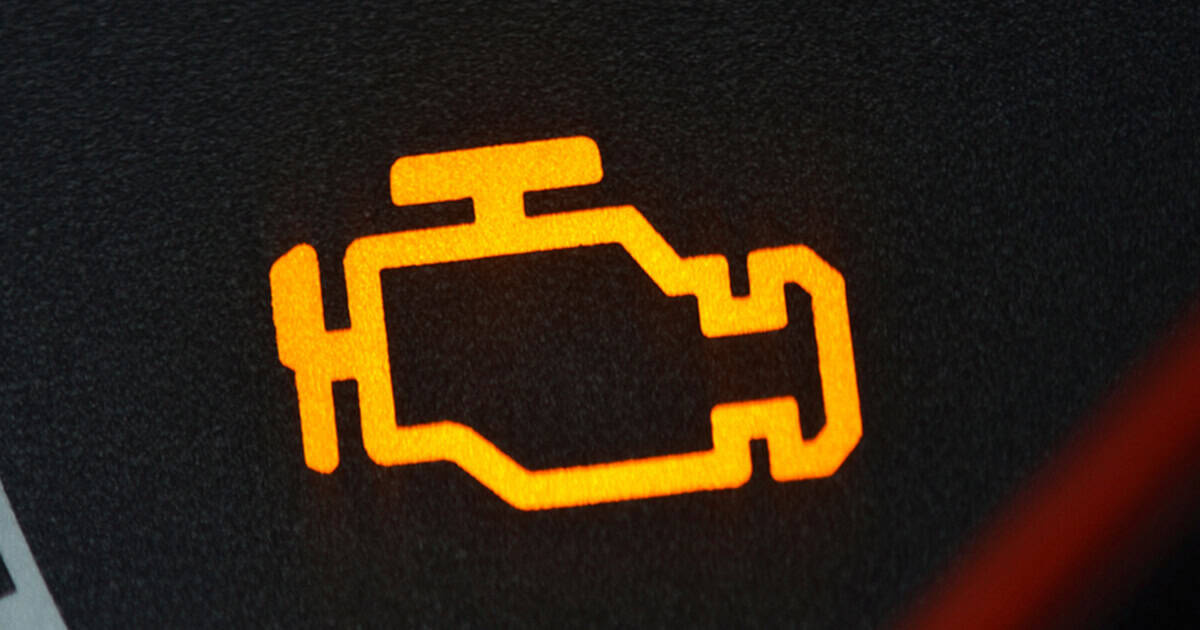
A belt that has jumped a tooth throws the engine timing out. Symptoms include rough running, misfires, poor starting and a loss of power, often with the engine management light on. Any of these on a car near or past its belt interval needs a garage check before the car goes any further.
Oil on the belt or timing cover is another warning, as a contaminated dry belt degrades quickly. On wet belt engines, an oil pressure warning is the more likely sign, and the car should be stopped as soon as it is safe to do so.
Buying Used, Chains and Electric Cars
The paperwork to ask for is an invoice for the last belt change, showing the date, the mileage and the parts replaced. A stamp in the service book is useful but less conclusive. Checking that date against the manufacturer’s current interval for the engine, not the one in the handbook, shows how much life the belt has left.
A missing belt record should be treated as a belt that is due. The cost of a change should come off the asking price, using a quote from a local garage for that specific car. A seller who refuses the reduction is asking the buyer to carry the risk.
Engines with a timing chain avoid the scheduled belt change altogether. Chains run in oil and are generally intended to last the life of the engine, but they can stretch on some engines, usually signalled by a rattle on start-up. A chain engine still needs its oil changed on time, as the chain relies on clean oil to last.
Electric cars have no timing belt, no timing chain and no camshafts, so the question does not apply. Hybrids are different. A petrol hybrid still has an engine, and its belt or chain needs the same checks as any other petrol car.

Leave a Comment
More in News

Autotrader Shows Used Petrol Cars Cost £14,625 as 17 Months of Price Rises End

Catalytic Converter Thefts Are Rising Again and Could Cost Every Van Owner over £1,000

Every Electric Car Now Costs £46 More to Insure than Petrol, MoneySuperMarket Finds

Leicestershire Council Took £900,127 in Parking Penalties as Notices Issued Rise 9.3 Percent

How the DVLA’s Digital Driving Licence Will Work for Every UK Driver in 2026
Trending on Motoring Chronicle

Why brakes squeal on cold mornings

As many as one in six British motorists admit they are terrible drivers
Every UK Driver Now Risks a Moving Traffic Fine as 30 Councils Add Cameras

Drivers don’t have the foggiest when it comes to using their lights correctly