
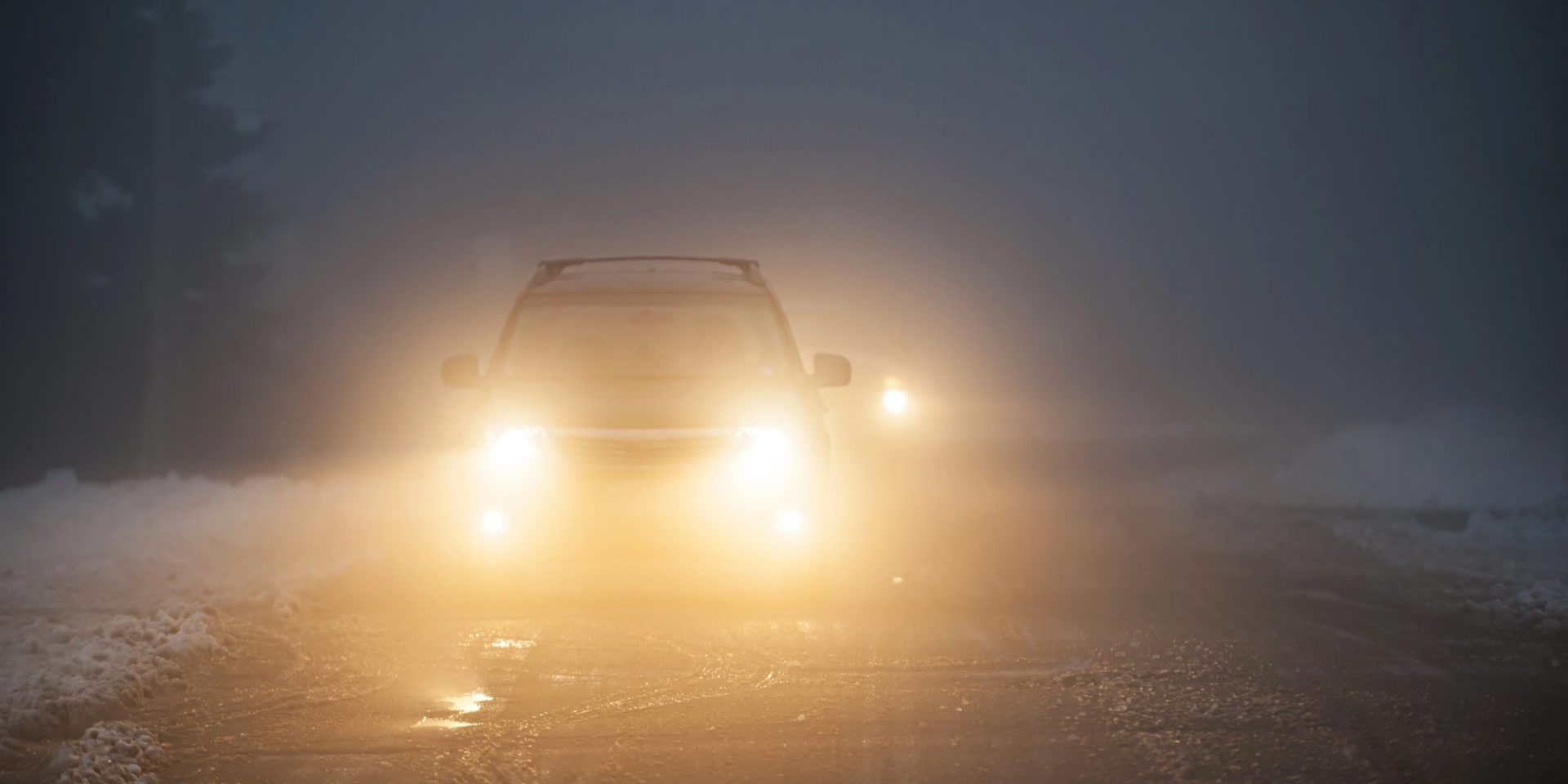
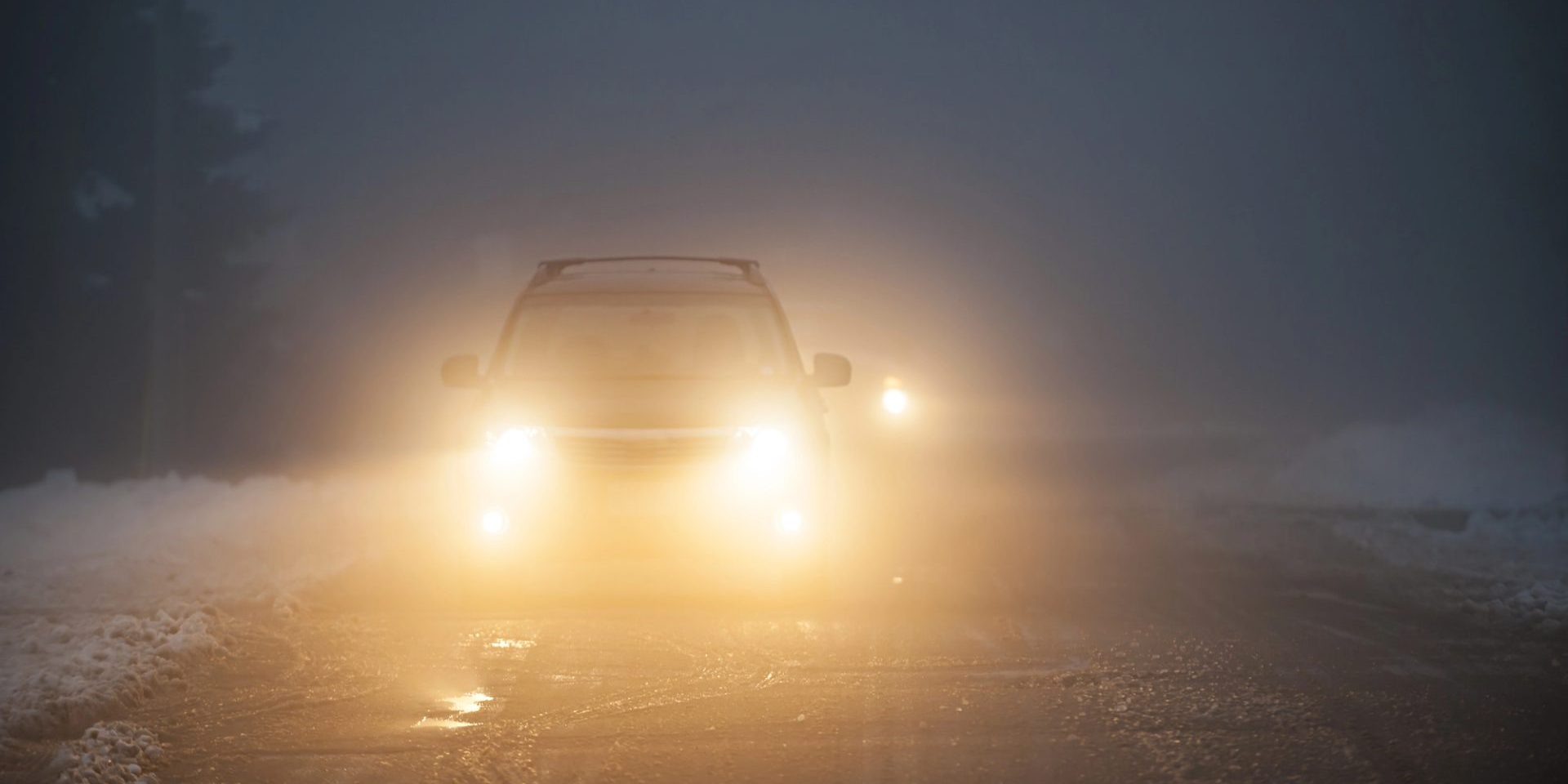
- Fog lights are for seriously reduced visibility only, which Rule 226 of the Highway Code generally puts at a driver unable to see more than 100 metres (328 feet).
- Rule 236 requires drivers to switch front and rear fog lights off when visibility improves.
- Automatic headlights and daytime running lights are no stand-in for a driver’s own check of the switches, the AA says.
The Fog Lifts at the Next Junction, but the Switch on Your Dashboard Stays Put
Front and rear fog lights are legal only when visibility is seriously reduced, and the Highway Code gives drivers a working yardstick of 100 metres (328 feet). Once the road opens up and the view stretches beyond that, the lights have to go off. Rule 236 leaves no room for leaving them on until the end of the trip.
Fog does not clear all at once. It thins, lifts and returns, and each change hands the driver a decision. The rules behind that decision are short, and the habits that keep it simple take a minute to build.
What Rules 226 and 236 Require
Rule 226 of the Highway Code covers lights in poor visibility: “You MUST use headlights when visibility is seriously reduced, generally when you cannot see for more than 100 metres (328 feet). You may also use front or rear fog lights but you MUST switch them off when visibility improves (see Rule 236).”
Rule 236 closes the loop: “You MUST NOT use front or rear fog lights unless visibility is seriously reduced (see Rule 226) as they dazzle other road users and can obscure your brake lights. You MUST switch them off when visibility improves.”
Both rules carry the same legal reference in the Highway Code, RVLR regs 25 and 27. Together they set two limits. Fog lights come on when a driver cannot see more than 100 metres, and they go off when the view improves. The Highway Code says generally for the 100 metre mark, so it works as a guide to what counts as seriously reduced visibility.
The Met Office draws its line elsewhere. Fog is any condition that cuts visibility to less than 1,000 metres, and mist is visibility of 1,000 metres or more, as the AA sets out. The Highway Code mark is one tenth of that distance. A driver who can see 400 metres ahead, to take one example, sits in fog by the Met Office definition and well beyond the Highway Code’s general 100 metre mark. The AA states that fog lights should not go on automatically whenever there is mist or fog. The site’s earlier explainer on what the fog light rule means covers the penalty side.
Why a Bright Light Becomes a Problem Once the Fog Lifts
Rule 236 gives two reasons for the switch-off requirement, and both involve other road users: the lights glare at them, and they can hide the brake lights. The AA calls front and rear fog lights extremely bright, which helps in thick fog and glares at other drivers on clear tarmac.
The brake light point deserves a second look. Rule 235 tells drivers in fog to check their mirrors before slowing and then brake, so that their brake lights warn the drivers behind. A rear fog light left on after the fog has gone can obscure that signal, which is the risk Rule 236 names.
The AA Charitable Trust’s director, Edmund King OBE, puts the rule in a sentence: “If visibility becomes seriously reduced, use your fog lights, but remember to switch them off again when conditions improve as they can dazzle other road users and make brake lights harder to distinguish.”
Patchy fog adds to the difficulty. Country roads and low ground see fog arrive and vanish fast, the AA says, which leaves the lights as a task for the whole trip. The switch can move twice on one drive: on when the view shrinks, off when it opens.
What Drivers Can Do Before and On the Drive
The AA’s advice for a day with fog in the forecast is a short list, and each item takes a minute or less.
First, learn the controls before moving off. The AA asks drivers to spend a few moments with the front and rear fog light switches and the heating and demisting settings, so every control is findable without a glance away from the road. That is a skill worth having before the road turns white.
Second, prepare the car. The AA says to check that every light works, clean the windows, mirrors and lights, and look up current weather warnings and traffic updates for the route before leaving. The site’s guide to how to check your car lights before winter covers the bulbs.
Third, use dipped headlights and switch them on yourself. The AA warns against relying on automatic systems, which respond to ambient light and can stay off when conditions are bright enough, even with fog reducing visibility. Daytime running lights can leave the rear of a vehicle unlit. King puts it directly: “Don’t assume your automatic headlights have switched themselves on either. Take control, use dipped headlights and make sure you can both see and be seen.”
Fourth, leave full beam off. The AA says it generally makes things worse, as full beam reflects off the water droplets in fog and makes it harder to see.
Fifth, use fog lights only when visibility is seriously reduced, which the Highway Code generally puts at 100 metres (328 feet), and switch them off when the view opens. Rule 236 turns that last step into a requirement, so build a habit around it: when the road ahead opens up, reach for the switch.
Gap, Speed and Junctions: the Rest of the Fog Routine
Lights are one half of fog driving. The other half is stopping distance. Rule 235 tells drivers in fog to keep their stopping distance comfortably inside the stretch of road they can see clearly, and the AA turns that into a speed that allows a stop inside the distance seen to be clear. On the following gap, the AA moves the usual two seconds up to a minimum of three in fog, with more room again when visibility drops further.
Rear lights ahead are a poor guide to that gap. Rule 235 flags the same trap in the lights of the vehicle ahead. King returns to the point: “One of the biggest mistakes is simply following the rear lights of the car in front. It can give you a false sense of security and means you may be travelling too close to react safely if that vehicle suddenly stops.”
When the AA issued its fog advice on 9 November, King summed up the speed and space message in full: “Fog can transform a familiar road in a matter of minutes, and with visibility potentially falling to just 50 metres in some places this morning, drivers need to be prepared to adapt their speed and leave more room between themselves and the vehicle ahead.”
Junctions need extra time. Rule 235 has drivers halt in the right spot where a junction offers little view, listen for traffic, and pull out with purpose once sure it is safe. The AA adds that drivers should slow right down, look carefully and hold back until confident. At a quiet junction in thick fog, a wound-down window can help a driver hear vehicles not yet in view, though the AA calls that an extra precaution and never a substitute for careful observation. Road workers, cyclists and pedestrians at the roadside are much harder to spot in poor visibility, so the same caution applies along the edge of the road. The AA also asks for clear windows before setting off, which includes clearing a misted windscreen at the kerb before moving away.
Rule 234 covers what comes before the fog: check mirrors, then slow down, and treat a Fog sign on a clear road as a warning of a bank of fog or drifting patches ahead. Fog that seems to be clearing can turn thick again without notice, which is reason enough to keep a hand near the switch rather than assume the job is done.
King’s closing advice fits the whole routine: “Ultimately, there’s no prize for arriving a few minutes early. Give yourself extra time, slow down and drive to what you can actually see ahead.”
Want more car content? Add us as a preferred source on Google to your favourites list for the best automotive news and analysis on the internet.
If you enjoyed this article, be sure to follow us on Microsoft Start.
Sources
- GOV.UK: The Highway Code, Driving in adverse weather conditions (226 to 237)
- AA: AA urges drivers to see and be seen as dense fog threatens Monday morning journeys
Reviewed by Preetam Gadekar

Leave a Comment
More in News

DVSA Plans a Drone Fraud Lab and 10% More MOT Fraud Cases in Court
Home Office Has No Immediate Plan to Count Cars Police Seize Without Warning
Every Driver Without a Seatbelt Risks £100 as 37 Police Forces Issued 35,539 Notices
Every Driver Who Blocks a Lane Merge Risks £100 and 3 Points

XPENG G6 Drive-Away Prices Start at $49,990 on 2026-Plate Stock
Trending on Motoring Chronicle

What the New Tobacco and Vapes Act Means for Drivers Who Smoke or Vape With Children in the Car
The Audi Q9 Wants To Make A Big Entrance. Automatic Doors, Seven Seats And A 1.5 Square Metre Glass Roof Say It Might

Why Insurers Are Consulting on Making Black Boxes Mandatory for Every Newly Qualified Driver
What the UK Tyre Tread Limit Actually Means (and How to Check Yours)