
Every Driver Who Swerves for a Deer Risks a Far Worse Crash
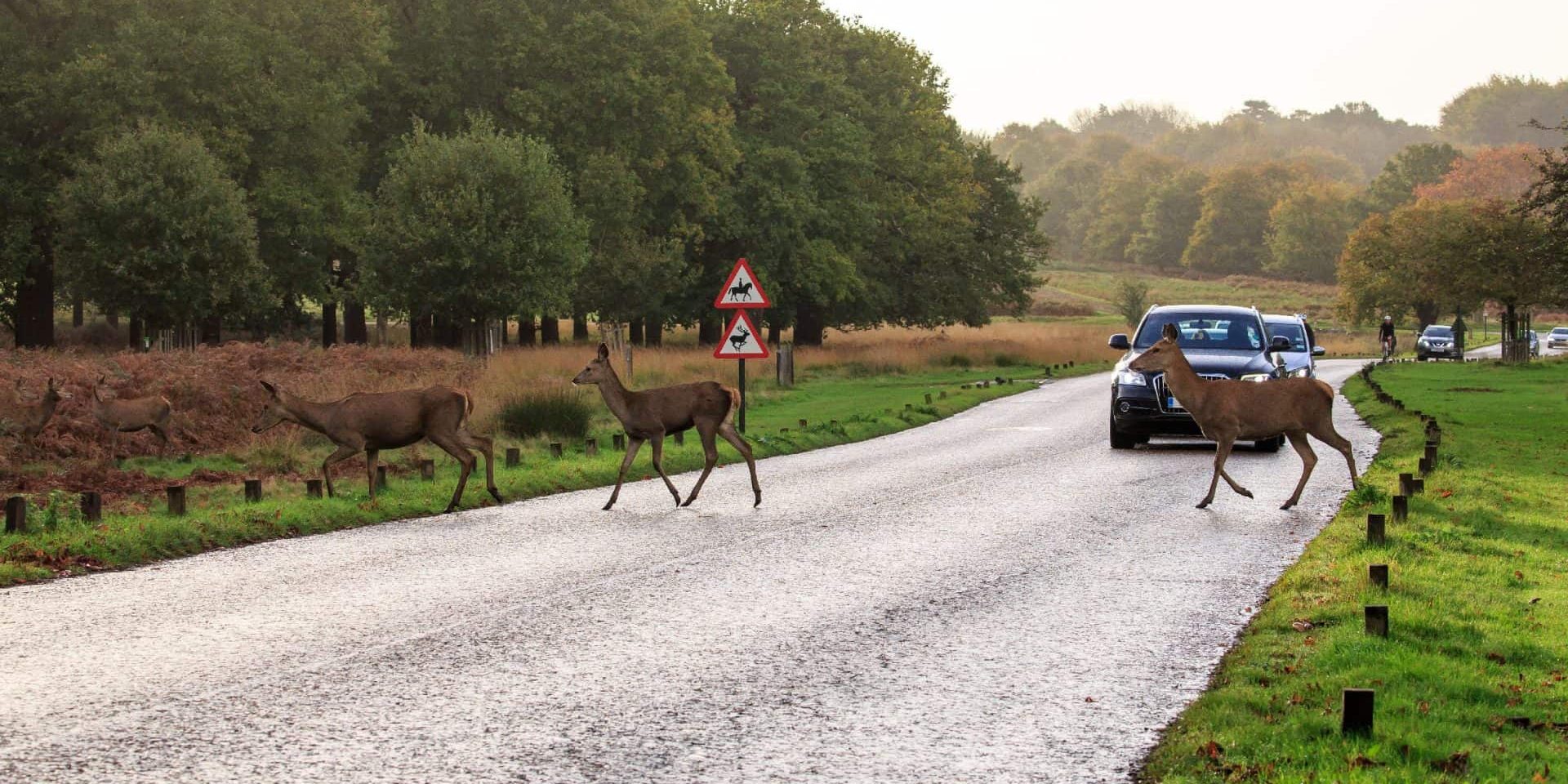

- AA Accident Assist handled 284 deer strikes between 14 September and 13 November 2026, its worst autumn tally in six years and 46 per cent up on 2021.
- The autumn rut is ending, but the British Deer Society warns that deer stay active through winter and that no time of day or night is completely safe, even in built-up areas.
- If a deer steps out, brake firmly and keep control instead of swerving, then stop somewhere safe with hazard lights on and call the police if the animal is hurt or in the road.
The Rut Is Ending, but Your Risk on Dark Rural Roads Is Not
The instinct to yank the wheel when a deer leaps into your headlights is the one most likely to turn a deer strike into a far more serious crash. The British Deer Society and AA Accident Assist give drivers the same instruction this winter: brake firmly, keep control of the car and do not swerve.
That warning lands as deer strikes climb. AA Accident Assist, which looks after AA members after a road collision, logged 284 collisions with deer from 14 September to 13 November this year. That is 11 more than the 273 in the same window of 2025 and 89 more than the 195 logged in 2021, a rise of 46 per cent in five years. The 2026 count beats the previous peak of 276 set in 2024.
Tim Rankin, who runs AA Accident Assist as managing director, said: “Deer-vehicle collisions can happen in a split second, often leaving drivers with little time to react. We know from helping AA members following collisions just how distressing these can be, potentially causing serious injuries and as well as thousands of pounds worth of damage to vehicles.”
He added: “Our figures show that incidents during the autumn rutting season have increased by almost half in five years. While the rutting season is drawing to a close, the danger hasn’t passed.”
The rut is the breeding season for red, sika and fallow deer, and it is the window the AA tracks. The joint warning looks past it to the darker months ahead, when drivers are on the road at the hours deer move.
Six Years of Rising Deer Strikes, and No Quiet Month
Year by year, the AA series for the 14 September to 13 November window runs 195 in 2021, 222 in 2022, 242 in 2023, 276 in 2024, 273 in 2025 and 284 in 2026. Only one year dipped, and only by three.
The months outside the rut were hardly safer. Between 1 January and 31 August 2026, AA Accident Assist recorded 1,106 deer collisions. Spread over those 243 days, that works out at about four and a half strikes a day. The rut itself ran at about 4.7 a day across its 61 days, so the first eight months of the year came close to the autumn peak.
Those figures cover only the incidents AA Accident Assist handled. The AA says the national total for deer incidents is likely to be considerably higher, and the British Deer Society estimates that more than 40,000 deer are killed or injured on the roads each year, with the true figure possibly nearer 74,000.
Behind the rise sits a bigger herd. Estimates put the wild deer population at between two and three million, at least four times the roughly 450,000 estimated half a century ago. A pause in culling through the Covid pandemic let numbers grow faster still.
Charles Smith-Jones, technical adviser at the British Deer Society, said: “Although peak autumn rutting activity is ending, deer remain active through late autumn and winter. Shorter days mean deer are often moving during periods of reduced visibility, particularly at dawn and dusk, but sometimes throughout the day.”
What to Do When a Deer Steps Into Your Lights
The first move is the brake pedal, pressed firmly, with the car kept under control. A swerve can put you into oncoming traffic or another obstacle, and National Highways warns that this can lead to a more serious collision.
Rankin put it plainly: “If a deer suddenly appears in front of your vehicle, brake firmly while maintaining control. Swerving to avoid an animal could result in a far more serious collision.”
Earlier official advice from National Highways and the British Deer Society, issued in October 2021, adds three refinements. Use full beam whenever you can, then dip the lights the moment you spot a deer, as deer can freeze on the spot instead of leaving the road. Brake sharply and stop only when no car behind is close enough to run into you, and put the hazard lights on. If you do stop, try to halt as far from the animal as you can, which gives it room to leave the verge calmly.
Then look for the second deer. Deer gather in herds and follow one another as they move, so a single deer crossing in front of you is a sign that more are close by. Rankin’s advice to slow down covers this point: “Darker mornings and evenings can make deer harder to spot, particularly on rural roads and through woodland. We would encourage drivers to reduce their speed in areas where deer may be present and remember that where there is one deer, others may follow.”
Smith-Jones made the same case for patience: “If you see one deer, expect others nearby and reduce your speed accordingly. Taking a little more time on these roads can help prevent serious injuries to both people and deer.” The reflex is hard to beat, and the swerving instinct behind deer crashes explains why it so often makes a strike worse.
What to Do in the Minutes After You Hit One
Get the car somewhere safe, switch on the hazard warning lights and stay away from the deer. National Highways guidance from 2021 tells drivers never to move a deer off the road themselves, as doing so puts them at great risk of injury.
Look after yourself and anyone travelling with you first. Call an ambulance if anyone is hurt. Then call the police if the deer is injured, blocking the road or creating a danger for other drivers. The police can call in specialists to deal with an injured deer.
The legal duty to stop is narrower than it sounds. Section 170 of the Road Traffic Act 1988 makes you stop, and give your details if asked, when a crash involving your car injures another person, damages another vehicle, or damages an animal on a set list or property on or beside the road. The Act defines that list as “horse, cattle, ass, mule, sheep, pig, goat or dog”. Deer are absent from it. Hit a deer and nothing else, and that section alone does not require you to stop or report it. Injure a passenger or damage roadside property in the same crash and the duty applies in full: if you do not give your name and address at the scene, you must report the crash at a police station or to a constable as soon as reasonably practicable, and within 24 hours at the latest. Failing to do so is a criminal offence.
Rankin’s warning puts the damage to a car in the thousands of pounds. A full breakdown of deer strike repair costs shows which parts take the hit and where the money goes.
Where and When to Slow Down This Winter
The danger zones are roads through woodland, farmland and forest, and any stretch with deer warning signs. Smith-Jones said: “Drivers should remain alert on roads passing through woodland, farmland and other areas where deer are known to be present.”
Timing counts as much as place. Research by the DeerAware campaign, cited by National Highways in 2021, found that the risk climbs once the clocks go back at the end of October, as more drivers are then out at the times deer are busiest: from sunset to midnight and in the hours just before and after sunrise. Deer collisions rise substantially from October to December, when poorer driving conditions and short days combine with the rut.
Jeremy Phillips, head of road user safety at National Highways, said in October 2021, ahead of that year’s clock change: “As the clocks go back this weekend, journeys next week may feel different for many drivers even on familiar routes. This time of year we see an increase in the number of deer collisions and our advice is to take care while driving and look out for deer. Drivers may easily be caught unaware on roads they travel everyday by the sudden appearance of deer in their path, but there are some simple tips they can use to help reduce the risk.”
The 2026 warning goes further than any single season. Smith-Jones said: “There is no absolutely safe period. Motorists can encounter deer on the roads at any time of day or night, sometimes even in built-up areas where they might least expect to see them.”
For drivers making early starts or heading home after dark, the practical answer holds all winter: drop your speed where the trees close in, use full beam on empty roads, and treat every deer as the first of several. Deer are one part of a wider problem, and the risk of animal strikes after dark climbs on unlit country roads.
Want more car content? Add us as a preferred source on Google to your favourites list for the best automotive news and analysis on the internet.
If you enjoyed this article, be sure to follow us on Microsoft Start.
Sources
- AA: OH DEER! Deer-Vehicle Collisions hit six-year high as drivers warned of winter danger
- legislation.gov.uk: Road Traffic Act 1988, section 170
- GOV.UK: Increased risk of deer collisions as clocks go back
- Auto Express: Oh deer! Staggering increase in car collisions with hoofed wildlife
Reviewed by Preetam Gadekar

Leave a Comment
More in News
SA Police Drop 8,383 Mobile Speed Camera Fines, but 70,184 Paid Ones Stand
Ford Agrees to Settle 2016 PowerShift Class Action for Fiesta and Focus
Can You Clean an EGR Valve in Place? Pierburg’s Parts Arm Strongly Advises Against It
Man goes to AutoZone for car battery change. Then the worker says he doesn’t know how: ‘It’s under warranty’
Every PCP Driver Can Hand the Car Back After Paying Half the Total
Trending on Motoring Chronicle
Electric Car Owners Pay £46 More a Year to Insure, MoneySuperMarket Reveals
UK Drivers Face £200 in French Tolls and €140 Fines for Missing Stickers

Why Connecticut Drivers Cruising in the Left Lane Now Face an $88 Fine

Audi Just Built Its First Plug In Hybrid RS Car. It Does 0 To 62 In 3.6 Seconds And 52 Miles On Electric Alone
