
Every Driver on Devon’s M5 Faces AI Cameras and £200 Phone Fines
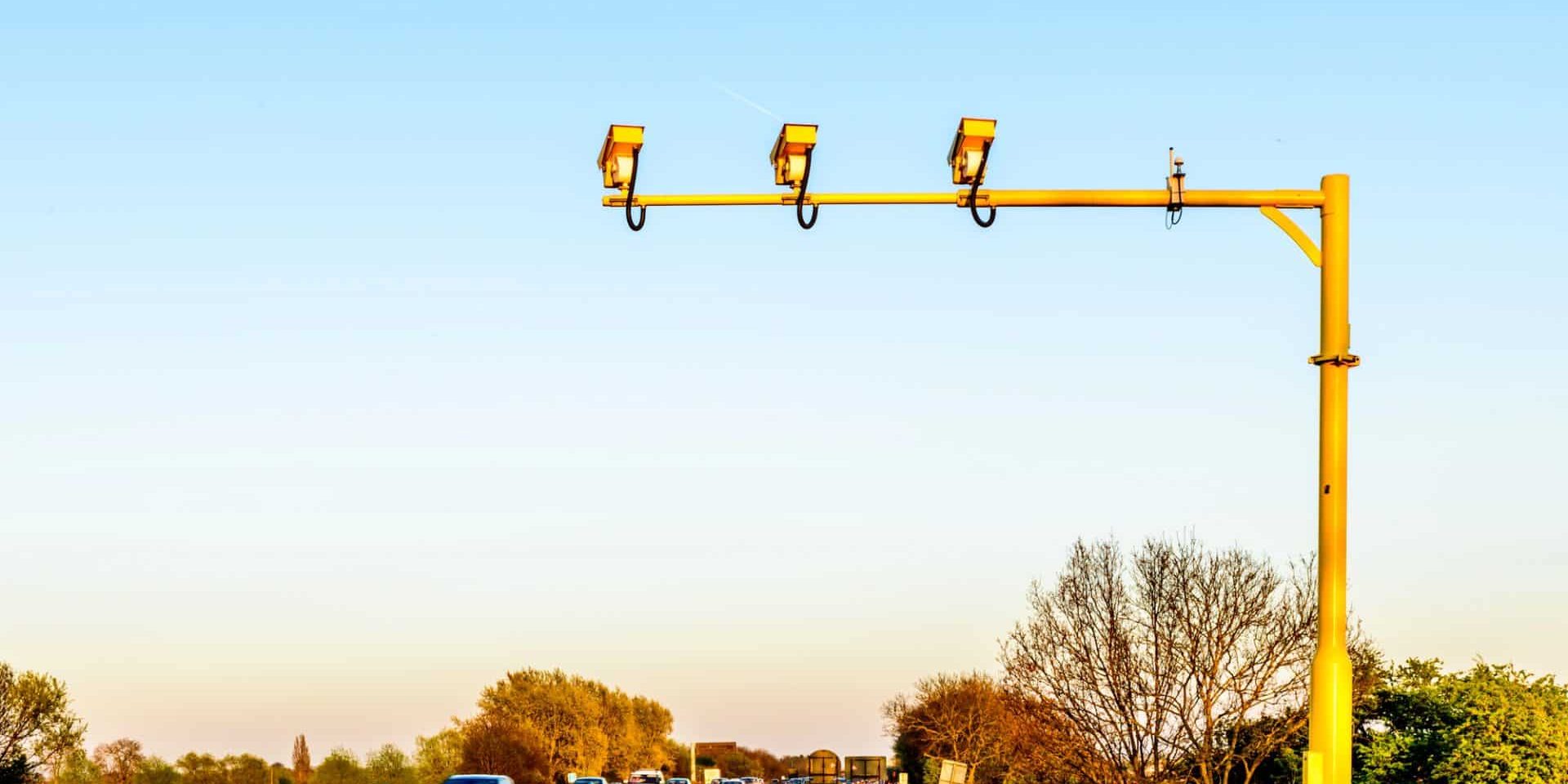
- AI cameras that flag phone and seatbelt offences will cover the M5 in the Devon and Cornwall area for the first time, alongside the A38 and A30, with National Highways backing the roll-out until the end of April 2027.
- Four years of trials checked 6.5 million vehicles and found more than 8,500 offences, and the police say fewer than 1 percent of vehicles checked were offending.
- A phone brings 6 penalty points and a £200 fine, a missing seatbelt costs up to £500, and humans review every flagged image before a driver hears a word.
The Camera Looks Through Your Windscreen Before Any Person Checks the Image
Drivers on the M5 in Devon and Cornwall’s area are set to be photographed by the same artificial intelligence system that has been catching phone and seatbelt offences on the A38 and A30. The M5 joins the programme for the first time, under the Acusensus system run with the police force and the Vision Zero South West road safety partnership. National Highways has backed more camera use on the region’s main roads through to the end of April 2027.
The announcement names no junctions and no start date, so a driver cannot tell where a camera trailer will stand on a given morning. The rules the cameras police are not new: a driver who holds a phone or leaves a seatbelt unfastened on the M5 is already breaking the law. An earlier report explains what AI cameras see inside cars.
The penalty depends on the offence. Using a handheld phone, sat nav, tablet or any other connected device at the wheel carries 6 penalty points and a £200 fine under the rules on GOV.UK. A seatbelt offence carries a fine of up to £500.
How the Cameras Work and Who Checks the Pictures
The system photographs passing vehicles from above and from the front. Two cameras capture those high-speed images, and the software flags any image that looks like a seatbelt or phone offence. A flag is not a charge. At least two human reviewers verify each flagged image to decide whether an offence has taken place, the partnership says.
If the reviewers confirm an offence, the driver receives one of two letters. The less serious cases bring a warning letter. The more serious ones bring a notice of intended prosecution. The choice depends on the severity of the offence.
Images released with the announcement show what the system works from: an overhead shot looking down through a windscreen, and a Cornwall still of an occupant who seems to hold a mobile phone.
What Four Years of Trials Found
In four years of trials across both counties, the partnership counts 6.5 million vehicles monitored and more than 8,500 offences detected. More than 5,400 were seatbelt offences and more than 3,100 were mobile phone offences, which makes seatbelts about 64 percent of the total and phones about 36 percent. Spread across 6.5 million vehicles, 8,500 offences works out at roughly 0.13 percent of those checked. Adrian Leisk, head of road safety at Devon and Cornwall Police, opened his statement with that point:
“It’s important to say that the vast majority of motorists are complying with the rules – in fact, less than 1% of the vehicles we monitored using the Acusensus cameras were detected as committing offences.”
“Using a mobile phone behind the wheel significantly increases your chances of being involved in a serious collision – particularly on high-speed roads where traffic might suddenly slow – and motorists not wearing seatbelts are twice more likely to die than those who wear one. These dangers cannot be understated.”
“While the figures demonstrate that the vast majority of motorists are complying with the rules, sadly a small minority continue to ignore the law and put other lives in danger.”
“The Vision Zero South West partnership remains committed in the use of technology to help address behavioural issues that lead to road traffic collisions. This is about keeping all road users in Devon and Cornwall safe and it’s great to see these cameras having a positive impact in our region.”
The partnership says the cameras change behaviour. Its own data shows offences at a camera site drop by 50 percent on average inside a month, and by 80 percent over the long term when the cameras return to a site already monitored. An earlier release from the same partnership gave a sharper example: in August 2024, seatbelt detections fell 50 percent and phone detections fell 33 percent at three locations over the course of the month. The cameras also stood at the same spot on the A38 at Landrake in 2023, 2024 and 2025, and the partnership reports a lasting, sizeable fall in both offences year after year.
Those percentages come from the partnership and the camera supplier, not from an independent evaluation. Geoff Collins, UK general manager of Acusensus, whose company sells the equipment, gave this view:
“Our experience in Devon and Cornwall clearly demonstrates that the long-term use of this camera technology does change behaviours, for the better.”
“Far fewer drivers are distracted by their phones and more occupants are correctly belted – meaning the roads are safer for everyone.”
What It Costs If a Camera Catches You
Courts can go further than the £200 and 6 points for a phone. GOV.UK says a driver taken to court can be banned from driving and can face a maximum fine of £1,000, or £2,500 for a lorry or bus driver. A driver within 2 years of passing the test also loses the licence for a phone offence.
Six points is halfway to a ban. GOV.UK says reaching 12 points inside 3 years can bring a disqualification, so a second phone offence inside that window reaches the threshold on its own. Depending on the offence, an endorsement stays on the record for 4 or 11 years. The rules for new drivers are different.
GOV.UK gives up to £500 as the fine for not wearing a seat belt when required, and the same ceiling covers a child under 14 who is unbelted or in the wrong seat. GOV.UK gives no standard sum for a seatbelt offence caught on camera. The earlier report on how AI cameras flagged 19,145 possible seatbelt offences covers the wider enforcement trend.
The phone law covers more than a call. The rules on GOV.UK ban holding a device for any reason, online or offline, so texting, taking photos or videos and browsing the web all count. They apply at traffic lights, in a queue of traffic, to a driver supervising a learner and in a car whose engine stops when the car stops. A phone held in flight mode still counts as holding it.
The law does allow hands-free use. A Bluetooth headset, voice commands, a dashboard cradle or mat, a windscreen mount and a built-in sat nav all pass, provided the driver never holds the device and it does not block the view of the road ahead. Even then, police can stop a driver they think is not in full control through distraction, and the driver can be prosecuted. The penalty there is 3 points, for a driver who lacks a full view of the road ahead or proper control of the car.
What the Motorway Changes and What Comes Next
A motorway raises the stakes. Leisk singled out high-speed roads, where traffic might suddenly slow. Leisk gave the reasoning behind the cameras in an earlier release from the partnership:
“However, the dangers associated with these offences are well documented. Around a third of all fatal collisions nationally involve someone who wasn’t wearing a seatbelt – and not wearing one means you are twice as likely to die in the event of a serious collision.”
“Using a mobile phone behind the wheel also significantly increases your chances of being involved in a collision, with the distraction impairing both your judgment and reaction times.”
Jack Mason, South West road safety manager for National Highways, which backs the extra camera use, said:
“Road safety is a shared responsibility – motorists play an active role through the way they drive.”
“Working as part of the Vision Zero South West road safety partnership, our ambition remains that no-one should be harmed while travelling or working on our roads.”
The wider aim is a drop in deaths and serious injuries. The partnership reports four straight yearly falls in people killed or seriously injured on the roads of Devon and Cornwall. The figure was 790 in 2022, 754 in 2023 and 678 in 2024, which is 112 fewer people than two years earlier, a fall of 14 percent. Alison Hernandez, police and crime commissioner for Devon, Cornwall and the Isles of Scilly and chair of Vision Zero South West, said:
“While these figures are certainly going in the right direction, there is a lot more work to be done. These aren’t just numbers, these are lives turned upside down by unimaginable tragedy and trauma. Every member of the Vision Zero South West partnership has committed to halving the number of people killed and seriously injured on our roads by 2030 – and eventually, to zero.”
“The level of collaboration between agencies within Vision Zero South West has been key to our progress. It’s enabled us to work with new partners and test groundbreaking equipment – along with new educational opportunities – which are improving driver behaviour and preventing people from being killed or seriously injured.”
“We need everyone to be at their very best when using our roads. No one wants to answer the door to a police officer bringing them tragic news about a family member or loved one.”
The roll-out has a clear end date for now. National Highways support runs to the end of April 2027, and the announcement carries no decision on the period after that. For drivers the practical steps are plain: put the phone in a mount or out of reach before pulling away, fasten the belt before moving off and make sure every passenger does the same. A driver who is caught receives a letter, either a warning letter or a notice of intended prosecution. Phone cases also reach court often, with phone cases now reaching Crown Court in nearly one in three.
Want more car content? Add us as a preferred source on Google to your favourites list for the best automotive news and analysis on the internet.
If you enjoyed this article, be sure to follow us on Microsoft Start.
Sources
- GOV.UK: Using a phone, sat nav or other device when driving
- GOV.UK: Seat belts: the law
- Midweek Herald: M5 to get AI mobile phone and seatbelt cameras
- Rewind Radio: AI cameras have positive effect on road safety in Devon and Cornwall
Reviewed by Preetam Gadekar

Leave a Comment
More in News
‘Are we serious? I need to pay to go home’: Man’s phone stops working in rented Toyota. Then he tries to use the navigation

Illinois woman follows car into Panera parking lot. Then she crashes out when they don’t follow parking etiquette: ‘Valid sis’
Woman goes to Mercedes dealerships to sell her car. They make her an offer. She says yes. Then they try to “scam” her

Sydney Petrol Still 73 Cents Dearer Than 30 June, With a Fall Forecast

Double Demerits Start 18 December in WA and 24 December in NSW and ACT
Trending on Motoring Chronicle

Geely’s New Flagship Electric SUV Has 280 Miles Of Range And Costs Less Than A Base Model Tesla

The Easiest and Hardest Places to Pass Your Driving Test in Britain Revealed

Enforcers Did Not Contest 4,831 Fines Drivers Won at the Traffic Penalty Tribunal

How to Claim Up to $4,595 From the Mitsubishi Outlander Hood Settlement
