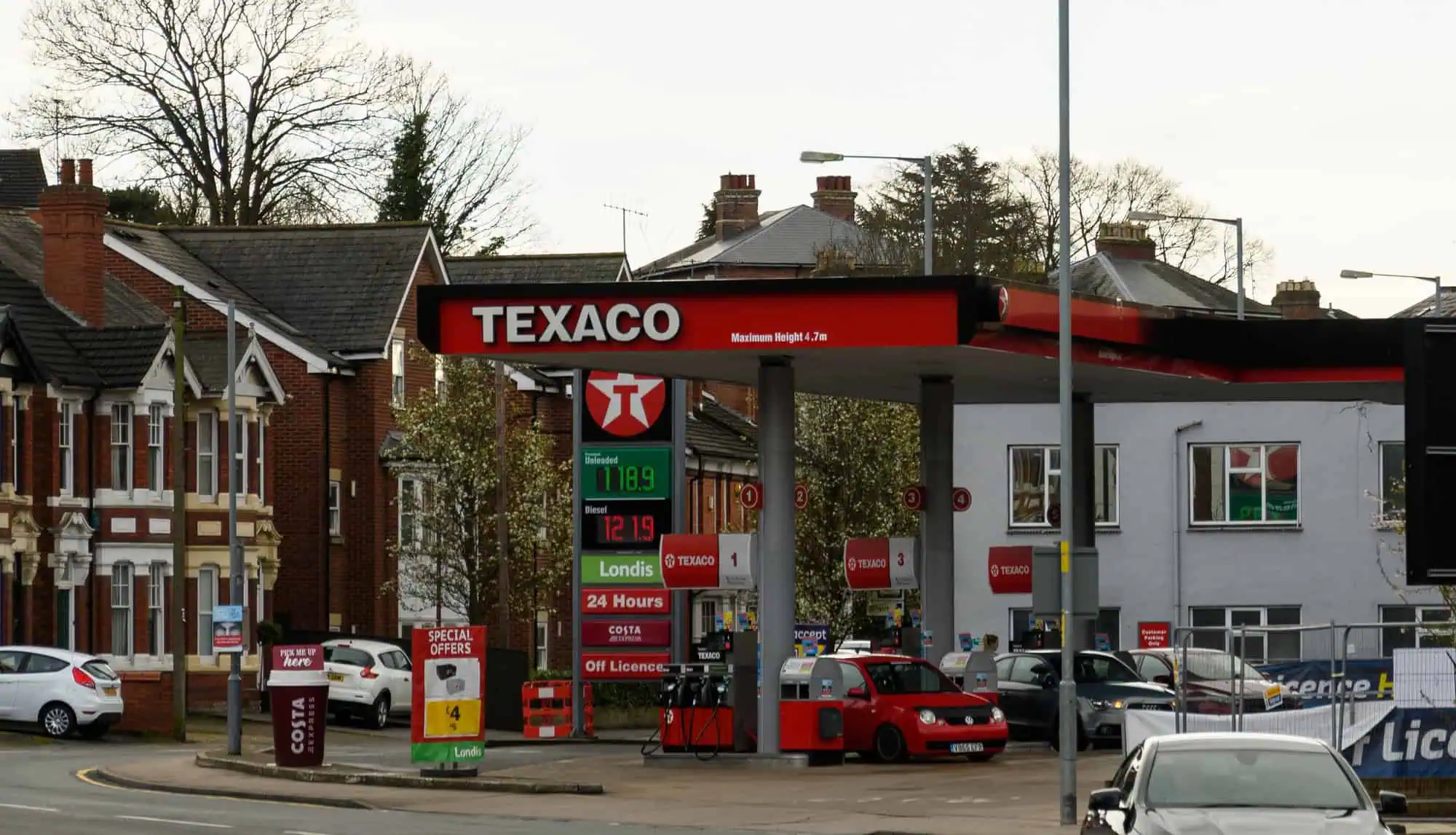
What Idling to Warm Your Car Can Cost Every Driver, From £20 to £80


- Rule 123 of the Highway Code bars drivers from leaving an engine running unnecessarily while stationary on a public road, and the RAC warns that sitting with the heater on to warm up risks a fine.
- The 2002 regulations set a £20 fixed penalty that rises to £40 if unpaid after 28 days, and the RAC puts the penalty at £80 where a civil enforcement officer issues it, The Sun reported.
- Clear the ice, demist the glass and drive off gently, and the fine is never in play.
The Cold Morning Habit That Draws a Warning First and a Fine Second
Start the engine, turn the heater up, go back inside for the keys or the coffee, and let the screen clear while the car idles. The Highway Code says drivers must not, and an authorised officer who finds the engine running can require the driver to switch it off.
Refuse that request and the fine follows. Wandsworth Council and Richmond upon Thames Council each publish the same figure: a £20 fixed penalty notice, rising to £40 if it is not paid within 28 days. The RAC quotes a higher number. Its senior policy officer Rod Dennis advises against warming the car that way.
“However tempting it might be to sit in a vehicle with the engine running and the heater on to warm up, we strongly advice against it.”
Rod Dennis put a figure on the risk.
“As well as polluting the air and wasting fuel, drivers who leave their engines idling unnecessarily on a public road also risk an on-the-spot fine of £80.”
The gap between £20 and £80 is £60, and £80 is four times the council figure.
What Rule 123 Says, and When the Engine Can Stay On
Rule 123 of the Highway Code opens with the heading The driver and the environment and reads: “You MUST NOT leave a parked vehicle unattended with the engine running or leave a vehicle engine running unnecessarily while that vehicle is stationary on a public road.” Two separate duties sit in that sentence. A driver must not walk away from a parked car with the engine running, and must not leave the engine running without a reason while the car is stationary on a public road.
The Highway Code then gives a working guide. If the vehicle is stationary and likely to stay that way for more than a couple of minutes, the driver should apply the parking brake and switch off the engine to reduce emissions and noise pollution. The rule also lists what is allowed: leaving the engine running is permissible if the vehicle is stationary in traffic or while diagnosing faults. The Highway Code marks the rule with a legal reference to regulations 98 and 107 of the Road Vehicles (Construction and Use) Regulations 1986.
Richmond upon Thames Council turns that into a plainer request. It asks drivers to switch off when the vehicle is parked for more than one minute, and it says the request does not apply at traffic lights, at a pedestrian crossing of any kind, or when a breakdown makes it necessary to run the engine to fix the problem. The council lists where the no idling rule does apply: a car stationary at the roadside but not sitting in traffic, a car waiting at a railway level crossing, and a car that has stopped outside a school or business. Refrigerated vehicles are exempt, and so are vehicles that need the engine to power tools and machinery.
Warming a family car at the kerb of a residential street fits the first of those examples. The rule’s wording refers to a public road, and the powers in the 2002 regulations refer to a vehicle stationary on a road.
Why the Fine Is £20 in One Place and £80 in Another
The national fixed penalty comes from the Road Traffic (Vehicle Emissions) (Fixed Penalty) (England) Regulations 2002. The Secretary of State for Transport made them on 11 July 2002 and they came into force on 18 July 2002. Regulation 2 defines a stationary idling offence as a contravention of regulation 98 of the 1986 construction and use rules so far as it relates to the prevention of exhaust emissions. Regulation 8 sets the fixed penalty for that offence at £20. Regulation 17 raises a £20 penalty to £40 where it is not paid before the end of the payment period, and regulation 16 sets that period at not less than 28 days from the date of issue.
That is the same £20 and £40 that Wandsworth and Richmond print on pages both updated on 23 September 2026. The version of the regulations available on the legislation website is the original as made in 2002, so the figure is best described as set at £20 in the 2002 regulations.
The RAC figure is higher and comes in two parts. The standard penalty for engine idling, the RAC says, is a fixed penalty notice of £40 from a police officer or a penalty charge notice of £80 from a civil enforcement officer. Payment inside a set period, usually two weeks, can halve the fine, which would bring £80 down to £40.
A second route explains the higher number. Idling Action London, a campaign for councils and drivers in the capital, says a council can create a Traffic Management Order under the Road Traffic Regulation Act 1984, so that its traffic enforcement officers issue penalty charge notices of £80 for idling vehicles. That is a separate power from the 2002 fixed penalty, which is why two councils can charge different amounts for the same engine left running. The RAC says the £80 depends on where a driver lives, so the council that covers the street where the car is parked sets the bill. Wandsworth and Richmond publish £20 rising to £40.
How Enforcement Works: Asked First, Fined on Refusal
Nobody gets a notice for starting the car. Under regulation 6 of the 2002 regulations, a local authority can authorise any officer or other person in its area to stop idling offences, and regulation 12 lets that person, on production of evidence of the authorisation, require a driver to stop the running of the engine once there is reasonable cause to believe an offence is being committed.
Wandsworth and Richmond describe the same sequence. A civil enforcement officer who sees a driver idling asks them to turn the engine off and warns that failing to do so leads to a fine. Only a driver who refuses the request is issued the £20 notice. The regulations back that up with a second offence: a person who fails to comply with a requirement to stop the engine is liable on summary conviction to a fine not exceeding level 3 on the standard scale. Regulation 14 lets the officer ask for the driver’s name, address and date of birth, and refusing to give them is an offence at the same level. Regulation 13 lets an authorised person issue a fixed penalty notice whenever they judge that an idling offence has been committed, so asking first is the practice of these councils rather than a step the regulations demand. A notice has to be issued as soon as reasonably practicable and no later than 24 hours after the offence, under regulation 15.
Richmond began fining drivers who refused to turn off their engines on 1 March 2019, and the council has widened the job so that all its traffic wardens can remind idling drivers to switch off and fine those who refuse. The offence applies when no one is in the car, too: Rule 123 bars leaving a parked vehicle unattended with the engine running.
The offence in the regulations is defined by exhaust emissions, which is why drivers of electric cars are far less likely to face a fine.
Four Myths the Councils Want Drivers to Drop
Richmond upon Thames Council lists four idling myths, and Wandsworth lists the same four in slightly shorter form. The first is the one behind the warm-up habit: “If it’s cold outside, I need to keep my engine running to keep the heater on.” Both councils answer that with the engine off and the ignition on, the heater should stay warm for up to 30 minutes.
The second myth: “If parked on a yellow line, keeping my engine running means I won’t get a parking fine.” Both councils say traffic wardens can fine a driver for parking somewhere illegal whether the engine is running or not, so an idling engine adds a second possible penalty to the first.
The third: “Isn’t it better to idle because stopping and starting the engine will wear it out?” Both councils say no, and that worry no longer holds for modern engines.
The fourth: “Surely idling doesn’t contribute very much to air pollution in the grand scheme of things?” The councils say research shows that switching off engines when parked can reduce air pollution levels in the street where the vehicles are parked. They also cite up to 150 balloons of exhaust emissions a minute from an idling car, with harmful chemicals including cyanide, nitrogen oxides and tiny particles called PM2.5, and the Royal College of Physicians figure of 40,000 premature deaths a year linked to air pollution. Richmond adds that an idling engine burns fuel less efficiently than a moving one, so it produces more emissions, and that air pollution can be several times higher inside an idling vehicle than outside.
What to Do on a Frosty Morning Instead
Rod Dennis sets out the RAC routine for a cold morning.
“On cold mornings, the best approach is to clear any ice or snow properly and ensure windows are fully demisted before setting off, then get on your way and let the car warm you up.”
The clearing step has its own penalty. A driver who sets off with a frosted or misted screen risks the £60 windscreen fine, a fixed penalty with three penalty points, so a half-cleared screen swaps one penalty for another.
For the screen itself, the guide to defrosting with warm dry airflow covers the air conditioning and fresh air intake settings that clear misted glass.
Switch the car off if it is going to stand for more than a minute or two while the screen is cleared by hand. Scrape every window. Use the heater and air conditioning to demist as the car moves off gently, which is the RAC’s let-the-car-warm-you-up advice in practice.
A driver who wants the heater going before leaving can switch the engine off and keep the ignition on, which the councils say keeps the heater warm for up to 30 minutes. A driver who leaves the engine running on a public road and goes back inside the house breaks Rule 123 and risks the notice on top.
Sources
- legislation.gov.uk: The Road Traffic (Vehicle Emissions) (Fixed Penalty) (England) Regulations 2002
- GOV.UK: The Highway Code, general rules, techniques and advice for all drivers and riders (103 to 158)
- Wandsworth Council: Car idling
- The Sun: Using your car’s heater can land you with a £80 on-the-spot fine, warns RAC
Want more car content? Add us as a preferred source on Google to your favourites list for the best automotive news and analysis on the internet.
If you enjoyed this article, be sure to follow us on Microsoft Start.

Leave a Comment
More in News

Why Hogging the Middle Lane Risks a £100 Police Fine and 3 Points
What You Can Tow on a Car Licence (and the Limit Your Car Sets)

2027 Toyota Sequoia Starts at $69,900 With Standard Hybrid Power and New Trailer Assist

Direct Connection Unveils Six HEMI V8 Crate Engine Packages from 385 to 1,025 Horsepower
What Happens to Car Tax When Buying a Used Car (and the £80 Fine)
Trending on Motoring Chronicle

Ford Recalls 91,198 F-150 Trucks Over Running Lights That Refuse to Dim

How to Stop Condensation Fogging Up Your Car Windows This Autumn

Roof Rack Fines Can Reach £2,500 as Holiday Drivers Ignore Safety Checks

DVSA Fines a Berkshire Garage £1,600 for Pops and Bangs