
2027 Toyota Sequoia Starts at $69,900 With Standard Hybrid Power and New Trailer Assist


- The 2027 Toyota Sequoia starts at $69,900 MSRP, and every grade carries Toyota’s i-FORCE MAX hybrid V6, rated at 437 horsepower.
- A new trailer driver-assist suite measures the trailer, stretches blind spot coverage along its length, helps hold the lane and guides reversing on an SUV Toyota rates to tow up to 9,520 pounds.
- The new Trailhunter package on the SR5 and a reworked TRD Pro lead a six-grade range backed by a 10-year, 150,000-mile hybrid battery warranty.
What a $69,900 Sequoia Does When You Hook Up a Trailer
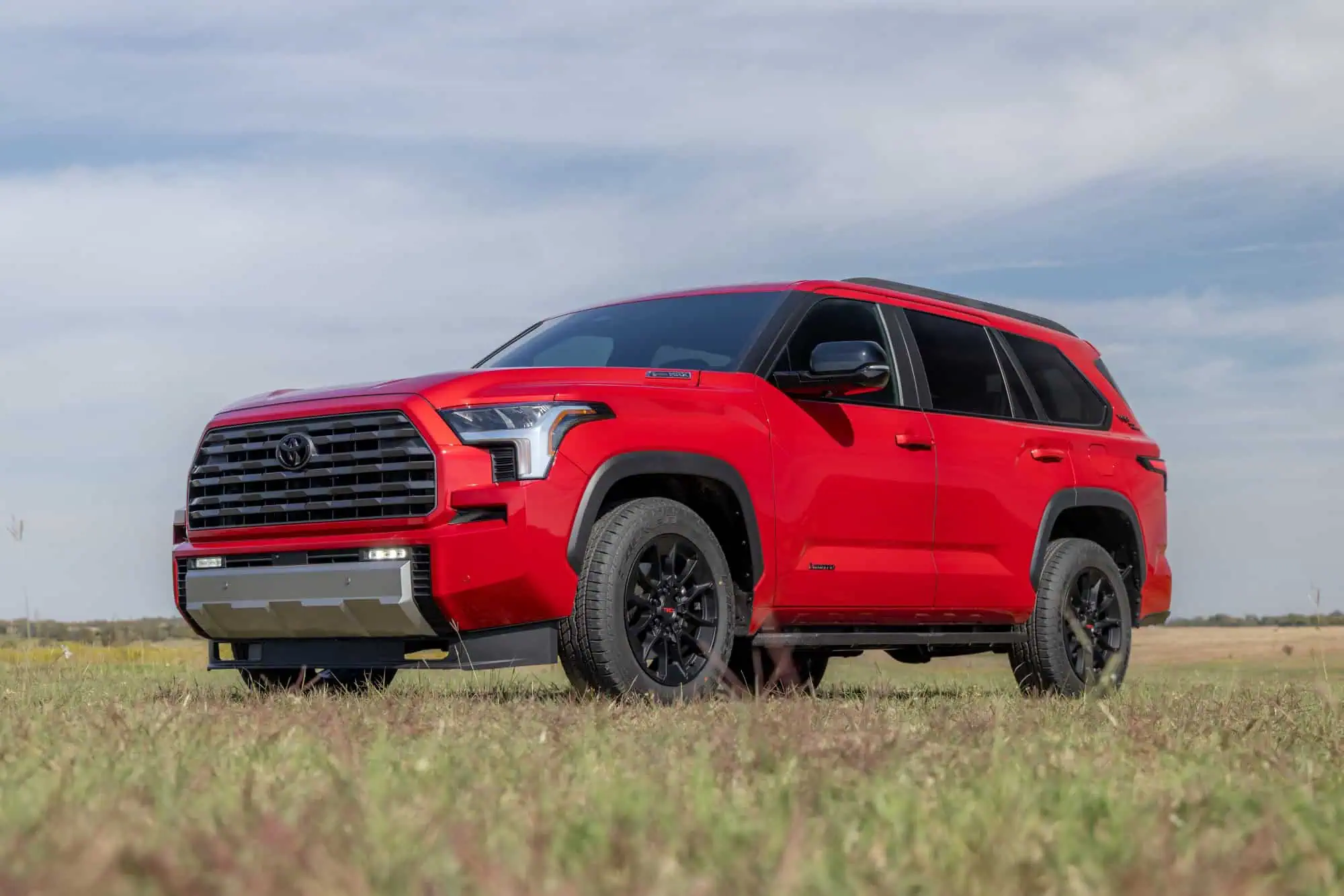
Toyota set the starting MSRP of the updated 2027 Sequoia at $69,900 and expects the full-size SUV at dealerships in the fall of 2026. That is the lineup’s entry price. Toyota gave the figure as a starting MSRP and has not stated a destination charge or prices for the other grades, so buyers who want a Limited, Platinum, 1794, TRD Pro or Capstone need a dealer quote to see the real figure.
Power is the same on every grade. Each 2027 Sequoia runs Toyota’s i-FORCE MAX hybrid: a 3.4-liter twin-turbo V6 paired with a motor generator, rated by Toyota at 437 net combined horsepower and 583 lb-ft of torque. Toyota’s maximum towing figure is 9,520 pounds. Toyota offers no gas-only Sequoia, so the hybrid is the baseline.
The change that counts most to anyone with a boat, camper or equipment trailer is a new set of Trailer Advanced Driver Assistance Systems, which Toyota calls TADAS. They sit on top of Toyota Safety Sense 4.0, and they work on the points where towing goes wrong: knowing what you are pulling, seeing beside it, holding a lane with it and backing it up. Toyota lists the towing technologies as available and has not said which grades carry them or what they cost.
Four Trailer Aids, Step by Step
The sequence starts with Automated Trailer Detection. Rear radar and a camera detect that a trailer is attached and measure it, then pass those numbers to the redesigned Trailer Garage menu. That menu has moved from the meter cluster to the multimedia system, so the trailer profile now lives on the 14-inch touchscreen instead of the meter cluster.
Trailer Blind Spot Monitor uses that measurement. The standard blind spot zone reaches beyond the body of the Sequoia to cover the length of the trailer and its immediate surroundings, and it widens or narrows with the size of the trailer. A short utility trailer and a long boat trailer get different coverage.
Trailer Lane Trace Assist is a towing version of the standard Lane Trace Assist. It provides steering support that keeps the rig centered in certain conditions. Toyota says it can compensate when lanes split and help manage uneven roads and certain wind disturbances, which are the moments when a loaded trailer pulls a driver off line.
Trailer Backup Guide, improved for 2027, adds moving on-screen guidelines, a slider interface and semi-automated steering support for tight maneuvers. Toyota says it can guide a path to the trailer and help detect jackknife risks. Toyota limits the lane-centering help to certain conditions.
Trailhunter and TRD Pro Change the Off-Road Menu
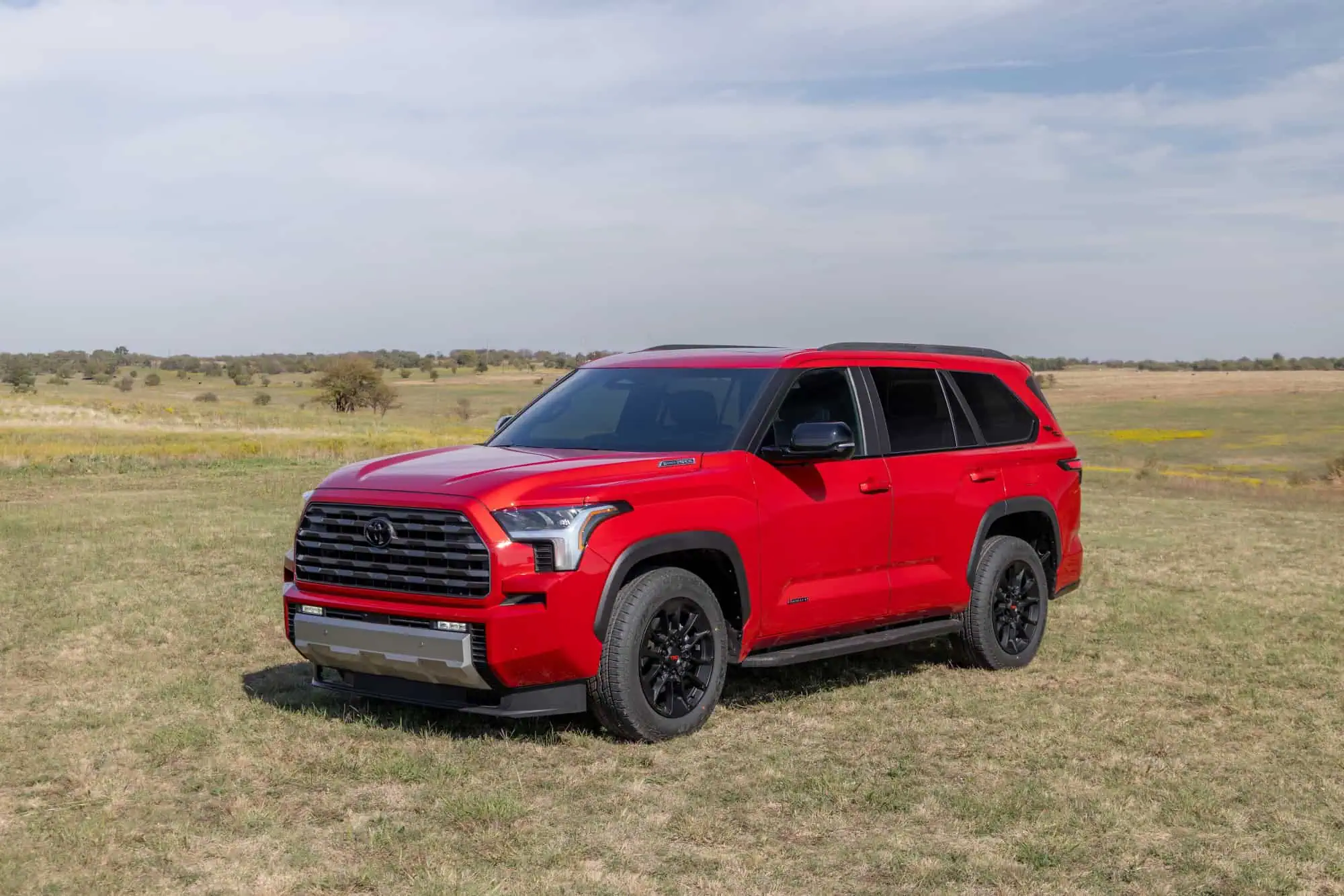
The Trailhunter is a package built on the SR5 and is new to the Sequoia. It adds Old Man Emu upgraded suspension, an underbody skid plate, front recovery hooks and Michelin LTX Trail tires, with bronze-colored wheels and unique badging on the outside. Crawl Control, Multi-Terrain Select and a locking rear differential come with it. The Tundra pickup gets its own Tundra Trailhunter package for 2027.
The TRD Pro changes at the suspension. It gets newly designed, Sequoia-specific FOX QS3 adjustable shocks for stability and adjustable damping at high speed on desert tracks or over rocks. Red tow hooks become standard, and a new color called Honeycomb joins the paint list.
The Trailhunter package debuted on the Sequoia in July’s 2027 Sequoia reveal, and Sequoia and Tundra Trailhunter builds also sit on Toyota’s Off-Road display at the SEMA Show in Las Vegas, which runs Nov. 3 to 6. A Sequoia Snowhunter appears there as a concept with a TRD front skid plate, a roof rack and a cargo box. Toyota describes the SEMA vehicles as prototypes modified with parts not available from Toyota, so the Snowhunter is a show vehicle and not a model on the order sheet.
What Backs the Hybrid: Warranty and ToyotaCare
Warranty terms set out what stands behind that hybrid. Toyota’s basic cover runs 36 months or 36,000 miles on everything except normal wear and maintenance items. The powertrain is covered for 60 months or 60,000 miles, and perforation from corrosion for 60 months.
Hybrid components carry 8 years or 100,000 miles. The hybrid battery carries 10 years or 150,000 miles. Against the basic cover, that is 84 months and 114,000 miles longer.
ToyotaCare covers normal factory-scheduled maintenance for one year or 10,000 miles, and roadside assistance runs 2 years with no mileage limit.
Cabin, Safety and the Rear Seat Reminder
Every grade gets the latest Toyota audio multimedia system on a 14-inch touchscreen, developed by Toyota Connected North America with AT&T 5G connectivity, a configurable home screen and an always-on Quick Control shortcut menu. A 12.3-inch digital meter is standard. So is a built-in Drive Recorder Dash Cam, the first Toyota camera with playback on the touchscreen, which saves 20-second clips of manual and triggered events from the external cameras.
Toyota Safety Sense 4.0 is standard. It covers the Pre-Collision System with Pedestrian Detection, full-speed radar cruise control, Lane Departure Alert with Steering Assist, Automatic High Beams, Lane Tracing Assist, Road Sign Assist and a driving assist function. Emergency Drive Stop System, Panoramic View Monitor, Safe Exit Alert and Rear Camera Detection round out the list. While Lane Tracing Assist is active, the Emergency Drive Stop System can bring the vehicle to a stop under certain conditions if it determines the driver is not attentive.
New for 2027, the Advanced Rear Seat Reminder uses a millimeter-wave radar concealed in the headliner. Under certain circumstances it detects movement in the second and third rows after the vehicle is parked, the ignition is off and the driver has exited. It escalates from hazard lights to chimes to the horn. With an active Safety Connect trial or subscription and a 5G network, it also sends an app notification, a text message and an automated phone call. Every grade includes a 5-year Connected Services trial covering Remote Connect, Safety Connect and Service Connect, so the last three stages run on that trial first and need a subscription once it ends.
The Arene software platform from Woven by Toyota supports over-the-air updates, and the sliding third row with an adjustable cargo shelf lets owners trade legroom for cargo space.
Six Grades and What the Starting Price Buys
The SR5 is the entry grade. It has the 14-inch screen, the hybrid and the Trailhunter option. Limited adds SofTex-trimmed seats, heated and ventilated front seats and more convenience features. Platinum moves to leather-trimmed seats, second-row captain’s chairs, a panoramic moonroof and a 14-speaker JBL Premium Audio system.
The 1794 grade adds saddle-brown interior accents, leather-trimmed seating, open-pore wood-style trim and exclusive badging. TRD Pro carries the FOX shocks and a heritage grille. Capstone sits at the top with semi-aniline leather seats, 22-inch wheels, acoustic glass and power running boards.
Buyers comparing Toyota’s big body-on-frame SUVs can start with the Land Cruiser price guide before they visit a dealer. With six grades and one price published, the next step for a Sequoia shopper is to ask each dealer for the MSRP of the exact grade, the destination charge and the arrival date.
Want more car content? Add us as a preferred source on Google to your favourites list for the best automotive news and analysis on the internet.
If you enjoyed this article, be sure to follow us on Microsoft Start.

Leave a Comment
More in News

Why Hogging the Middle Lane Risks a £100 Police Fine and 3 Points

What Idling to Warm Your Car Can Cost Every Driver, From £20 to £80
What You Can Tow on a Car Licence (and the Limit Your Car Sets)

Direct Connection Unveils Six HEMI V8 Crate Engine Packages from 385 to 1,025 Horsepower
What Happens to Car Tax When Buying a Used Car (and the £80 Fine)
Trending on Motoring Chronicle

McLaren Project: Endurance debuts Triple Crown inspired livery during Monterey Car Week [Photo Gallery]

Chinese Mural Art: a cultural tribute by Rolls-Royce [Photo Gallery]
Why a Record 33 Million Americans Are Traveling This Labor Day as Gas Prices Climb

Audi Q9 Flagship SUV Opens for UK Order in August With Seven Seats
