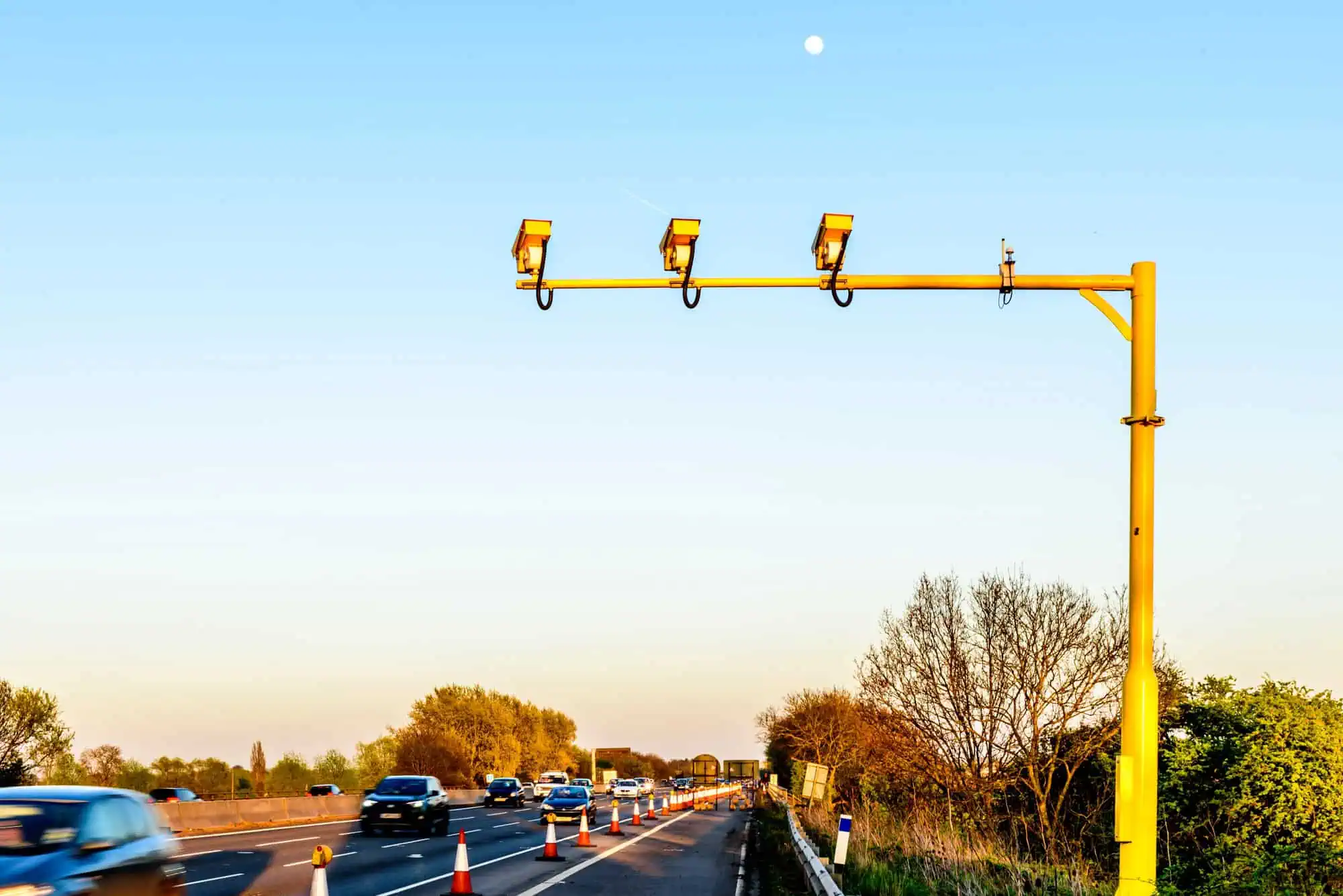
Every Driver Risks a £1,000 Fine When Councils Fail to Cut Back Hedges


- Nearly one in five drivers say they have broken a speed limit after a road sign was hidden by overgrown branches or hedges, new RAC research shows
- Councils can order a hedge or tree cut back within 14 days under the Highways Act 1980, yet 58 percent of drivers do not know a fine is possible for the person who lets it grow over a sign
- Courts have thrown out speeding convictions where a driver proved the limit sign was obscured, though a second, unobstructed sign on the same stretch of road has sunk at least one appeal
The Hedge That Costs You Three Penalty Points
A driver slows for a bend, glances at where the speed limit sign should be, and sees only leaves. The limit dropped from 60mph to 30mph thirty yards back, hidden behind a garden hedge nobody has trimmed in months. A speed camera catches the car doing 42mph. A fixed penalty notice arrives a fortnight later.
That scenario is now common enough that the RAC commissioned a survey of more than 1,400 motorists to measure it. The results, reported by Auto Express, found that nearly one in five drivers have broken a speed limit after a sign was blocked by overgrown foliage. Ninety-four percent said they had seen a road sign covered by branches or hedges at some point, and more than half said they run into the problem regularly.
Nearly Every Driver Has Seen a Sign Swallowed by a Hedge
Speed limit signs, stop signs and give way signs were named as the hardest to see once vegetation takes hold. Four out of five respondents said overgrown greenery had made it difficult to pull out of a junction or roundabout safely, and 21 percent admitted they had missed a turn entirely after a direction sign was blocked from view. Five percent went further and said they had accidentally driven through a give way sign they never saw.
Drivers are not the only ones alarmed by the trend. RAC spokesperson Harriet Hernando said: “While a small number have accidentally ignored a give way sign, the effects of doing so can be catastrophic.”
Modern cars raise the stakes further. Adaptive cruise control and speed limit warning systems read road signs through a forward-facing camera, not through a satellite link to a council database. A sign buried in a privet hedge feeds the same blank image to a £40,000 SUV’s safety systems as it does to the eyes of a learner driver in a ten-year-old hatchback.
The Council Has 14 Days to Act Once a Notice Goes Out
The law on overgrown hedges near roads is older than most of the drivers affected by it. Section 154 of the Highways Act 1980 gives a highway authority the power to serve a notice on a landowner or occupier whenever a hedge, tree or shrub overhangs a road or footpath so as to endanger or obstruct traffic, or interferes with a driver’s view of a traffic sign or a street lamp. The person served has 14 days to cut it back. Guidance built on the Act sets a generally accepted minimum clearance of 5.05 metres, or 16 feet 6 inches, over a carriageway and 2.4 metres over a footpath.
If the notice is ignored, the council can do the work itself and bill the landowner for it. Anyone who thinks a notice is unfair can appeal to a magistrates’ court. What the Act does not do is fine homeowners automatically. The RAC survey found that 58 percent of drivers had no idea a penalty of any kind was even possible for letting a hedge grow over a road sign, which is one reason so many keep growing unchecked.
There is a second layer of responsibility that sits with the council rather than the homeowner. Section 85 of the Road Traffic Regulation Act 1984 places a duty on the traffic authority to erect and maintain speed limit signs in a way that gives drivers adequate guidance. A sign the council put up but never revisited, swallowed by vegetation on land the council itself owns, can leave the authority answering for its own upkeep failure rather than a resident’s garden.
When Judges Have Sided With Drivers Over Hidden Signs
An obscured sign is not an automatic get-out, but it has worked in court. Honest John’s legal coverage of speeding appeals cites a case where Ipswich Crown Court quashed a driver’s conviction after an arboriculturist gave evidence that foliage had fully hidden the limit sign at the time of the offence. In another case, two High Court judges overturned a driver’s conviction after hearing that an overgrown hedge had blocked his view of the sign, and ordered his legal costs paid from public funds.
The same coverage records a case that cuts the other way. A driver’s appeal was rejected. The judge accepted that foliage covered one copy of the sign, but a second, unobstructed 30mph sign stood on the opposite side of the road, and that was enough to sink the defence. Courts want proof that no reasonable driver in that spot could have known the limit, not just proof that one sign among several had a branch across it.
Anyone who plans to use an obscured sign as a defence needs to move fast. A phone photograph taken at the scene, ideally within days of the alleged offence and before anyone has a chance to trim the hedge, is the evidence solicitors say courts trust the most.
What a Speeding Endorsement Actually Costs
A first speeding offence dealt with by fixed penalty sits in what the Sentencing Council calls Band A: three penalty points and a fine of between 25 and 75 percent of the driver’s weekly income. Faster breaches push the case to court and into Band B or Band C, where fines rise to between 75 and 175 percent of weekly income, four to six points can be added, and a court can suspend a licence for anywhere from seven to 56 days. The statutory caps sit at £1,000 for an ordinary road and £2,500 for a motorway.
Roughly three million speeding fixed penalty notices go out across Britain each year, close to one for every 15 licence holders. DVLA figures reported by Honest John show 1,231,744 licence holders carried live speeding points in 2025, up from 1,129,830 in 2024 and 1,023,528 in 2023. Speeding offences alone accounted for 78 percent of the 4.84 million penalty points issued in 2025. Every one of those points can add hundreds of pounds a year to an insurance premium long after the fine itself is paid.
What to Do If a Sign Near You Is Obscured
Homeowners with a hedge, tree or shrub that overhangs a road or pavement should check it against the 5.05 metre carriageway clearance and cut it back before a council notice forces the issue. A trim now costs an afternoon. A Section 154 notice ignored costs the price of a contractor sent by the council, plus the original job still needing doing.
Drivers who spot an obscured sign, whether it hides a speed limit, a give way or a junction warning, should report it to the local council through its highways or street care team, most of which now take reports online in a few minutes. National Highways takes reports for motorways and major A-roads instead. Anyone who receives a Notice of Intended Prosecution and believes the relevant sign was hidden at the time should return to the location as soon as possible, photograph what a driver would actually have seen, and take that evidence to a solicitor before entering a plea. Waiting until the hedge has been cut back removes the only proof that would have counted.
None of this shifts the basic rule of the road. A driver is still responsible for knowing the limit on a familiar route, and a sign spotted a fraction late is rarely enough on its own to beat a fixed penalty. What the RAC survey adds is a number: one in five drivers now say a hedge, not carelessness, put the points on their licence. Until the councils and homeowners on the hook for that hedge start cutting it back, that number is unlikely to fall.
Sources:

Leave a Comment
More in News

Only 13 Percent of Stolen Cars Are Ever Recovered by Police, DVLA Data Reveals
Teenage Drivers in London Now Pay £2,928 for Car Insurance, Quotezone Reveals

What Your Tyre Pressure Warning Light Actually Means (and How to Reset It)
How to Fix a Windscreen Chip Before It Fails Your MOT

Millions of Older Drivers Could Now Pay Doctors £62.50 for a DVLA Medical Letter
Trending on Motoring Chronicle
What Record £3.2 Billion Motor Insurance Payouts in Q2 2026 Mean for Your Next Renewal

Automobili Lamborghini unveils Miami-inspired Urus SE during Art Basel Miami Beach 2024 [Photo Gallery]

Legends Reborn: Iconic Liveries Dazzle at Salon Privé Blenheim Palace 2024 [Photo Gallery]

York Council Made £10 Million from Parking but Spent Just £5 Million on Roads