How Trusting Your Sat Nav Speed Limit Could Land You a Speeding Fine and Points

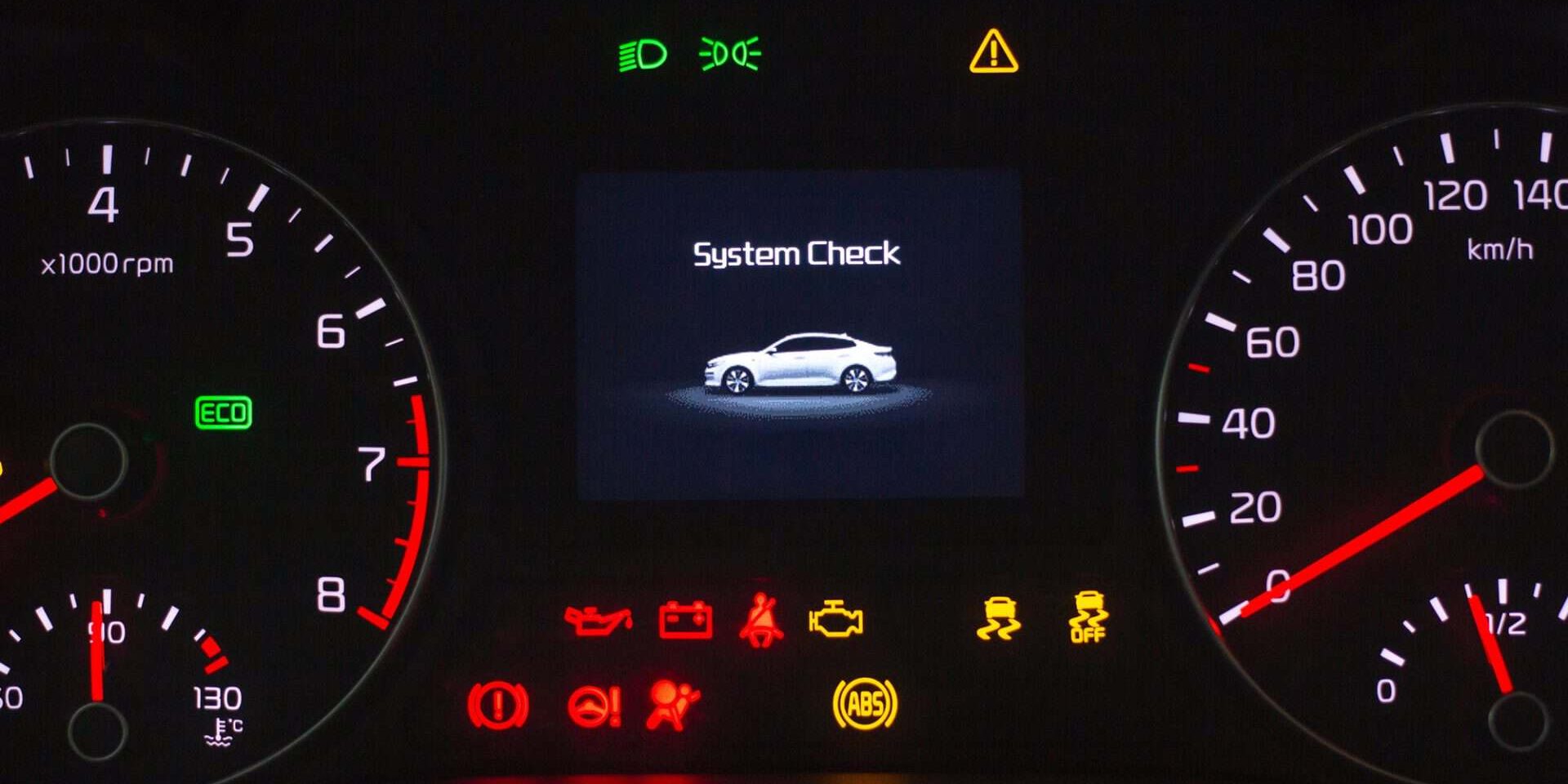
Most drivers now glance at a sat nav or phone app to check the speed limit, and assume the number on the screen is the law. It is not. The limit displayed by satellite navigation is only as accurate as the map data behind it, and when that data is out of date the consequences fall on you, not the software. Trust the wrong figure and you can pick up a speeding fine and penalty points, with no defence to fall back on.
The risk has grown as limits across Britain change faster than ever, with thousands of new 20mph zones, variable motorway limits and temporary roadworks restrictions appearing all the time. A sat nav that has not been updated, or whose map provider is simply behind, can show a 30 where the road is now a 20, and that gap is exactly where drivers are being caught.
Why sat navs get the speed limit wrong
Satellite navigation systems do not read road signs. They display a limit held in a database, matched to your position by GPS. That database has to be built, checked and pushed out to your device, and at every stage there is room for it to lag behind reality. When a council lowers a road to 20mph, or a new average-speed zone goes live, it can take weeks or months for the change to filter through to every map provider and then to every driver’s device.
Built-in systems in older cars are the worst offenders, because many owners never install the map updates, but phone apps are not immune either. GPS drift in towns can place you on the wrong road entirely, so the app shows the limit for a parallel street. Temporary limits through roadworks, which are among the most heavily enforced, almost never appear on a sat nav at all. The result is a screen that looks authoritative but can be quietly, and expensively, wrong.
Who is legally responsible, you or the sat nav
The law is unambiguous on this point. The driver is responsible for observing the speed limit shown on the road signs, full stop. “My sat nav said 30” is not a defence, and courts do not accept it. The signs on the road, and the rules that set national limits where there are no repeater signs, are what count. If your device shows a higher figure than the posted limit and you drive to it, any penalty is yours.
There is a second danger that compounds the first. Staring at a sat nav screen to check a limit is itself a distraction. Rule 150 of the Highway Code warns drivers not to be distracted by in-vehicle systems and to keep proper control of the vehicle at all times. Using your phone as a sat nav is legal only if it is fixed in a cradle and you set the route before you move off. Picking it up, or letting it pull your eyes off the road, can leave you facing a charge of not being in proper control, or worse.
What a mistake can actually cost
Speeding itself carries a minimum penalty of a £100 fixed penalty and three points. That is the floor, not the ceiling. If the case goes to court, fines are based on how far over the limit you were and on your weekly income, and can reach up to £1,000 on most roads or £2,500 if the offence is on a motorway, with the option of three to six points or a short ban for serious cases. Even the basic three points can push up an insurance premium for years.
The distraction offences are separate and can be steeper. Being judged not in proper control of your vehicle brings a fixed penalty and points, while careless driving, if a distracted mistake causes a problem, can carry far larger fines and a longer points endorsement. Handheld phone use, which includes picking up a phone being used as a sat nav rather than leaving it in a cradle, carries a £200 fixed penalty and six points, enough on its own to cost a newer driver their licence. None of these are theoretical: enforcement is rising, and as we reported, the spread of AI cameras that can see inside cars is making distraction and phone offences far easier to detect.
Why 20mph zones make this more dangerous
The explosion in 20mph limits is the single biggest reason this is worth taking seriously now. Whole towns and cities have dropped large numbers of residential and high-street roads to 20mph in a short space of time, and these are exactly the changes most likely to lag on an out-of-date sat nav. A driver doing 30 in a newly lowered 20 zone, trusting a screen that still says 30, is both speeding and at far greater risk of hitting a pedestrian.
The penalties in these zones are no lighter for being on a quiet street. We recently reported on a driver who lost her licence after being caught at 28mph in a 20mph zone, a reminder that the tolerance many drivers assume exists is thin, and that camera enforcement in these areas is being stepped up. The combination of falling limits and rising enforcement means the cost of trusting the wrong number has rarely been higher.
How to avoid being caught out
The fix is mostly common sense, but it needs to become a habit. First, treat the road signs as the truth and the sat nav as a helpful second opinion, never the other way round. If the screen and the sign disagree, the sign wins. Second, keep your maps updated: built-in systems usually have a free or paid update through the manufacturer, and phone apps should be set to update automatically over wifi so you are not relying on data that is months old.
Third, mount your phone properly in a cradle and set your route before you drive, so you are never tempted to handle it on the move. Fourth, be especially alert in residential areas, near schools and through roadworks, where limits change most often and enforcement is heaviest. And finally, slow down when you are unsure rather than guessing upward. If you cannot see a limit sign and you are in a built-up area with street lighting, the limit is usually 30 unless signs say otherwise, and increasingly it is 20. Reading the road, not the screen, remains the only reliable way to stay on the right side of the law and keep your licence intact.
The issue is becoming more pressing as cars themselves start to read limits. Many new models now feature intelligent speed assistance, which uses a camera to recognise speed-limit signs and can chime or gently resist the accelerator when it thinks you are over the limit. It is a useful safeguard, but it relies on the same imperfect inputs, misreading a sign partly hidden by foliage, picking up a limit on a slip road, or confusing a lorry’s rear sticker for a road sign. As with sat nav, the technology is an aid, not an authority, and the driver remains the one held responsible if the car gets it wrong and you follow it.
Company car and van drivers should be particularly careful, because points and bans carry consequences for employment as well as insurance, and a vehicle used for work is no less likely to be caught by a roadside or average-speed camera. If you drive for a living, it is worth raising map updates with whoever manages your fleet, since an out-of-date system across a fleet of vehicles multiplies the risk. Whatever you drive, the principle does not change. The sign on the post is the law, the screen on the dashboard is a guide, and keeping the two straight is the cheapest insurance policy a driver has.
Sources:

Leave a Comment
More in News
Brighton Drivers Face £70 Fines as Western Road Becomes a Red Route This Summer

Caravan and Motorhome Tyre Failures Drive a 16 Percent Rise in Towing Breakdowns
Councils Risk Losing a Third of Their Road Funding Unless They Prove They Fix Potholes
Why Petrol Drivers Have Already Spent a Year’s EV Charging Costs by 9 June
These Stretches of the M1, M6 and M5 Still Carry a 60mph Limit and £100 Fines
Trending on Motoring Chronicle
7 Interior Maintenance Habits That Keep Your Car Looking New

Winter thrills on Ice: Lamborghini Esperienza Neve debuts in Inner Mongolia [Photo Gallery]

Bentley Motors opens applications for 2026 apprenticeship intake
Top Marks: 2026 Hyundai Palisade Earns IIHS Top Safety Pick+ Under Tougher New Test Rules