
Why AI Speed Cameras Are Catching Thousands of Drivers for Phones and Seatbelts
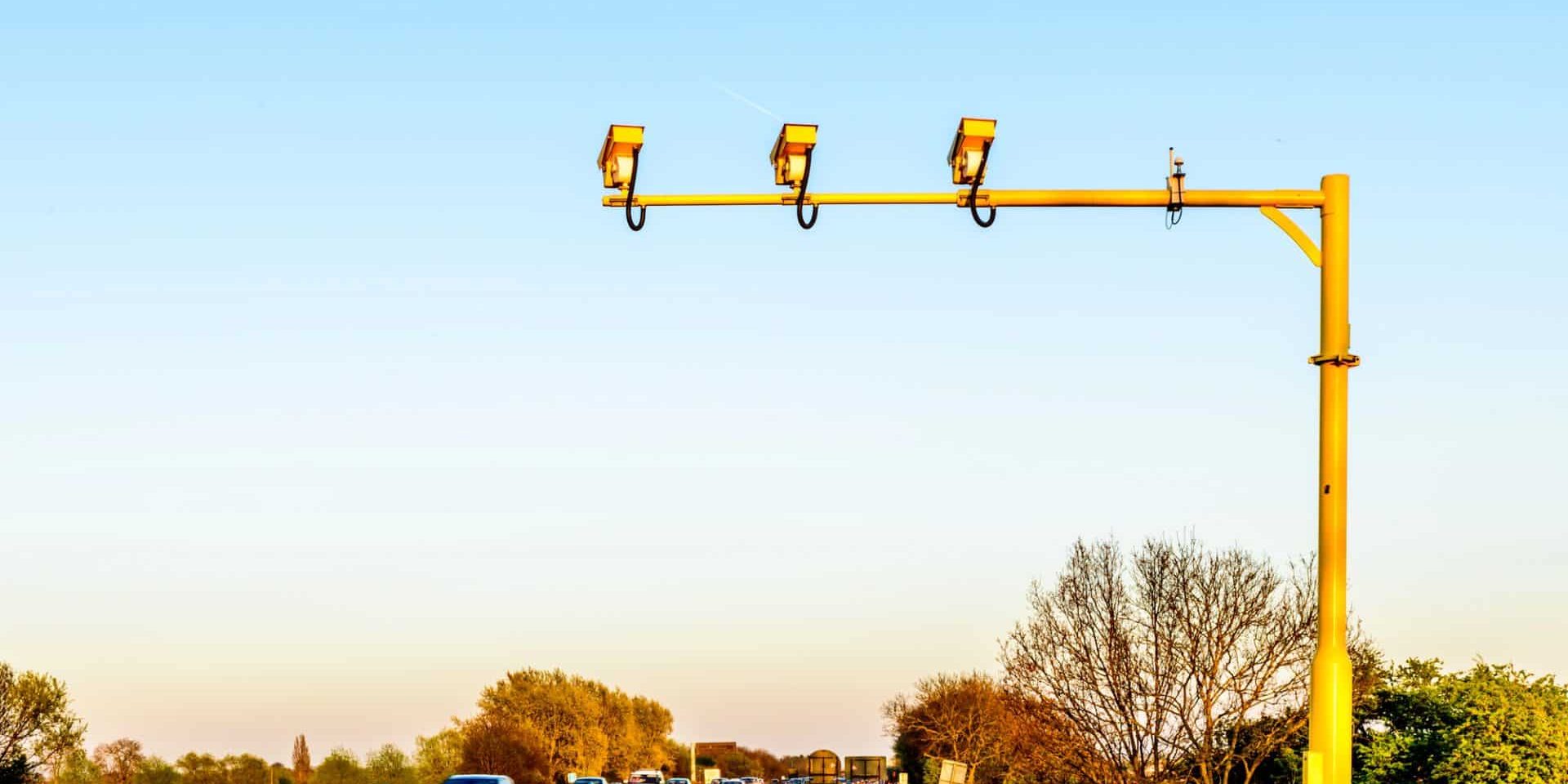
A new generation of roadside cameras is catching thousands of drivers doing things they assumed no one would ever see. Unlike the familiar yellow speed camera, these units use artificial intelligence to peer through the windscreen and spot a phone in someone’s hand or a seatbelt left unclipped. The results from early deployments are startling. In Greater Manchester alone, more than 3,000 offences were recorded in just five weeks, and in Sussex a single camera logged hundreds of breaches in its first seven days of operation.
For drivers who still glance at a message at the lights or let the belt hang loose on a short trip, the message is simple. The behaviour that traffic cameras could never reliably detect before is now being captured automatically, day and night, and the penalties for being caught are far from trivial.
What the cameras are catching
The figures from the trials show just how common these offences are. In its first week in Sussex, one AI camera recorded 620 seatbelt offences, 110 instances of handheld mobile phone use, 17 cases involving both at once, and one offence of a driver not being in proper control of their vehicle. That is from a single camera over seven days. Scaled across a county, let alone the country, the numbers point to a habit that millions of drivers have slipped into without thinking.
Greater Manchester’s experience underlines the point. More than 3,000 offences in five weeks is a rate that no human officer parked at the roadside could ever match, and it captures behaviour that is both widespread and genuinely dangerous. Using a phone at the wheel slows reaction times dramatically, and an unbelted occupant is far more likely to be killed or seriously hurt in a collision. The cameras are aimed squarely at the two behaviours that road safety teams say cause the most avoidable harm.
How the technology works
These are not ordinary cameras. The units capture high resolution images of the inside of a vehicle as it passes, using an infrared flash that allows them to see clearly through the windscreen in daylight, after dark and in poor weather. Because the flash is infrared rather than the bright white burst of an old speed camera, drivers usually have no idea they have been photographed.
The clever part is what happens next. Artificial intelligence software analyses each image in real time and flags those that appear to show a phone being held or a seatbelt missing. Crucially, the computer does not issue the fine. Every image the system flags is passed to a trained human reviewer who checks it before any action is taken, which is designed to weed out false positives, such as a hand resting near the chin being mistaken for a phone. Only confirmed offences are passed on for enforcement.
The same technology can also be paired with speed detection and number plate recognition, so a single installation is capable of monitoring several behaviours at once across multiple lanes of traffic without any visible flash or road markings. That combination is what makes the new cameras so much more powerful than the equipment they are starting to supplement.
Where they are operating
The rollout is spreading quickly. The technology is currently being tested across 19 regions, including Devon, Cornwall, Greater Manchester, Staffordshire and Sussex, with cameras already operating in areas such as Durham, Humberside, North Wales and Staffordshire, and trials under way in Avon and Somerset. Many of the units are mobile, mounted on trailers or in vehicles that can be moved between locations, so the absence of a fixed yellow box on a stretch of road no longer means you are not being watched.
Police forces have generally followed a pattern of running a warning period when a camera first appears in an area, sending letters to first time offenders rather than fines, before moving to full enforcement. That grace period does not last long, and once it ends the penalties apply in full. Given how fast the scheme is expanding, drivers anywhere in the country should assume that a camera capable of seeing inside the cabin could be operating on their route.
The penalties you are risking
The consequences are serious. Using a handheld phone while driving carries a fine of £200 and six penalty points. For a driver who passed their test less than two years ago, six points means an automatic loss of licence, because new drivers are revoked at six points rather than the twelve that applies to everyone else. Even for experienced drivers, six points can push insurance premiums up sharply and bring a licence dangerously close to a ban.
Not wearing a seatbelt carries a fine of £100, which can rise to as much as £500 if the case goes to court. While there are no penalty points for a belt offence at present, the financial hit is real, and the safety risk is far greater than the fine suggests. Drivers are also legally responsible for ensuring that children under 14 are properly restrained, so a parent can be penalised for a child in the back who is not belted in.
Put together, a single lapse caught by one of these cameras could cost a driver hundreds of pounds, a clutch of points and a steep rise in insurance, and for a newer driver it could mean starting the whole licensing process again. Set against that, the few seconds saved by glancing at a phone or skipping the belt look like a poor bargain.
What to do
Treat every road as if a camera could be watching the inside of your car, because increasingly one can. Put your phone out of reach or use a properly mounted hands free system, and never pick it up at the lights or in slow traffic, which still counts as an offence. Make sure everyone in the car is belted before you move off, and check that children are correctly restrained. If you receive a notice you believe is wrong, you have the right to challenge it, and because a human reviews every flagged image there should be a clear photograph behind any penalty. For more on how camera enforcement is growing, see our report on the surge in bus lane fines and the risks of middle lane hogging.
The case for the cameras rests on a grim body of evidence. Department for Transport data has long shown that a driver using a handheld phone is several times more likely to be involved in a collision, and that drivers distracted in this way are slower to spot hazards and slower to brake. Seatbelt neglect is just as deadly. Around a quarter of people killed in cars in recent years were not wearing a belt, a proportion that has barely shifted despite decades of campaigns. Supporters of the technology argue that automated enforcement is the only way to change behaviour at scale, because the chance of being caught is what genuinely deters people, far more than the size of the fine itself.
Privacy campaigners have raised concerns about cameras photographing the inside of every passing car, and forces have responded by stressing that images which show no offence are deleted automatically and never reviewed by a person. Only the small share of pictures the AI flags are kept and passed to a human, and only confirmed offences result in a penalty. Whatever your view of the surveillance question, the practical reality for drivers is unchanged. The safest assumption is that the law applies whether or not you think anyone is looking.
Sources:

Leave a Comment
More in News

Is It Illegal to Have Lights On in Your Car?

New Volvo XC60 and XC90 Plug-In Hybrids Offer Up to 78 Miles of EV Range

Electric Car Repairs Now Cost UK Drivers 19 Percent More Than Petrol Cars

What Actually Happens If You Skip a Car Service

Classic Car Owners Now Pay £154 a Year to Insure, Up 26 Percent
Trending on Motoring Chronicle

World premiere of the Volkswagen T-Roc: new generation of the best seller launched [Photo Gallery]

Rolls-Royce announces Black Badge Spectre: the alter ego, amplified [Photo Gallery]

Relay Attacks Now Cause 70 Percent of Car Thefts and Push Up Everyone’s Premiums

How the Cost of Owning a Car in the UK Has Hit £11,500 a Year
