A Chinese Electric Supercar Is Coming For Lamborghini And Ferrari. It Will Make Its Global Debut In The UK


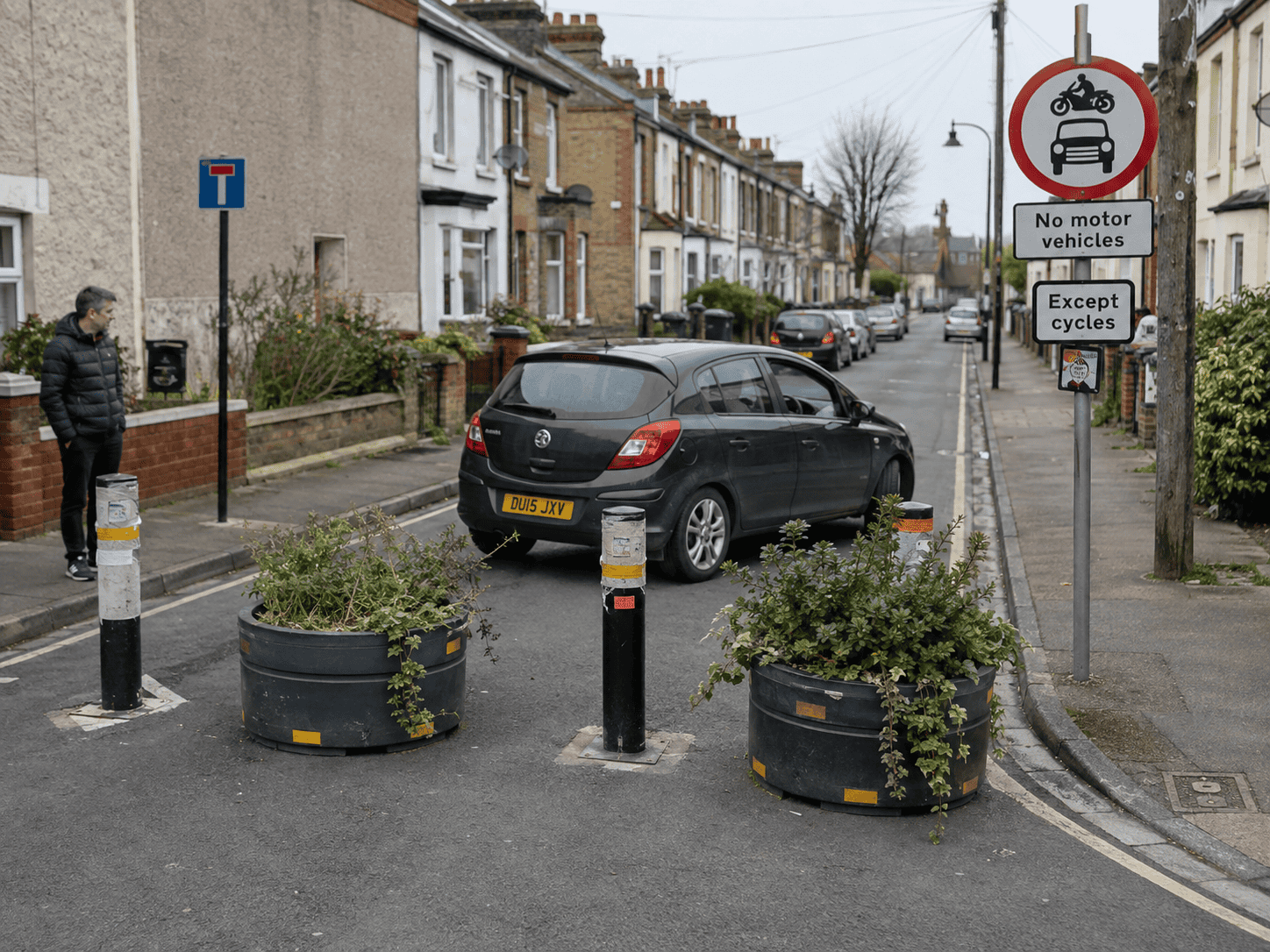
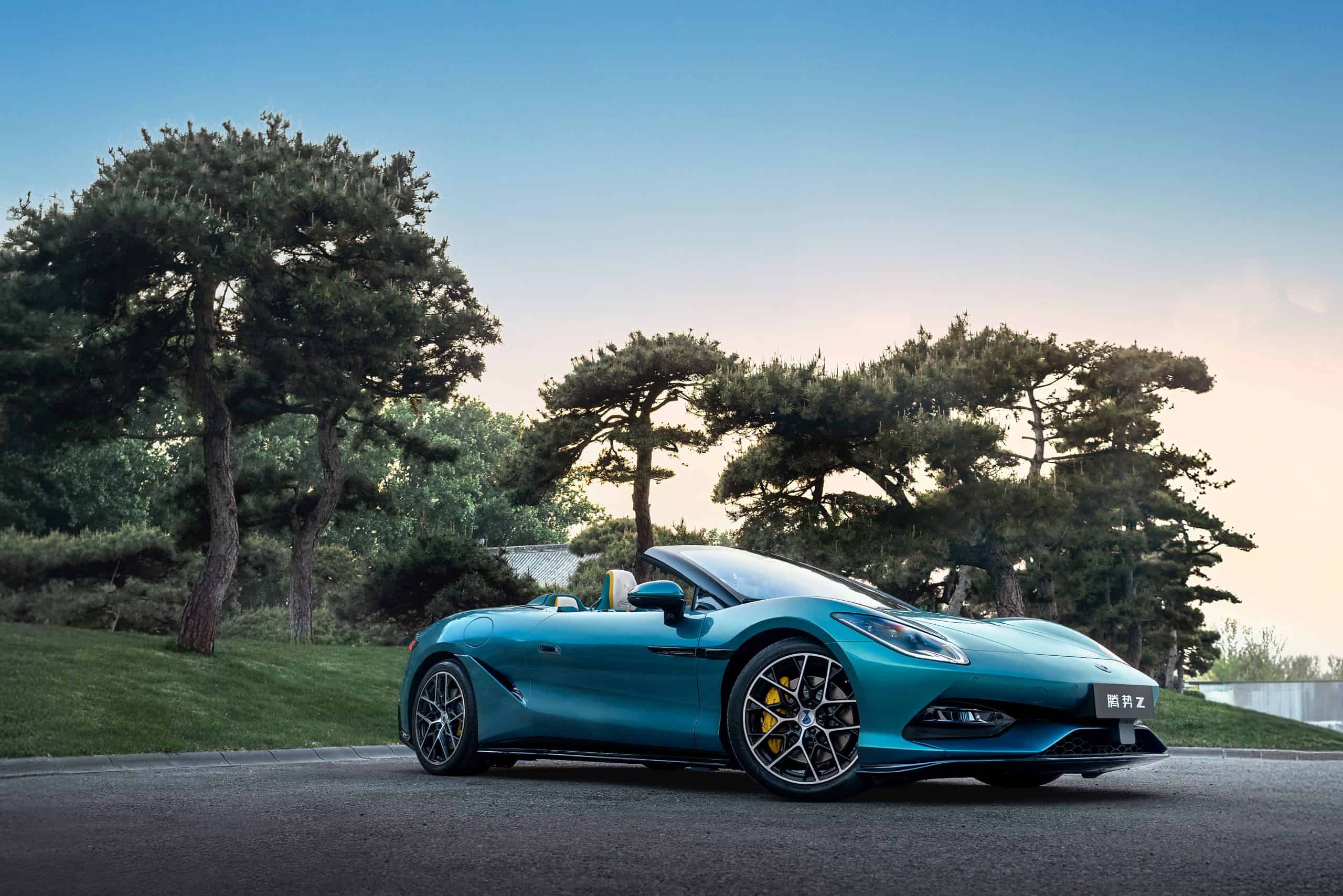
A Chinese manufacturer is about to do something that would have been unthinkable five years ago. This summer, at the Goodwood Festival of Speed, BYD’s premium brand Denza will globally launch a fully electric supercar with more than 1,000 horsepower, a 0-100 km/h time of under two seconds, and a production convertible variant with a retractable soft top. The Denza Z is not a concept. It is not a rendering. It is already lapping the Nurburgring Nordschleife, and it is heading to the UK for its first public appearance in final production form.
For the European supercar establishment, this is the moment the conversation changes. BYD is not a startup with a render and a promise. It is the world’s largest manufacturer of new-energy vehicles, with the scale, the battery technology, and the vertical integration to build and deliver a car like this at a pace that most legacy manufacturers cannot match. The Denza Z is BYD’s statement of intent at the very top of the market, a direct challenge to the million-dollar territory that has been the exclusive preserve of Ferrari, Lamborghini, McLaren and Porsche for decades.
BYD Executive Vice President Stella Li said: “The Beijing Auto Show is the perfect moment for BYD to demonstrate our innovative technologies and the difference they can make to our vehicles and our customers. On all our brands’ show stands, from BYD itself to FANGCHENGBAO, DENZA and YANGWANG, we have a line-up that shows how our commitment to research and development is leading the way not just in China, but globally. Breakthroughs like FLASH Charging will overcome the final barriers to the adoption of truly sustainable mobility, while exciting new models like our DENZA Z are ready to inspire fresh waves of customers around the world.”
The Numbers Are Designed To Shock
The headline figures leave very little room for ambiguity about where Denza is aiming. The Z produces more than 1,000 horsepower. It accelerates from 0 to 100 km/h in under two seconds. It is available in both coupe and convertible form, with the convertible shown in full production specification at the Beijing Auto Show this week, complete with a retractable soft-top roof.
For context, the Ferrari SF90 Stradale produces 986 horsepower and reaches 100 km/h in 2.5 seconds. The Lamborghini Revuelto makes 1,001 horsepower and manages 2.5 seconds. The Rimac Nevera, currently the fastest electric production car in terms of acceleration, produces 1,914 horsepower and hits 100 km/h in 1.81 seconds but costs north of £2 million. The Denza Z sits firmly in this performance bracket, though pricing has not yet been confirmed.
The chassis uses a magnetorheological body-control system that Denza calls DiSus-M, an electro-magnetic damping system engineered specifically to manage the forces generated by this level of performance. Magnetorheological dampers use fluid that changes viscosity in response to a magnetic field, allowing the suspension to adjust its firmness thousands of times per second. It is the same core technology used by Ferrari, Lamborghini and Aston Martin in their highest-performance models, though Denza’s implementation is its own in-house development.
The body architecture has been designed to deliver what Denza describes as a world-leading balance of rigidity, lightweight construction and packaging, with extensive use of carbon fibre. Aerodynamic ducts on the bonnet act as air channels to generate downforce at high speed, and the overall form follows what Denza calls a “Pure Emotion” design philosophy, blending carbon fibre with aerodynamic function to create a silhouette that is intended to compete visually with the best of European supercar design.
Already Testing At The Nurburgring
The Denza Z has already commenced testing and lap-record runs at the Nurburgring Nordschleife, the 20.8-kilometre circuit in Germany that has served as the ultimate proving ground for high-performance cars for decades. Denza has not yet published an official lap time, but the fact that the car is already running at the Ring in what appears to be a near-production configuration suggests that a time is coming, and that Denza is confident enough in the number to be pursuing it publicly.
A competitive Nurburgring time would be a significant statement. The fastest production cars around the Nordschleife include the Porsche 911 GT2 RS MR at 6:38, the Mercedes-AMG One at 6:35, and the Porsche 919 Evo, an unrestricted prototype, at 5:19. BYD’s performance brand Yangwang has already posted a 6:59 with the U9 Xtreme hypercar, making it the first Chinese production car to lap the Nordschleife in under seven minutes. If the Denza Z can improve on that time, it would place a BYD-built vehicle among the fastest production cars ever to lap the circuit.
The Goodwood Launch Is Deliberate
Choosing Goodwood Festival of Speed for the global launch is not accidental. Goodwood is the single most prestigious live automotive event in the UK, attended by hundreds of thousands of enthusiasts and covered by global media. It is the venue where manufacturers launch their most important performance cars, and where the hill climb provides a dramatic and public demonstration of capability that no auto show stage can replicate.
By bringing the Denza Z to Goodwood rather than launching it at a Chinese or Middle Eastern event, BYD is making a calculated statement about where it sees the car competing. This is not a vehicle aimed primarily at the Chinese domestic market. It is aimed at the global supercar buyer, and the UK is the stage chosen to make that case.
The timing also coincides with a period of intense scrutiny of Chinese automotive brands in Europe. BYD already sells the Atto 3, Seal, and Dolphin in the UK, and its market presence is growing rapidly. The Denza Z elevates the conversation from affordable electric transport to the absolute pinnacle of automotive performance, a segment where brand prestige, engineering credibility, and emotional appeal are everything. If the Z is taken seriously at Goodwood, it changes the perception of what Chinese manufacturers are capable of far more effectively than any number of competitively priced family hatchbacks.
BYD’s Battery Technology Underpins The Whole Thing
What separates BYD from most supercar manufacturers is that it makes its own batteries. The Denza Z uses BYD’s second-generation Blade Battery, the company’s lithium iron phosphate cell technology that has been refined across millions of vehicles in BYD’s broader lineup. Blade Battery cells are known for their thermal stability, safety in puncture tests, and long cycle life, though they have traditionally been associated with lower energy density than the nickel-based cells used by most premium EV manufacturers.
The second-generation version is claimed to address that density gap while retaining the safety and longevity characteristics that made the original Blade Battery one of the most widely deployed EV cells in the world. Paired with BYD’s FLASH Charging technology, which the company claims enables extremely rapid charging across its latest models, the Z should offer practical usability alongside its performance figures, though specific charging times and range figures for the Z have not yet been published.
This vertical integration is a significant competitive advantage. Ferrari and Lamborghini buy their battery cells and electric motor technology from suppliers. Porsche develops some components in-house but relies on partners for others. BYD designs and manufactures its own cells, its own electric motors, its own power electronics, and its own vehicle management software. That level of control over the entire powertrain gives BYD the ability to optimise every element of the system as a single integrated package rather than assembling components from multiple suppliers.
A Convertible Supercar In A Segment That Barely Has Any
The decision to launch the Z with a production convertible from the outset is a bold move. The electric supercar segment has been almost exclusively focused on coupe body styles. The Rimac Nevera is a coupe. The Lotus Evija is a coupe. The Pininfarina Battista is a coupe. Open-top electric supercars remain exceptionally rare, partly because of the structural challenges of accommodating a heavy battery floor without a fixed roof to provide rigidity, and partly because the segment is so new that most manufacturers have focused on getting the coupe right first.
Denza launching both versions simultaneously, and choosing the convertible as the car shown at Beijing in full production trim, suggests confidence in the structural engineering and a belief that the convertible will be the more desirable variant in the markets the Z is targeting. In the Middle East, Southern Europe, and California, where a significant proportion of million-dollar supercars are sold, an open-top option is often the preferred choice. Having it available from day one rather than as a later derivative gives the Z an advantage that most electric rivals cannot currently offer.
What We Do Not Know Yet
The Denza Z remains light on confirmed specifications beyond the headline figures. Range, exact battery capacity, charging times, weight, pricing, and the full list of markets where it will be sold have not been published. Denza has stated that further technical specifications and a comprehensive sales rollout schedule will be issued in due course.
Pricing will be critical in determining how the Z is perceived. If it lands in the region of £500,000 to £1 million, it competes head-on with established European supercars where brand heritage and resale value carry enormous weight. If it undercuts them significantly, it becomes a disruptive proposition that forces the entire segment to reconsider what performance can be delivered at a given price point. BYD’s manufacturing scale and vertical integration theoretically allow it to price aggressively, but the premium supercar market has never been about cost efficiency. It is about desirability, exclusivity, and the emotional connection a buyer feels to the brand and the car.
Whether the Denza Z can generate that emotional connection with European buyers, who have grown up with Ferrari, Porsche and Lamborghini as the benchmarks of automotive aspiration, is the question that Goodwood will begin to answer. The performance is there on paper. The technology is credible. The engineering pedigree, through BYD’s battery expertise and Yangwang’s Nurburgring record, is legitimate. What remains to be seen is whether a supercar from a Chinese brand can make someone feel the same thing when they look at it, sit in it, and drive it as the cars it is setting out to replace.
That question will start to be answered on the hill at Goodwood this summer. The European supercar industry will be watching closely.

Leave a Comment
More in News

Are There Warning Signs Before a Cam Belt Breaks? Usually One, and It Is Not the Belt

Fife and Dundee Cars Fail 38.6% of First Attempt MOTs, Nearly Double Sutton’s 20.3%

How to Tell If Rust Will Fail Your MOT (and What a Repair Costs)

Why Your Car Clicks But Won’t Start (and What to Do)
Diesel Drivers Pay £31 More Per Tank Than a Year Ago, DESNZ Data Shows
Trending on Motoring Chronicle
How to Tell What Your Exhaust Smoke Colour Means (and When to Worry)
Why NHTSA Just Opened a Federal Probe Into Tesla’s Driverless Cybercab
How to Check if Your Car Still Has a Deadly Takata Airbag
Can You Still Pass? Mandatory Eye Tests for Over-70 Drivers Are Closing In