Not Ready For An EV? Volkswagen’s New Full Hybrid Golf Might Be The Middle Ground Most Drivers Actually Want


Volkswagen has announced a new full hybrid powertrain for the Golf and T-Roc that slots neatly into the gap most car buyers are currently stuck in. It runs on electric power at low speeds and around town. It does not need a charging cable, a wallbox, or any charging infrastructure at all. It uses less fuel than the current mild hybrid models. And it costs less to buy than the plug-in hybrid versions. For the large number of UK drivers who want better fuel economy and lower emissions but are not ready to commit to a full EV or deal with the hassle of plugging in a PHEV, this could be exactly the drivetrain they have been waiting for.
The new Golf Hybrid and T-Roc Hybrid are scheduled to arrive in the UK in the fourth quarter of 2026. UK specification, pricing and trim levels have not yet been confirmed, but the technical details revealed at the International Vienna Motor Symposium this week give a clear picture of what Volkswagen is offering and how it differs from the hybrid options already in the range.
Where It Sits In The Lineup
Volkswagen currently offers two levels of electrification in the Golf. The eTSI models use a mild hybrid system that provides a small efficiency boost but cannot drive on electric power alone. The eHybrid and sporty GTE models are plug-in hybrids with larger batteries that offer meaningful electric-only range but need regular charging to deliver their best efficiency figures. If you never plug in a PHEV, it is essentially a heavier, more expensive petrol car.
The new full hybrid sits between the two. It can drive on electric power alone in the situations where it helps most, primarily around town and at low speeds, but it generates all of its electrical energy on board through recuperation and by using the petrol engine as a generator. There is no plug. There is no reliance on external charging infrastructure. The car manages its own energy balance internally.
For buyers who liked the idea of a plug-in hybrid but knew they would never actually plug it in, the full hybrid offers the honest version of that proposition. It delivers a higher proportion of electric driving than a mild hybrid, with lower consumption and emissions, without asking the driver to change any part of their daily routine.

How The System Works
The technical layout is more sophisticated than a conventional full hybrid. The system is built around a 1.5-litre TSI evo2 turbocharged petrol engine, two electric motors, a 1.6kWh lithium-ion battery, and a hybrid module that packages the drive motor, generator, power electronics, differential, a single-speed gearbox and an electronically controlled multiplate clutch into one unit. The battery sits in the vehicle floor at the rear.
The two electric motors serve different purposes. One is the drive motor, responsible for propelling the car on electric power alone or assisting the petrol engine when extra performance is needed. The second acts as a generator, converting energy from the petrol engine or from recuperation during braking and coasting into electricity to keep the battery topped up.
The system operates in three modes, switching between them automatically based on driving conditions.
In pure electric mode, the petrol engine switches off entirely and the car runs on the drive motor alone. This happens at low speeds, when pulling away from a standstill, and in stop-start urban traffic. The result is quiet, smooth, zero-emission driving in exactly the conditions where a petrol engine is at its least efficient and most wasteful.
In serial mode, the electric motor continues to drive the wheels, but the petrol engine starts up to power the generator, which feeds electricity to the drive motor and tops up the battery. The key detail is that the petrol engine is mechanically decoupled from the wheels in this mode. It is not driving the car. It is running in its most efficient operating window purely to generate electricity. This is the same principle used by range-extender EVs, and it means the petrol engine only ever runs at the revs and load where it burns the least fuel per unit of energy produced.
In parallel mode, which activates from around 37mph on faster roads and motorways, the petrol engine reconnects to the wheels and becomes the primary power source. The electric motor supports it as a booster during acceleration, overtaking, or any situation where extra torque is useful. At steady motorway speeds, the petrol engine runs efficiently on its own with the electric system recovering energy during any deceleration.
The transitions between these three modes are managed automatically. The driver does not need to select or think about which mode is active. The system reads the driving conditions and chooses the most efficient configuration moment to moment.
Three Driving Profiles Give Some Control
While the mode switching is automatic, the driver can choose between three profiles that adjust how aggressively the system prioritises efficiency or performance.
Eco mode limits maximum system output to 70 per cent and disables the boost function, prioritising the lowest possible energy consumption. For commuting, school runs and urban driving, this is the setting that will deliver the best fuel economy figures.
Comfort mode removes the power restriction and enables the boost function, giving full system output when needed while still allowing the automatic mode switching to manage efficiency. This is likely to be the default setting for most drivers in most situations.
Sport mode changes the strategy more fundamentally. The system switches to serial mode earlier, keeping the battery topped up and the electric motor ready to deliver full power on demand. The result is quicker throttle response and more immediate acceleration, with the petrol engine running more frequently to keep the electrical reserves high.
Why This Approach Could Appeal To More Buyers Than A PHEV
The plug-in hybrid has a well-documented credibility problem. In theory, a PHEV like the Golf eHybrid offers the best of both worlds, with enough electric range for daily driving and a petrol engine for longer trips. In practice, studies have repeatedly shown that many PHEV owners rarely or never plug in, which means they are driving a car that is heavier, more complex and more expensive than a standard petrol model while achieving worse fuel economy than the manufacturer’s headline figures suggest.
The full hybrid sidesteps that problem entirely. Because it generates its own electrical energy, its real-world efficiency does not depend on driver behaviour or access to a charger. The fuel consumption figures you see on the spec sheet should be much closer to what you actually achieve on the road, because the system is designed to work autonomously rather than relying on an external energy source that the driver may or may not use.
For company car drivers, the tax implications will depend on where HMRC categorises the full hybrid in the Benefit in Kind bands. PHEVs with sufficient electric range currently benefit from lower BIK rates, and a full hybrid with a 1.6kWh battery will not qualify for the same treatment. For private buyers paying for their own fuel, the real-world consumption advantage over a mild hybrid could be the more relevant comparison.
Two Power Outputs Are Planned
Volkswagen has confirmed that the full hybrid system will be offered in two output levels, though specific power and torque figures for each variant have not yet been published. Given the 1.5 TSI evo2 base engine and the dual-motor hybrid module, the system outputs are likely to be competitive with the current mild hybrid and plug-in hybrid models in the Golf range.
The Golf and T-Roc are the first models confirmed for the new powertrain, which makes sense given their status as two of Volkswagen’s highest-volume products globally. If the system proves successful, expansion to other models in the range, potentially including the Tiguan and Passat, would be a logical next step.
What We Are Waiting For
UK pricing is the key missing piece. The full hybrid needs to be priced meaningfully below the plug-in hybrid to make the consumer case convincing. If it lands too close to eHybrid money, buyers will question why they would choose a system with a smaller battery and no plug-in capability. If it sits just above the eTSI mild hybrid with a noticeable improvement in real-world fuel economy, it becomes a straightforward upgrade for the majority of Golf and T-Roc buyers who want better efficiency without changing their habits.
Volkswagen has described the cars shown this week as near-production concept vehicles, meaning the final specification may differ slightly from what has been presented. UK trim levels, equipment and options will be confirmed closer to the Q4 2026 launch date.
What is already clear is that Volkswagen has identified a gap in the market that neither mild hybrids nor plug-in hybrids have successfully filled. The full hybrid Golf and T-Roc promise better efficiency than the former and more honest real-world economy than the latter, without asking buyers to install a charger or change the way they use their car. For the millions of UK drivers who are not ready for an EV but want to do better than a conventional petrol engine, this could be the most practical answer yet.

Leave a Comment
More in News
How to Land the Biggest July 4 Car Deals on 850,000 Unsold 2025 Models
Electric Cars Cost 42 Percent More to Insure Than Gas Models, New Data Shows
Tesla Sued and Federally Probed After a Model 3 Killed a Woman Inside Her Home

Driving Test Waits Range From 5 to 24 Weeks in New DVSA Centre Data
Why Your New Car Keeps Showing the Wrong Speed Limit (and What to Do)
Trending on Motoring Chronicle

What the UK’s First Laughing Gas Breathalyser Means for Drivers This Summer
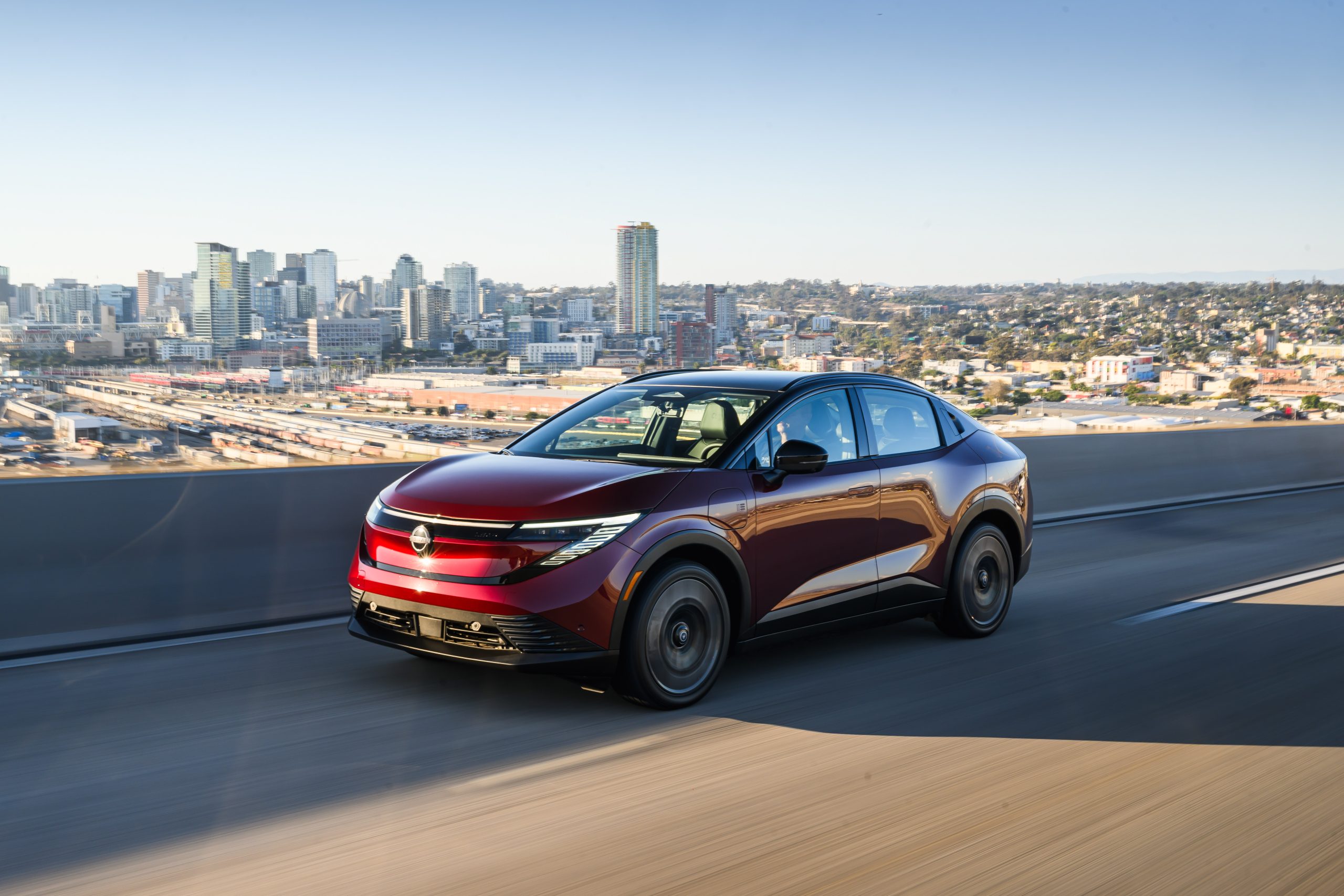
All-new 2026 Nissan LEAF wins 2026 MotorWeek Drivers’ Choice Award for Best EV

Government Orders a Review Into Public EV Charging Costs After a 38 Percent Price Rise

The Easiest and Hardest Places to Pass Your Driving Test in Britain Revealed