
Suzuki e Vitara review: Affordable debut EV ticks lots of boxes


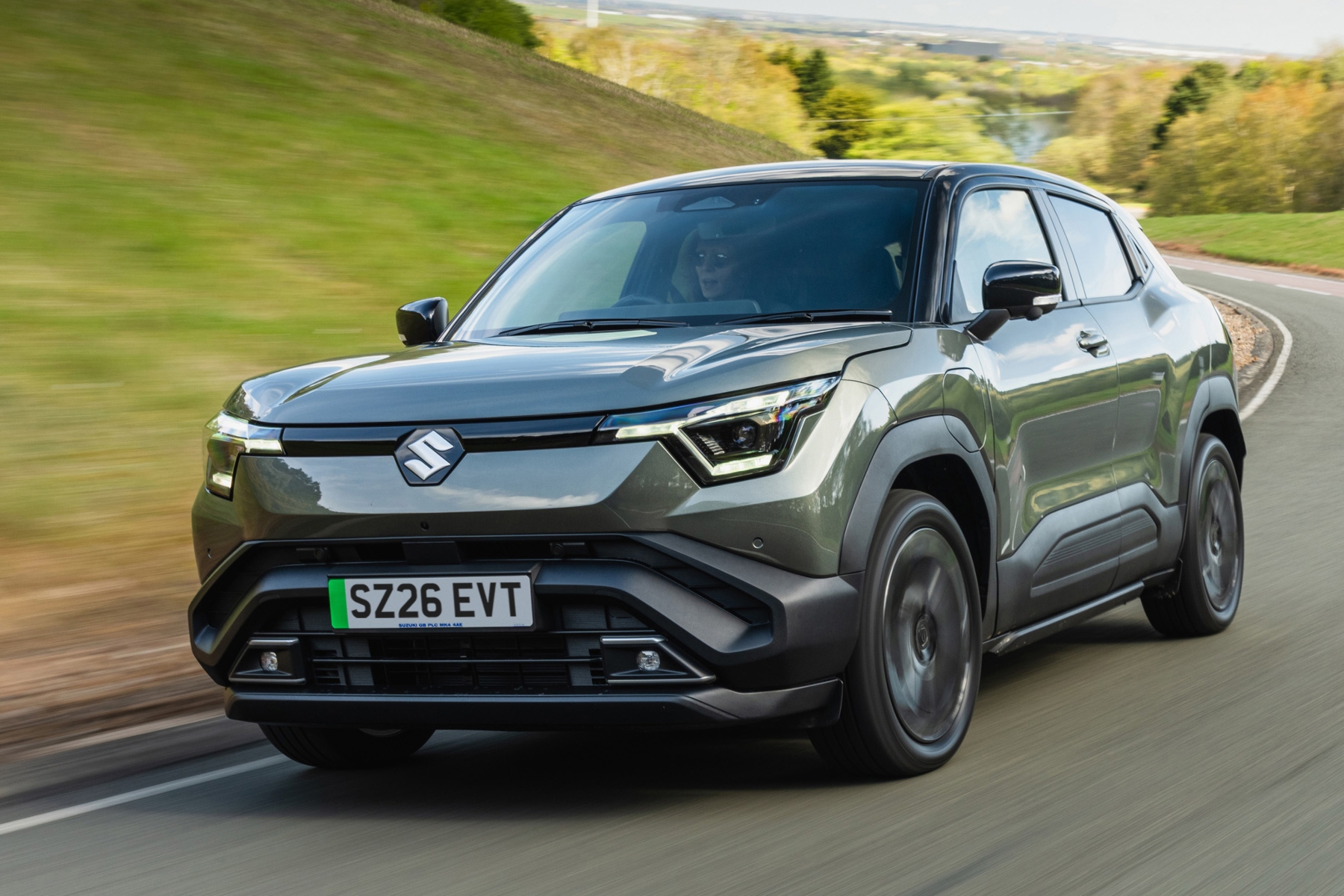
We get to grips with the Suzuki e Vitara – the Japanese brand’s first 100% electric car
It’s fair to say that Suzuki is a little late to the EV party here in Europe with the launch of its first all-electric vehicle.
However, it makes more sense when you look at the company’s global sales. ‘Maruti Suzuki’ dominates the Indian market, for instance, with a 53% share of the passenger vehicle market.
India isn’t exactly leading the charge when it comes to EV sales, so Europe is likely to be a significant market for the Suzuki e Vitara compact SUV.
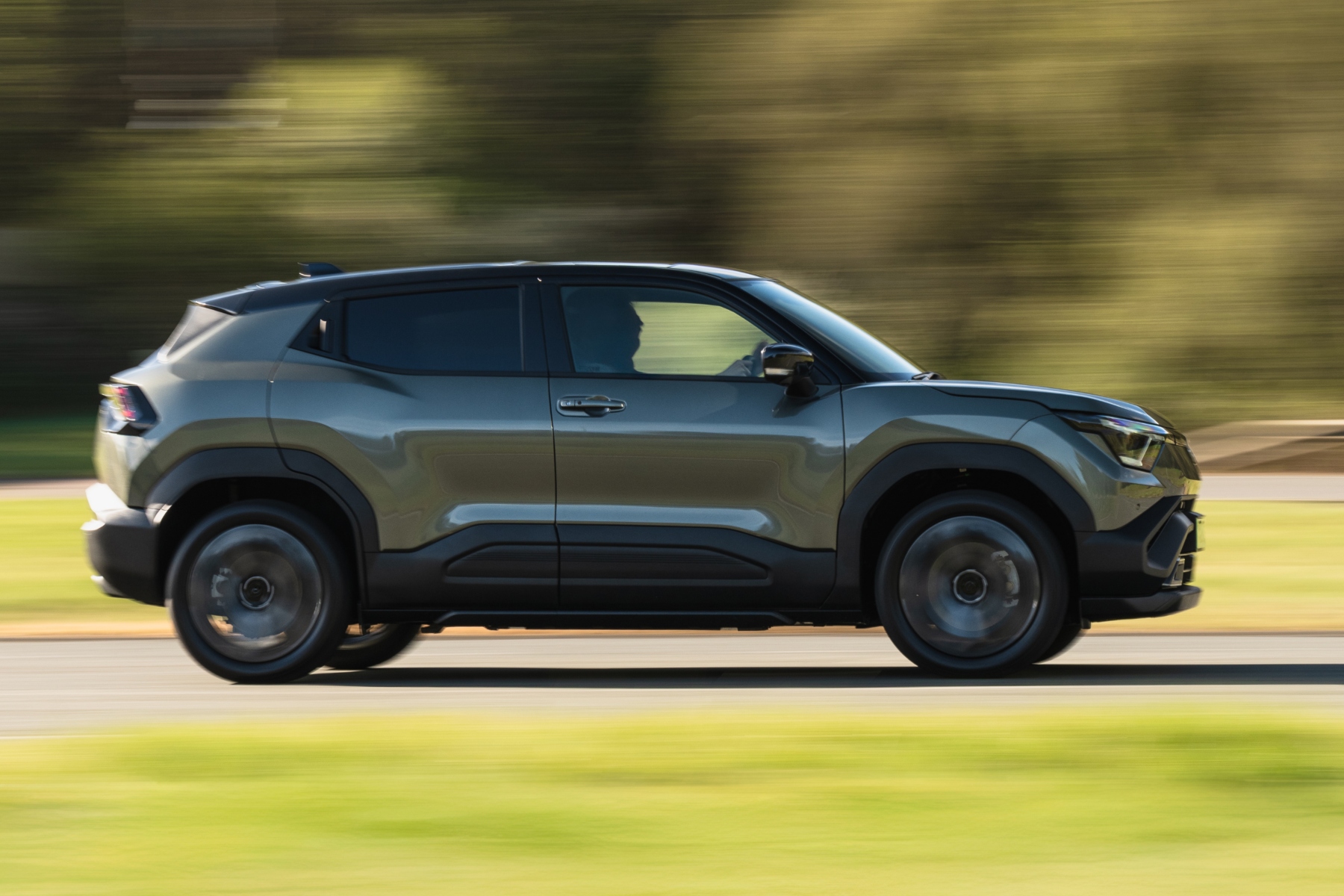
You’d be right in thinking that the e Vitara looks familiar, because it was developed alongside the Toyota Urban Cruiser. The pair are much the same and are both built on a Suzuki production line in India.
The e Vitara’s USP is that it’s available both with front-wheel drive and as a 4×4 (AllGrip, or now eAllGrip, in Suzuki speak), whereas the Toyota only gets FWD.
The e Vitara also builds on Suzuki’s SUV heritage and, of course, shares its name with the popular Vitara.
Designed to meet the growing demand for compact SUVs that are affordable, practical and easy to live with, the e Vitara is up again stiff opposition from the likes of the Jeep Avenger, Kia EV3, Skoda Elroq, Ford Puma Gen-E and Toyota Urban Cruiser.
Then there are the many Chinese newcomers such as the BYD Atto 3, Geely EX5, Leapmotor C10 and MG4 Urban.
The entry-level Suzuki e Vitara uses a 49kWh battery mated to a 142bhp electric motor powering the front wheels. Then there’s a 61kWh battery and motor combo developing 172bhp. At the top of the range, a 180bhp dual-motor version (the car I tested) gets a 61kWh battery and all-wheel drive.
The 49kWh can accelerate from 0-62mph in 9.6 seconds, while the 61kWh (FWD) is a little swifter (8.7s), but it’s the all-wheel drive 61kWh that’s the fastest with a sprint time of 7.4 seconds.
The FWD with the bigger battery is expected to be the biggest seller, offering 264 miles of range and efficiency of 4.1m/kWh. The smaller battery manages a claimed 213 miles of range and similar efficiency (4.2 m/kWh)
All versions charge at a relatively sedate 70kW and take 45 minutes for a 10-80% boost, but they do get an energy-saving heat pump as standard.
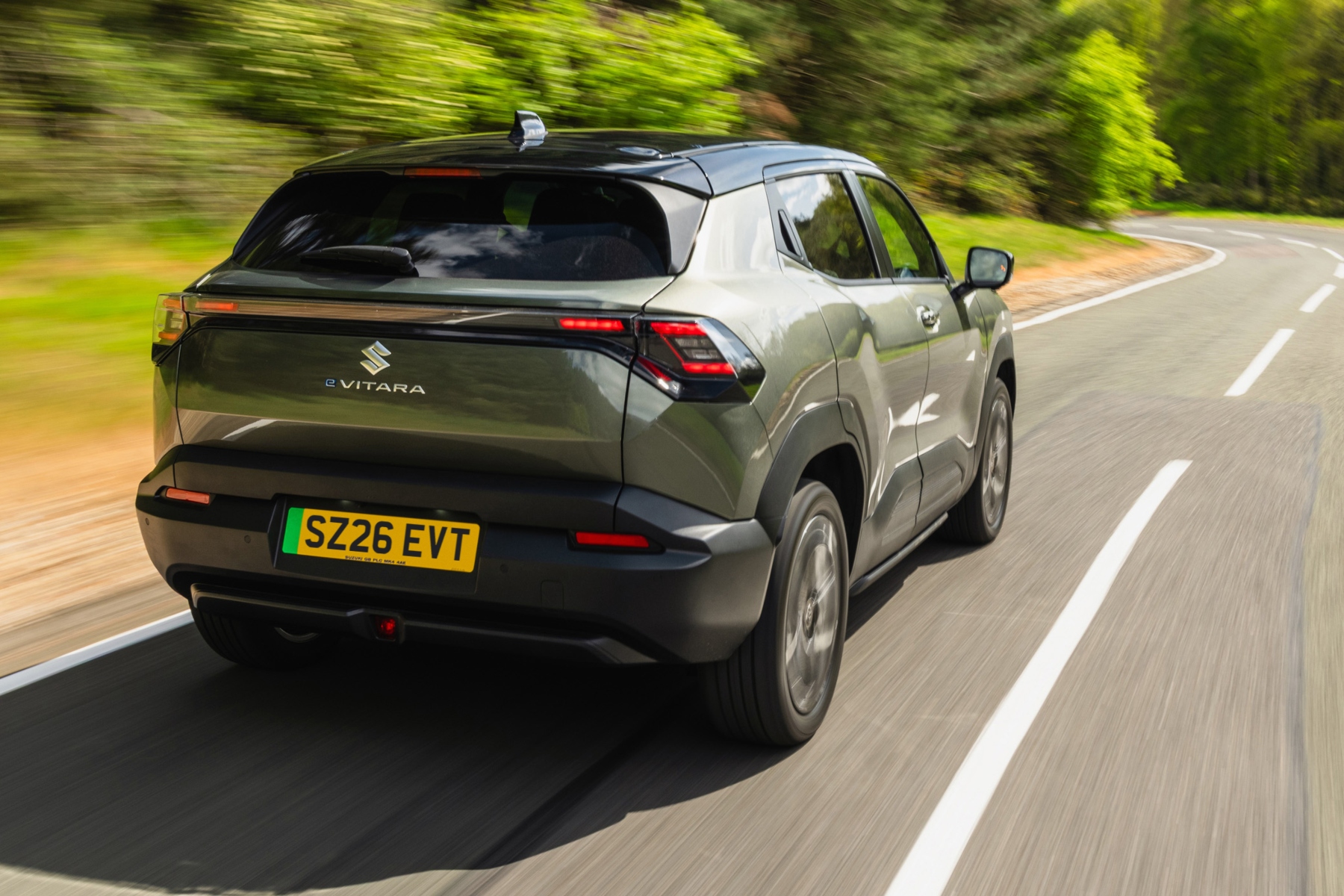
Starting at £26,249 (including a £3,750 Suzuki discount), the five-door crossover is certainly competitively priced, and looks the part with chunky SUV styling, square-shaped wheel arches, plastic body mouldings and a purposeful stance.
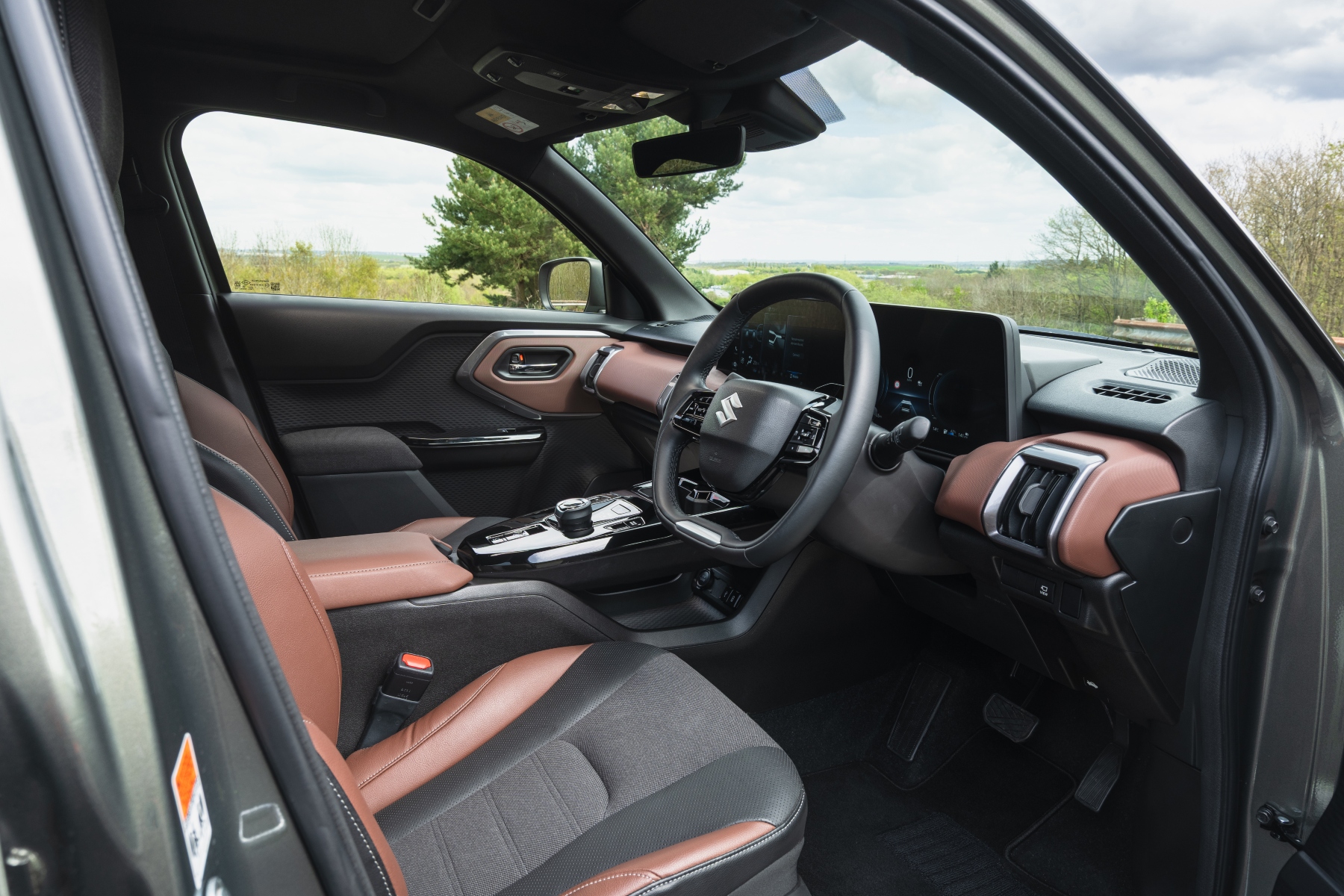
Inside, the packaging exploits the car’s long wheelbase to provide a surprisingly spacious interior, complete with commanding driving position and a clever sliding rear seat system which gives rear passengers extra room.
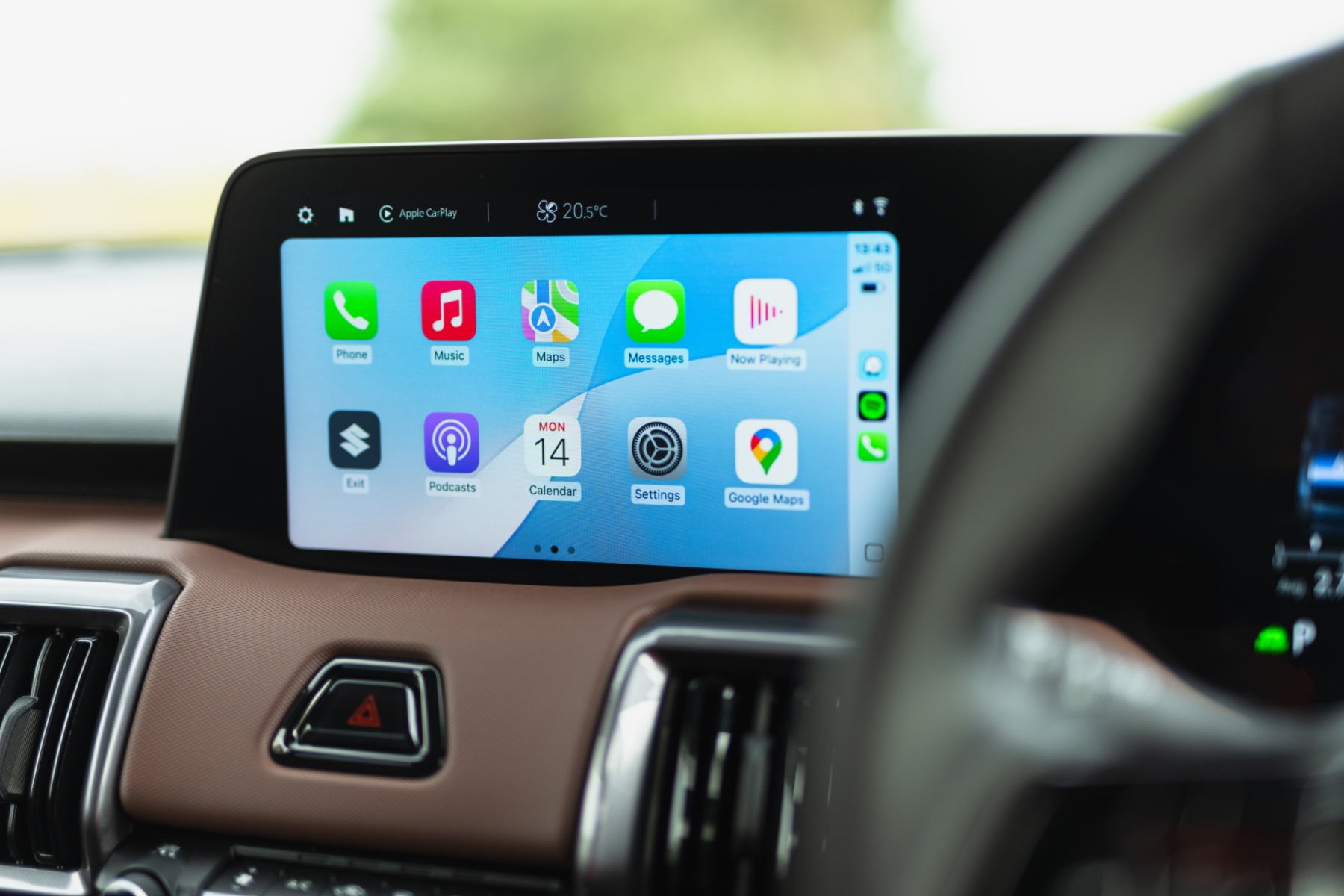
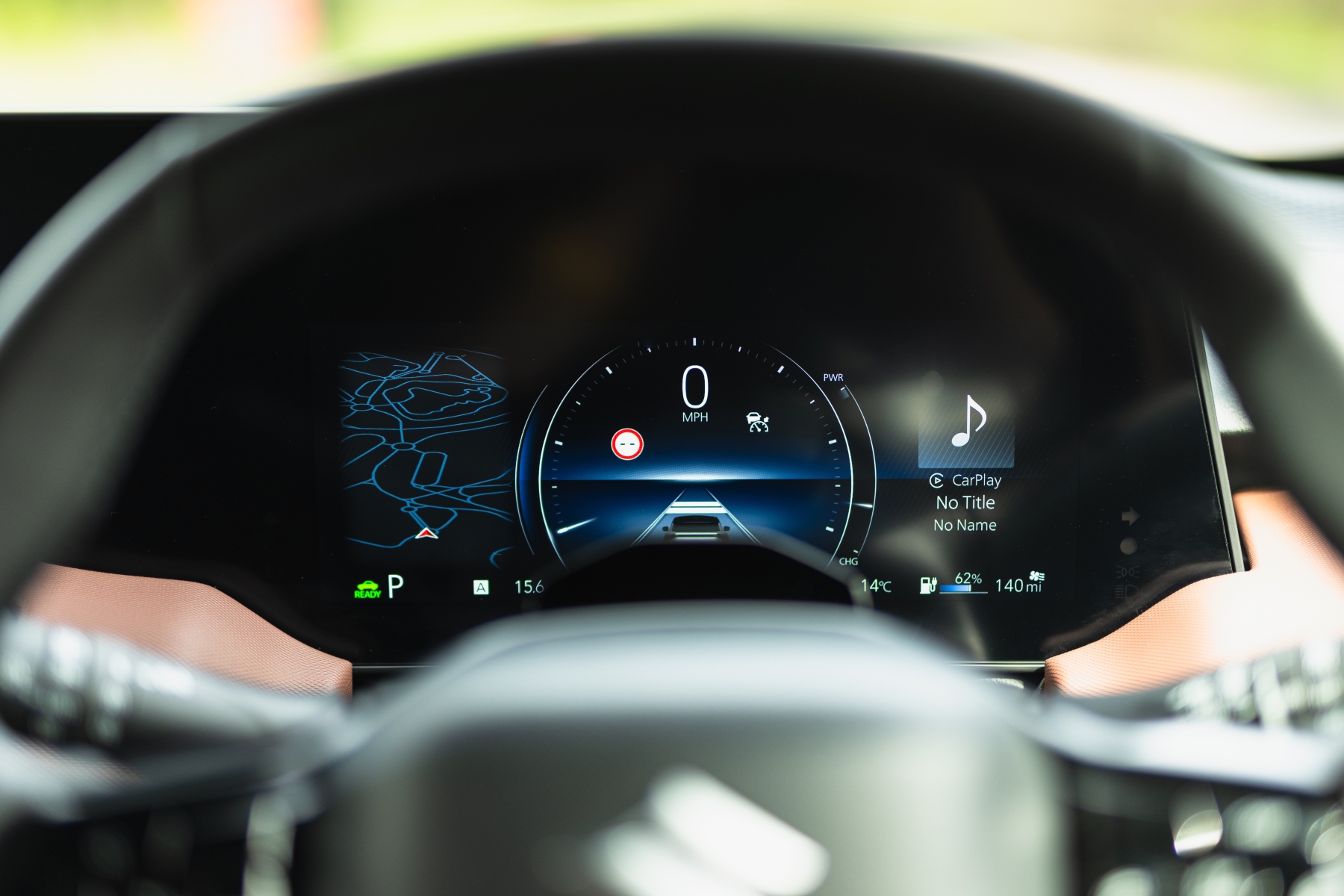
Up front it gets a 10.1-inch infotainment touchscreen and, a 10.25-inch digital driver’s display.
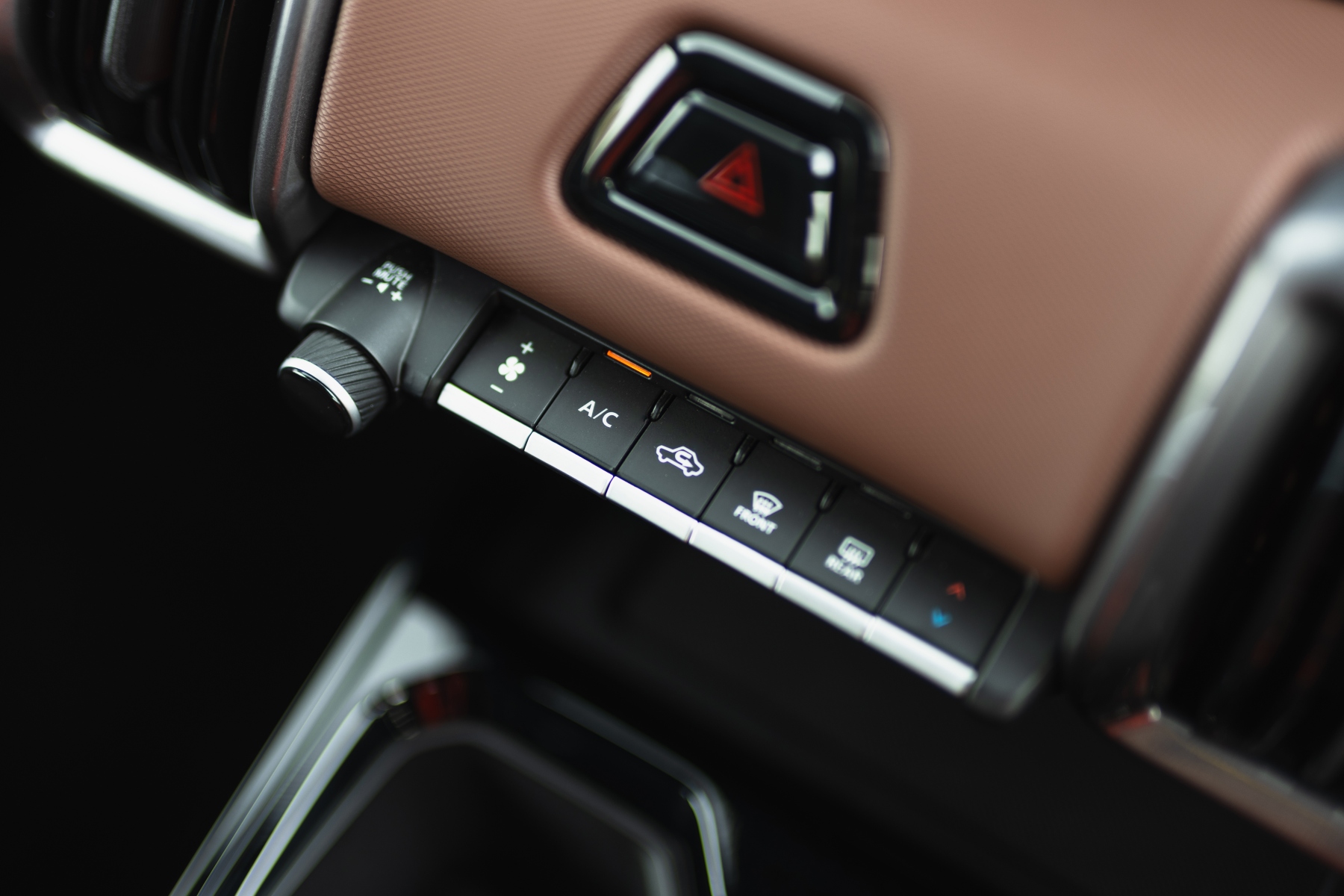
The touchscreen is a big improvement on Suzuki systems of the past, but still a little laggy compared to some rivals. On the plus side, there are physical controls below for essentials such as climate control and volume, so much safer than the minimalist offerings from some rivals.
Safety and driving assistance tech includes a blind spot monitor, rear-view camera, adaptive cruise control, and road sign recognition.
While it’s hard to fault the e Vitara’s overall build quality and the pleasing clunk from the doors, the interior materials used are nothing to get excited about with soft-touch surfaces in short supply. Let’s just say that Suzuki has prioritised durability over plushness.
Thankfully, the cabin redeems itself when it comes to space. There’s plenty of legroom up front, and at the back, though rear passengers over 6ft might struggle for headroom.
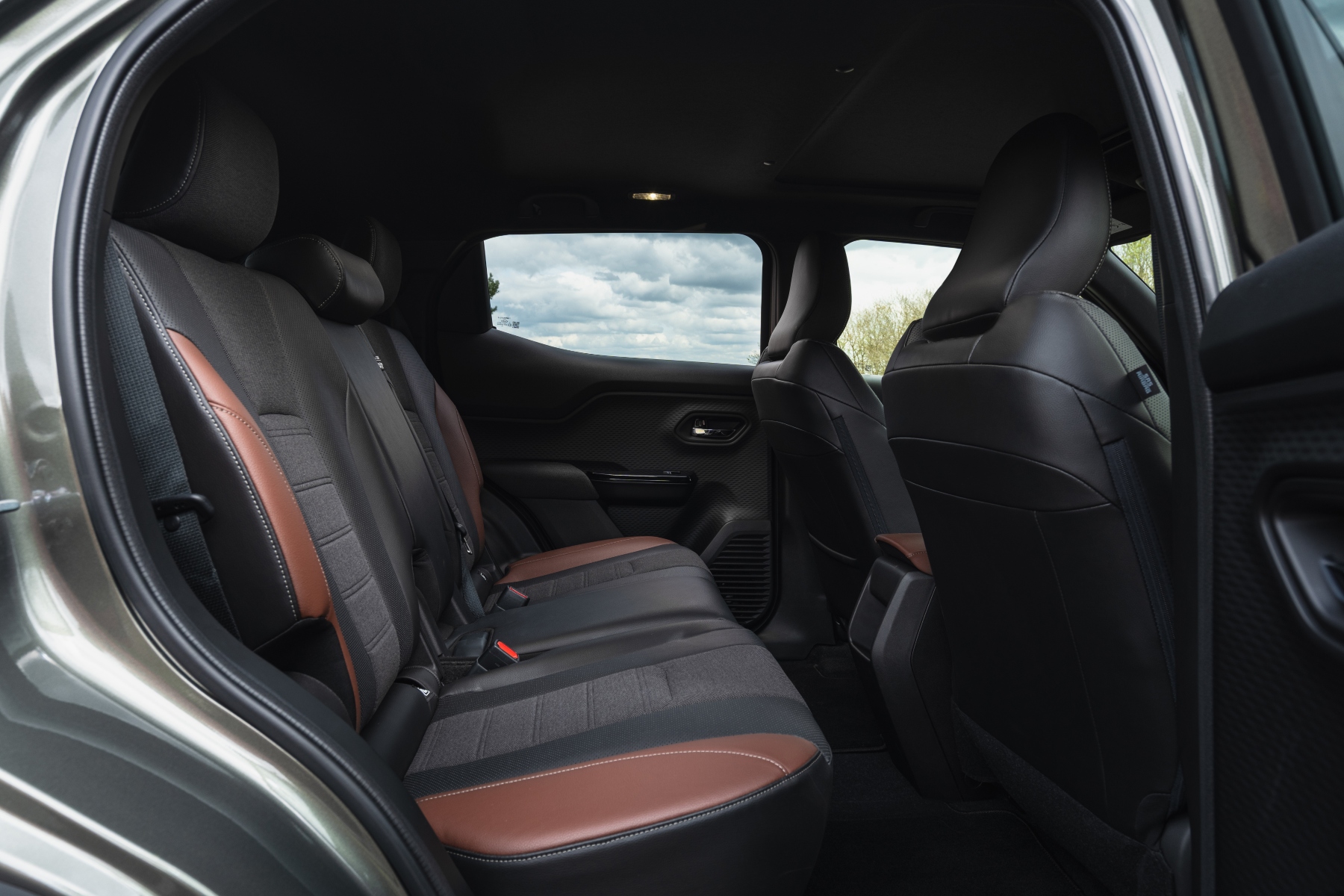
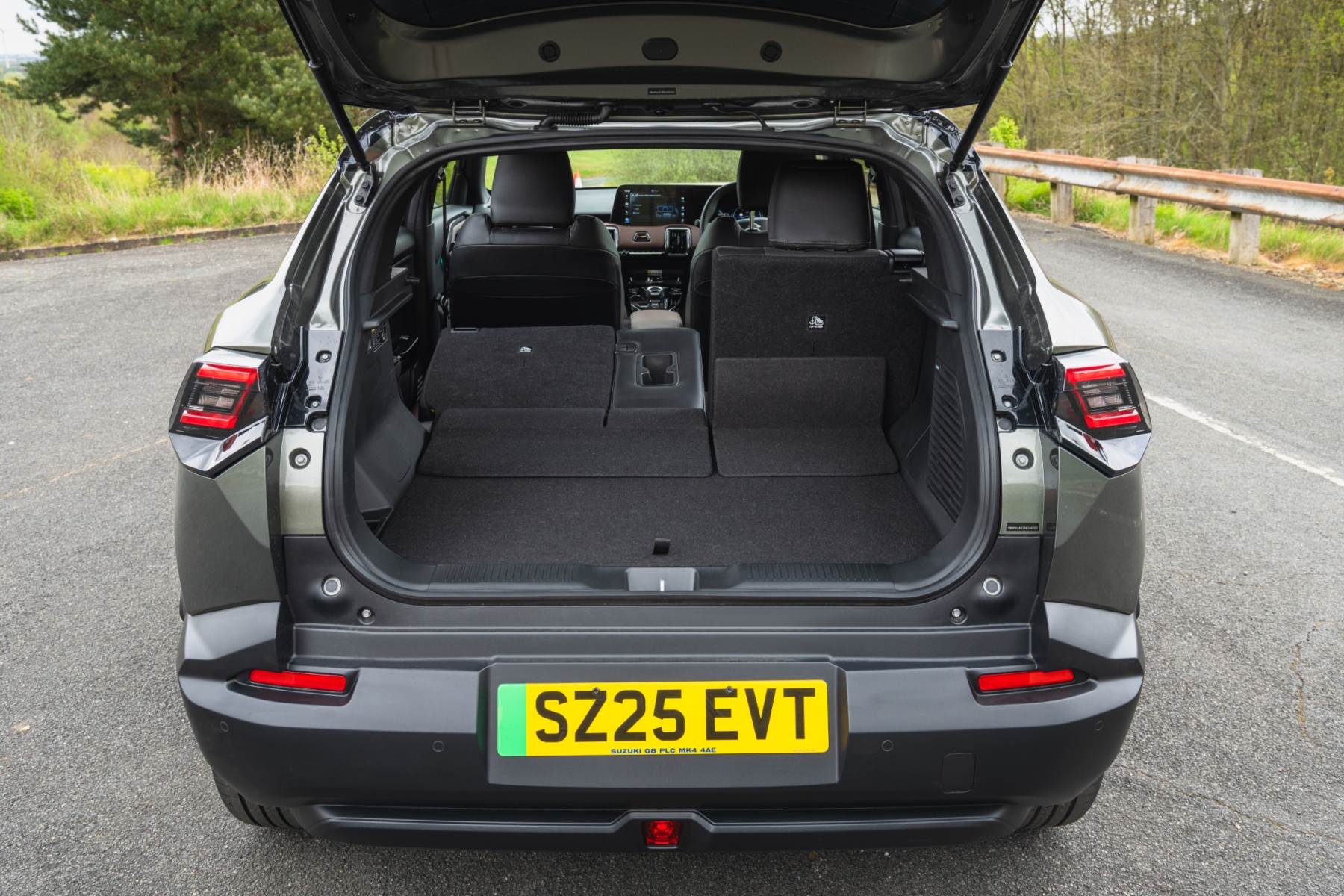
The 244-litre boot capacity isn’t exactly class-leading, so it’s just as well the 40:20:40 split folding rear bench can slide forwards to increase the capacity to 310 litres – and folds flat to offer a 562-litre volume.
All-round visibility is good and the driving position will suit most, though I’d like the option to sit a little lower.
On the road, the Suzuki e Vitara is easy to drive, and smooth and refined for the most part. However, the suspension set-up is on the stiff side, so it does have a tendency to thud over poorer surfaces.
The steering is light and direct, and the tight 10.4-mtre turning circle means that manoeuvring is a doddle.
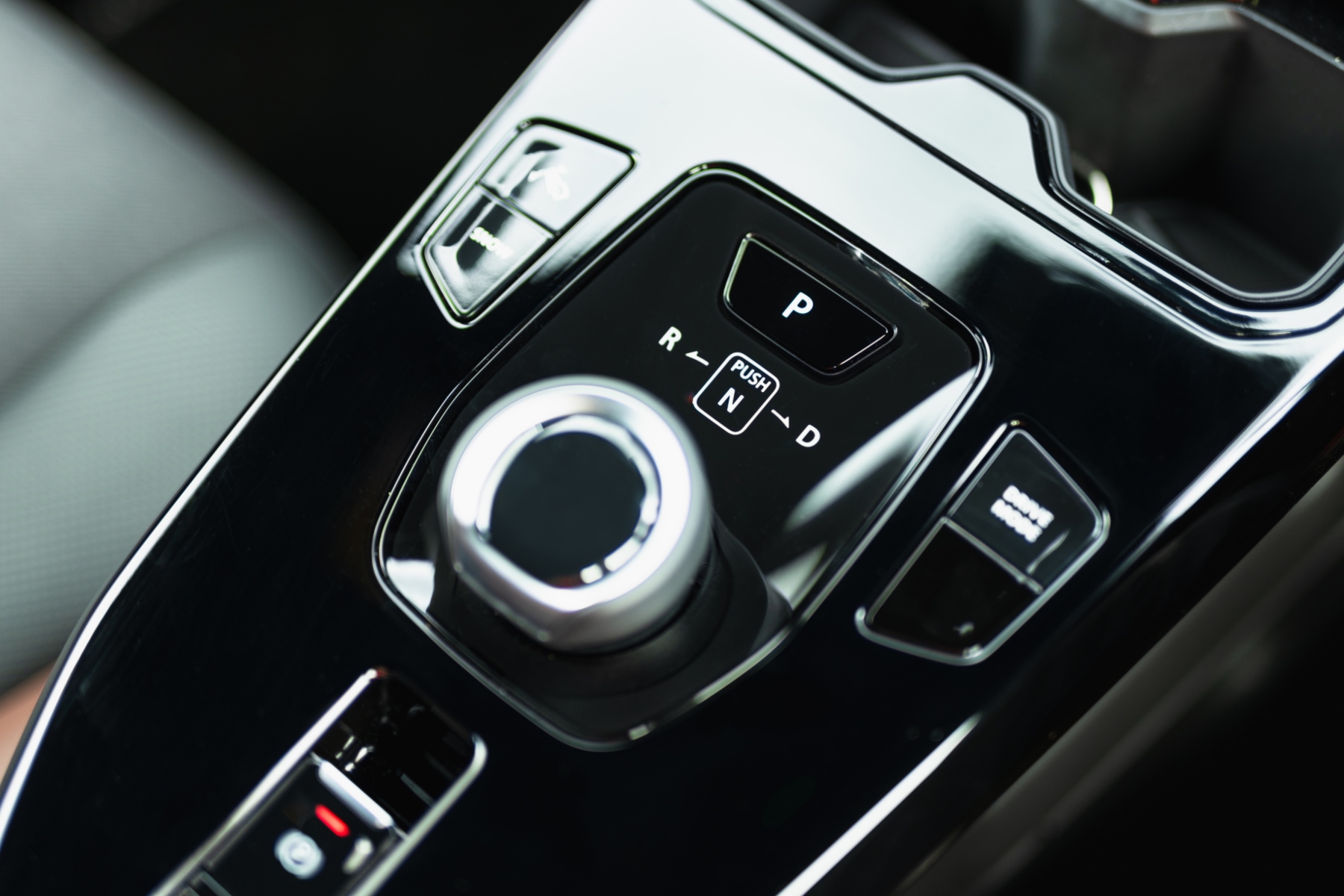
There are four primary drive modes (Eco, Normal, Sport, Snow), though the AWD gets Trail too. I didn’t get to test it off-road, but it should be able to get you out of a muddy field, but you’d need more ground clearance for properly tough terrain.
As you’d expect, it’s quick off the line, but it’s also agile – inspiring confidence to push on. What’s more, it manages to stay fairly flat in more challenging corners and there’s ample grip.
As ever, Normal delivers the best blend of performance and efficiency, Sport is fun for short bursts, and Eco dulls the driving experience.The brakes are progressive and there are three levels of regenerative braking available – it’s just a shame that there aren’t adjustment paddles behind the steering wheel.
On paper, the driving range of the 61kWh e Vitara I tested is 245 miles. I’d need a week to estimate the rear-world range, but I suspect it’s closer to 200 miles.
Suzuki also quotes a 326-mile city driving range, and though that seems optimistic, if most of your driving is in an urban environment, you will squeeze more miles out of the battery.
So, while some rivals have bigger batteries and a faster charging capability, the e Vitara does come with a considerable amount of peace of mind, especially if you’re planning to hold onto the car or buy one second-hand further down the line.
Apart from Suzuki’s award-winning customer service and reliability record, the e Vitara gets a basic three-year, 60,000-mile warranty, but customers can get up to 10 years or 100,000 miles of warranty by getting their cars serviced annually at a Suzuki dealership.
What’s more, the battery pack is also covered for 10 years, or up to 100,000 miles, with the same caveat.
That said, unless you need four-wheel drive, you’re better off with the 61kWh front-wheel drive which is cheaper and offers more range.
Verdict: The family-friendly Suzuki e Vitara is an honest and likeable first-effort EV. Well equipped, comfortable, easy to drive, solid and durable, it represents good value for money. It’s also available with all-wheel drive, which should appeal to customers out in the sticks, ready to make the switch to 100% electric.
Review in association with AutomotiveBlog

Leave a Comment
More in News

What NHTSA’s Tesla Robotaxi Petition Over School Zone Speeding Means for You

Why Hyundai Is Telling 94,622 Genesis Owners to Park Outside

BMW Owners Have One Day Left to Claim This Shark Fin Antenna Payout
Car Insurance Prices Are Falling for the First Time in Years, Federal Data Shows

Honda Civic Hybrid Gains S+ Shift Tech and New Sport Grade from £34,325
Trending on Motoring Chronicle

Liverpool Council Fines Nearly 3,000 Drivers as New Traffic Cameras Go Live

Why Are My Tyres So Loud All of a Sudden?
How to Check Your Car Lights Before Winter (and Avoid a £100 Fine)
Special livery package for 911 GT3 celebrates 50th anniversary of ANDIAL [Photo Gallery]
