
Avoidable Driving Mistakes That Double Your Risk After Dark


Night driving accounts for a mere 25 percent of all road travel while causing nearly 50 percent of fatal collisions. Safety data from NHTSA and RoSPA point to a lethal combination of reduced visibility, driver fatigue, and impaired depth perception as the core causes. Many of these incidents come from eight common and entirely avoidable mistakes, from overdriving the reach of your headlights to neglecting the slow buildup of grime on your windscreen. Knowing how human vision changes in low light, and acting on that knowledge before each trip, is what separates a confident night driver from a statistic.
Why Night Driving Is Three Times More Dangerous Than Driving in Daylight
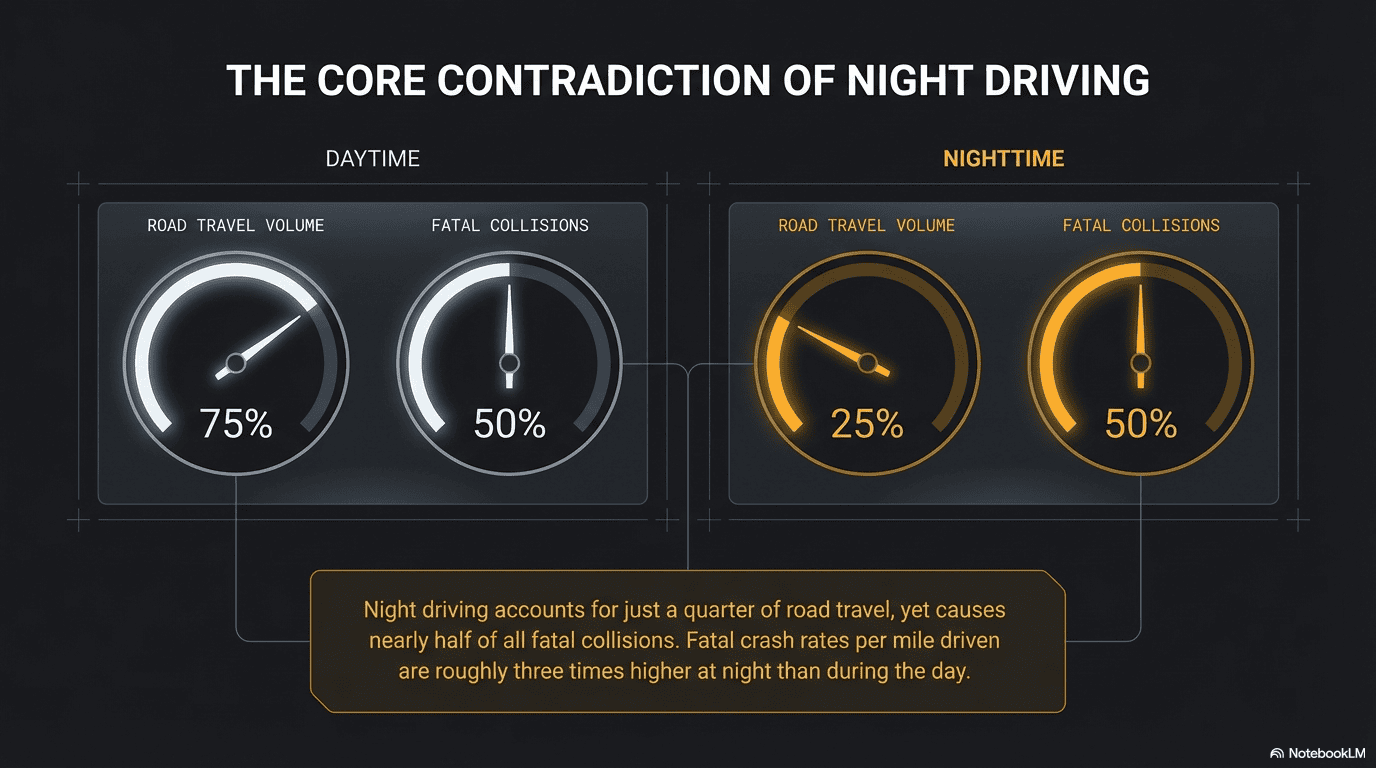
Night driving accounts for just 25 percent of road travel, yet it generates 50 percent of fatal collisions. That is not a rounding error: fatal crash rates per mile driven are roughly three times higher after dark than during daylight hours. The disparity is not random. Reduced visibility, narrowed peripheral vision, and the inability of human eyes to judge depth accurately at night all compound in the same window of time, creating a set of conditions that are fundamentally different from anything a driver faces by day.
The Three Pillars of Night-Time Driving Risk Every Driver Needs to Know
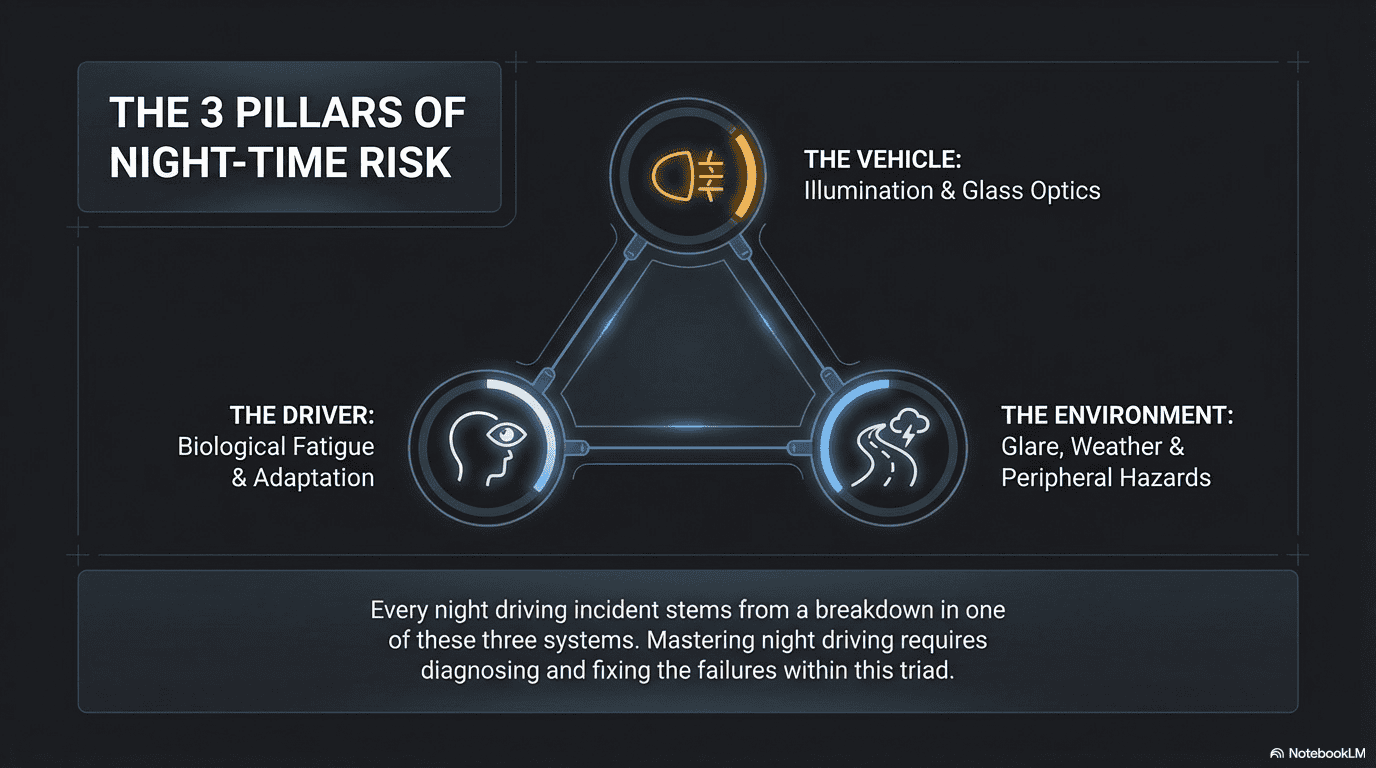
Every serious night driving incident can be traced back to a failure in one of three systems: the vehicle, the driver, or the environment. The vehicle pillar covers illumination quality and the optical condition of glass surfaces. The driver pillar covers biological fatigue, visual adaptation, and reaction time. The environment pillar covers glare from oncoming traffic, weather conditions, and peripheral hazards. These three systems do not operate independently. A vehicle with oxidized headlight lenses, driven by a tired driver in autumn rain, is not three separate risk factors; it is a single compounding failure state.
Overdriving Your Headlights: The Night Driving Mistake That Makes a Crash Unavoidable
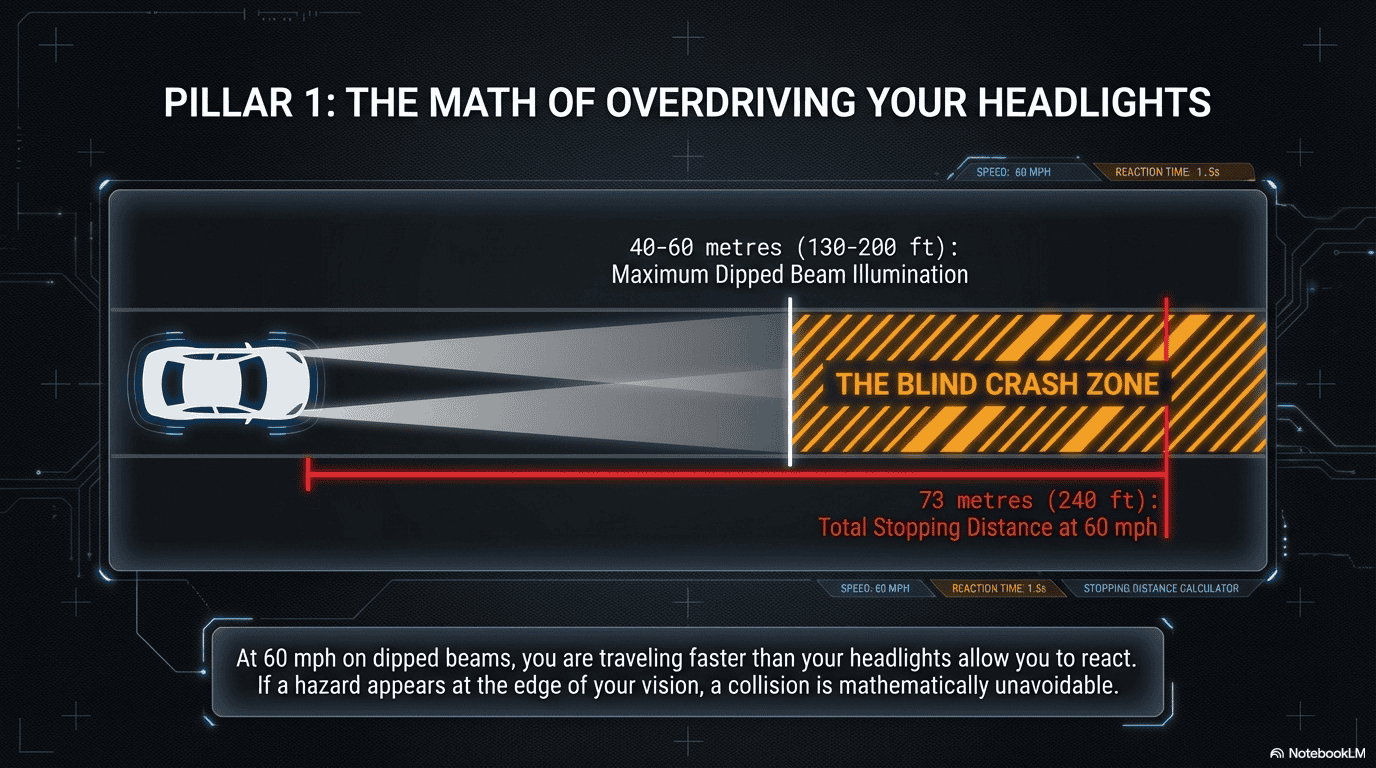
On dipped beams, standard headlights illuminate 40 to 60 metres ahead. At 60 mph, total stopping distance is 73 metres. The gap between those two numbers is what safety engineers call the blind crash zone. A hazard appearing at the outer edge of your headlight range gives you less distance to stop than your vehicle physically requires to do so. The collision becomes a matter of physics, not reflexes. The only correction is to reduce speed until stopping distance fits within the lit zone, or to switch to full beams where the road ahead is clear.
How a Dirty Windscreen and Oxidized Headlights Are Silently Cutting Your Night Vision
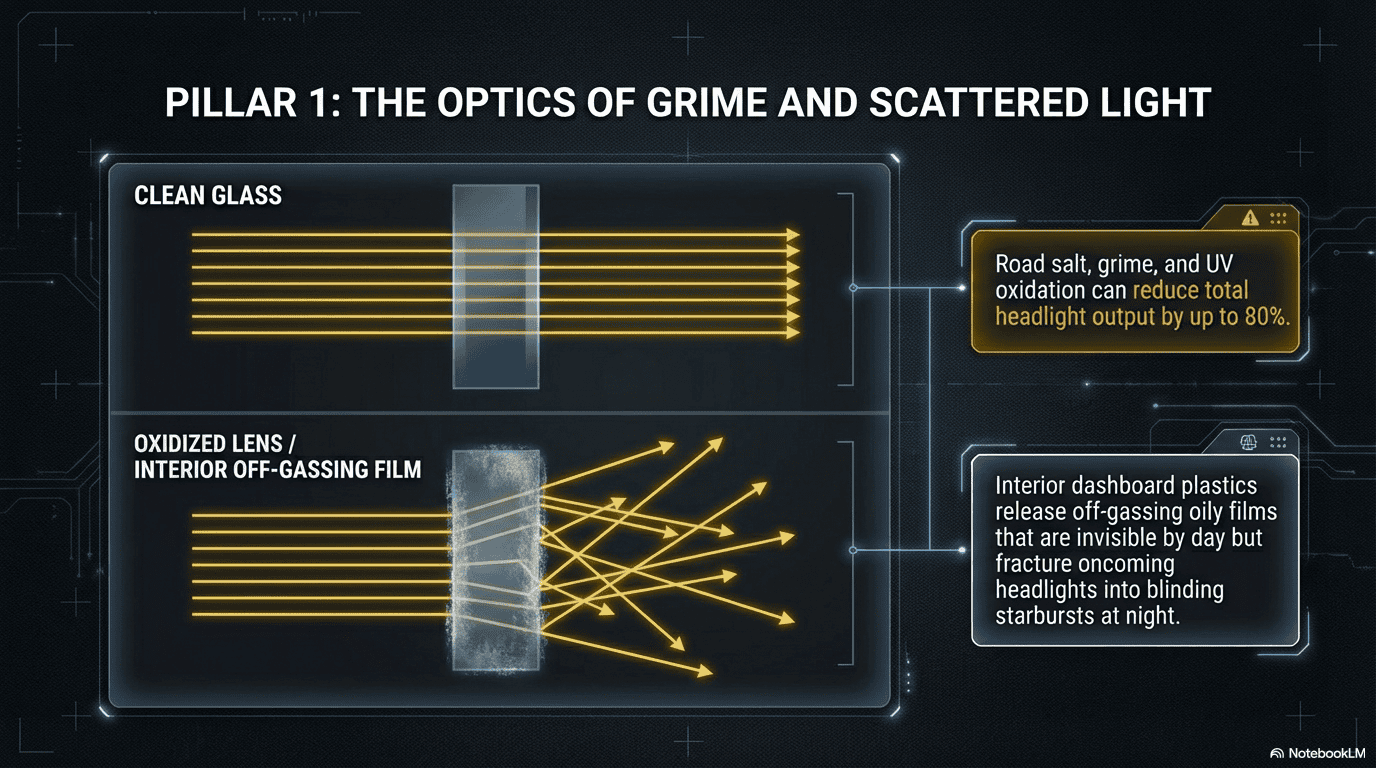
Road salt, grime, and UV oxidation on headlight lenses can reduce total light output by up to 80 percent, reducing a vehicle to a fraction of its designed illumination capability without the driver ever noticing. The interior windscreen compounds the problem in a separate way. Dashboard plastics release an invisible oily off-gassing film that builds up on the glass surface. In daylight it is imperceptible, but at night it fractures oncoming headlights into blinding starbursts that wash out the road ahead entirely. Wiping the interior screen with a microfiber cloth before a night drive eliminates this in under 20 seconds.
What Happens to Your Eyes at Night: Rod Cells, Peripheral Vision, and Flash Blindness
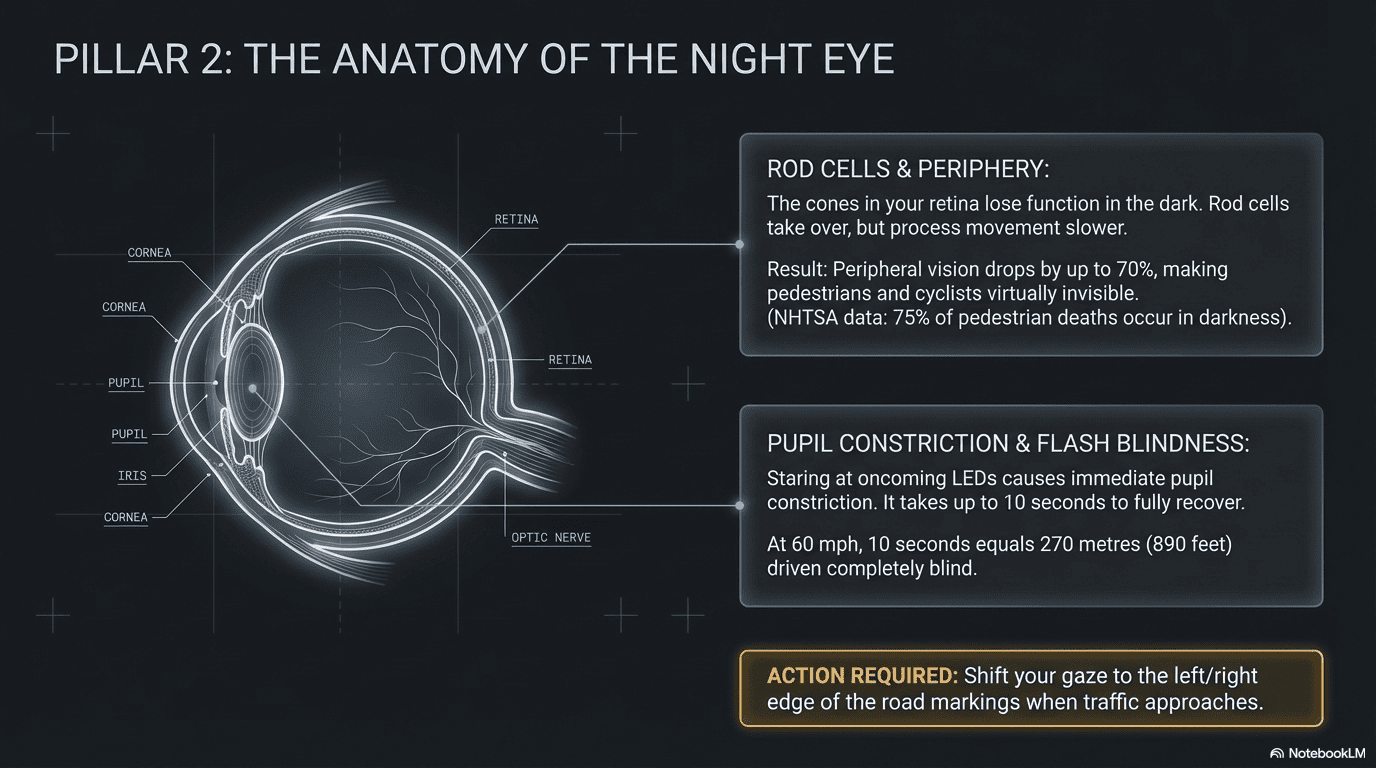
In low light, the cone cells in your retina stop functioning and rod cells take over. Rod cells detect motion but process it more slowly, and peripheral vision drops by up to 70 percent. NHTSA data shows that 75 percent of pedestrian deaths occur in darkness, a direct result of this biological shift. The secondary hazard is flash blindness from oncoming LED headlights. Staring at an approaching vehicle causes immediate pupil constriction that takes up to 10 seconds to reverse. At 60 mph, 10 seconds of severely impaired vision covers 270 metres. The correction is to shift your gaze to the left or right edge of your lane markings when oncoming traffic approaches.
Why Bright Interior Cabin Lighting Destroys Your Night Vision Before You Even Leave
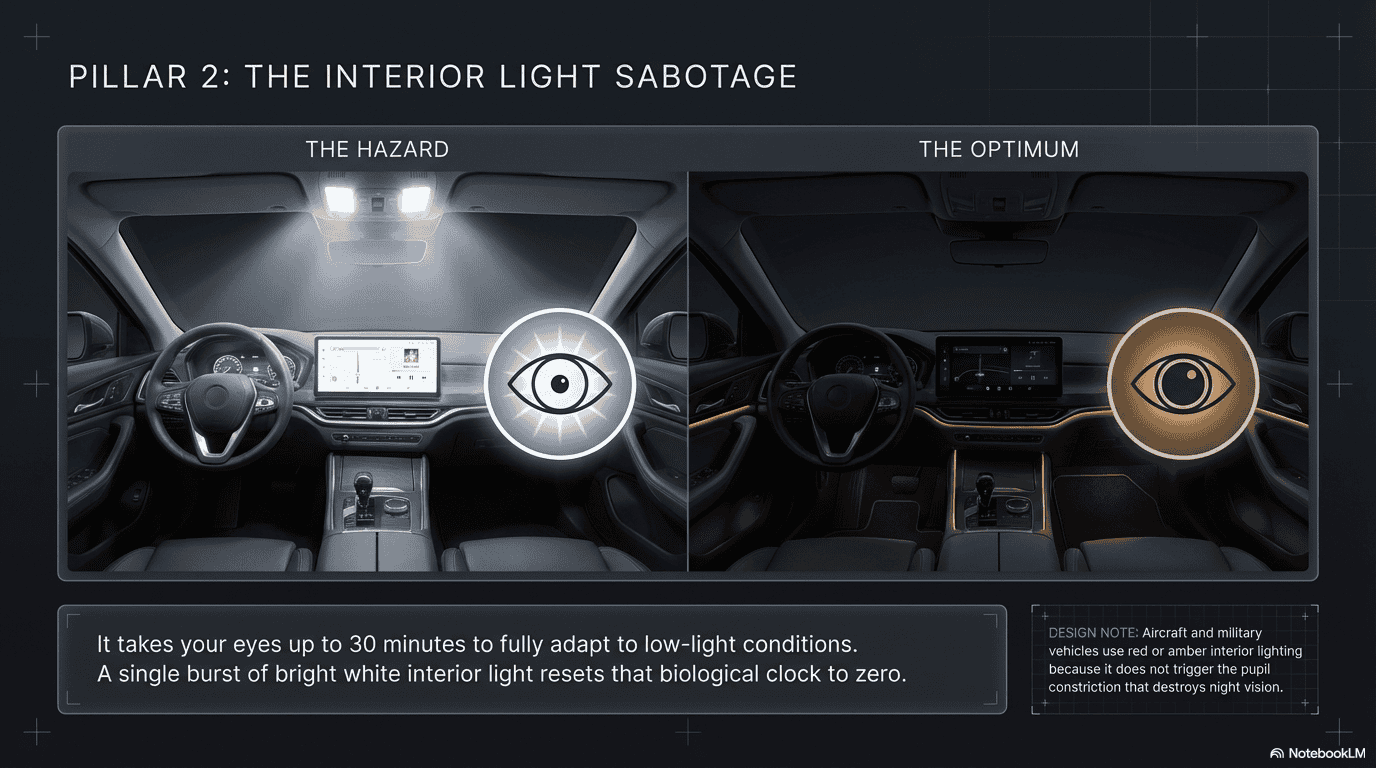
Your eyes require up to 30 minutes to fully adapt to low-light conditions. A single burst of bright white interior light, from a dome lamp, a phone screen, or a map light, resets that adaptation clock to zero. Aircraft and military vehicles solved this problem decades ago by switching to red and amber interior lighting, which does not trigger the pupil constriction that erases dark adaptation. For road drivers, the fix is simpler: dim the dashboard and infotainment displays to the lowest legible brightness, switch off interior map lights, and avoid using the phone without a properly dimmed screen holder before and during a night drive.
The Circadian Danger Zones: When Driver Fatigue Becomes the Equivalent of Drunk Driving
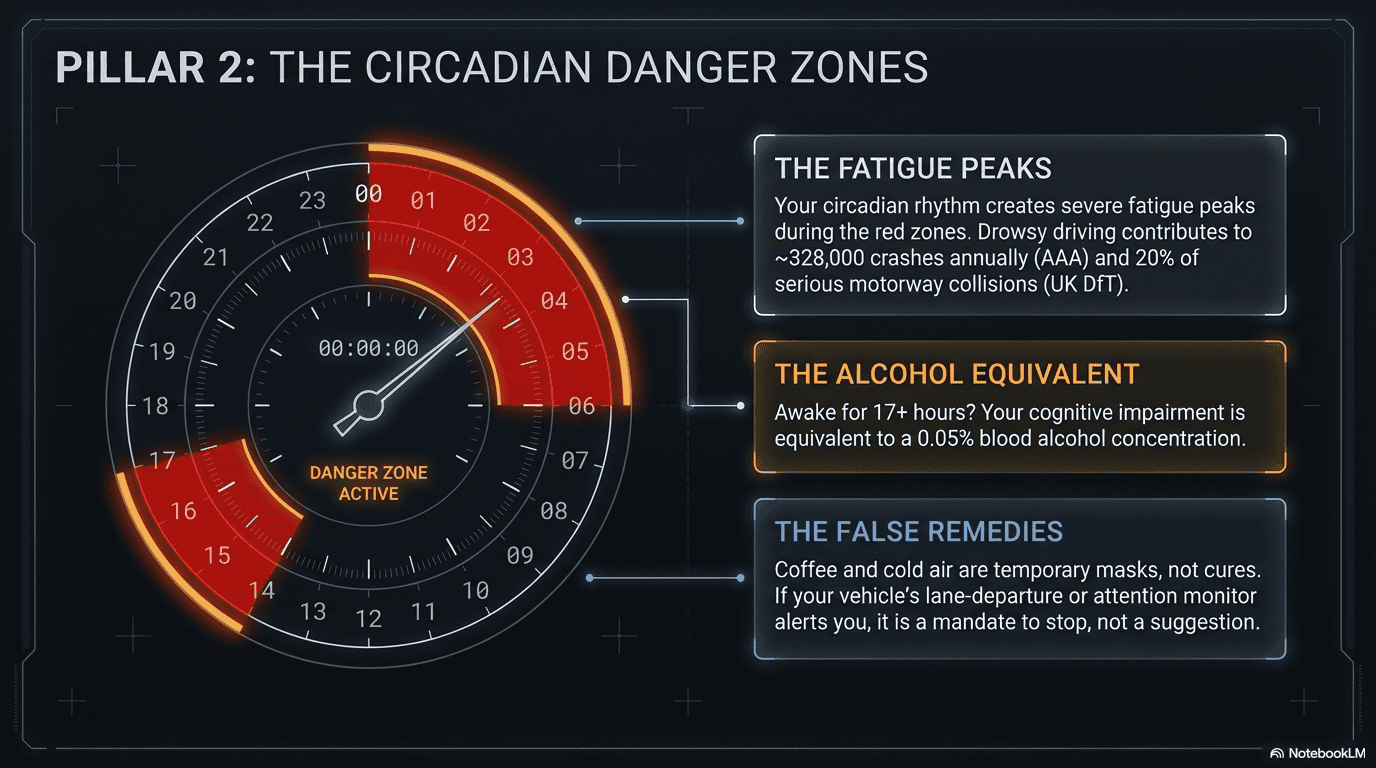
The human circadian rhythm generates peak fatigue windows in the early hours of the morning and again in mid-afternoon. Drowsy driving contributes to approximately 328,000 crashes annually according to the AAA Foundation for Traffic Safety, and accounts for 20 percent of serious motorway collisions in the UK according to the Department for Transport. After 17 consecutive hours without sleep, cognitive impairment reaches the equivalent of a 0.05 percent blood alcohol concentration. Coffee and cold air mask the sensation of tiredness temporarily; they do not restore reaction time or judgment. If your vehicle’s lane-departure or driver attention monitor activates, it is a signal to stop, not a suggestion to continue with more caution.
The High Beam Dilemma: Why Most Drivers Use Full Beams Too Little and Dip Them Too Late
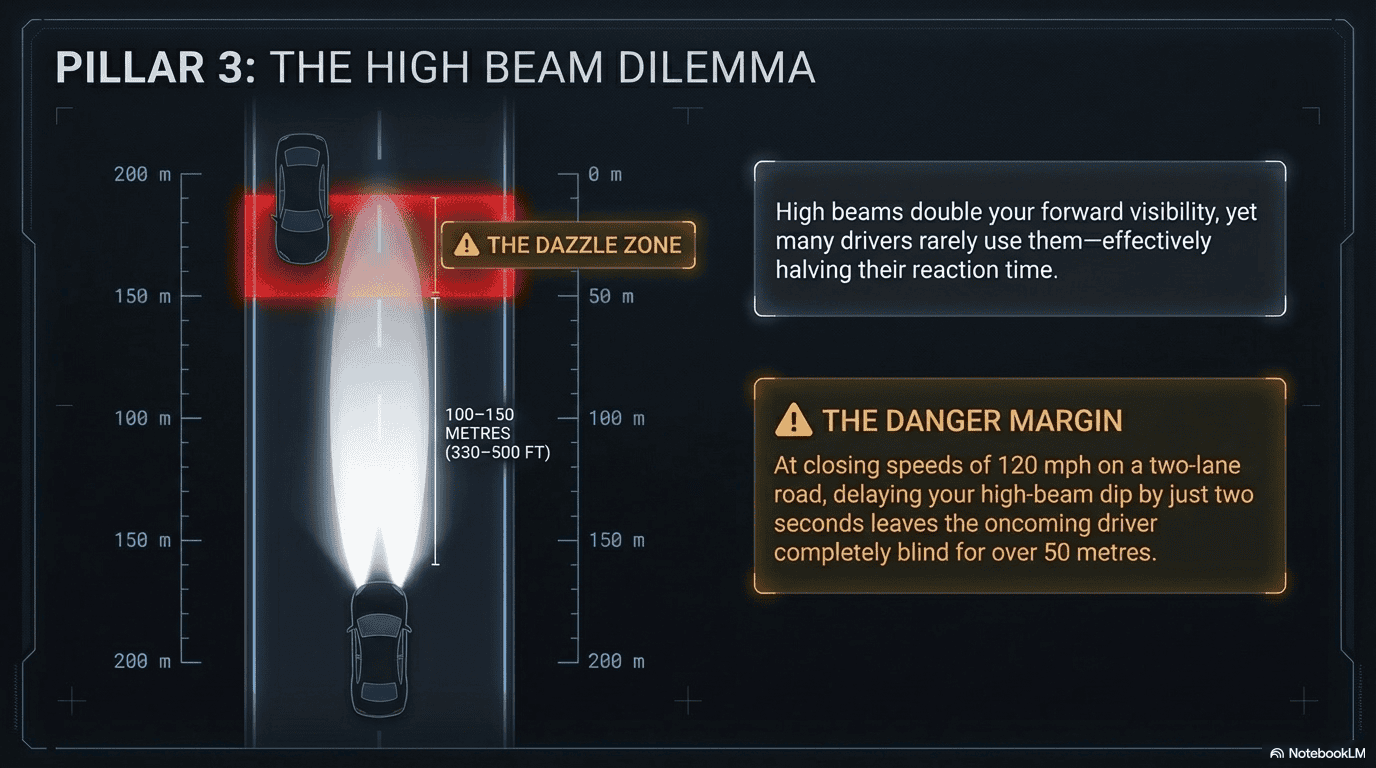
High beams illuminate 100 to 150 metres ahead, roughly double the range of dipped beams, yet a large proportion of drivers rarely engage them on unlit rural roads, cutting their effective reaction distance by half. The opposing error is equally serious. At combined closing speeds of 120 mph on a two-lane road, delaying the dip by just two seconds leaves the oncoming driver completely blind for over 50 metres. The rule is straightforward: engage full beams on any unlit road with no oncoming traffic within 150 metres, and dip them the moment an oncoming vehicle enters that range.
Seasonal Night Driving Hazards: Autumn Wet Leaves, Wildlife at Dusk, and Winter Fog
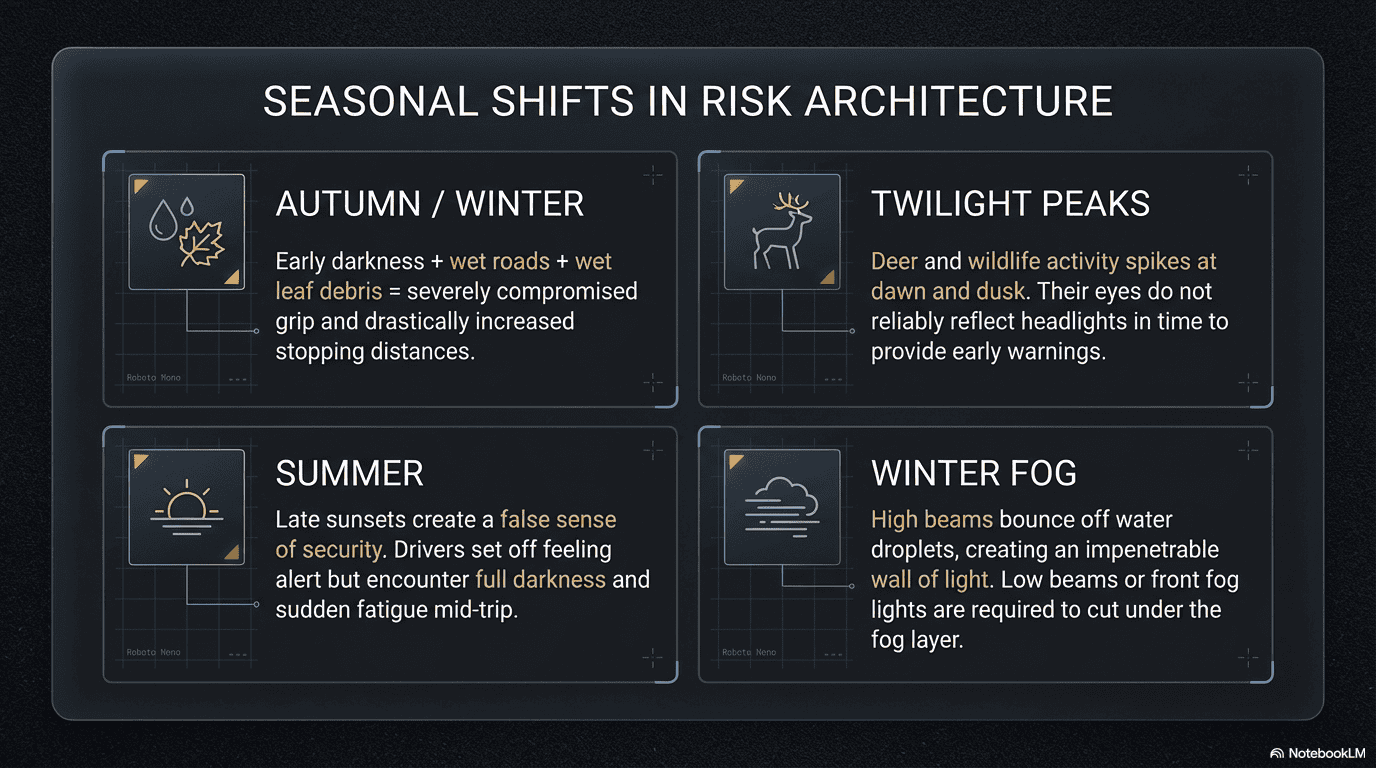
Night driving risk is not constant across the year. In autumn and winter, early darkness combines with wet roads and leaf debris to produce severely compromised grip and stopping distances that can be twice those of dry summer conditions. At twilight, deer and other wildlife are at peak activity along road margins, and their eyes do not reliably reflect headlights in time to provide useful warning. In winter fog, high beams are actively harmful: they bounce off water droplets and create a wall of reflected light that makes visibility worse, not better. In fog, low beams or dedicated front fog lights are the correct choice for cutting under the fog layer.
Night Driving Technology Rated: What Adaptive Headlights and Night Vision Systems Actually Do
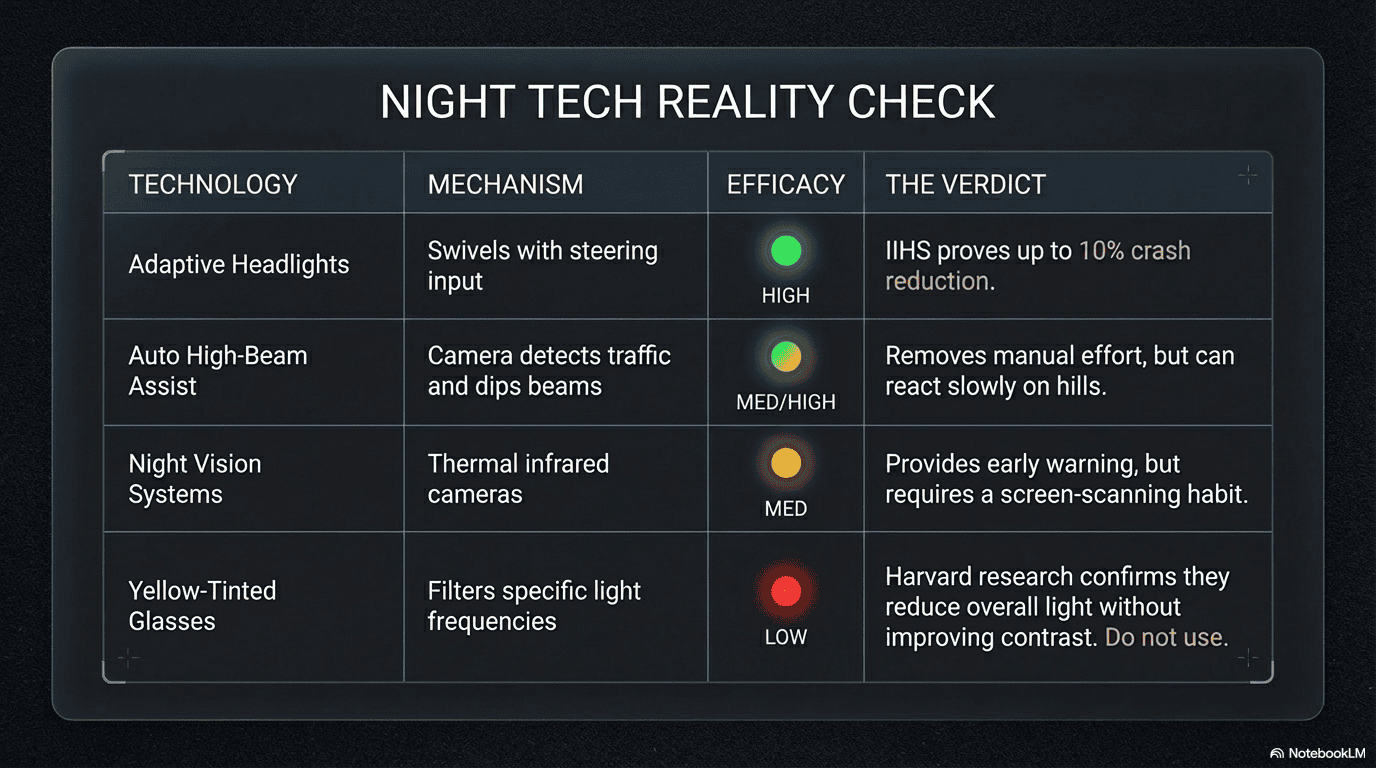
Adaptive headlights that swivel with steering input are rated high efficacy by IIHS, with data showing up to a 10 percent crash reduction. Auto high-beam assist is rated medium to high: it removes the manual effort of managing full beams, though camera-based systems can respond slowly on crests and hills. Night vision systems using thermal infrared cameras provide genuine early warning of pedestrians and animals beyond the headlight range, but they require the driver to develop a habit of scanning the dashboard screen. Yellow-tinted driving glasses rate low: Harvard research confirms they reduce total light transmission without improving contrast, and their use is not recommended.
Night Driving Anxiety and Deteriorating Vision: When Discomfort Is a Signal to See an Optician
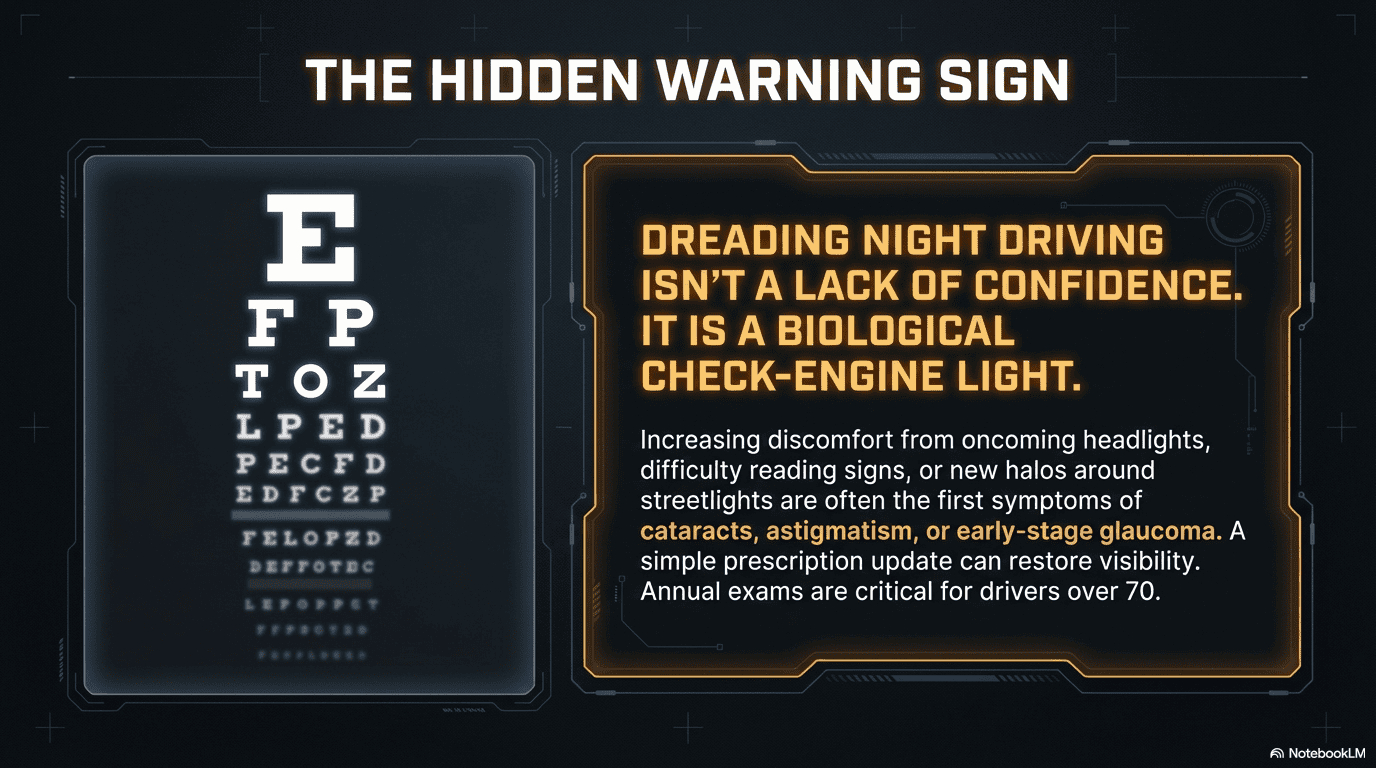
Increasing discomfort from oncoming headlights, difficulty reading road signs at distance, or the appearance of halos around streetlights are not signs of low confidence behind the wheel. They are often the first clinical indicators of cataracts, astigmatism, or early-stage glaucoma. A standard prescription update can restore night visual acuity significantly in many of these cases. Drivers over 70 are particularly at risk of undetected degradation, and annual eye examinations are not an optional extra for this group. Treating night driving anxiety as a psychological issue when the cause is optical delays a straightforward solution.
The 60-Second Pre-Drive Routine That Fixes the Most Dangerous Night Driving Mistakes
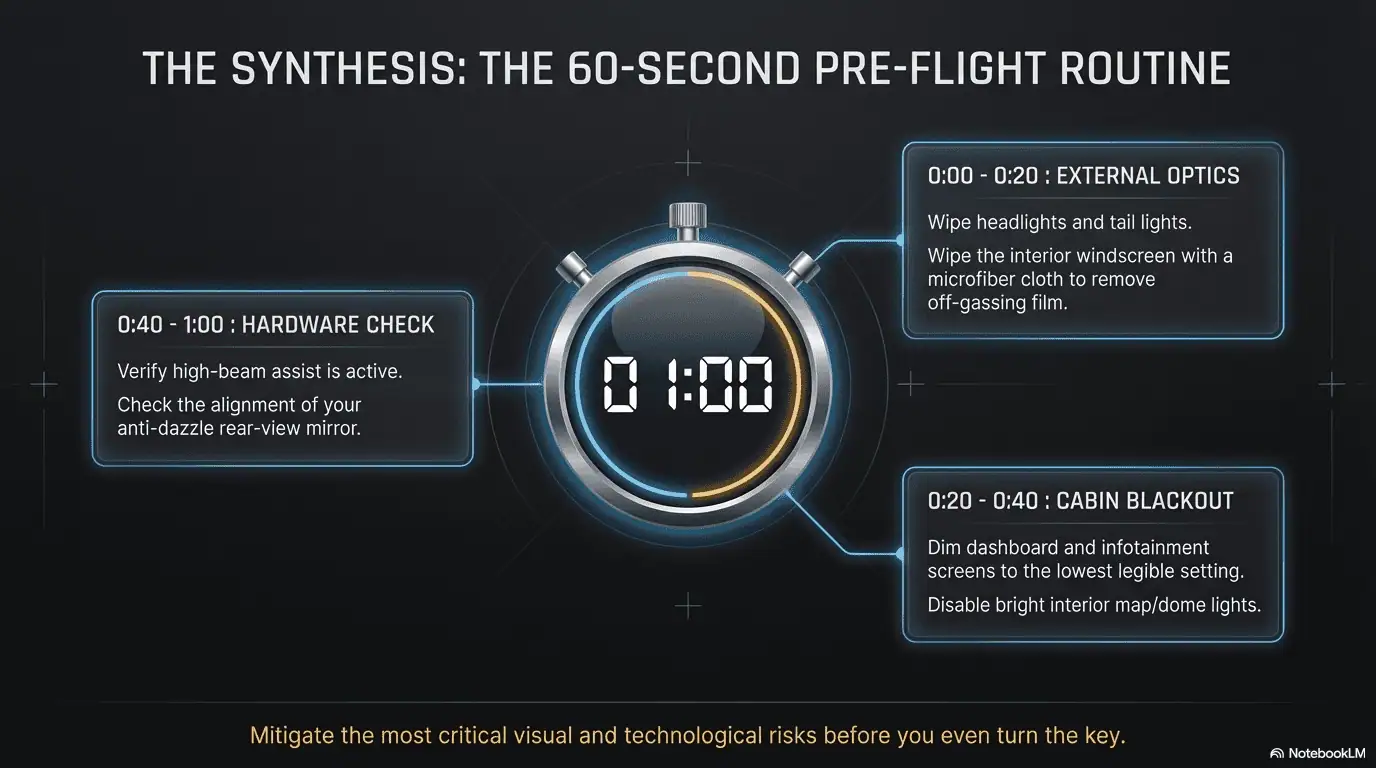
Most of the vehicle-related night driving risks covered in this article can be addressed in 60 seconds before setting off. In the first 20 seconds, wipe the headlights and tail lights with a cloth, then clean the interior windscreen with a microfiber to remove the off-gassing film. In the next 20 seconds, dim the dashboard and infotainment displays to the lowest legible setting and switch off interior dome and map lights. In the final 20 seconds, confirm that high-beam assist is active and check that the anti-dazzle setting on the rear-view mirror is functioning. These three steps address the majority of avoidable optical and illumination failures before the vehicle moves.
If you enjoyed this article, be sure to follow us on Microsoft Start.

Leave a Comment
More in News

Wheel Bearing Noise: How Long Can You Really Keep Driving?

Kia Prices 2027 K5 From $27,690 as EX Trim Is Cut

GMC Prices 2027 Sierra 1500 From $51,295 With New V8 Power
Northern Ireland Drivers’ Car Insurance Jumped £73 in Three Months, WTW Shows
How to Fix Falling Fuel Economy in Your Car (and What Causes It)
Trending on Motoring Chronicle

RAC Data Shows Diesel Drivers Nearing a Record Price as Tanks Cost £107
Why Auto Loan Delinquencies Just Hit Their Highest Level in 32 Years
New A46 Speed Cameras Go Live in Warwickshire With £100 Fines for Drivers
Nissan Kicks, Murano named to U.S. News 2026 Best Cars for the Money Awards
