The Importance of Wheel Alignment: Ensuring Vehicle Safety and Performance


Wheel alignment, the process of adjusting the angles of wheels to the car manufacturer’s specifications, is crucial for ensuring optimal vehicle performance and tire lifespan. Properly aligned wheels ensure the car drives straight and reduces tire wear. However, many drivers overlook this important maintenance step, not realizing that it can significantly impact safety and driving comfort. A vehicle with aligned wheels offers a smooth ride, precise steering, and improved fuel efficiency.
Given its impact on vehicle dynamics, wheel alignment is not just a matter of tire care but a fundamental aspect of automotive safety. Misalignment can occur from everyday incidents such as hitting potholes or curbs, which can alter the wheel angles. Recognizable symptoms include uneven tire wear, the vehicle pulling to one side, or a crooked steering wheel when driving straight. Addressing these signs promptly will prevent further complications and maintain the vehicle’s performance.
Key Takeaways
- Proper wheel alignment is essential for vehicle performance and tire longevity.
- Symptoms of misalignment include uneven tire wear and the vehicle pulling to one side.
- Regular alignment checks and adjustments can prevent safety and handling issues.
Understanding Wheel Alignment and Its Elements
Wheel alignment is critical for safe driving and the longevity of tires. This section explains what wheel alignment entails and the significance of the primary angles involved.
Definition and Purpose of Wheel Alignment
Wheel alignment involves adjusting the angles of a vehicle’s wheels to ensure they are aligned correctly with the manufacturer’s specifications. Proper alignment is key for the stability of the vehicle, helping tires perform properly and last longer. A regular alignment check is part of maintaining a vehicle’s health, optimizing tire performance and ensuring safety during operation.
Key Alignment Angles: Camber, Toe, and Caster
- Camber: This angle is the vertical inclination of the wheels. If the top of the wheel leans out from the center of the car, the camber is positive; if it leans in, it’s negative. Proper camber settings contribute to optimal tire wear and vehicle stability.
- Toe: Toe alignment refers to the directional difference between the tire’s front and the rear end. A toe-in suggests the front of the tires are closer to each other than the rear, while a toe-out is the opposite. Correct toe alignment ensures straight vehicle tracking and reduced tire rubbing.
- Caster: This is the angle created by the steering pivot point from the front to back of the vehicle. Caster angle affects balance, steering, and cornering. Positive caster helps increase steering stability, while negative caster might make steering lighter.
Signs and Symptoms of Misalignment
Understanding the signs of misaligned wheels is critical for vehicle maintenance and safety. Addressing these issues promptly can help preserve tire life and ensure proper vehicle handling.
Identifying Common Signs of Misaligned Wheels
- Pulling: A vehicle that veers to the right or left when the steering wheel is positioned straight indicates a potential misalignment.
- Uneven Tire Wear: Look for patterns of wear that differ between the tires. This irregular wear can suggest a misalignment issue.
The Impact of Misalignment on Tires and Steering
- Tire Durability: Misalignment often leads to premature tire wear, necessitating more frequent replacements.
- Steering Feedback: An off-center steering wheel or unusual vibrations when driving are telltale signs that the vehicle’s wheel alignment should be checked.
Consequences of Neglecting Wheel Alignment
Improper wheel alignment can lead to a range of problems affecting vehicle safety, performance, and the cost of ownership.
Effects on Safety and Vehicle Performance
Misaligned wheels can compromise the safety of a vehicle by affecting tire grip, leading to poor handling, especially in wet or slippery conditions. This misalignment can cause uneven tire wear and might result in a sudden tire failure, posing a significant risk to safety. Additionally, a vehicle with misaligned wheels might experience reduced performance, such as decreased fuel efficiency due to increased rolling resistance, also known as drag.
Long-Term Damage and Increased Maintenance Costs
Over time, ignoring wheel alignment issues can lead to more severe damage to various components of a vehicle. This includes premature wear and tear on tires, suspension, and steering systems. The longevity and lifespan of these parts are significantly reduced, leading to more frequent replacements and repairs. Consequently, vehicle owners face inflated maintenance costs over the lifespan of their automobile. The additional strain on the car’s systems caused by misalignment can also reduce overall fuel efficiency, resulting in higher fuel costs.
Aligning Your Wheels: The Alignment Process
Wheel alignment is fundamental for the optimal performance and longevity of your vehicle. This process ensures that tires are calibrated to the manufacturer’s specifications, providing stability, handling efficiency, and reduced tire wear.
When to Get an Alignment Check
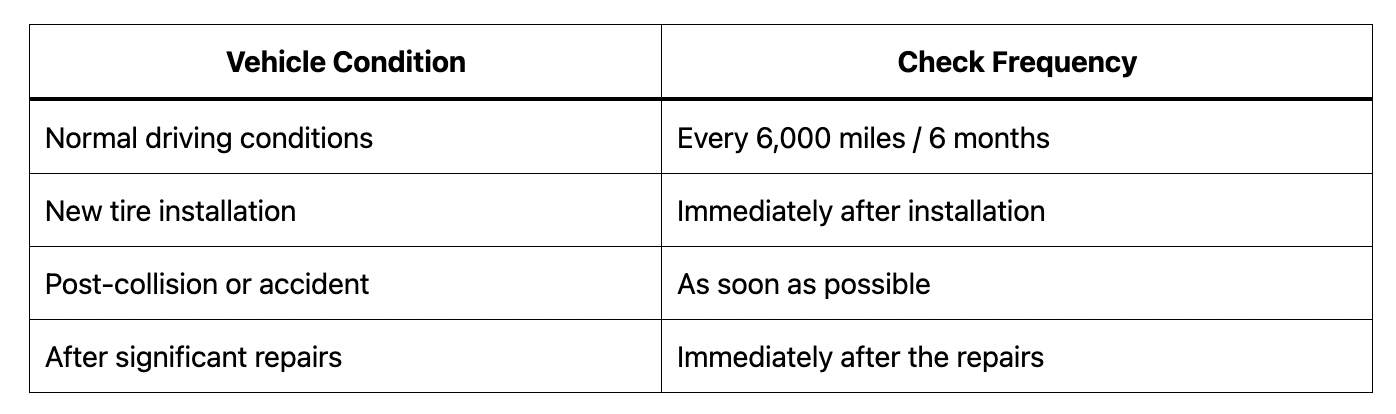
Alignment should be checked periodically as part of regular vehicle maintenance or when:
- New tires are installed.
- Suspension components, such as bearings or ball joints, are replaced.
- The vehicle exhibits signs of misalignment, including uneven or rapid tire wear, pulling to one side, or steering wheel misalignment.
Recommended Alignment Check Frequency:
The Role of Specialized Alignment Equipment
Specialized alignment equipment is integral to the alignment process. This equipment accurately measures wheel angles, allowing technicians to adjust them according to vehicle specifications. Technicians will typically adjust the following angles:
- Camber: The inward or outward angle of the tire when viewed from the front.
- Toe: The extent to which the tires turn inward or outward when viewed from above.
- Caster: The angle of the steering axis when viewed from the side.
Key Equipment Used in Wheel Alignment:
- Alignment Rack: A platform where the vehicle is positioned for alignment.
- Wheel Clamps: Devices that attach to the wheels to hold sensors.
- Computerized Sensors: Measure wheel angles and compare them to manufacturer specifications.
- Steering Wheel Holder: Secures the steering wheel during the alignment process.
Properly calibrated machinery is essential for accurate measurements, and trained professionals ensure that the adjustments meet the vehicle’s alignment needs. This precision benefits the overall drive quality and contributes to vehicle safety.
Maximizing the Benefits of Proper Wheel Alignment
Proper wheel alignment plays a significant role in the performance and upkeep of a vehicle. Well-aligned wheels lead to noticeable improvements in fuel efficiency and tire longevity, while also enhancing driving comfort and precision.
Improving Fuel Economy and Extending Tire Life
Properly aligned wheels decrease rolling resistance, which means your car doesn’t have to work as hard to move forward. This reduction in effort translates directly into improved fuel economy, saving money on gas over time.
- Fuel Economy: Vehicles with wheels aligned correctly can see a marked increase in miles per gallon due to reduced friction and improved aerodynamics.
- Tire Life: Even tire wear is vital for the lifespan of tires. Wheel alignment checks prevent premature tire wear by ensuring that the tire tread remains even, which prolongs tire life and prevents the need for early replacement.
Ensuring Optimal Handling and Comfort
Correct wheel alignment is fundamental for achieving a vehicle’s optimal handling characteristics. It contributes to a smooth ride by preventing the vehicle from pulling to one side or creating vibrations.
- Handling: A vehicle with wheels in proper alignment responds predictably and precisely to steering inputs, which is critical for maintaining control during driving.
- Comfort: A smoother ride is achieved when the suspension system and tires work harmoniously. This leads to a more comfortable driving experience, free from unnecessary jolts and vibrations.
Regular wheel alignment checks are essential in safeguarding these benefits for vehicle performance.
If you enjoyed this article, be sure to follow us on Microsoft Start.

Leave a Comment
More in News

Does a Failed MOT Devalue a Car? The Part of the Record Buyers Should Actually Read

What an AdBlue Warning Light Really Means Before Your Diesel Refuses to Restart

How Bus Lane Cameras Earned Councils £37.7 Million by Fining UK Drivers This Year
Every New Car Buyer Could Get Bigger Discounts as Britain Misses Its EV Target

Drivers Using Rapid EV Chargers Pay 79p a kWh, Up 4 Percent, Zapmap Shows
Trending on Motoring Chronicle

Car Insurance Premiums Jumped 3.6 Percent as the Average Bill Hits £399

Toyota Recalls 8,521 C-HR EVs Over a Software Bug That Cuts Power While Driving

DfT Could Cut the 2030 Electric Car Target From 80 to 50 Percent

What Starmer’s Cut to the 2030 Electric Car Target Means for Every Car Buyer