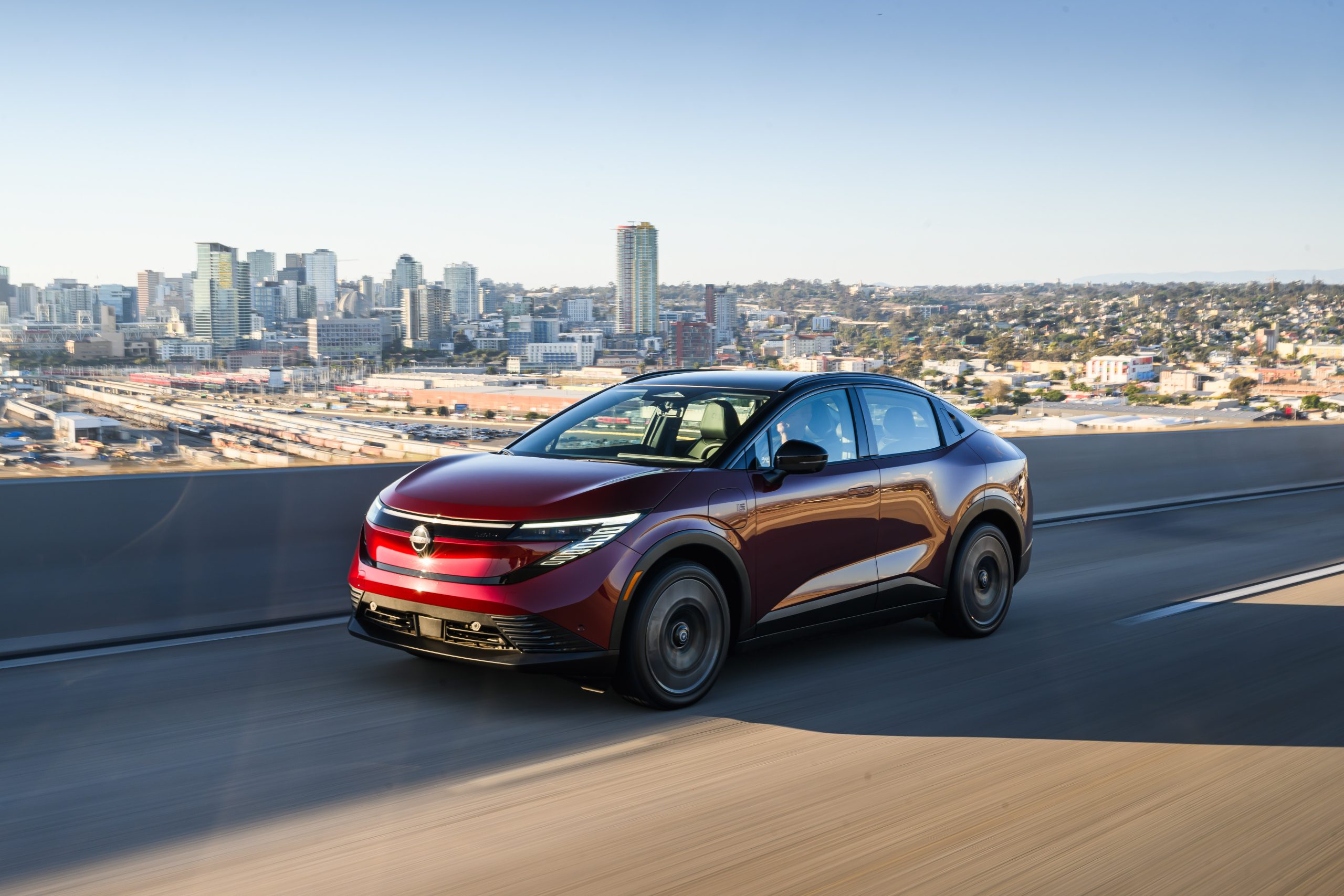
How Ford’s Recall of 41,748 Trucks and SUVs Could Leave Your Headlights Dark


- Ford is recalling 41,748 Super Duty trucks and Expedition SUVs because a contaminated LED chip can knock out headlights, parking lights, or daytime running lights.
- Only about 1 percent of the recalled vehicles are believed to actually carry the defect, but Ford cannot tell which ones without an inspection.
- VINs become searchable on NHTSA’s recall site starting October 26, and dealers will replace any failing headlamp assembly for free.
A chip contaminated at the factory can leave a truck without headlights
Ford has traced a new recall back to a single point of failure far from the assembly line: a contaminated LED chip at a supplier’s facility. That chip sits inside the headlamp assemblies on 2026 Super Duty trucks and 2025 through 2027 Expedition SUVs, and when it fails, the result is not a dim bulb but a headlamp that stops working outright, cutting daytime running lights, parking lights, or the high and low beams themselves depending on which part of the assembly is affected.
The recall, filed with NHTSA as campaign 26V606 and internally as Ford recall 26C43, covers 41,748 vehicles: 17,512 F-250 Super Duty trucks, 10,295 F-350s, 523 F-450s, 120 F-550s, and 13,298 Expeditions. Ford says the failure means the vehicles no longer meet Federal Motor Vehicle Safety Standard 108, the federal rule governing how exterior lighting has to perform. A dashboard warning light illuminates when the low or high beams stop working, giving drivers at least one signal that something is wrong, though the daytime running light and parking light failures do not necessarily trigger the same alert.
Why only some trucks in the batch are actually affected
Ford estimates that only about 1 percent of the 41,748 recalled vehicles carry the defective chip, a detail that complicates the fix rather than simplifying it. Because the contamination happened during chip manufacturing rather than vehicle assembly, Ford cannot simply flag a sequential run of VINs the way it might for a software or installation error. The company says affected vehicles fall within a suspect build date range and includes only trucks and SUVs that were either unsold as of September 15, 2026, or that had been in a customer’s hands for less than four months by that date.
That means every owner in the eligible build window needs an actual physical inspection to know whether their specific truck has the bad chip, rather than being able to rule it out based on when or where they bought the vehicle. Ford’s own records show the scale of the underlying defect is small: as of September 10, the company had only six warranty claims and six field reports, all tracing back to six vehicles, and says it is not aware of any crashes or injuries linked to the problem. The company opened its internal review in May 2026 and formally approved the recall on September 15.
Headlight failures and the risk of driving blind
Losing a headlight, or losing the ability to switch between high and low beams, is one of the more dangerous ways a vehicle can fail, because the danger shows up specifically when visibility already matters most: driving at night, in rain, or on an unlit rural highway. A truck that loses its low beams without warning puts the driver in the position of either continuing with reduced visibility or pulling over somewhere that may not be safe to stop. Parking lights and daytime running lights matter too, since they are what make a vehicle visible to oncoming traffic and pedestrians in dim conditions, dawn, dusk, and fog chief among them.
Super Duty trucks and Expeditions are also disproportionately used for towing, hauling, and long highway stretches, exactly the driving conditions where a sudden lighting failure carries the highest consequences. A contractor towing a trailer at night or a family on a long highway drive in an Expedition has less margin for error if a headlamp assembly fails mid-trip than a commuter making a short, well-lit drive home.
What owners should do now
Because VINs are not sequential and will not be publicly searchable on NHTSA’s recall lookup tool until October 26, the fastest way to check coverage right now is to call Ford directly at 1-866-436-7332, or to contact a Ford or Lincoln dealer and ask them to run the vehicle’s VIN through Ford’s internal OASIS system, referencing recall 26C43. Once the NHTSA VIN lookup goes live on October 26, owners can also check there directly by entering their 17-character VIN.
Owner notification letters are expected around the same time. Ford’s own filing lists dealer notification between October 26 and 30, with owner letters following November 6 through 13, while NHTSA’s acknowledgment of the recall lists owner letters as expected by October 26, a discrepancy between the two official documents that owners should resolve by confirming the current schedule directly with Ford or a dealer rather than relying on either date alone.
When a covered vehicle comes in, dealers will inspect both the left and right headlamp assemblies. If an assembly passes inspection, no further action happens. If it fails, the dealer replaces it with a new assembly confirmed free of the chip contamination, at no cost to the owner. Drivers who notice a lighting malfunction, a dashboard warning for the beams, or lights that simply stop working, should not wait for a letter and should contact a dealer immediately regardless of where they fall in the notification schedule.
What happens next
With VINs not searchable until October 26, most owners are currently in a waiting period where they cannot yet confirm their own vehicle’s status through NHTSA’s public tool. Once that lookup goes live, expect a clearer picture of how many owners actually book dealer inspections and how many of those inspections turn up the defective chip, closer to Ford’s predicted 1 percent than the full 41,748-vehicle population. NHTSA will continue tracking complaints under campaign 26V606, and any crash or injury reports tied to a lighting failure during this window would likely prompt closer scrutiny of how Ford is managing owner notification in the meantime.
Sources:

Leave a Comment
More in News

Steiner predicts multiple F1 titles for Antonelli as Mercedes gamble pays off

Man’s Tesla has 9% range left. Then he gets a message that he’s ‘too far from closest known charging station.’ Now the car refuses to start
Man drives Toyota Tundra. Then he realizes the RPM meter ‘makes no sense’

Why British Drivers Are Rethinking Their Next Used Car

YANGWANG ALTIOR makes its global debut in Abu Dhabi: a higher expression of power [Photo Gallery]
Trending on Motoring Chronicle

What the New GOV.UK Wallet Means for Every UK Driver This Year

Hyundai Motor America Reports Record-Breaking January 2026 Sales
Hyundai Sonata Plug-In Owners Can Claim $10 a Day for Battery Delays

Hyundai Recalls 54,337 Elantra Hybrids Over a Fire Risk