What DVSA Data Reveals Fails Most Cars at Their MOT (and How to Avoid It)

- DVSA data shows lamps, reflectors and electrical faults are the single biggest cause of MOT failure in Britain, ahead of suspension, tyres and brakes.
- More than a quarter of cars, 27.24 percent in the most recent quarter, fail their MOT the first time they are tested.
- Most of the top failure causes can be checked and fixed at home before the test, for free or for the cost of a bulb.
The Fault That Fails More Cars Than Anything Else
A blown bulb, a cracked lens or a wiring fault is the most common reason a car fails its MOT in Britain, according to DVSA’s own test data, and it is also the easiest problem on the entire list to catch before you ever book a slot. Lamps, reflectors and electrical equipment account for 15.6 percent of all MOT failure occurrences, ahead of suspension at 14.1 percent, tyres at close behind and brakes at 12.2 percent. Together, those four categories are behind well over half of every failed test in the country, and every one of them can be checked in a driveway with nothing more than a torch and a few minutes.
How Many Cars Actually Fail
DVSA’s figures for the first quarter of the 2025/26 testing year, covering Class 3 and Class 4 vehicles, put the initial failure rate at 27.24 percent. That is broadly consistent with the full 2024/25 financial year, when 28.08 percent of tests ended in failure. The first-time pass rate for Class 4 vehicles, the category that covers most cars, has held at almost exactly 64 percent for five consecutive years, moving by less than one percentage point in either direction each year. Testers are not getting stricter and cars are not getting worse; drivers are simply presenting cars with the same handful of avoidable faults, year after year.
It was not always this consistent. Pass rates have improved substantially over the longer term, with the failure rate falling from a low point of pass performance in 2009 to today’s level, a gain of around 12 percentage points. Whatever progress has been made appears to have plateaued, and the same faults that caused problems five years ago are still causing them now.
What to Check Before You Book the Test
Start with lights. Turn on every light on the car, including sidelights, headlights on both dip and main beam, fog lights, brake lights, indicators and the number plate light, and walk around the car checking each one works and is not cracked, cloudy or held together with tape. A single failed bulb is one of the cheapest fixes available and one of the most common reasons a car is turned away.
Next, check your tyres. Legal tread depth is 1.6mm across the central three-quarters of the tyre and around its full circumference, but a tester will also fail a tyre for cuts, bulges, exposed cord or damage to the sidewall regardless of how much tread remains. Check the pressure is correct while you are there, as a badly underinflated tyre wears unevenly and can fail on tread depth sooner than expected.
Suspension faults are harder to self-diagnose but not impossible to notice. Listen for knocking or clunking over speed bumps, watch for a car that dips heavily under braking or pulls to one side, and check for visible fluid leaking from a shock absorber. Any of these are worth a quick check at a garage before the test rather than after a failure, as booking the repair and retest separately usually costs more in total than fixing it in one visit.
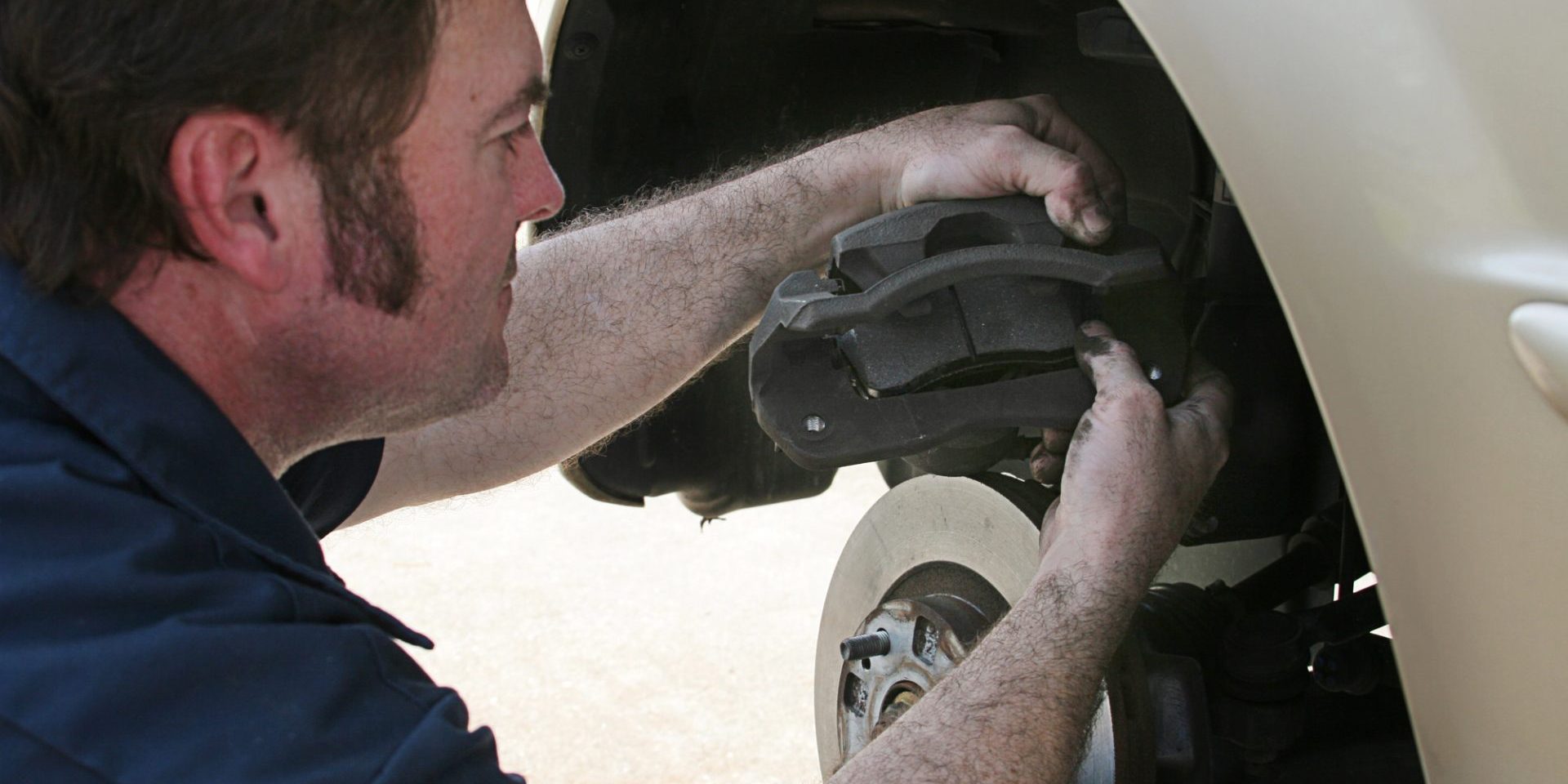
Brakes are the fourth major category, and while pad wear is hard to inspect without removing a wheel, warning signs are not: a spongy pedal, a car that pulls to one side under braking, a grinding or squealing noise, or a warning light on the dashboard all justify a check before the test date rather than waiting for the tester to find it.
Where the Edge Cases Trip People Up
Not every fault is obvious, and some faults that feel minor are treated as major or dangerous by testers. A washer bottle that is empty, a horn that does not sound, a wiper blade that smears rather than clears, or a driver’s seatbelt that does not retract properly can each cause a fail on their own, and none of them require a mechanic to check. Go around the car testing every switch, button and control that a tester will use, not just the ones you use day to day.
If your car has an advisory from a previous test, check whether it has been addressed. An advisory is not a legal requirement to repair before the next MOT, but if it has worsened after it was first noted, it can tip over into a failure at the following test. You can look up your car’s full MOT history for free using its registration number on GOV.UK, which shows every advisory and failure item recorded against it, giving you a head start on what a tester is likely to flag again.
Booking your MOT a few weeks before it is due, rather than on the exact expiry date, also gives you a buffer. If the car fails, you can legally continue driving it to a pre-booked repair or retest as long as the current MOT has not yet expired, but once it expires, driving the car on public roads becomes illegal except to a booked test appointment. A short check beforehand, covering lights, tyres, suspension and brakes, catches the vast majority of what actually fails cars in Britain, and it costs nothing but a few minutes on the driveway.
The Other Faults Worth Knowing About
Beyond the top four categories, steering and exhaust faults account for a smaller but still significant share of failures. A steering wheel with excessive play, checked by gently rocking it while the engine is off and a helper watches the front wheels, can indicate worn track rod ends or a failing rack that a tester will flag immediately. Exhaust faults usually come down to a leak causing excessive noise, or, on cars fitted with a diesel particulate filter, evidence that the filter has been removed or tampered with, something DVSA testers now check for specifically and treat as an automatic major fault.
Emissions failures are less common than they once were but still catch out a meaningful number of older petrol and diesel cars, especially those that do only short trips and rarely get the engine fully up to temperature. Running a car on a longer motorway trip a few days before the test can sometimes clear a minor emissions fault caused by a build-up of unburned fuel deposits, though a persistent fault is more likely to need a proper diagnostic check.
Why Failure Rates Vary So Much by Postcode
National averages hide a wide regional spread. Analysis of DVSA’s postcode-level data has shown that cars tested in some parts of the country are close to twice as likely to fail as cars tested elsewhere, a gap that reflects a mix of local vehicle age, how much of the driving in an area is short urban trips rather than motorway miles, and genuine differences in how strictly individual test centres apply the rules within DVSA’s guidelines. If you have moved house or changed garage recently and started noticing more advisories or failures than before, it is worth asking directly whether your new local centre tends to test more rigorously, as a garage operating well within DVSA standards can still be noticeably stricter than the one you used previously.
Garages have also warned that MOT testing capacity itself is under pressure, with the Class 4 test fee frozen for sixteen years even as running costs for testing stations have risen. Where slots are scarce, booking early becomes doubly important, both to secure a convenient appointment and to leave time for any repairs a failure throws up before your existing MOT expires.
Sources:

Leave a Comment
More in News

Are There Warning Signs Before a Cam Belt Breaks? Usually One, and It Is Not the Belt

Fife and Dundee Cars Fail 38.6% of First Attempt MOTs, Nearly Double Sutton’s 20.3%

How to Tell If Rust Will Fail Your MOT (and What a Repair Costs)

Why Your Car Clicks But Won’t Start (and What to Do)
Diesel Drivers Pay £31 More Per Tank Than a Year Ago, DESNZ Data Shows
Trending on Motoring Chronicle
Aston Martin Valhalla makes global public dynamic debut ahead of Monaco Grand Prix

Banned Chinese Airbag Part Kills an 11th American, This Time in a Chevrolet Equinox

Kia PV5 Passenger Adds Seven-Seat Electric People Mover From £36,995
Why The Average Car Repair Bill Just Hit £3,699 Even As Premiums Hold