Hillingdon Issued 17,016 Pavement Parking Tickets to Drivers, Up 50.3 Percent, at £140 Each
- Hillingdon’s annual parking report for 2025/26 counts 110,823 penalty notices, up 0.85 percent on the 109,885 issued a year earlier.
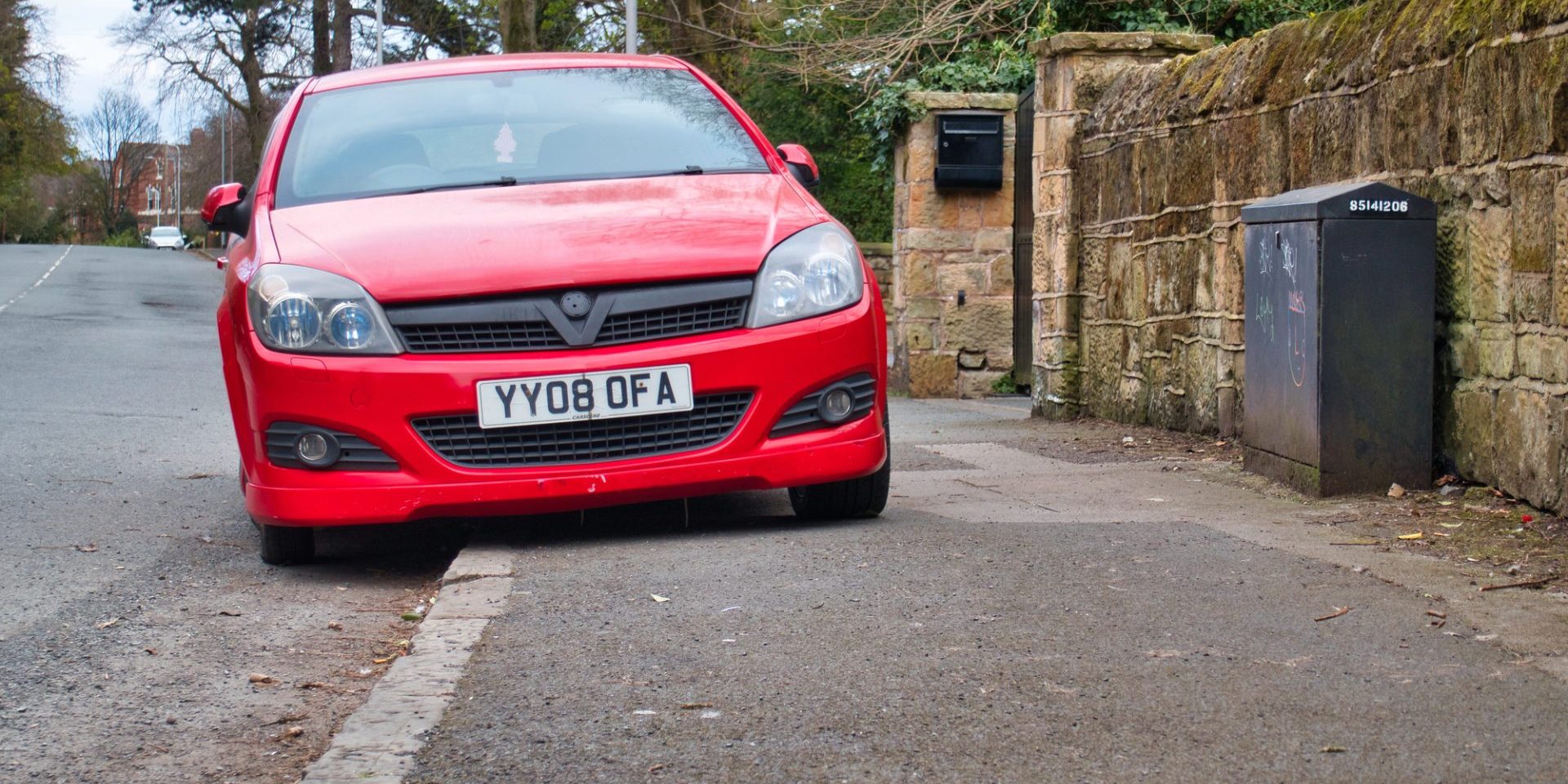
- Notices for parking with a wheel on the pavement jumped 50.3 percent, from 11,320 to 17,016, and each carries a £140 penalty at the higher level.
- The council kept a £4.684 million parking surplus, and £4.072 million of it went on concessionary fares.
The £140 Mistake Made 17,016 Times on Hillingdon’s Streets
Hillingdon Council issued 17,016 penalty charge notices in 2025/26 for contravention code 62: a vehicle parked with one or more wheels on a footpath or on any part of the road other than the carriageway. A year earlier the count was 11,320, so the borough wrote 5,696 more notices, a rise of 50.3 percent. In 2023/24 it was 11,709, which leaves the latest total 5,307 (45.3 percent) above the figure from two years ago.
Code 62 was the biggest single line in the borough’s books. It made up 15.4 percent of all 110,823 notices and 25.9 percent of the 65,745 issued on street by civil enforcement officers. The next largest on-street code, parking in a residents’ bay without a valid permit (code 12), reached 14,951.
Every owner who leaves a wheel on the kerb needs the price. Hillingdon was a Band B borough in 2025/26, which means a higher level of £140 and a lower level of £90. Code 62 sits in the higher-level on-street lists that Hounslow and Wandsworth publish, so a notice in Hillingdon costs £140. Band A boroughs charge £160 for the same level, so a Hillingdon driver pays £20 less than a driver in a Band A borough for the same offence. At full price, the 17,016 notices were worth £2,382,240. Hillingdon’s report does not say how many were paid in full, paid at a discount or cancelled, so that sum shows the full-price value of the notices and is not money collected.
Across all kinds of notice the council’s parking income averaged £55.82 per notice issued (£6.186 million divided by 110,823). That figure averages all income over all notices and says nothing about what any single ticket costs.
Where the Other 93,807 Tickets Came From
On-street enforcement produced 65,745 notices, 59.3 percent of the total. Moving traffic cameras added 29,952 (27.0 percent), car parks 13,841, bus lanes 940 and parking cameras 345. Add those together and the total matches the 110,823 the report prints, up 938 on the 109,885 of 2024/25 and 11,146 (11.2 percent) above the 99,677 of 2023/24.
Beyond pavements, the on-street codes that climbed were the ones about restricted streets, permits and kerbs. Parking in a restricted street at prescribed times (code 01) rose from 9,934 to 11,269, up 13.4 percent. The residents’ bay code rose from 13,635 to 14,951, up 9.7 percent. Parking across a dropped kerb (code 27) went from 2,474 to 3,157, up 27.6 percent. Parking in a suspended bay (code 21) went from 588 to 956, up 62.6 percent. Cycle track and cycle lane parking (code 49) more than doubled, from 70 to 158.
Pay and display on the street moved the other way: notices for no valid ticket or voucher (code 06) fell from 7,662 to 7,136, down 6.9 percent. In the council’s car parks, the same offence (code 83) rose from 10,885 to 11,243, up 3.3 percent and 50.4 percent above the 7,477 of 2023/24.
Box Junction Notices Fell 37.6 Percent While Bus Lane Notices Jumped
Moving traffic notices cost £160 each, and the 29,952 issued in 2025/26 are 9,060 fewer than the 39,012 of the year before, a fall of 23.2 percent. The drop sits almost entirely in two codes. Box junction notices (code 31J) fell from 16,885 to 10,531, down 37.6 percent. Prohibited right turns (code 50JR) fell from 9,517 to 5,570, down 41.5 percent.
Other moving traffic codes rose. Restricted route notices (code 33J) went from 5,454 to 7,000, up 28.3 percent, and wrong direction notices (code 32JD) from 409 to 716. Entering a pedestrian zone (code 53J) went from 246 to zero.
Bus lanes went the other way. The council issued 940 bus lane notices, against 131 in 2024/25 and 1,181 in 2023/24, each at £160. March 2026 alone produced 579 of the 940. The other eleven months of the year added up to 361. At £160, 940 notices carry a full price of £150,400.
The report also records a change in how the council watches schools. Cabinet agreed to lease a number plate recognition car and to decommission some fixed School Keep Clear cameras, keeping them at the 10 locations with the most offences. Notices for stopping outside a school by camera (code 48j) fell from 804 to 333.
Where the Money Went: A £4.684 Million Surplus
Hillingdon’s parking revenue account for 2025/26 shows £6.186 million from penalty charge notices, £2.255 million from on-street pay and display and cashless parking, £1.043 million from permits and £0.339 million from other income such as suspensions and waivers. The report prints a total of £9.827 million against expenditure of £5.143 million, which leaves a surplus of £4.684 million. The four income lines add up to £9.823 million, and the account also carries a £3.383 million line for contributions from Heathrow that the report does not explain.
Road traffic law limits what a London council can do with that surplus. The report lists £4.072 million for concessionary fares (86.9 percent of the surplus), £0.218 million for traffic management, £0.211 million for developing parking management schemes, £0.161 million for off-street parking and £0.020 million for CCTV. The council states that its full concessionary fares obligation for the year was in excess of the £4.072 million. Car parks sit outside this account: they brought in £2.470 million net, and any surplus there goes to the council’s general fund.
The report gives one year of money figures, so there is no pound comparison with 2024/25. The notice counts are the comparison that the data supports.
How to Avoid or Challenge a Pavement Parking Ticket
The rule is old. London banned parking on the pavement in 1974, when the Greater London Council (General Powers) Act 1974 came in, with exceptions. A London council can allow it on a particular street by passing an administrative resolution, and signs and bay markings then show drivers where it starts and ends and how much of the pavement is usable. The DfT lists the vehicles exempt under the London rules as emergency, breakdown and maintenance vehicles, plus vehicles delivering or collecting goods, who get 20 minutes unless the council allows longer. Wandsworth’s guidance says no part of a car is allowed on the pavement, and Hounslow’s says a car must have all four wheels on the carriageway unless it is in a marked bay.
So the way to avoid a code 62 notice is to find a bay, or a signed stretch where pavement parking is allowed, and to keep all four wheels on the carriageway everywhere else. Outside London the Department for Transport has told Parliament it plans new regulations in January 2027, covered in our report on the January 2027 pavement parking ticket plan, but London drivers already live under the stricter rule.
A driver who thinks a notice is wrong has three steps in Hillingdon, all in writing, online or by post to the address on the notice, and how parking fine appeals work across the country follows the same order. First comes an informal challenge, which can be made once the officer has attached the notice to the car or handed it over. If that fails and a Notice to Owner arrives by post, the registered keeper can make a formal representation. If the council rejects it, the rejection letter explains how to appeal to an independent adjudicator. A challenge made inside the discount period is held at the discount amount, and the discount is offered again if the council turns the challenge down.
People use all three steps. The council recorded 16,225 informal challenges in 2025/26, up 18.4 percent from 13,699, 12,230 formal representations, down 5.4 percent from 12,933, and 446 formal appeals, up 17.4 percent from 380. Those figures cover every type of notice and the report does not give outcomes, so the success rate for pavement parking is not known. The London-wide record on outcomes is in the London tribunal appeals data, where appellants won 48.9 percent of the cases an adjudicator heard in 2025-26.
Want more car content? Add us as a preferred source on Google to your favourites list for the best automotive news and analysis on the internet.
If you enjoyed this article, be sure to follow us on Microsoft Start.
Sources
- London Borough of Hillingdon: Parking Annual Report 2025/26
- GOV.UK: Pavement parking: options for change
- legislation.gov.uk: London Local Authorities Act 2000, section 15
- London Borough of Hounslow: Penalty charge notice contravention codes
Reviewed by Preetam Gadekar

Leave a Comment
More in News
Victoria’s Average Speed Camera Bill Lapsed, So Fines Stay $261 to $1,046

NHTSA Probes 1.24 Million Ford Explorers After Side Airbag Burns

New Jersey REAL ID Wait Falls From 73 Days to 3 Ahead of Thanksgiving

What Cat S and Cat N Actually Mean (and What to Check First)

NHTSA Questions Whether Waymo’s School Bus Fix Worked for 2,895 Robotaxis
Trending on Motoring Chronicle

GM directs major investment in local workforce to launch three new vehicles

Toyota Announces Powerful All Electric bZ Woodland SUV [Photo Gallery]

Crown Courts Jailed Two Gangs for Stealing 65 Cars Worth £600,000 in Relay Attacks
Alabama I-65 Work Zone Cameras Can Mail $250 Tickets No Sooner Than Nov. 16