The Birth of a Legend: How Ferdinand Piëch and the BUGATTI Veyron changed the automotive industry


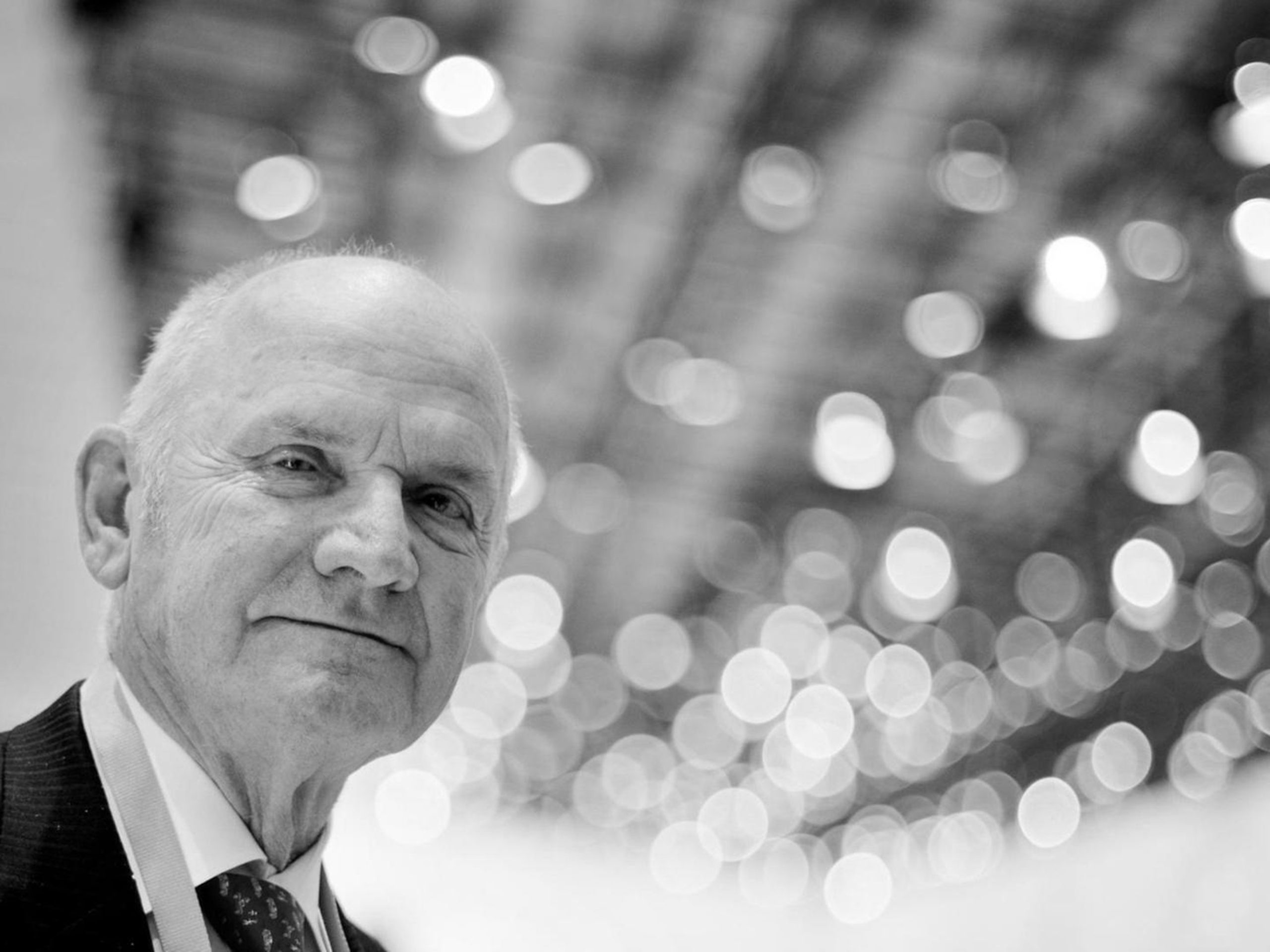
Born in Vienna on April 17, 1937, Ferdinand Karl Piëch was fascinated by technology from an early age – a passion that would define his entire life. He studied mechanical engineering in Zurich before beginning his career at Porsche, where he played a pivotal role in the creation of the legendary Porsche 917. His engineering brilliance later transformed Audi with innovations like the five-cylinder engine, TDI technology, and the quattro all-wheel-drive system. By 1993, as CEO of Volkswagen AG, Piëch had become one of the most influential figures in the automotive world.
And yet, the growth of his legacy would continue further. In 1997, when on a Shinkansen express train between Tokyo and Nagoya, Piëch sketched an idea on the back of an envelope that would change the automotive world. In conversation with Karl-Heinz Neumann, then Head of Powertrain Development at VW, he outlined an engine with 18 cylinders. Powerful, revolutionary, and unlike anything before it. This concept was the genesis of the powertrain that would later evolve into the legendary Bugatti W16.
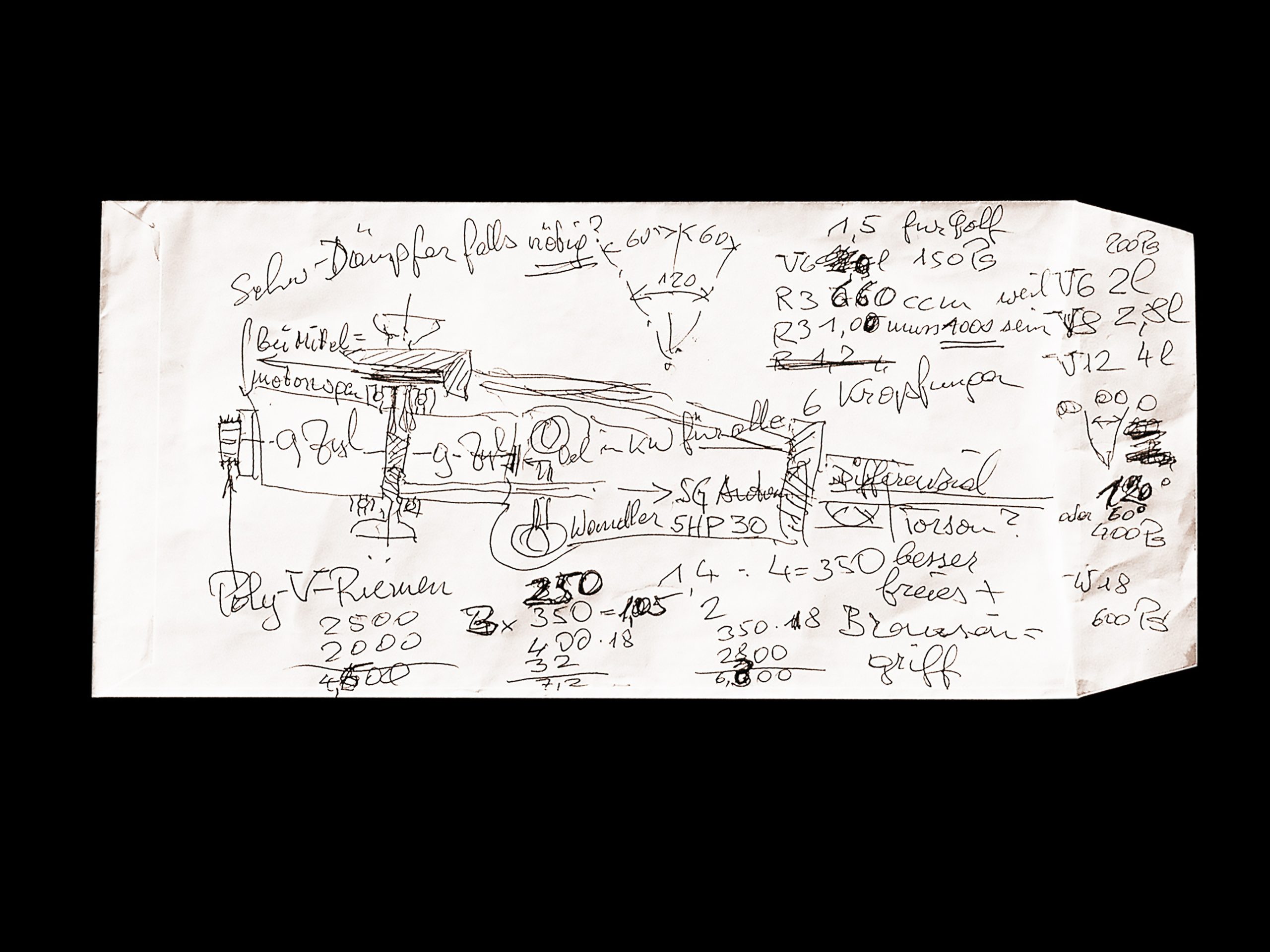
At the heart of Piëch’s fascination with technology was an imagination unbound by convention. He envisioned a car that could produce 1,000 PS and exceed speeds of 400 km/h, all while maintaining the refinement and usability of a luxury grand tourer. This was an idea that no existing vehicle architecture could support – and one that required an entirely new approach to engineering.
At the time, Piëch was searching for an automotive brand that could realize his bold vision. As considerations leaned towards Bentley and Rolls-Royce, fate intervened during his Easter vacation in 1997, when his son Gregor insisted on buying a model of a Bugatti Type 57 SC Atlantic. Inspired by his passion for the iconic marque, Piëch decided that Bugatti, a name synonymous with performance and luxury, was the perfect fit. And so, on May 5, 1998, Volkswagen secured the rights to the Bugatti brand – and the first steps towards making the W16 engine a reality were set in stone.
With the brand secured, Piëch commissioned his friend, the renowned designer Giorgetto Giugiaro of Italdesign, to develop a concept that faithfully honored his vision. The result was the Bugatti EB 118 – a two-door coupé whose model designation pays homage to its 18-cylinder engine. To the public’s surprise, the vehicle was unveiled at the Paris Motor Show in September 1998 – just a few months after Volkswagen AG had acquired the brand.
The possibilities for such an incredible feat of engine-development spread wide in the minds of the pioneers behind it – extending beyond the concept of the EB 118. Thus, in March 1999, the second study with 18 cylinders followed at the Geneva Motor Show: the EB 218 luxury saloon. In September of the same year, Bugatti presented the EB 18/3 Chiron super sports car at the IAA in Frankfurt. The rearrangement of the numbers in the model designation was done for trademark reasons, as the number 318 was already protected by another manufacturer.
Another highlight followed in October 1999, when the EB 18/4 Veyron was unveiled at the Tokyo Motor Show – the concept that would ultimately form the basis for the future production model. Unlike the previous studies, the design-study did not come from Giugiaro’s hand, but from the young Czech designer Jozef Kabaň, under the direction of seasoned design veteran Hartmut Warkuß.
In 2000, Ferdinand K. Piëch announced that Bugatti would be building a production car with 1,001 PS, capable of exceeding 400 km/h. The real challenge, however, was not just the sheer technical performance; it was to meet Piëch’s ultimate ambition: to create an automobile that would reach 400 km/h in the morning and still be suitable for an elegant drive to the opera with the wife in the evening.
His ambition was clear: Bugatti was to deliver the extraordinary, the unsurpassed, the ultimate. Every vehicle had to be a solitaire – incomparable and unique. “Only that is Bugatti,” he once wrote.
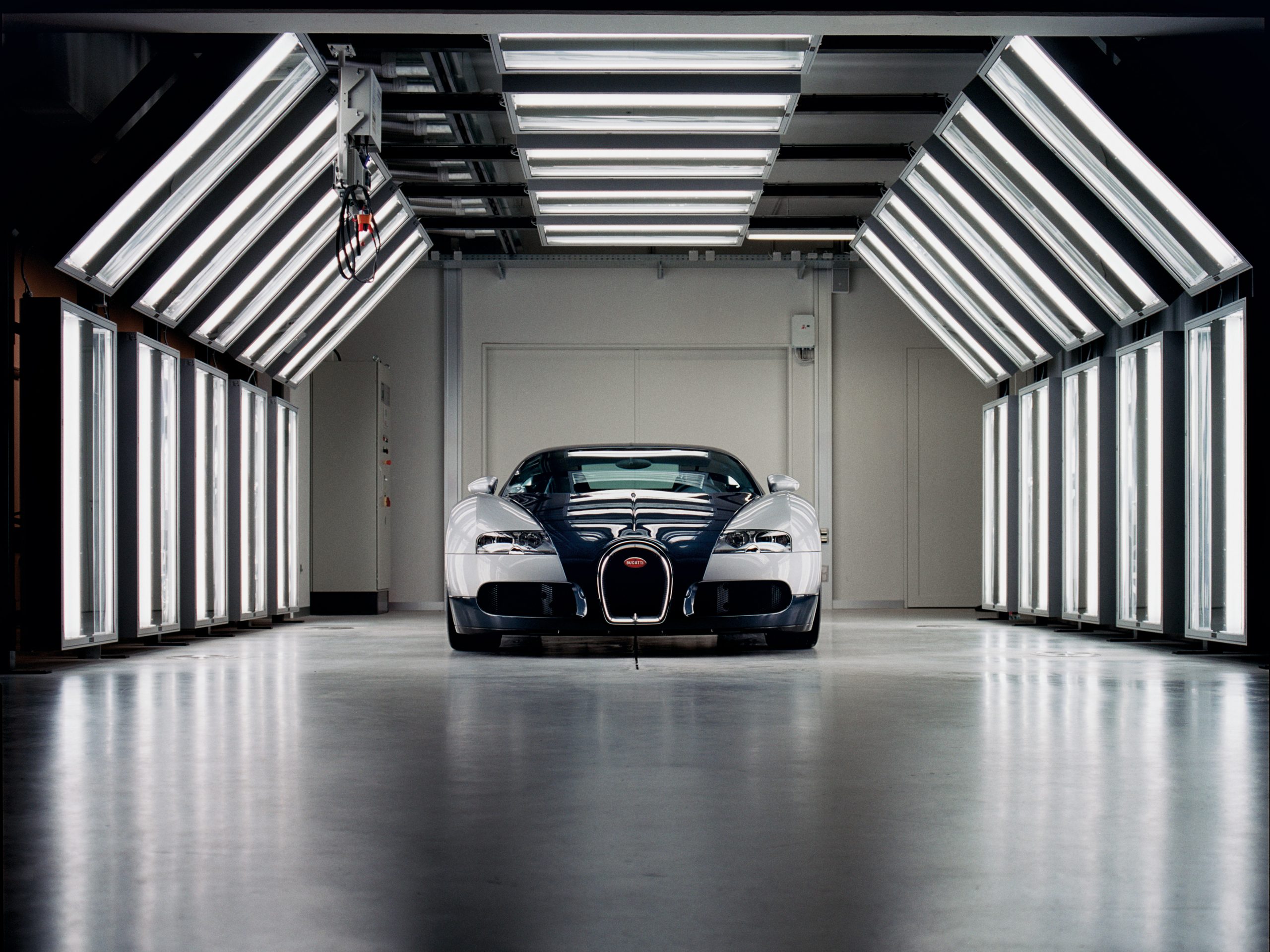
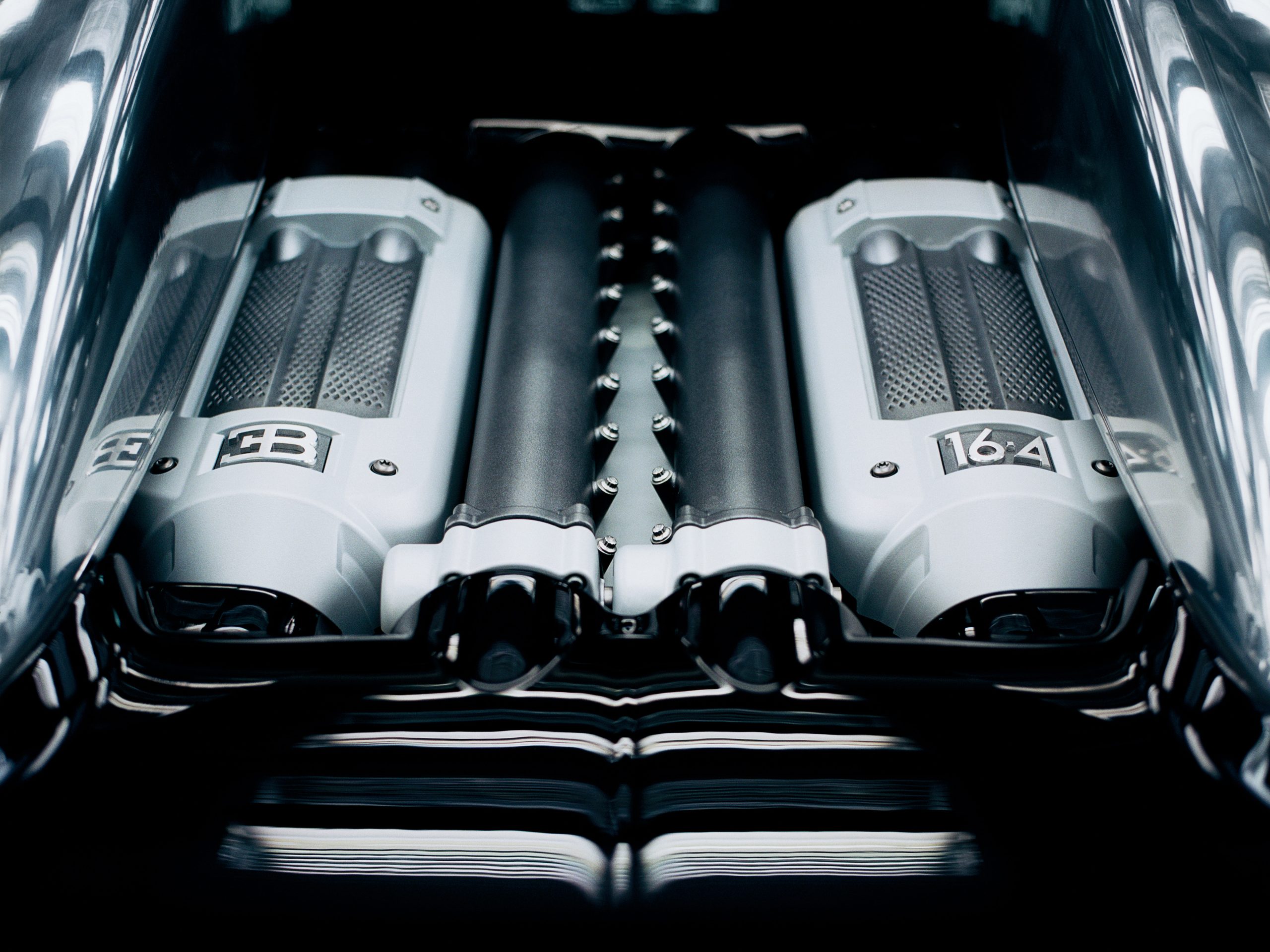
In 2005, his vision became reality. The Bugatti Veyron 16.4 was unveiled to the world and set new standards in performance, speed and luxury. With a top speed of 407 km/h and acceleration from 0-100 km/h in 2.5 seconds, it was the fastest production vehicle in the world – and underscored Bugatti’s dedication to technological excellence.
But beyond the numbers, the Veyron was more than a technical marvel; it was the embodiment of Prof. Dr. Ferdinand Karl Piëch’s relentless pursuit of perfection. His determination to achieve the seemingly impossible shaped the hyper sports car landscape and laid the foundation for every Bugatti masterpiece that followed.
Even today, two decades later – on Piëch’s birthday – the legacy of the Veyron remains unmatched. It was a revolution; it was the origin of the hyper sports car, and a testament to what happens when engineering genius meets an uncompromising vision. Prof. Dr. Ferdinand Karl Piëch had led Bugatti back to the forefront of automotive engineering, elevating it once again to its historic role as the pinnacle of performance and luxury – and it all started with the drive to create the extraordinary.
“Prof. Dr. Ferdinand Karl Piëch was a visionary who refused to accept limitations. His ambition was not just to create a fast, high-performance vehicle, but to redefine what was possible in automotive engineering. The Bugatti Veyron was his ultimate statement – a car that set entirely new benchmarks for speed, power, and luxury. On what would have been his birthday, we honor the legacy he left behind. Two decades later, the Veyron’s legacy remains incomparable, inspiring every Bugatti innovation that followed and cementing its place as one of the most significant automotive achievements in history.” – CHRISTOPHE PIOCHON – PRESIDENT OF BUGATTI

Leave a Comment
More in News

UK Drivers’ Car Insurance Premiums Jump 9.7 Percent to £1,184, Consumer Intelligence Reveals

Motorway Fuel Stops Cost UK Drivers Up to £14 More a Tank, CMA Reveals

Why Catalytic Converter Theft Is Surging Again [and How to Protect Your Car]

What Michigan USAA Drivers Must Know Before the Oct 8 Deadline

How Rivian Fixed 98,828 EVs Camera Bug Before Owners Even Knew
Trending on Motoring Chronicle

Ferrari 12Cilindri Manuale: Photo Gallery

How Falling Used Car Prices Have Handed UK Buyers the Upper Hand for the First Time in Years

A celebration of Bugatti past and present: the inaugural concours d’Élégance International Schlumpf [Photo Gallery]

Why Car Batteries Fail Without Warning