Progressive’s Profit Fell 3 Percent Even as It Added 1.4 Million Car Insurance Policies
- Progressive’s net income fell 3 percent in the third quarter of 2026 to $2.54 billion, even as the company added more than 1.4 million auto policies over the past year.
- Net premiums written climbed 4 percent to $22.3 billion for the quarter, and the company’s combined ratio, a core measure of underwriting profit, improved to 88.7 from 89.5 a year earlier.
- Direct auto policies grew 8 percent and agency auto policies grew 7 percent, evidence that Progressive kept winning customers through a year when many drivers nationwide were quoted higher premiums.
Progressive Grew Its Auto Business and Still Made Less Money
Progressive Corporation, the country’s second-largest private auto insurer by premium volume, reported its third-quarter 2026 results on October 14 in a filing with the Securities and Exchange Commission. The numbers show a company adding customers faster than almost any point in its recent history while its bottom line moved in the opposite direction, a split that says something about where auto insurance pricing stands right now for the millions of drivers who carry a Progressive policy.
Net income for the quarter ended September 30 came to $2.542 billion, down 3 percent from $2.615 billion in the same quarter of 2025. Diluted earnings per share landed at $4.37, also down slightly from $4.45 a year earlier. For the first nine months of 2026, Progressive’s net income actually rose, to $8.671 billion from $8.357 billion, so the third-quarter dip is a single-quarter story rather than a change in direction for the year.
What Drivers Paid, and What It Means
Progressive’s net premiums written, the clearest measure of how much customers are paying into the company’s policies before adjustments, reached $22.301 billion for the quarter, up 4 percent from $21.384 billion a year earlier. Net premiums earned, which recognizes that revenue over the life of each policy, rose 5 percent to $21.869 billion from $20.849 billion.
That growth came almost entirely from new customers rather than larger price increases on existing ones. Progressive’s total policies in force across all lines hit 40.489 million at the end of September, up 6 percent from 38.078 million a year earlier. Within personal auto specifically, direct auto policies, the ones customers buy straight from Progressive online or by phone, grew 8 percent to 16.848 million. Agency auto policies, sold through independent insurance agents, grew 7 percent to 11.347 million. Special lines policies, which cover motorcycles, boats, and recreational vehicles, grew 6 percent to 7.390 million.
Those growth figures matter for anyone who has shopped for auto insurance in the past year and found Progressive’s quote competitive against other national carriers. A company adding customers at that pace while most of the industry reported premium increases is a sign Progressive priced itself to take market share rather than to maximize revenue from each existing customer, at least in the states and risk categories where it chose to compete hardest.
Progressive uses a usage-based telematics program, Snapshot, that tracks driving behavior and adjusts individual premiums based on braking, mileage, and time of day spent on the road. The program has run for more than 15 years and gives Progressive pricing data most smaller regional insurers cannot match, letting it set rates closer to an individual driver’s actual risk rather than a broad category average. That precision helps explain how the company can grow its policy count by high single digits while its combined ratio moves in the right direction at the same time, a combination that is difficult for carriers relying on traditional rating factors like age, ZIP code, and credit-based insurance scores alone.
The Combined Ratio Explains the Rest
Insurers track underwriting performance through a figure called the combined ratio: claims paid out plus operating expenses, divided by premiums collected, expressed as a percentage. A combined ratio under 100 means an insurer is making money on the insurance itself, separate from any investment returns. Progressive’s combined ratio for the quarter was 88.7, an improvement of 0.8 points from 89.5 in the third quarter of 2025. For the year to date, the companywide combined ratio stands at 87.5.
An improving combined ratio alongside falling net income points to where the real pressure sat this quarter: not in how claims performed, but in investment results. Progressive recorded net realized losses of $231 million in September alone and posted an all-in accounting loss of $679 million for the month once unrealized investment swings are counted alongside net income, a result tied to the value of its investment portfolio rather than anything connected to car repair costs or claim payouts. Book value per share stood at $59.51 as of September 30, down 1.6 percent from $60.45 a year earlier.
Segment by segment, September’s results showed Progressive’s agency auto business running a combined ratio of 88.6, direct auto at 92.7, property insurance at 63.3, and commercial lines at 90.8. The companywide loss and loss-adjustment-expense ratio for September came to 69.2, with an accident-year figure of 71.2. Catastrophe losses stayed modest for the month at a net ratio of 1.4 companywide, though Personal Lines property coverage carried a heavier 5.0 ratio tied to weather losses. Progressive’s release states the company has no additional commentary on the September figures beyond the data itself.
A combined ratio of 88.7 means Progressive kept roughly 11.3 cents of every premium dollar as underwriting profit for the quarter, before counting investment income or losses separately. Most large national auto insurers aim to run somewhere in the mid-90s to break even on underwriting alone and rely on investment returns to turn a profit overall, so a figure in the high 80s puts Progressive well ahead of that baseline on the insurance side of its business, even in a quarter where its total net income fell. The direct auto segment’s 92.7 combined ratio, higher than agency auto’s 88.6, reflects the higher advertising and acquisition costs that come with building a policy base through television ads and online quotes rather than independent agents who are paid commission only when a sale closes.
How This Fits the Rest of the Insurance Market
The results land in the middle of a year when rate increases have been a constant theme in auto insurance coverage nationwide, with multiple states seeing full-coverage premiums climb and federal inflation data only recently starting to show relief for some policyholders. Progressive’s numbers show both halves of that story at once: a company still pulling in more premium dollars and more policyholders than a year ago, while its underwriting results improved and its headline profit still slipped for the quarter on investment losses that have nothing to do with how many claims it paid.
For customers, the practical takeaway sits in the policy growth numbers more than the profit figures. An insurer adding auto policies at 7 to 8 percent annual rates while improving its combined ratio is not pricing itself out of the market, and Progressive’s quotes have likely stayed closer to flat or seen smaller increases than some competitors over the past year in order to win that volume. Progressive has scheduled its formal third-quarter investor call for November 3, with CEO Tricia Griffith and CFO Andrew Quigg set to field analyst questions, and the company’s Form 10-Q covering the quarter in full detail is due with the SEC on November 2.
What To Do With This Information
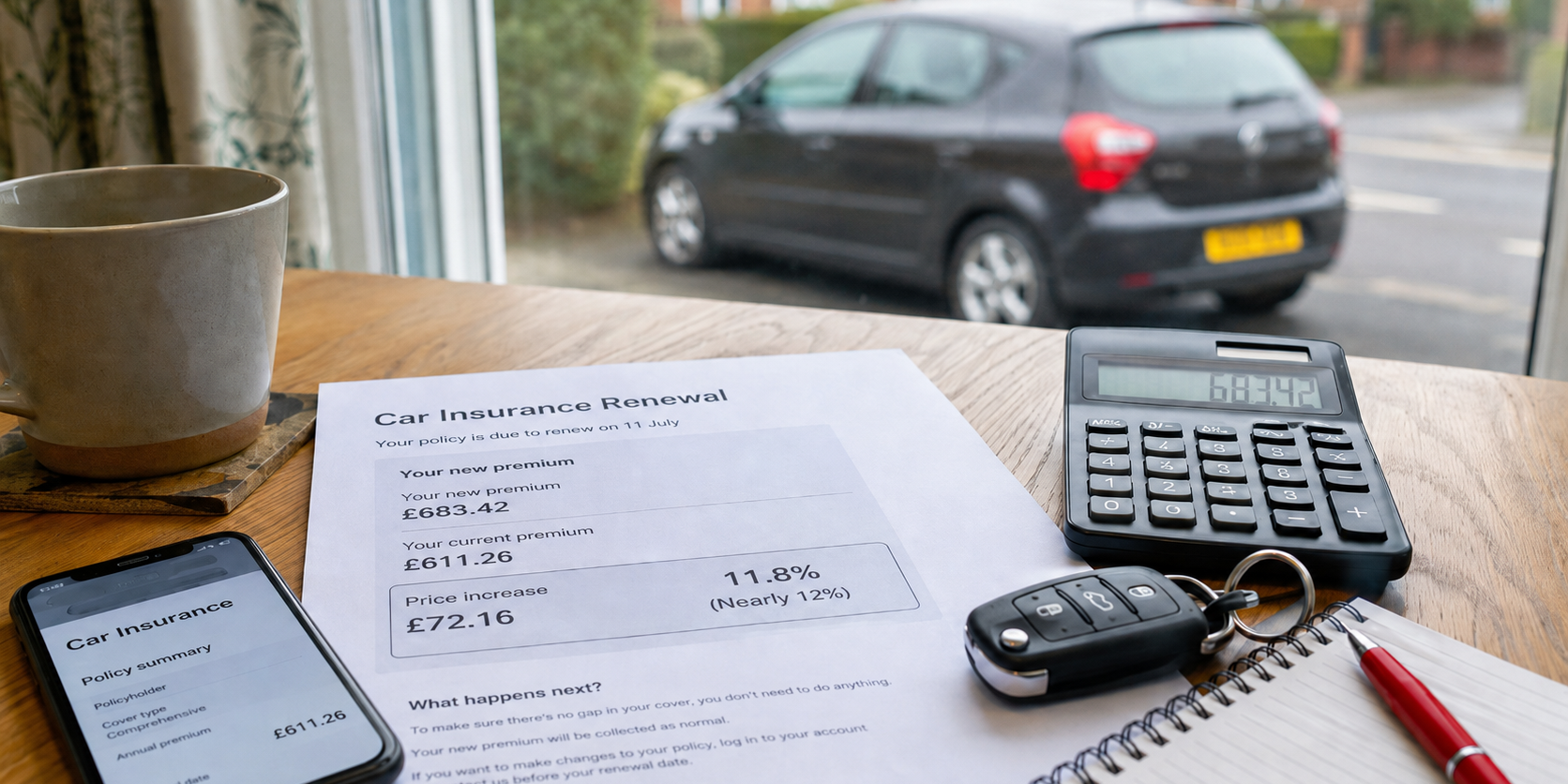
- If your renewal notice shows a premium increase, get a competing quote from at least one carrier that is actively growing its book of business. A company adding policies quickly is often pricing more aggressively to win new customers than one trying to offset rising claims costs.
- Ask your agent or the insurer directly whether your rate reflects a companywide filing or a change specific to your state, vehicle, or driving record. Combined ratio improvements at the national level do not always translate into lower individual premiums right away.
- Review your policy’s collision and other-than-collision deductibles at renewal. Insurers that improve their combined ratio often do it partly through claims handling and partly through policy terms, so the cheapest headline price is not always the best overall value.
- Watch for Progressive’s full 10-Q filing on November 2 and its investor call the following day if you want segment-level detail beyond what the preliminary September release covers, including state-by-state premium and loss trends not included in the monthly summary.
Progressive began as a non-standard auto insurer in 1937, built its direct-to-consumer business through call centers starting in the 1990s, and became one of the first major insurers to sell policies online. It now writes personal auto, commercial auto, property, and specialty coverage across all 50 states, and its growth in policy count this quarter puts it on pace to keep narrowing the gap with the two carriers ranked above it in total U.S. auto premium.
Want more car content? Add us as a preferred source on Google to your favourites list for the best automotive news and analysis on the internet.
If you enjoyed this article, be sure to follow us on Microsoft Start.
Sources:

Leave a Comment
More in News

What a Coolant Warning Light Means Before It Costs You a £1,000 Repair

NHTSA Picks 23 Vehicles for 2027 Crash Tests and Adds a New Pedestrian Safety Score

GAP Insurance Paid Back Just 6 Percent of What Drivers Paid, FCA Figures Show

A £4,300 Vauxhall Made Hagerty’s List of Classic Cars Worth Watching in 2026

Every Company Car Driver Faces a Benefit in Kind Tax Rise This April
Trending on Motoring Chronicle

Wagons Roll: VW’s 2027 Lineup Brings a Camping ID. Buzz Tourer and All-New Atlas SUV

How a Burning Smell From Your Clutch Could Signal a £600 Repair Bill
BMW’s New M350 xDrive Brings 443hp and a Drift Moment Feature

New Jersey Drivers Face the Country’s Biggest Car Insurance Hike at 10.46 Percent