
Form, Function, and the Future: Shaping the Bugatti Tourbillon



When Jan Schmid and his team of exterior designers set out to shape the Tourbillon, they faced a challenge that defines the marque: how do you honor more than 115 years of automotive artistry while propelling the brand into a new age? For Schmid, Bugatti’s Chief Exterior Designer, the answer lay in what he calls “finding that sweet spot of what a Bugatti is and what a Bugatti can be in the future.”
The result is a hypercar that carries forward Bugatti’s famed design language yet reimagines it with both precision and purpose. The latest chapter of the Bugatti ‘A New Era’ documentary series explores this evolution, revealing how heritage and innovation converge in every surface.
Every angle of the Tourbillon tells a story. The iconic horseshoe grille, lower and wider than on any Bugatti before it, anchors a face that appears to be lunging forward. But this isn’t simply sculptural. Schmid and his team shaped every millimeter with intent, even ensuring that an EU number plate fits seamlessly within the horseshoe’s curves while maintaining aerodynamic and structural integrity.
“It’s really about making a Bugatti recognizable as a Bugatti from every angle by incorporating our core design DNA elements.”
The Horseshoe

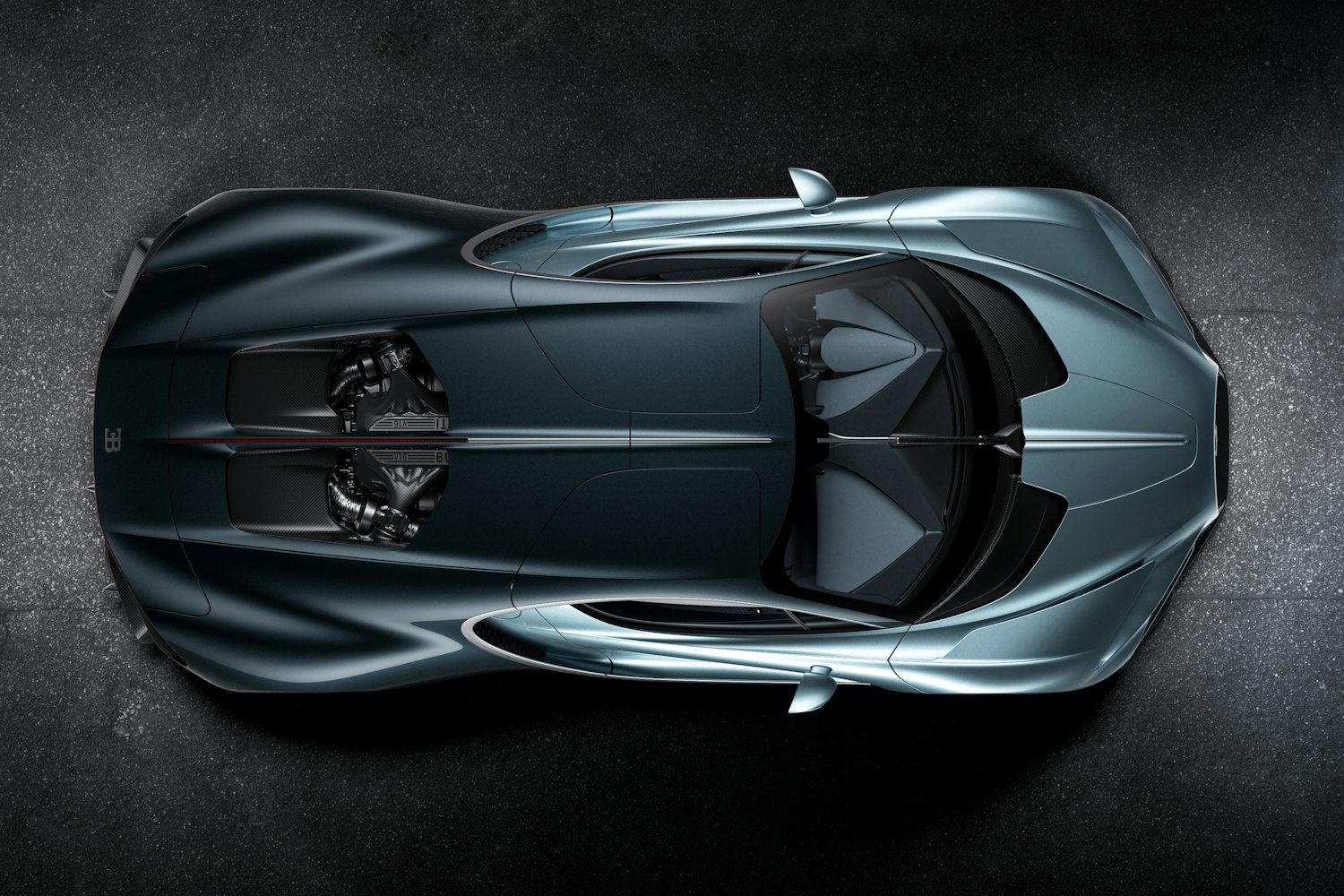
The horseshoe is joined by the fuselage accentuation and the centerline; a feature that traces its lineage to the riveted spine of the Type 57 SC Atlantic. On the Tourbillon, this centerline flows from nose to tail, culminating in the third brake light, which is integrated into the spine itself.
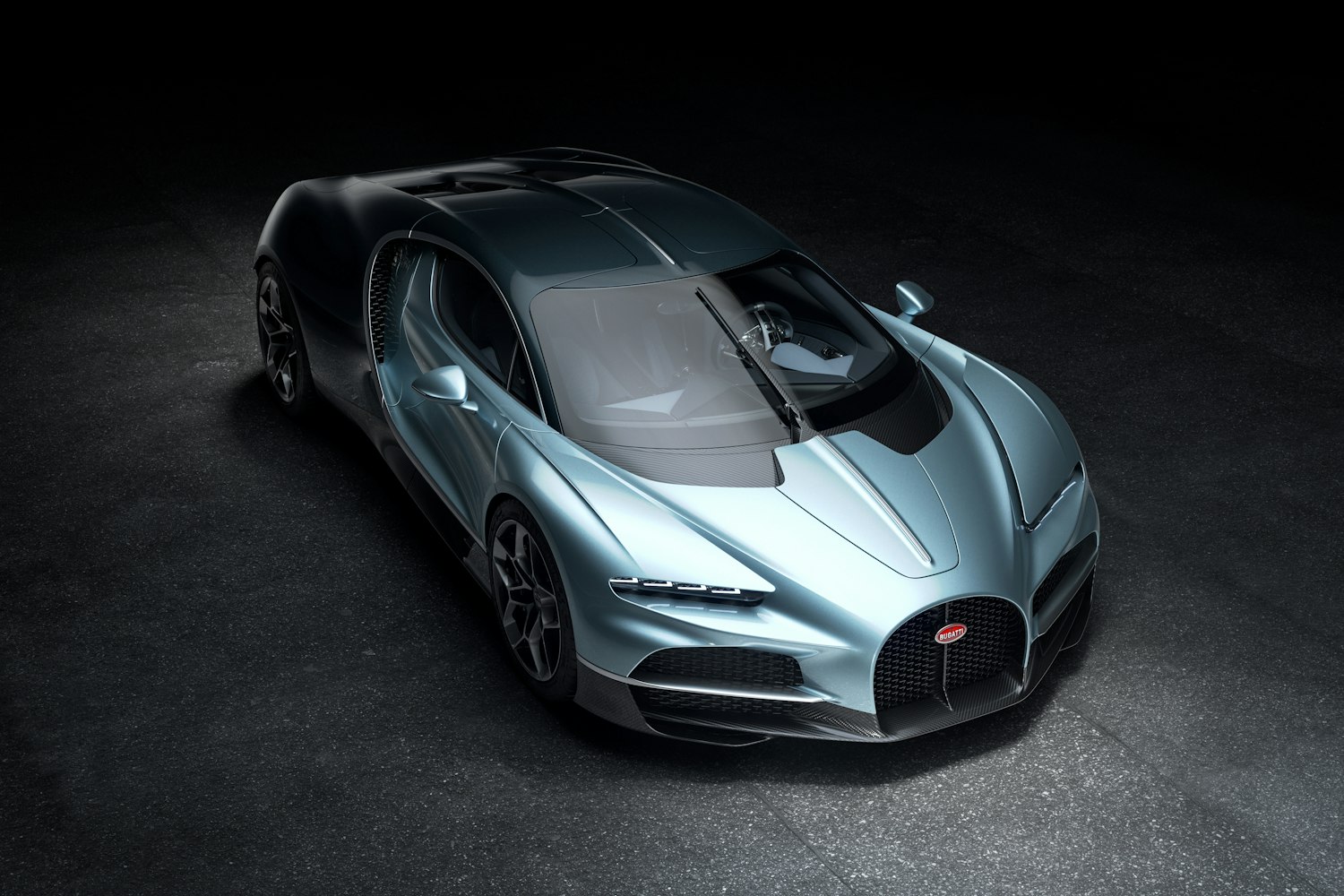
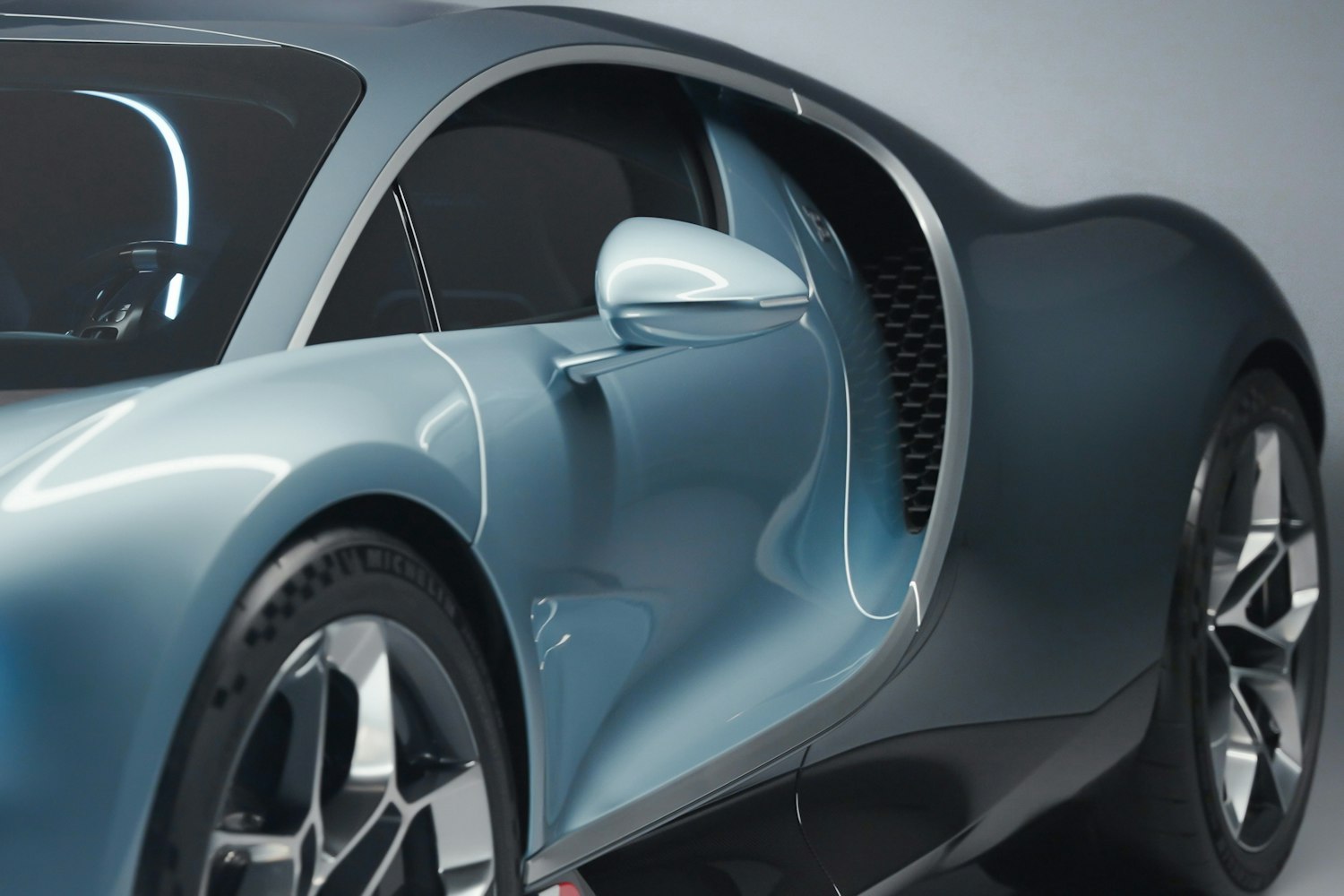
The distinctive Bugatti Line, sweeping from the A-pillar around the greenhouse before flowing toward its precise return at the front of the car, creates what Schmid describes as “an impression of leaping forward.” That defining curve accentuates and supports the car’s side profile, where every surface seems charged with motion and ready to accelerate. Along the line’s path, it also defines the division for Bugatti’s iconic duotone color split, a signature element that traces back to the brand’s earliest creations.
The Tourbillon’s side profile is a bold statement of form. Its pronounced “Coke bottle” curvature, sweeping inward before flaring over the rear haunches, gives the car a sense of visual drama. This sculptural treatment celebrates proportion, offering a unique interplay between lightness and strength.
The Face
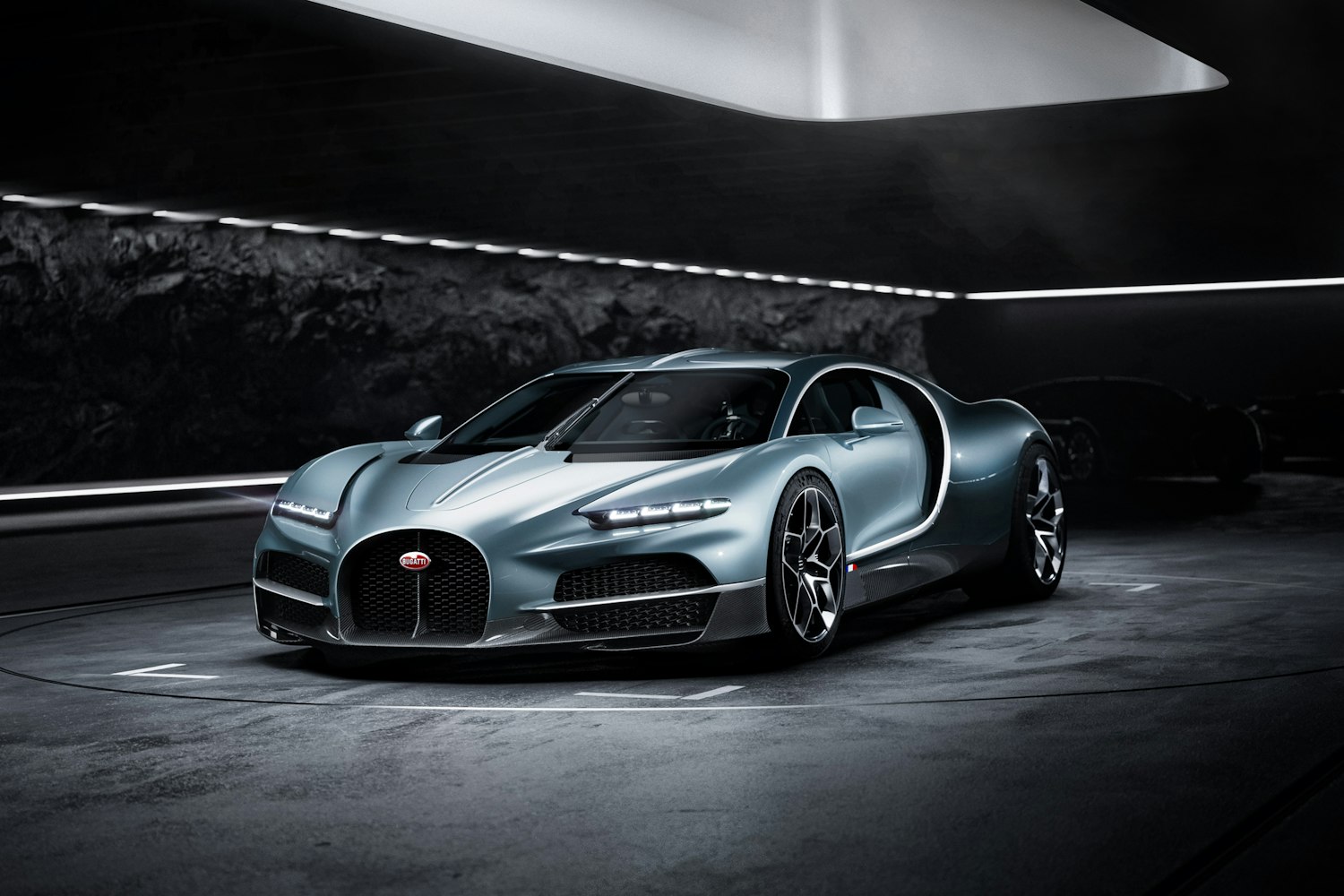
A closer look at the Tourbillon’s face reveals a remarkable feat of engineering. Despite sharing nearly the same footprint as the Chiron, the Tourbillon manages to accommodate more luggage space, an electric front axle and intricate aerodynamic ducting, all while sitting lower to the ground. The secret lies in the seamless collaboration between design and engineering, transforming function into sculpture.
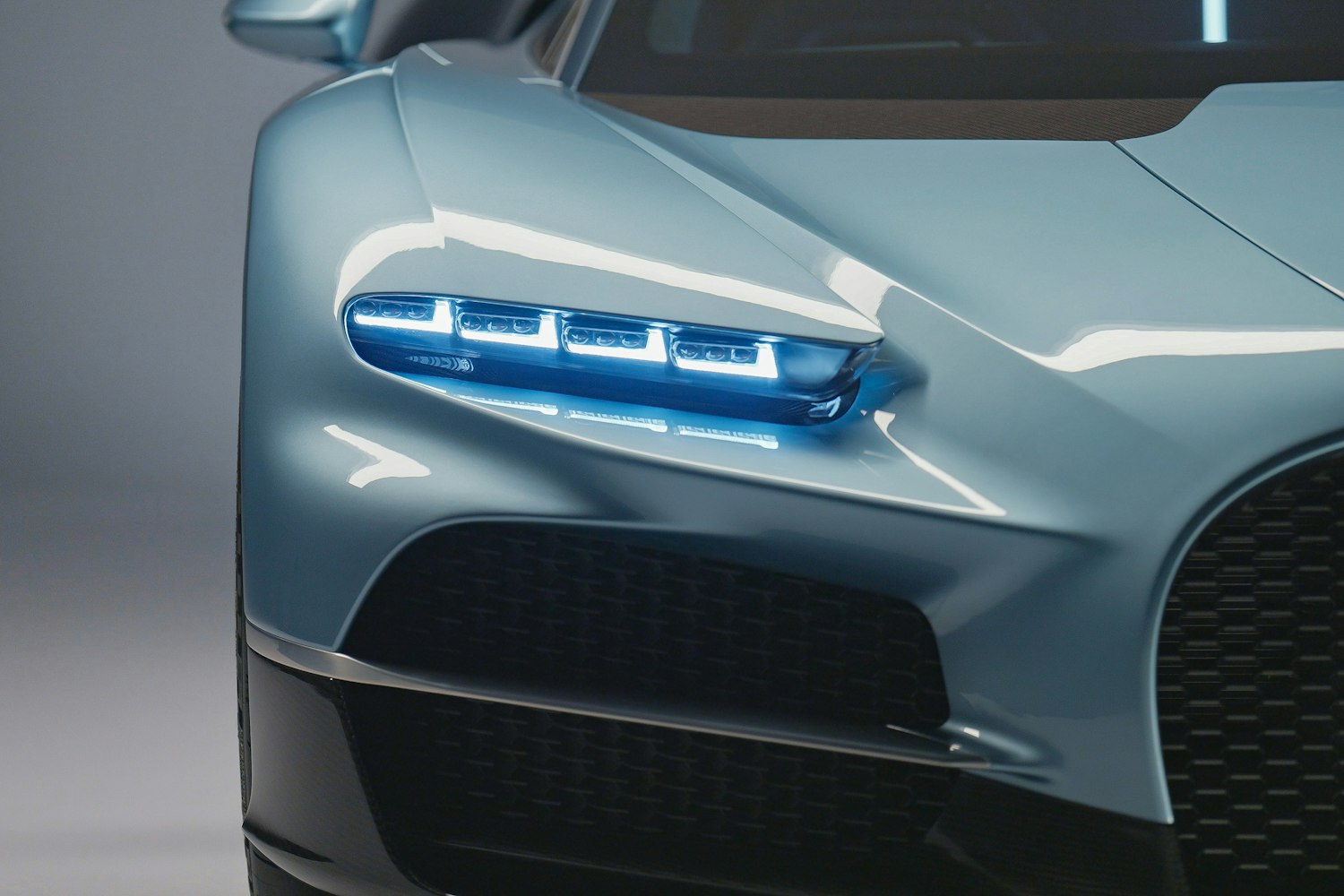
The headlights exemplify this philosophy. Compact yet unmistakable, they attach to what Bugatti calls the ‘flying fender,’ which serves dual purposes. Visually, it accentuates the fuselage’s forward thrust. Functionally, it channels air beneath the fender and out the top, feeding the side radiators and air intakes. The side view reveals a dynamic interplay between the precisely drawn front fender, with its long crease line flowing all the way toward the side intake, and the muscular, sculpted rear fender.
The Rear
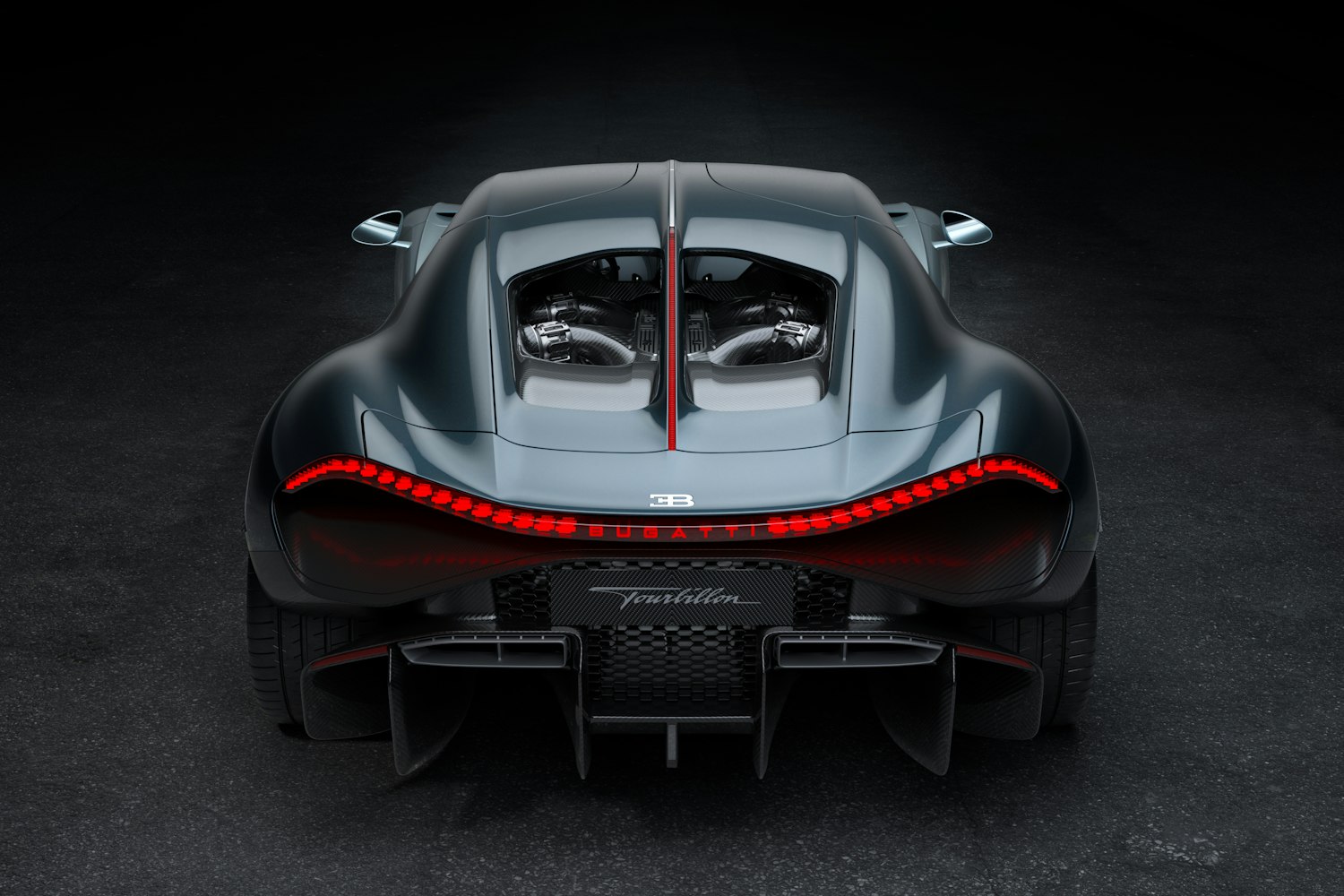
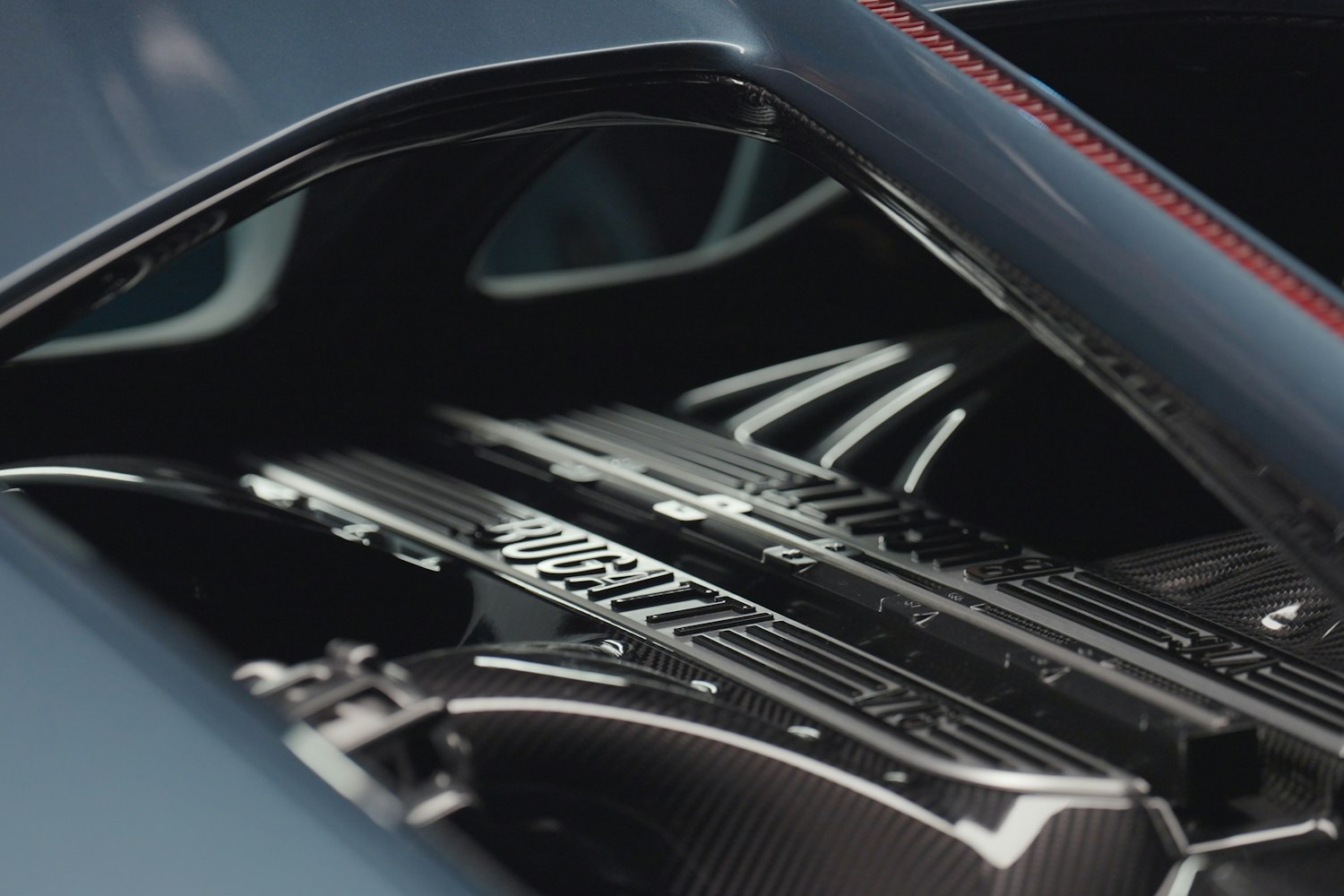
At the rear, the Tourbillon’s fender flows seamlessly into the deck, where an active rear wing deploys only when needed. Below, the open engine bay showcases the towering plenum of the naturally aspirated V16.
More than 124 individual LED elements form a single monobloc tail light that traces the rear’s contour from edge to edge, with the Bugatti script illuminating at its center. Beneath this, air outlets draw hot air from the side-mounted radiators. The exposed rear wheels and high-mounted diffuser channel, starting behind the front seat, create a lightweight, planted appearance while accelerating air rearward with efficiency.
“Everything is playing hand in hand. The new package, the design – we really showcased the capabilities of what the Tourbillon can do.”
When asked to choose his favorite element, Schmid doesn’t hesitate.
“I have to point towards the way the rear fender is shaped. It is, in fact, inspired by the proportion of the rear fender of the Veyron with its reflection-based vastness and the grandeur of the surfacing. I’m particularly happy about how it turned out and how it gives really strength and muscle to the car and enhances the overall stance and proportion.”
The Tourbillon stands as proof of the marque’s enduring philosophy: creating beauty through the symbiotic interplay of strong graphic DNA elements that interact seamlessly with expansive, sculptural surfaces. The result is a form that is unmistakably Bugatti.
The Tourbillon


Leave a Comment
More in News

What to Do If Your Car Aquaplanes (and How Tyre Tread Affects Risk)

Motorpoint Finds Diesel Drivers Face £515 More a Year in Fuel, Doncaster Hit Hardest

Why Your Car’s Stop-Start System Stops Working (and What a New Battery Costs)
What a Red X Actually Means on the Motorway (and What to Do)

RAC Finds Car Repair Bills Near £700 as 25% of Young Drivers Delay Fixes
Trending on Motoring Chronicle

Why Your Car Air Conditioning Smells Musty and How to Clear It Without a Garage Visit

Northern Ireland Drivers’ Car Insurance Jumped £73 in Three Months, WTW Shows

Five Volvo cars, including two plug-in hybrids, named Car and Driver Editors’ Choice award Winners

Subaru Recalls 69,663 Foresters Because the Moonroof Glass Can Detach While Driving
