Bugatti Develops Bespoke Michelin Tires for the 1,800 PS Tourbillon Hypercar


Four small patches of rubber are all that connect any car to the road, and for a hypercar with 1,800 PS that contact patch becomes one of the hardest engineering problems of the entire project. Bugatti has now pulled back the curtain on how it solved that problem for the Tourbillon, revealing a tire developed from scratch with Michelin specifically for its new hybrid flagship as the car moves toward series production.
The story is told in the latest episode of Bugatti’s “A New Era” documentary series, which follows the Tourbillon’s development team to Michelin’s Ladoux test facility in France. There, in the summer of 2025, engineers set out to validate one of the most critical components on the car: a bespoke tire built to handle everything the Tourbillon can throw at it.
Why a Hypercar Needs Its Own Tire
Most performance cars run tires adapted from an existing range. The Tourbillon does not. Compared with its predecessor, every key performance metric has climbed, from power and acceleration to top speed, and that left Bugatti and Michelin with no option but to start with a clean sheet. Rather than reworking an off-the-shelf product, the two companies developed tires capable of delivering stability and grip across an exceptionally broad operating window, from low-speed city driving to sustained high-speed running.
The challenge is not only about outright grip. A tire for a car like this has to behave predictably when cold, stay composed at speeds few drivers will ever approach, and still feel natural on a normal road. Bugatti describes the result as the product of months of simulation and virtual development long before any rubber met asphalt, with computer modeling narrowing the field of candidates ahead of physical testing.
Inside the Ladoux Test Program
By the time the team arrived at Ladoux, what had started as multiple bespoke front and rear tire concepts had been refined down to just three specially developed sets. The facility’s specialized tracks then allowed Bugatti to evaluate each option across a wide range of scenarios, including high-speed cornering and detailed handling assessments.
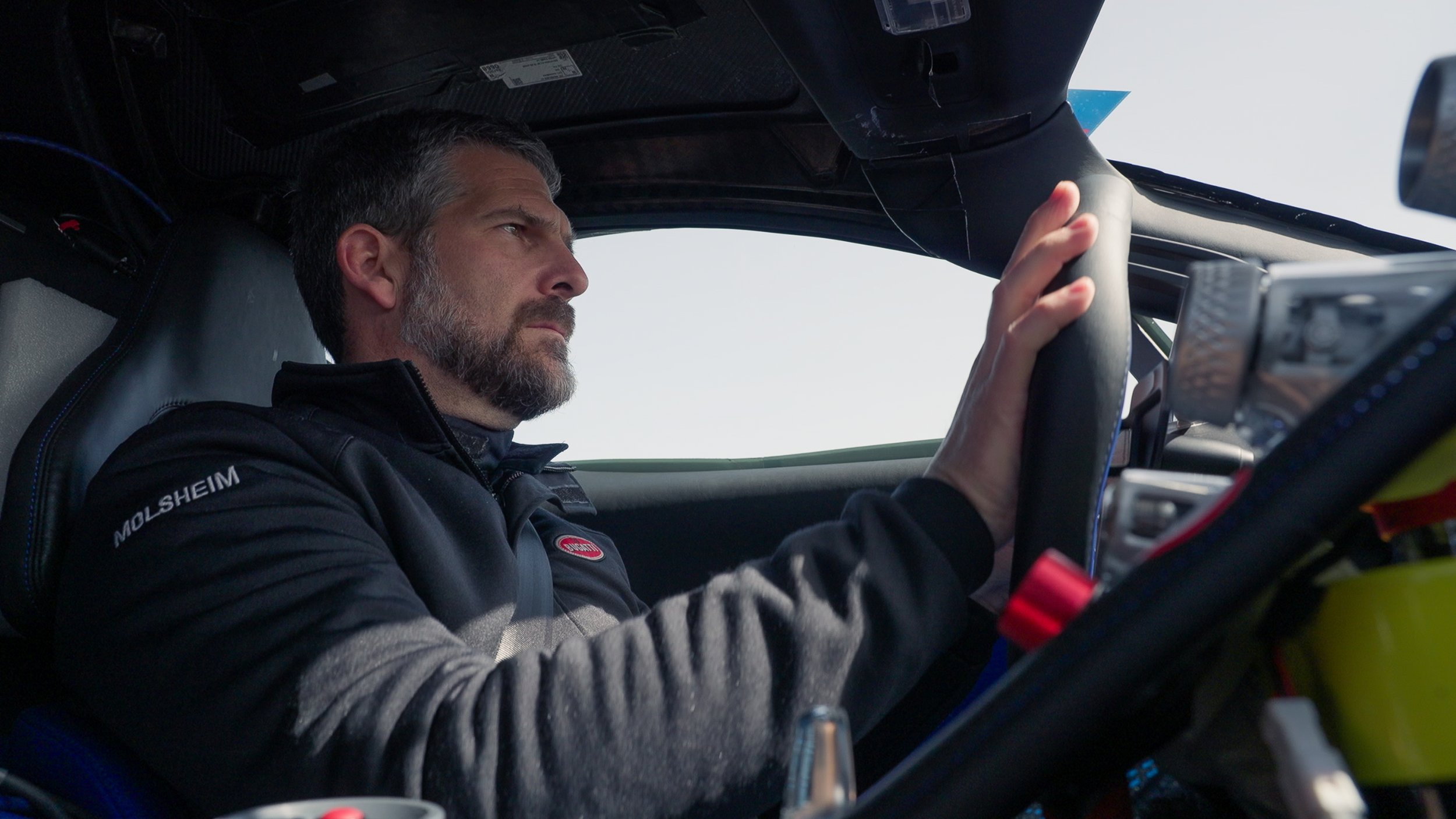
To build a complete picture, the team paired objective measurements with subjective driver feedback. Quantifiable data highlighted differences in grip and handling, while the drivers judged how those traits translated into the Tourbillon’s overall feel and personality. At the center of that process is Chief Test and Development Driver Miroslav Zrncevic, who described his role in unusually human terms.
“If it was a kitchen, I would be the taster,” Zrncevic said. “I’m working with different engineering teams to develop the character of the car, controls, vehicle dynamics, everything else.” His feedback, combined with the engineers’ instruments, helped translate impressions from behind the wheel into measurable targets the tire designers could chase.
That blend of data and instinct is what separates a tire that works on paper from one that works on the road. A compound can post strong grip numbers in the lab yet feel nervous at the limit, or wear unevenly after sustained high-speed running. By cross-checking the instruments against what the drivers report, Bugatti aims to lock in a tire that stays consistent whether the Tourbillon is crawling through a town or stretching its legs on a derestricted autobahn, with no unwelcome surprises as temperatures and speeds climb.
A Partnership That Goes Back to the Veyron
The Ladoux visit is the latest chapter in a relationship that stretches back to the Veyron. Bugatti and Michelin have worked together since the earliest days of that program, evolving tire technology to meet the rising demands of each successive generation of hypercar. The Veyron and Chiron both relied on bespoke Michelin rubber engineered to cope with speeds and loads ordinary tires were never designed to survive, and the Tourbillon continues that approach.
What makes the Tourbillon project stand out is the scale of the step up. With a naturally aspirated V16 paired to electric power for a combined 1,800 PS, the car asks more of its tires than any road-going Bugatti before it. The close cooperation between Bugatti’s engineers and Michelin’s designers is how the two sides keep that performance usable rather than intimidating.
What It Means for the Finished Car
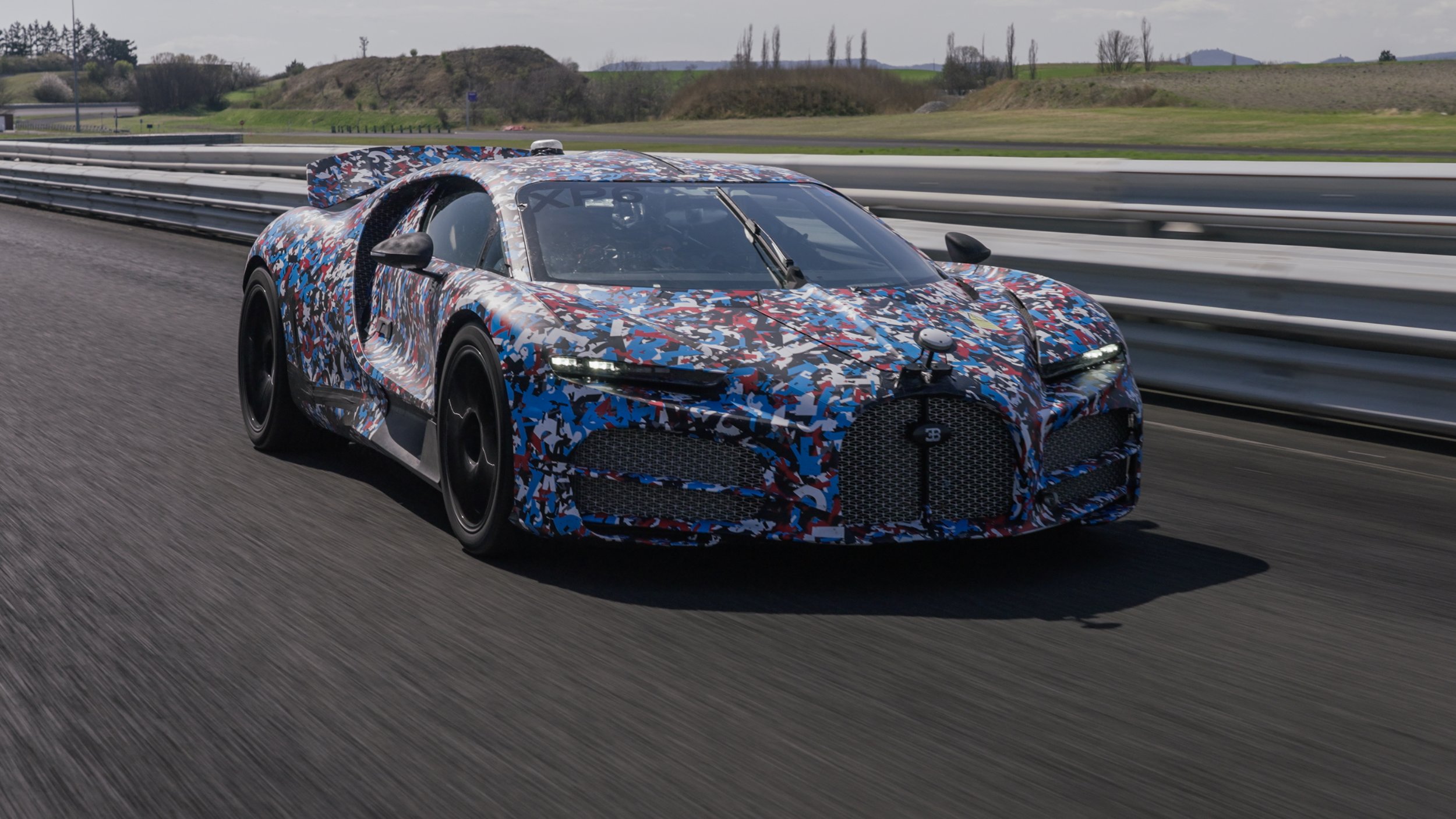
The tire work is part of a broader validation program that has already taken the Tourbillon from the frozen proving grounds of Sweden to the high-speed circuit at Nardo in southern Italy. Each stage feeds data back into the car’s setup as the final pre-production testing wraps up, and the tire is one of the last big pieces to be locked in before customer cars are built.
For the handful of buyers who will eventually take delivery, none of this will be visible. They will simply find a car that feels planted and approachable despite its enormous performance. That is the point. The months of simulation, the three candidate tire sets and the days of testing at Ladoux all exist so that the Tourbillon’s 1,800 PS can be deployed with confidence, on a set of tires built for nothing else.

Leave a Comment
More in News

Every Driver Fitting LED Headlight Bulbs Risks a £54.85 MOT Fee Under New DVSA Rules

Why Subaru Is Telling Owners of Brand New Crosstreks and Foresters Not to Drive
How Water Pooling in Nearly 94,000 Range Rovers Could Blind the Backup Camera
Toyota Recalls 105,794 Land Cruiser Hybrids Over Fuel Line Fire Risk
Ford Recalls 102,159 Super Duty and F-150 Trucks Over Faulty Speedometers
Trending on Motoring Chronicle

First look at the future: 2027 Volkswagen Atlas conquers Québec’s winter terrain

Aston Martin celebrates 60th anniversary of Goldfinger with 007-inspired secret experience in the heart of London [Photo Gallery]

How to Open a Frozen Car Door Without Breaking the Handle or Seal

High performance meets parenthood as Aston Martin and egg® join forces to unveil the ultimate luxury stroller [Photo Gallery]