Bugatti Veyron: the legacy behind a legendary name


In the pantheon of automotive legends, few names carry the weight of personal excellence and brand-defining legacy quite like Pierre Veyron. Revered as the namesake of the revolutionary Bugatti Veyron 16.4, his story is not merely one of motorsport triumph, but of technical ingenuity, steadfast loyalty and a timeless alignment with Bugatti’s core ethos.
Born in 1903 in France, Veyron’s early years revealed a mind both analytical and daring. Though he initially pursued engineering, he was soon drawn to the fast-evolving world of motorsport – a passion that found deeper purpose upon meeting Ettore Bugatti. Veyron’s talent behind the wheel was undeniable, but it was his sharp mechanical insight that truly captured Ettore’s attention. He was not merely a driver; he became a development engineer, a trusted test driver, and ultimately, a confidant to the Bugatti family. In many ways, he became an extension of the marque itself.
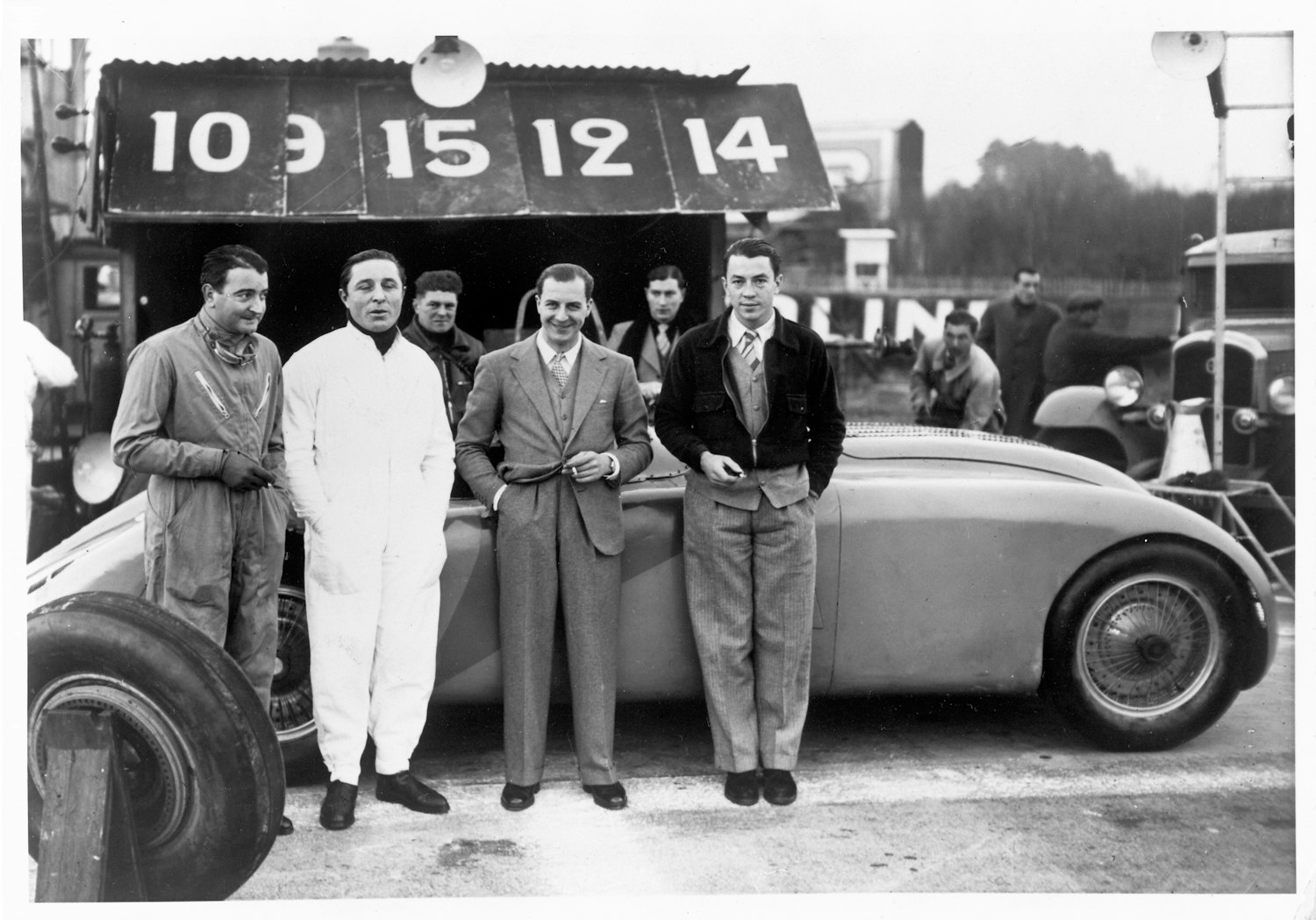
Veyron’s racing career formally began in the late 1920s, competing in hill climbs and endurance events across France. His breakthrough came in 1930 with a commanding victory in the 1500cc class at the Geneva Grand Prix, earning him recognition for both his fearless driving and his technical command of the car. By 1932, Ettore Bugatti had personally recruited Veyron as a test driver and part-time racer – a partnership that would define the next decade of his life as his hands shaped the performance and refinement of Bugatti’s most advanced race machines.
Thanks to his intimate mechanical understanding – sharpened not only from the driver’s seat but also from time spent in the workshop – Veyron became an invaluable bridge between the racetrack and the engineering bench. He worked closely with the teams in Molsheim, offering real-time feedback that helped fine-tune performance innovations and influence the evolution of Bugatti’s competition cars.
Throughout the 1930s, Veyron competed in many of Europe’s most demanding and prestigious motorsport events. He regularly piloted the Bugatti Type 51 and, later, the Type 57 in both Grand Prix and endurance formats. Among his standout performances were a class victory at the 1933 Berlin Avusrennen and a strong showing in the 1936 Grand Prix de l’ACF at Montlhéry, where he showcased the raw competitiveness of Bugatti’s maturing race technology.
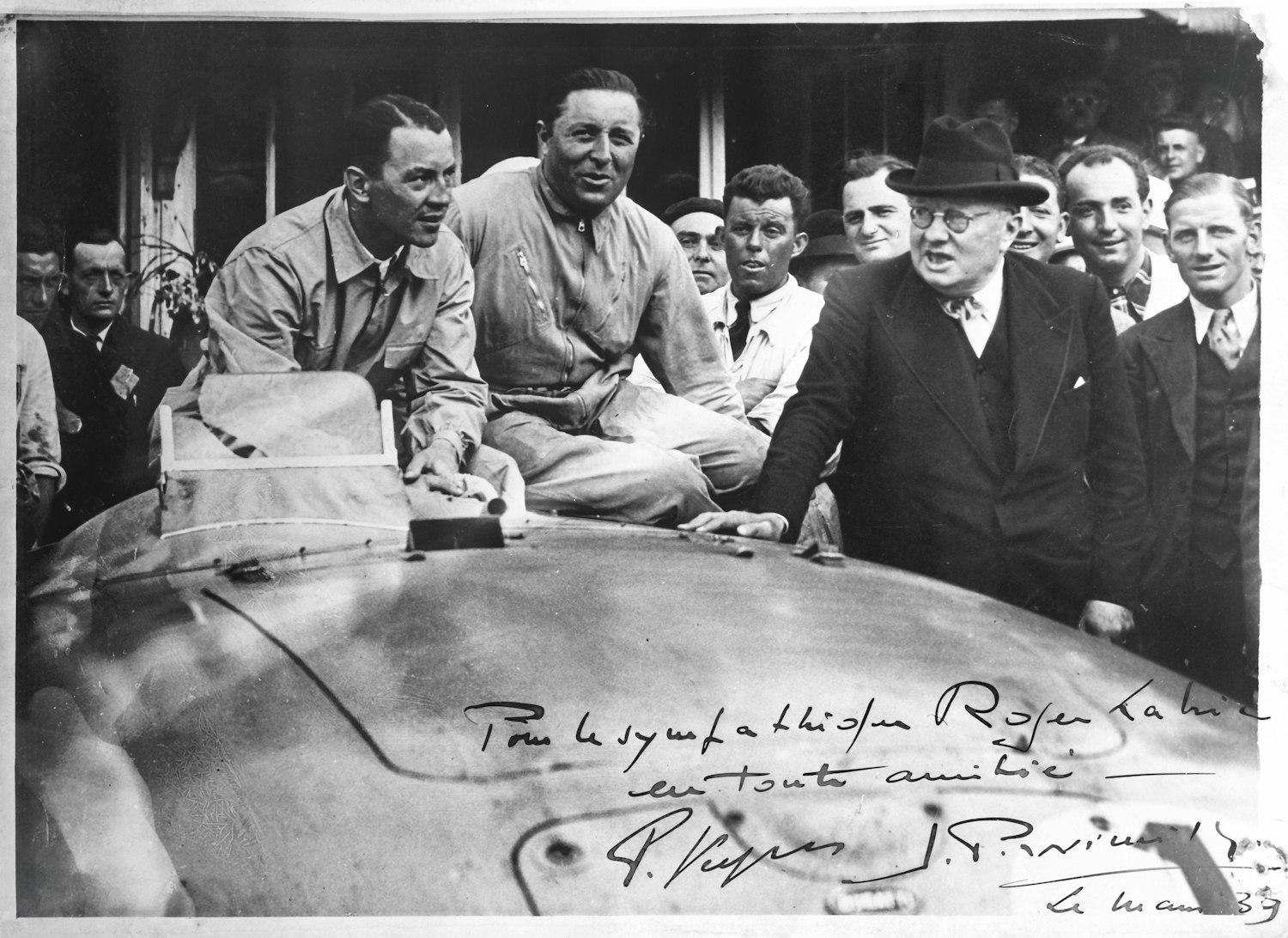
Veyron’s defining moment arrived in 1939 at the 24 Hours of Le Mans. Sharing the cockpit of the streamlined Bugatti Type 57C Tank with Jean-Pierre Wimille, the duo delivered a masterclass in endurance racing. Their victory was not merely a triumph of speed, but one of consistency, strategy, and mechanical reliability. It would also be the final Le Mans before the outbreak of the Second World War – an emblematic capstone to a golden era of motorsport.
That win was more than a race result. It was symbolic – a testament to the perfect synergy between driver and machine, and to Bugatti’s enduring pursuit of excellence. For the marque, it was not just a checkered flag; it was a declaration of purpose.
In the years following the war, Pierre Veyron gradually stepped back from competitive racing, yet remained a respected figure in the Bugatti world. He turned his attention to engineering and family life, but his influence on the brand’s racing legacy continued to resonate.
Decades later, as Bugatti prepared to reassert its presence on the global stage with a new hyper sports car, Ferdinand Piëch and the team were faced with a pivotal question: what name could carry the gravity and heritage of such a bold vision?
The answer lay in the past. Naming the car ‘Veyron’ was more than a tribute – it was a definitive statement. The Bugatti Veyron 16.4, launched in the early 2000s, was nothing short of a technological moonshot. With over 1,000 PS, a quad-turbocharged W16 engine, and top speeds beyond 400 km/h, it redefined what was thought possible in a road-going car. And yet, its core philosophy remained unmistakably Bugatti: relentless innovation, obsessive engineering, and the pursuit of perfection – principles embodied by Pierre Veyron himself.
Just as Veyron bridged the worlds of racing and engineering, the Veyron 16.4 bridged eras – seamlessly connecting the elegance of Bugatti’s heritage with the extreme performance demanded by a new generation. In every detail – from its sculpted interior to the thunderous heartbeat of its engine – his legacy lives on.
Today, the name Veyron is known around the world as a symbol of performance without compromise. But behind the numbers, the records, and the reverence lies a man whose character helped shape the soul of Bugatti. Pierre Veyron was more than a racer. He was an innovator, a collaborator, and a guardian of Ettore Bugatti’s vision.
If you enjoyed this article, be sure to follow us on Microsoft Start.

Leave a Comment
More in News

Paris Motor Show 2026 highlights, with BYD and Denza leading the charge

How a Burning Smell From Your Clutch Could Signal a £600 Repair Bill

What a Tyre Pressure Warning Light Means as Cold Mornings Return This Autumn

What the Fog Light Rule Actually Means (and the £50 Fine)

How to Drive Through Flood Water (and What to Do If It Stalls)
Trending on Motoring Chronicle

How a Deer Strike This Autumn Could Cost UK Drivers £2,713 in Repairs

Why Crash Test Ratings Saved 48,352 American Lives Over 30 Years

Poor Maintenance History Tanks Car Resale Value – Here’s Why

When to Use Your Hazard Lights (And When They’re Making Things Worse)