
First LA Speed Camera Warnings Expire Dec. 25, Then Fines Run $50 to $500
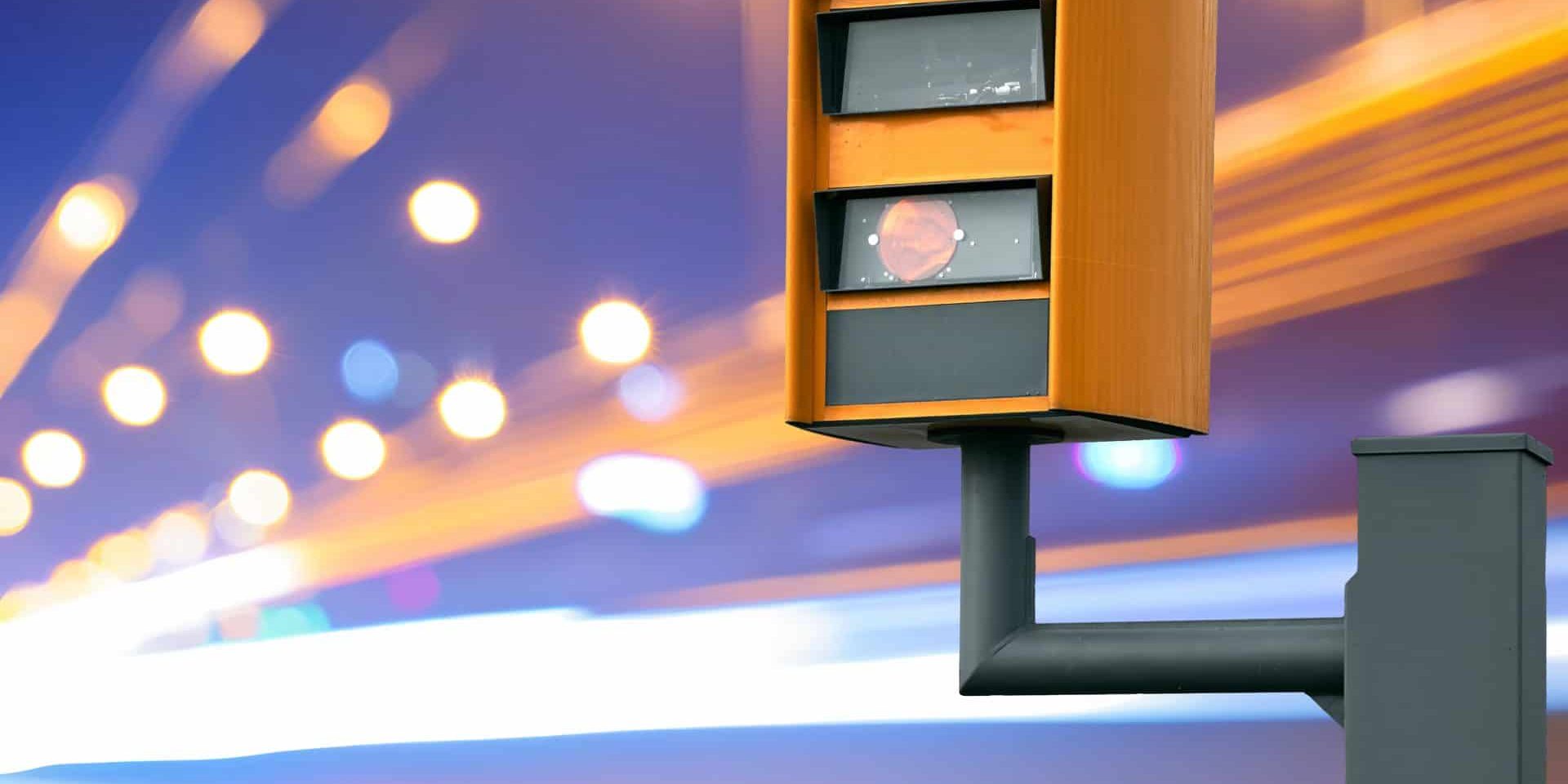

- Los Angeles switched on its first speed cameras Oct. 26, and each camera mails warnings only for its first 60 days, so the first fines land around Dec. 25.
- A camera photographs the rear plate of any car going 11 mph or more over the limit, and the civil fine runs from $50 for 11 to 15 mph over up to $500 at 100 mph or more.
- The registered owner receives the notice, which adds no points to a license and has no effect on insurance rates, and the owner has 30 calendar days after mailing to ask for a review.
Drive 11 Miles Over on These LA Streets and a Notice Follows
The Los Angeles Department of Transportation (LADOT) is building what it describes as California’s largest automated speed enforcement network, and the first cameras went live Oct. 26, 2026. Any driver caught at 11 mph or more over the posted limit gets a mailed notice. For the first 60 days of each camera, that notice is a warning with a $0 balance.
After the warning period, the fine depends on speed. It is $50 for 11 to 15 mph over, $100 for 16 to 25 mph over, $200 for 26 mph or more over and $500 at 100 mph or more. A first violation in the lowest tier brings a warning only. The ticket is a civil violation, so it adds no points to a driver’s record and does not touch personal auto insurance rates.
The program covers all 15 City Council districts and up to 125 cameras. Most districts get eight, and districts 4, 6, 8, 9 and 10 get one more. LADOT picked the sites from crash history, speeding data and nearness to schools, senior centers and high injury corridors, and the day-one list names four intersections: La Brea at 1st Street, Fairfax at Clinton Street, Melrose at Hayworth Avenue and La Cienega at Pico Boulevard. Cameras also cover stretches of Sunset, Olympic and Venice Boulevards and of Highland Avenue.
What the Fines Cost by Speed
LADOT’s speed safety use policy sets four tiers, and they are the numbers on the notice a driver would open.
- 11 to 15 mph over the limit: $50, with a warning in place of the fine on a first violation.
- 16 to 25 mph over: $100.
- 26 mph or more over: $200.
- 100 mph or more: $500.
Measured against the posted limit, 41 mph in a 30 zone is 11 over and sits in the lowest tier, while 56 mph in a 30 zone is 26 over and sits in the $200 tier. The first-violation warning applies in the lowest tier, under the city’s policy and Vehicle Code section 22425, the state statute behind the program. Later violations in that tier carry the $50 fine.
The citation goes to whoever is registered as the vehicle’s owner, identified from the rear plate photo. The cameras record plate information, and the city says they do not record the driver’s face. Assemblywoman Laura Friedman, who wrote AB 645, described the law that way. “We have a serious problem on our streets with people driving recklessly and endangering the lives of our neighbors, our children and our families,” Friedman said in a statement at the Oct. 1 announcement. “I authored the legislation that made today possible so Los Angeles can test a proven, commonsense tool with privacy built in.”
Friedman then spelled out the limits on the images. “These cameras only capture the rear license plate, don’t film the driver, and the photos must be deleted within five days if there’s no violation. This month, the program will go live outside schools, on our most dangerous corridors and on streets plagued by street racing. In Congress, I’ll continue working to keep our communities safe,” Friedman added. The city’s use policy repeats the five day deletion rule for images that do not lead to a violation. Local and federal police cannot get the data without a court order, a subpoena or another legal requirement.
When Each Camera Starts Ticketing
There is no single start date for fines. Every camera runs its own 60 day clock from the day it is switched on, and a new warning period begins under state law whenever cameras go live on new streets. A camera activated Oct. 26 finishes its warning window around Dec. 25. For the initial sites, that puts the first fines in late December 2026.
LADOT General Manager Laura Rubio-Cornejo announced the Oct. 26 start on Oct. 1 at a news conference in Hollywood, where crews were putting up cameras outside Kingsley Elementary School. “As we continue our work to create safer streets for all Angelenos, LADOT is committed to tackling the traffic safety crisis with every innovative, data-driven solution available,” Rubio-Cornejo said in a statement. “Speed safety systems have proven to be among the most effective tools we have to reduce dangerous speeding, prevent crashes and save lives.”
The goal is all 125 cameras running by the end of 2026, so the warning periods of the last cameras run into 2027. The city has not released a rollout calendar for the cameras after the first wave. LADOT lists the full fine schedule at LAspeedsafety.org.
Each camera needs a “Photo Enforced” sign showing the posted limit, placed no farther than 500 feet away. With every clock starting at activation, warnings and tickets go out side by side as the rollout continues. A driver can pass one camera still in its warning window and another already issuing $50 fines, and the two can sit on the same route. Cities elsewhere set their own terms: Groton, Connecticut’s cameras fine $50 for a first offense, a different rule from the LA first-violation warning.
How to Contest or Reduce a Notice
The registered owner has 30 calendar days after the mailing date to ask for a review of the notice, and an administrative hearing follows within 21 days of the review decision. Vehicle Code section 22425 also lets the owner look at and copy the photos. Check the speed and the plate against the photo before paying.
Income cuts the price. LADOT’s use policy cuts fines by as much as 80 percent for owners living under the federal poverty line, and by as much as 50 percent for owners earning up to 2.5 times that line. The details of who qualifies are in the policy, so read it before assuming a reduction applies.
The practical steps for a driver in the city:
- Keep speed at 10 mph or less over the posted limit on corridors like Sunset, Venice, Olympic and La Brea, where the first cameras went live.
- Watch for the “Photo Enforced” signs, which stand within 500 feet of each camera.
- Open every notice that arrives. A warning costs $0 and tells the driver the camera recorded 11 mph or more over the limit.
- If a fine notice arrives, put the 30 day review deadline on a calendar the day it comes.
A driver who also passes through other states should not assume these numbers travel. Pacific, Washington’s school zone cameras fine $200 to $290 after 30 days, a different structure from the LA tiers.
Who Pays for the Cameras and Where the Money Goes
The city’s contract with American Traffic Solutions, which trades as Verra Mobility, prices up to 125 cameras at $4,450 each per month over five years. Multiplying 125 cameras by 60 months gives $33,375,000 in base fees, and the city can also reimburse up to $5 million in postage. Section 4.1 of the filed copy states a different base cost, $33,750,000, which does not match the contract’s own arithmetic.
The fee is flat. State law forbids paying a camera vendor per notice or as a share of revenue, so the city owes $4,450 per camera each month whether the camera catches one driver or 10,000. LADOT told the City Council it expects ticket revenue to cover the program’s costs every year of the pilot. State law sends ticket revenue to program costs first and puts whatever is left toward traffic calming. The city’s filings do not say how many tickets it expects.
LADOT frames the program around deaths. “Speeding is one of the leading causes of serious injuries and deaths on our streets. In Los Angeles, around one in five fatal crashes in the city were directly attributed to speeding in 2024. To combat rising traffic deaths and injuries, the city is deploying the Speed Safety Systems Program to curb speeding and dangerous driving,” LADOT said. It added: “The deployment of this program will increase accountability for excessive and chronic speeding, and help people make better choices about their driving. The goal is safer streets, more lives saved, and fewer severe injuries.”
The numbers behind that claim come from LADOT’s impact report. Unsafe speed accounted for 16 percent of fatal and severe crashes from 2017 to 2021, and the report cites pedestrian survival rates of 90 percent when a driver hits at 23 mph and 25 percent at 48 mph. In 2025, 290 people died in traffic incidents in the city, per the Los Angeles Police Department’s most recent data, more than the number killed in homicides. Of the 125 locations, 59 are in equity areas. Critics have argued the program will “criminalize” low-income communities and people of color, and 63 of 193 public comments counted by March 13 raised concerns, mostly about privacy and equity.
Officials and advocates point to San Francisco, which has run the same kind of pilot. LADOT says early data showed a 72 percent reduction in speeding there. “Traffic violence kills more people in Los Angeles than homicides, but far too often, our policies don’t treat reckless driving with the urgency it deserves,” Councilman Hugo Soto-Martinez, who represents the Hollywood area, said in a statement. “If we can prevent a child from being hit on the way to school, or a family from losing someone on the way home, then we have a responsibility to take action. This is about making our streets safer for everyone who drives, walks or bikes in Los Angeles.”
Councilwoman Heather Hutt, who chairs the council’s Transportation Committee, agreed in a similar statement that speeding endangers everyday Angelenos. She added, “This new tool will slow traffic around our schools, so every family can get where they’re going safely.” Mayor Karen Bass issued her own statement. “The safety of every Angeleno is my number-one priority, and along with our state partners we’re investing in a comprehensive approach to street safety that holds reckless drivers accountable,” Bass said in a statement. “These speed safety cameras are bolstering our ability to protect LA families so they can get to school, work and home safely. I look forward to working with Angelenos to ensure this program is fair, transparent and meets the needs of every community.”
Damian Kevitt, executive director of Streets Are for Everyone, which worked with the city on the project for three years, welcomed the rollout. “We all know how bad speeding has gotten, and unfortunately, it continues to be the single largest factor behind the increase in serious injuries and fatalities across Los Angeles,” Kevitt said in a statement. “We’ve already seen a 78% drop in speeding in San Francisco and a 42% drop in traffic fatalities in 2025. I look forward to seeing a similar drop in speeding and learning how many lives these speed safety systems will save in Los Angeles in 2027 and beyond,” Kevitt added.
The pilot is authorized through Jan. 1, 2032, unless the legislature extends it, and LADOT owes the legislature a final evaluation report on or before March 1 of the last year. Florida runs its own program: Orlando’s school zone cameras mail $100 fines from Nov. 30 with no license points.
Want more car content? Add us as a preferred source on Google to your favourites list for the best automotive news and analysis on the internet.
If you enjoyed this article, be sure to follow us on Microsoft Start.
Sources
- FOX 11 Los Angeles: Los Angeles speed cameras go live Oct. 26: Locations and fines
- Spectrum News 1: LA to activate new speed cameras starting Oct. 26 with more to come
- The Auto Wire: Los Angeles Speed Cameras: Warnings First, Then $50 Fines
- The Drive: LA Just Powered Up Speed Cameras
Reviewed by Preetam Gadekar

Leave a Comment
More in News
Queensland’s 5c Petrol Rise Cap Faces a No Vote as Victoria Runs Daily Caps

Sachs and LuK Give No Mileage for a Dual Mass Flywheel. They Give Tests
Ambulance, Police and Fire Services Share Winter Driving Checks Every Driver Should Do Now
Florida man witnesses a devastating car accident. First responders haven’t arrived. So he takes matters into his own hands
How Big a Windscreen Chip Fails the MOT (and What Repair or Replacement Costs)
Trending on Motoring Chronicle

How DVSA Data Reveals Which Driving Test Centres Give You the Best Odds

Georgia Made 350 DUI Arrests as Five Drivers Died in Labor Day Crashes

The realization of an intractable dream: the engineering genius behind the Bugatti Veyron [Photo Gallery]

Why the 2027 Audi Q9 Could Solve the Headlight Glare Problem for US Drivers
