How to Jump Start a Car Safely (and What a New Battery Costs)


- Connect the leads in this order: red to the flat battery’s positive terminal, red to the donor battery’s positive terminal, black to the donor battery’s negative terminal, then the last black clamp to bare metal on the flat car’s engine, away from the battery.
- Start the donor car, crank the flat car for no more than five seconds at a time, then drive for at least 30 minutes so the alternator can recharge the battery.
- A car that keeps needing a jump usually has a tired battery. A new one costs from about £45 ($60) to £250 ($334) for the part, plus £25 to £50 ($33 to $67) to fit.
How to Jump Start a Car Safely, in the Right Order, and Know When the Battery Is Finished
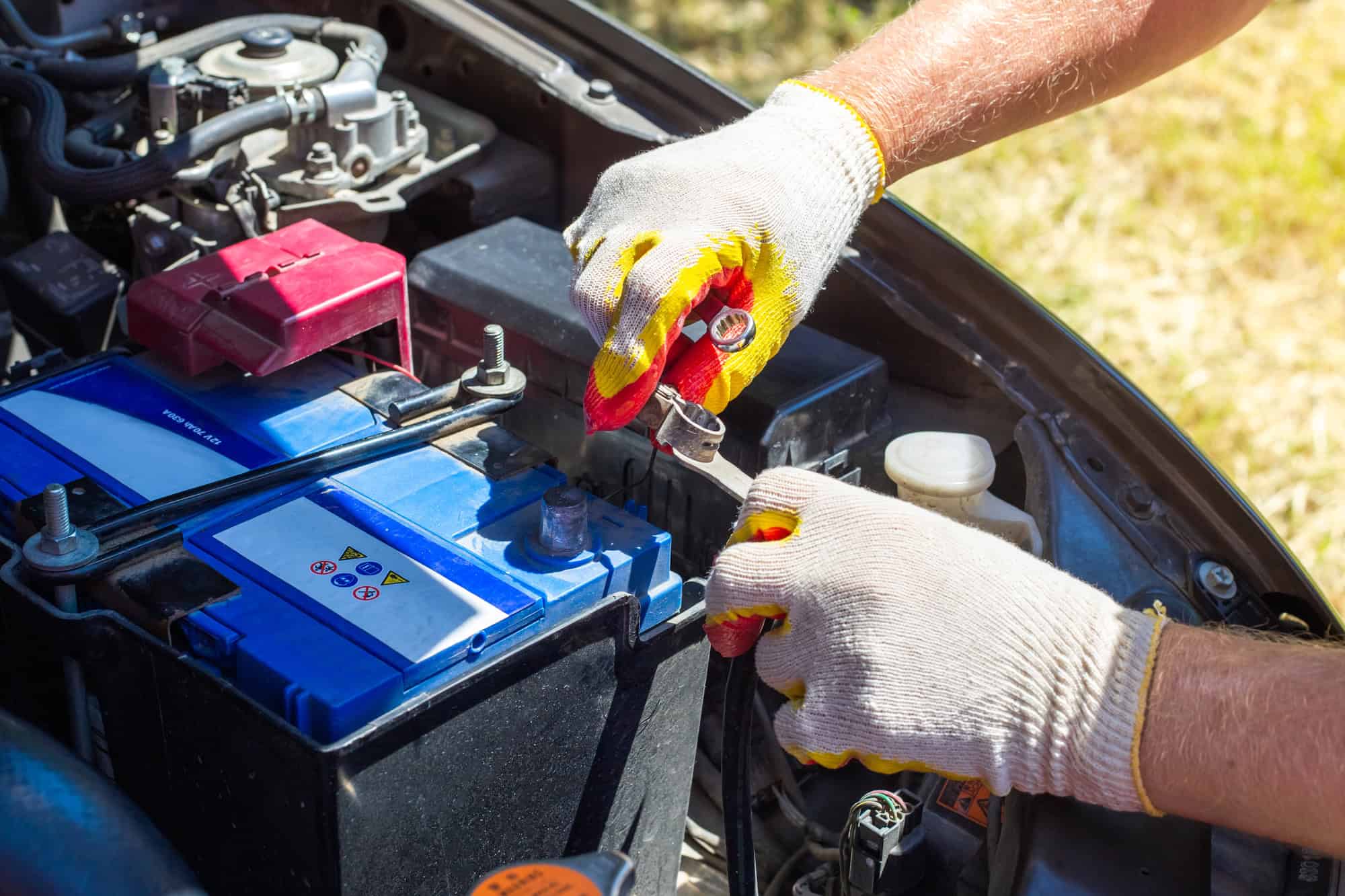
To jump start a car, park a donor car with a healthy 12V battery close enough for the leads to reach without the two cars touching, switch both engines off, and connect the leads in a fixed order. Red goes to the positive (+) terminal of the flat battery, the other red clamp goes to the positive (+) terminal of the donor battery, one black clamp goes to the negative (-) terminal of the donor battery, and the final black clamp goes to a solid, unpainted metal part of the flat car’s engine, away from the battery. Start the donor car, wait a few minutes, then start the flat one. That sequence comes from the RAC’s ten step guide, and it is the one to follow every time.
The rest of this guide covers what to check before you clip anything on, how to disconnect the leads safely, what to do when the engine still refuses to start, how hybrids and electric cars differ, and what a replacement battery costs in 2026 when a jump start is only a temporary fix.
What to Check Before You Connect Anything
Start with the batteries and the leads. The RAC advises against jump starting a car if either battery is leaking, cracked or badly corroded, and Which? gives the same warning about a leaking battery, adding that you should never jump start a battery whose fluid has frozen. Damaged jump leads are also a reason to stop and call for help rather than carry on.
Next, confirm that both cars use a 12V system. The RAC says to check the owner’s manual for both vehicles and confirm that both cars are on the same type of electrical system. Remove rings and metal jewellery, and tie back anything loose that could catch in a fan or belt. Which? also suggests rubber gloves.
Then switch off everything electrical on the flat car: lights, radio, sat nav and air conditioning all draw on whatever charge is left. The RAC suggests lowering a window if you can. Park the donor car close enough for the leads to reach, but never touching the flat car. Switch off both engines, take out both keys and open both bonnets. Some cars, such as certain BMW models, keep the battery in the boot, so Which? recommends finding it before you start.
One more rule applies to the donor. The RAC says the donor should have a fully charged battery and also says, in its own words: “Do not use a hybrid or electric vehicle as a donor vehicle unless the manufacturer specifically permits it.” Which? goes further and warns that using an electric car to jump another vehicle can damage its electrical systems and could void the warranty.
The Connection Order, Step by Step
With the checks done, connect the clamps in this order. First, attach one red lead to the positive terminal of the flat battery. Second, attach the other red lead to the positive terminal of the donor battery. Third, attach one black lead to the negative terminal of the donor battery. Fourth, attach the other black lead to a solid, unpainted metal part of the flat car’s engine, well away from the battery itself. Keep the clamps from touching each other or any other metal once they are live.
Now start the donor car and let it run for up to five minutes, according to the RAC. Which? suggests waiting three to five minutes before you start the working car and letting it run for a couple of minutes before you try the flat one. Then try the flat car. The RAC says you should not crank for more than about five seconds at a time to avoid overheating the starter motor, and you should wait a couple of minutes between attempts.
If the engine fires, leave it running. The RAC says to let it run for about five minutes before you disconnect, while Which? says to idle both cars for ten minutes with the leads still attached. Both are sensible, and the longer wait costs you nothing. Then remove the leads in reverse order: the black clamp from the earthed metal on the car that was flat, the black clamp from the donor’s negative terminal, the red clamp from the donor’s positive terminal, and finally the red clamp from the flat car’s positive terminal. Keep the leads and clamps away from moving parts such as fans and belts as you take them off, and never smoke near either car or lean over either battery.
Switch the engine off once and check that it restarts on its own. That test tells you whether the battery is holding charge before you drive away and leave yourself stranded somewhere less convenient.
When the Car Still Will Not Start, or Dies Again Later
If the engine will not start after a few attempts, the RAC says the problem could be more than a flat battery and recommends calling for professional help. Slow cranking, clicking and dim headlights are the usual signs of a battery with too little charge, which is the case a jump start is meant to fix.
After a successful jump, the drive that follows is just as important as the connection. The RAC says you should drive for at least 30 minutes in normal conditions, not heavy stop start traffic, to put charge back into the battery, and Which? gives the same half hour figure. Which? also warns against making a short trip and switching off, as the alternator might not have put back enough charge for the car to restart. For a full recharge, the RAC suggests a quality battery charger left on for several hours.
Motorcheck lists the signs of a battery near the end of its life: slow starting, a starter that sounds laboured, a battery warning light, dim headlights, electrical features that struggle even with the engine running, a clicking noise on the key, and needing repeated jump starts. If you recognise more than one of those, treat the jump as a rescue and book a battery test or replacement rather than hoping it will last.
The RAC also does not recommend bump starting, where you roll the car and release the clutch to turn the engine over. A jump start with leads or a charged portable pack is the method the RAC’s guide sets out. If you use a portable pack, the RAC says to charge it fully first, connect the red lead to the flat battery’s positive terminal and the black lead to a good earth point, and stand the pack on the ground, not on the engine, where it might fall off when the engine starts. Which? advises checking that the pack is rated for your engine size in litres and for the battery voltage before you buy.
Hybrids, Electric Cars and Start-Stop Models
Cars with a big drive battery still carry an ordinary 12V battery that runs the lights, locks and computers, and that is the battery that goes flat. The RAC says you can jump start a hybrid’s 12V battery, but only with the manufacturer’s guidance, and Which? says most electric cars have a 12V auxiliary battery that can usually be jump started once you have checked the manual. Which? adds that Tesla advises owners to call its roadside assistance first. Check the handbook for where to connect before you clip anything on.
Start-stop cars are not covered in the RAC’s guide, so the owner’s manual is the authority. Carwow notes that cars with complex electronics and stop-start systems need higher capacity batteries, and that is one reason the replacement part costs more than a basic lead-acid unit.
How Long a Battery Lasts and What a New One Costs
Motorcheck says most UK car batteries last about three to five years, with some reaching six in light use and favourable conditions, and it advises replacement as a car approaches five years on the same battery. Carwow gives a wider range of one to ten years for a 12V battery, with around five years counted as good. By type, Carwow says lead-acid units last up to three years, calcium batteries up to twice as long, and AGM batteries up to ten years.
On price, Carwow puts the battery alone at around £45 ($60) for a basic lead-acid unit and up to £250 ($334) for a lithium-ion or AGM battery. Fitting is a separate cost: Carwow says £25 to £50 ($33 to $67) is a fair rate, Halfords charges from £18 ($24) for in-store fitting, and it quotes £85 ($114) for a supplied and fitted calcium battery for a Renault Megane. It also warns that if someone asks £100 ($134) for a simple battery swap, you should walk away. Garage labour rates run from £40 to £80 an hour, and mobile mechanics charge £25 to £60 an hour plus a call-out fee of about £65 ($87).
Batteries top the list of causes in one large survey. In research published by Kwik Fit and carried out by Opinium, with fieldwork in February 2021 among 2,005 UK adults, battery failure was the cause of 17% of drivers’ most recent breakdowns, the highest of any fault. Only 4% of drivers named the battery as their biggest worry, while 15% worried most about brakes, which caused just 3% of recent breakdowns. The survey is a few years old, but the gap between worry and reality is the useful point: the part people forget about is the one that strands them.
You can stretch a battery’s life with habits Motorcheck lists. Drive the car regularly, for example a 30 minute drive every couple of weeks if it is rarely used, avoid frequent short trips that never let the battery recharge, do not leave lights, the radio or air conditioning running with the engine off, keep the battery clean and securely fixed, and keep up with servicing, which usually includes a battery check. Which? recommends a smart charger if a car sits parked or in storage for long periods.
The practical rule is simple. One jump start after leaving the headlights on is a mishap. A second jump within a few weeks is a warning, and a battery near five years old should be tested before the colder mornings arrive. Keep a set of jump leads or a charged portable pack in the boot, read the handbook for your own car, and call your breakdown provider if anything looks damaged or the engine will not start after a few tries.
Want more car content? Add us as a preferred source on Google to your favourites list for the best automotive news and analysis on the internet.
If you enjoyed this article, be sure to follow us on Microsoft Start.
Sources:

Leave a Comment
More in News
What to Do in a Motorway Breakdown (and When to Stay Inside)

Every Driver Gets Five Minutes Grace as Government Freezes Parking Charges at £100

How a Pothole Claim Now Costs UK Drivers £5,380 on Average This Year

Every Electric Car Driver in London Could Pay TfL Up to £3,780 a Year

What a Flashing Engine Management Light Means Before a £700 Catalytic Converter Bill
Trending on Motoring Chronicle

Why NHTSA Just Opened a Federal Probe Into Tesla’s Driverless Cybercab

GEM Warns UK Drivers Over Five Heatwave Hazards as Hot Weather Hits Britain

TfL Staff Racked Up £30,000 in Parking Fines While Fare Payers Picked Up the Bill

Two-thirds of younger drivers don’t fully clear ice from windscreens before setting off