Why Charging Your Electric Car From Home Could Still Get You a Fine
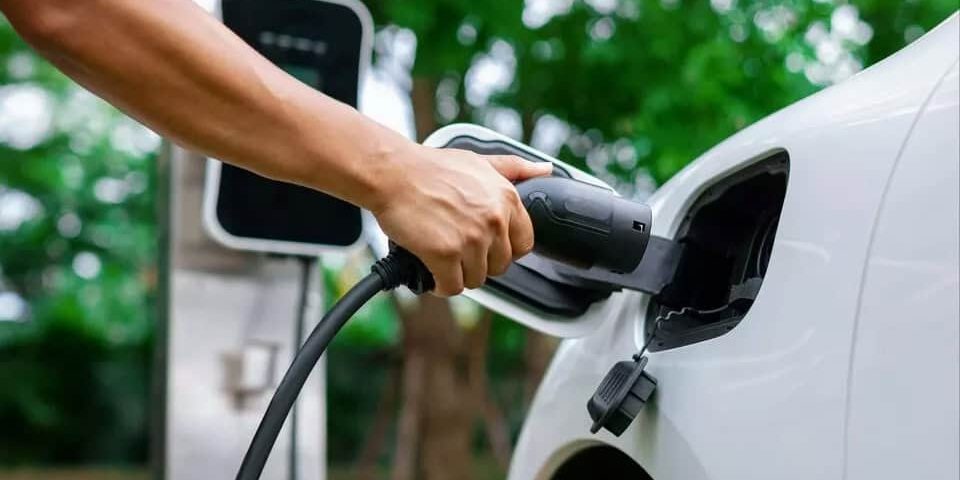
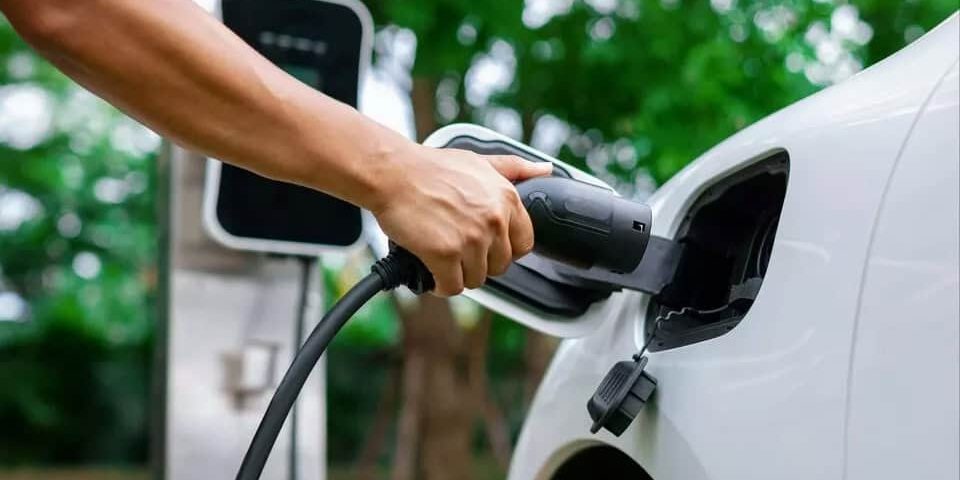
Drivers without a driveway who plug in an electric car by running a cable from a wall socket to the kerb are taking on a legal risk that few of them know about. A cable stretched across a public pavement can be treated as an obstruction under the Highways Act 1980, and if someone trips over it, a council or the injured pedestrian can pursue the driver directly. There is no dedicated penalty written into law for an EV charging cable specifically, but the general obstruction and nuisance powers councils already hold are enough for a warning letter, a removal notice, or in a small number of cases, formal action.
A Freedom of Information request submitted by Vauxhall to 134 local authorities across England, Scotland and Wales found that only seven currently offer a live, legal cross-pavement charging solution, typically a small channel or gulley set into the pavement that lets a cable run flush to the surface rather than trailing loose. A further 21 councils have a trial scheme running, and 28 more say they plan to roll one out by the end of 2026. That leaves the majority of the 134 councils that responded with no scheme in place and no published date for one. More than a third of UK households have no off-street parking at all.
The Rule Change That Has Not Reached Most Streets
In April 2026, Energy Secretary Ed Miliband announced that the government would introduce permitted development rights for cross-pavement charging gullies, removing the need for individual planning applications each time a resident wants one installed. Officials described the change as a way to make the process quicker, cheaper and simpler. It does not, on its own, put a single gulley into the ground. Installation still depends on the local council agreeing to fit the channel, and on funding being available to do it, which is exactly the gap the Vauxhall data exposes: a national policy shift with a patchy, council-by-council rollout that could take years to reach most streets.
Until a gulley is fitted, the only practical option for a driver without a driveway is a loose cable, run either across the pavement surface or, in some cases, tucked under a rubber cable cover designed to reduce the trip risk. Neither option is illegal in itself: the Highways Act deals with obstruction and hazard, not the specific act of charging an electric car. But the law gives councils wide discretion, and how strictly that discretion gets applied varies enormously between one local authority and the next.
A System That Penalises the Drivers With the Fewest Options
The drivers most likely to need a cross-pavement solution are also the drivers least likely to have one available. Terraced housing, converted flats and rented accommodation, all disproportionately common in exactly the urban and suburban streets where on-street parking is the norm, make up the housing stock least likely to have a driveway. Those same households are also the ones facing the sharpest financial case for switching to an electric car, given how much more expensive public charging remains per mile compared with charging at home. A driver with a driveway plugs in every night without a second thought. A driver without one has to decide whether to run a cable and accept the legal exposure, or pay a premium at a public charger for one reason alone: their street has not been fitted with the infrastructure that would let them charge safely and legally at home.
Home insurance adds a further complication that most drivers never think to check. A standard buildings or contents policy does not automatically cover the cost of defending a legal claim if a pedestrian is injured tripping over your charging cable and decides to sue. That protection typically requires a specific legal expenses add-on, which many policyholders do not have and do not know they are missing until the moment they need it.
What Councils Are Actually Doing
Where councils have introduced schemes, the approach differs sharply from one authority to the next. Some offer a subsidised gulley installation through their highways department, charging residents a one-off fee that is often lower than a year of public charging premiums. Others run a trial in a handful of streets before deciding whether to expand it borough-wide. A minority have gone the opposite direction, issuing guidance that treats any trailing cable as a highway obstruction regardless of how it is covered, effectively telling residents without a driveway that home charging is not available to them at all unless they can find off-street parking elsewhere.
London Councils, the umbrella body for the capital’s 32 boroughs, has published guidance encouraging a consistent approach to cross-pavement charging and cable management, an attempt to head off exactly the kind of postcode inconsistency the Vauxhall FOI data reveals nationally. Whether that guidance translates into more boroughs actually fitting gullies remains to be seen.
What the Law Actually Allows a Council to Do
Section 137 of the Highways Act 1980 makes it an offence to wilfully obstruct the free passage of a public highway, including a pavement, without lawful authority or excuse. In practice, prosecutions over a domestic charging cable are rare. Most councils that act at all start with an informal warning letter asking the resident to cover or remove the cable, escalating only if the same complaint recurs or a genuine injury is reported. The wider point for drivers is that the power to act sits there in law regardless of how rarely it gets used, leaving anyone who charges this way dependent on their council’s current mood rather than a clear, published rule they can check in advance.
That uncertainty sits awkwardly against the pace of the switch to electric cars. Battery electric vehicles took an ever-larger share of new car registrations through 2026, and a growing number of those buyers live in homes without a driveway, exactly the group with no legal clarity on how to charge safely at their own kerbside. Public charging infrastructure has expanded to meet part of that demand, but coverage still varies enormously by area, and using a public charger every time, rather than plugging in overnight at home, adds a real ongoing cost that a driveway owner never has to pay.
How to Charge at Home Without the Legal Risk
Drivers without a driveway are not without options, but they need to check the specifics for their own council rather than assume the rules are the same everywhere.
- Contact your council’s highways or parking team directly and ask whether a cross-pavement charging gulley scheme exists, is in trial, or is planned. Do not rely on the council’s general EV charging webpage, which often covers public chargers only.
- If no scheme exists, ask in writing what your council’s specific policy is on trailing charging cables. Many authorities have no published position at all, which means enforcement, if it happens, is being applied inconsistently rather than against a clear published rule.
- Use a purpose-made cable cover or ramp rated for pedestrian and wheelchair use, not a generic builder’s cable protector, if you must run a cable across a pavement while waiting for a permanent solution.
- Check your home insurance policy for legal expenses or public liability cover, and add it if it is missing. This is a small cost against a potentially large legal bill if someone is injured and pursues a claim.
- Ask your councillor to raise cross-pavement charging provision at the next highways or environment committee meeting if your area has no scheme and no timeline, using the Vauxhall FOI figures as evidence that peer councils are already ahead.
- Look at a subscription to a nearby public charging network as an interim step, checking unit costs carefully: prices vary widely between operators and locations.
Motoring Chronicle has previously reported on the VAT change that will make home charging cheaper while leaving drivers without a driveway behind, and on the government review into what drivers pay at public chargers. Anyone dealing with a council notice about street obstruction more broadly can also read our guide to how England’s new pavement parking fines work.
Sources:
- https://www.legislation.gov.uk/ukpga/1980/66
- https://www.rac.co.uk/drive/news/motoring-news/councils-offer-cross-pavement-charging-by-end-of-2026/
- https://eandt.theiet.org/2026/04/22/government-scraps-planning-rules-cross-pavement-ev-charging
- https://www.londoncouncils.gov.uk/news-and-press-releases/2025/electric-vehicle-revolution-hits-pavement-new-guidance-tackles-trip

Leave a Comment
More in News

What a Coolant Warning Light Means Before It Costs You a £1,000 Repair
Progressive’s Profit Fell 3 Percent Even as It Added 1.4 Million Car Insurance Policies

NHTSA Picks 23 Vehicles for 2027 Crash Tests and Adds a New Pedestrian Safety Score

GAP Insurance Paid Back Just 6 Percent of What Drivers Paid, FCA Figures Show

A £4,300 Vauxhall Made Hagerty’s List of Classic Cars Worth Watching in 2026
Trending on Motoring Chronicle

Lamborghini Polo Storico and the Diablo star at the Concorso di Varignana

Classic Car Owners Now Pay £154 a Year to Insure, Up 26 Percent

Every Electric Company Car Driver Faces a Benefit-in-Kind Tax Rate That Doubles by 2029

95% of women drivers say they have experienced aggressive behaviour