Why UK Speeding Fines Have Hit a Four-Year High Across Almost Every Police Force
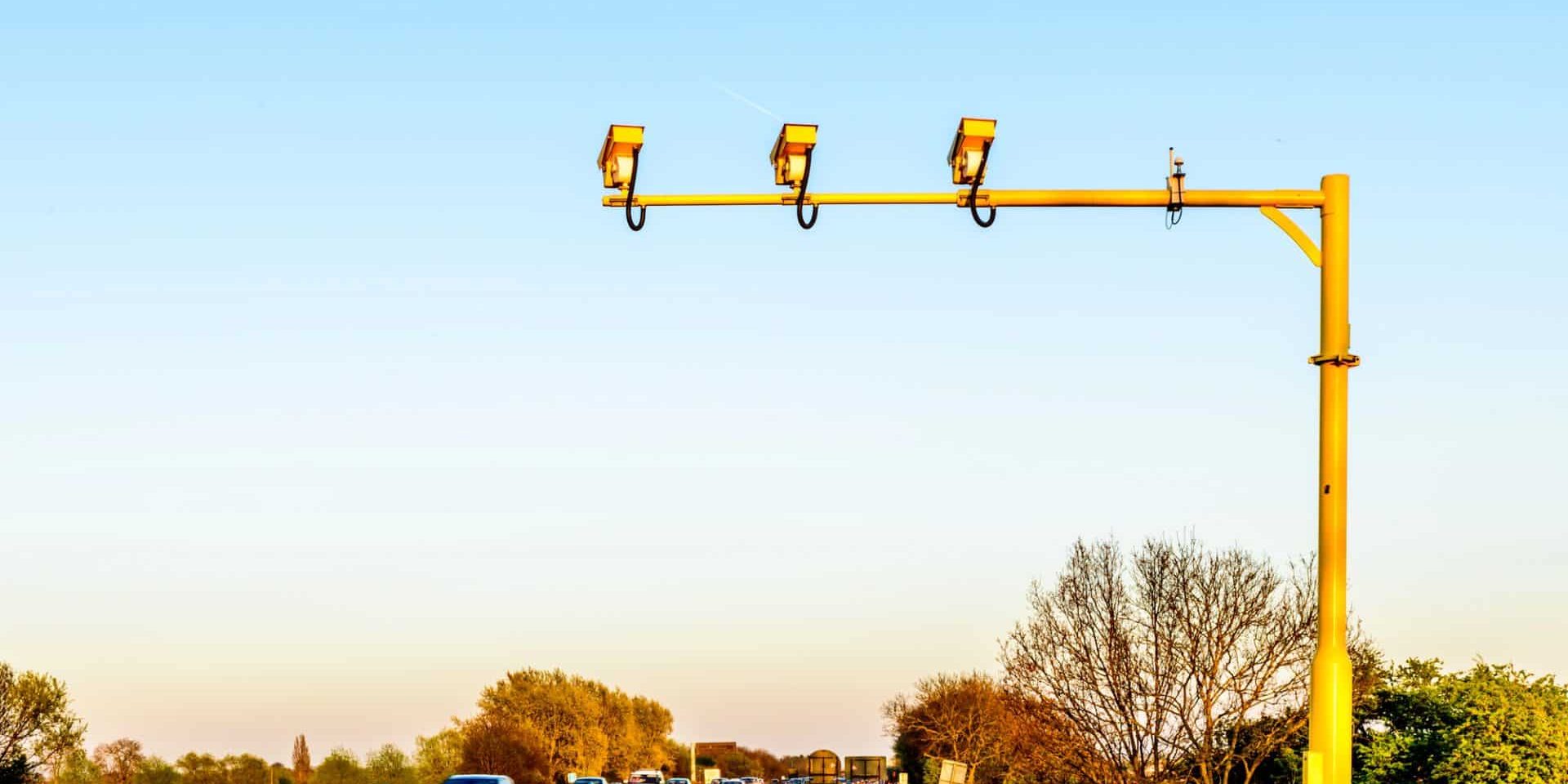
The number of speeding fines issued across the UK has reached a four-year high, according to new police data obtained through a Freedom of Information request by road technology specialist Ooono. The analysis, published by the RAC, found that 22 of the 24 police forces that responded to the FOI request reported an increase in the number of Fixed Penalty Notices issued for speeding when comparing 2024 with 2025. Only Warwickshire and Durham recorded a fall in the number of fines issued.
The data paints a striking picture of enforcement activity across England and Wales, with significant regional variation in where drivers are most likely to receive a fine. London led all areas in total volume, issuing 778,600 tickets during the period, with the rapid expansion of 20mph zones across the capital cited as a major contributing factor. West Yorkshire, meanwhile, topped the table outside London with 384,219 fines, a year-on-year increase of 13 per cent, suggesting that enforcement has intensified substantially even in areas that already had relatively high baseline figures.
Which Areas Have Seen the Biggest Increases?
The FOI data reveals that the rise in speeding fines is not concentrated in a single region but is instead a near-nationwide phenomenon. With 22 out of 24 responding forces reporting increases, the trend appears to reflect both changes in driver behaviour and increased enforcement activity through camera infrastructure and targeted policing operations.
London’s figure of 778,600 tickets is exceptional in scale, and the RAC highlighted the proliferation of 20mph zones as a key factor in the capital. Transport for London and individual London boroughs have expanded 20mph limits significantly in recent years, applying them across large areas of residential and arterial roads. Drivers who do not adjust their speed to these lower limits face an increased risk of being caught, particularly on roads where 20mph cameras have been installed as part of the zone infrastructure.
West Yorkshire’s 384,219 fines represent a 13 per cent increase year-on-year, which is one of the more pronounced rates of growth in the data. The force has invested in speed camera infrastructure and enforcement operations in recent years, and the FOI data suggests this investment is translating into significantly more fines. Warwickshire, one of only two forces to record a fall, nevertheless remained in the top five areas nationally for the number of Fixed Penalty Notices issued, suggesting that the decline is from a high base rather than evidence of a particularly low-enforcement environment.
The broader context for the rise in enforcement activity includes increased use of average speed cameras on major roads, the deployment of mobile enforcement units, and the continued rollout of safety camera partnerships between police forces and local highway authorities. Community speed watch schemes, in which trained volunteers use speed detection equipment to record speeding vehicles for follow-up by police, have also expanded in many areas and contribute to the overall picture of increased road speed monitoring.
What Happens When You Are Caught Speeding?
The penalties for speeding in the UK vary depending on how far over the limit a driver is caught and the circumstances of the offence. For the majority of drivers caught by cameras or in routine police stops, the initial offer will be a Fixed Penalty Notice carrying a £100 fine and three penalty points on the licence. Alternatively, where the speeding is at the lower end of the scale, a driver may be offered a speed awareness course as an alternative to the points, though this option is not always available and cannot be taken more than once within a given period.
More serious speeding offences are referred to court rather than dealt with through a fixed penalty. Magistrates have the power to impose fines based on the driver’s weekly income, and these fall into three bands. Band A covers the least serious offences and carries a fine of 50 per cent of weekly income alongside three to six penalty points. Band B covers moderate speeding and results in a fine of 100 per cent of weekly income, also with three to six points. Band C, for the most serious speeding, can result in a fine of 150 per cent of weekly income, six points, and in the worst cases, a disqualification from driving.
The threshold between bands varies depending on the speed limit being broken. In a 30mph zone, for example, exceeding 50mph is likely to attract a Band C response. On a motorway with a 70mph limit, speeds above 100mph fall into Band C territory. The actual speed recorded by the camera or officer is a critical factor in determining which band applies, and drivers caught significantly over the limit face considerably more serious consequences than those just above the threshold.
Drivers who accumulate 12 or more penalty points within a three-year period face totting up disqualification under the Road Traffic Offenders Act 1988. For newly qualified drivers within their first two years of holding a full licence, the threshold is far lower: accumulating six penalty points results in the revocation of the licence, requiring the driver to re-sit both their theory and practical tests. With speeding fines at a four-year high, the risk of accumulating points through multiple separate incidents is higher than it has been for some time.
The Role of 20mph Zones in the Rising Fine Count
The expansion of 20mph speed limits is one of the most visible changes to the UK road network in recent years, and it has had a direct impact on speeding fine statistics. In Wales, a default 20mph limit on residential and built-up roads came into force in September 2023, applying to roads across the country that had previously carried 30mph limits. The Welsh Government’s aim was to reduce casualties and improve the liveability of residential areas, but the change has also significantly expanded the number of roads on which drivers can technically be caught speeding at speeds that would previously have been lawful.
In England, the rollout of 20mph zones has been less uniform but still substantial. London has implemented 20mph limits across large portions of its road network, driven by the Mayor’s Vision Zero target of eliminating deaths and serious injuries. Many other local authorities in England have introduced 20mph zones in residential areas, near schools, and in town centres. The cumulative effect is that a significant and growing proportion of the urban road network now carries a 20mph limit, increasing the opportunities for enforcement.
Critics of widespread 20mph zones argue that the limits are routinely ignored and that enforcement is inconsistent, creating a situation where drivers face a lottery risk of being fined for a speed that many consider normal for the road in question. Proponents counter that the limits reflect safety evidence and that driver behaviour will adapt over time as the limits become more established. The FOI data suggests that enforcement is indeed active, at least in areas with camera infrastructure, and that the limits are contributing meaningfully to the overall rise in fine numbers.
How to Avoid a Speeding Fine
The most reliable way to avoid a speeding fine is to know the speed limit of the road you are on and to stay within it. This sounds straightforward, but with speed limits changing frequently along many routes, particularly in urban areas where 20mph zones may begin and end without prominent signage, staying consistently aware of the current limit requires active attention.
Modern satellite navigation systems, including those built into cars and apps such as Google Maps and Waze, typically display the current speed limit for the road being driven. Many cars also have speed limit recognition technology that reads road signs and displays them on the instrument cluster or head-up display. However, these systems can be inaccurate, particularly on roads where the limit has recently changed, and they should be treated as a guide rather than a guarantee.
The National Highways speed limit map, available online, and the relevant local authority websites provide authoritative information about limits in specific areas. If you drive regularly through areas you know are subject to active camera enforcement, making a habit of checking your speedometer against the limit on entry to each zone is the simplest practical precaution. Speed limiters or intelligent speed assistance, which is now standard on new cars sold in the UK under European regulations that continued to apply post-Brexit under UK law, can also be used to cap vehicle speed to the current limit if the driver chooses to activate it.
With speeding fines at their highest level in four years and enforcement activity spread across almost every police force in England and Wales, the statistical likelihood of being caught has risen. The combination of more cameras, more 20mph zones, and more enforcement operations means that drivers who treat speed limits as advisory rather than mandatory are facing a higher risk of a fine than at any point in recent years.
Sources
RAC: Speeding fines in the UK hit four-year high (April 24, 2026)

Leave a Comment
More in News

Newcastle Drivers Paid £3.7 Million in Parking Enforcement as Council Income Jumps 23 Percent

Coventry Drivers Paid £5.4 Million in Parking Charges as Council Surplus Jumps 80 Percent

What Your Rights Actually Are When a Garage Overcharges or Botches a Repair
£625 Million of Detected Motor Fraud Costs Honest Drivers, ABI Figures Show

BYD Dolphin-G review: UK’s first plug-in hybrid supermini is a winning package
Trending on Motoring Chronicle

2027 Toyota C-HR EV Arrives From $37,080 With Standard AWD and 338 Horsepower

MINI Countryman Untamed Edition Arrives With Off-Road Gear From $43,900

What Your Licence Lets You Tow This Caravan Season (and the Fines to Avoid)

Geely Starray EM-i Super Hybrid review: Top value family-sized plug-in hybrid