
Britain’s Best Selling EV Costs £21,495 And Just Got One Pedal Driving As Standard


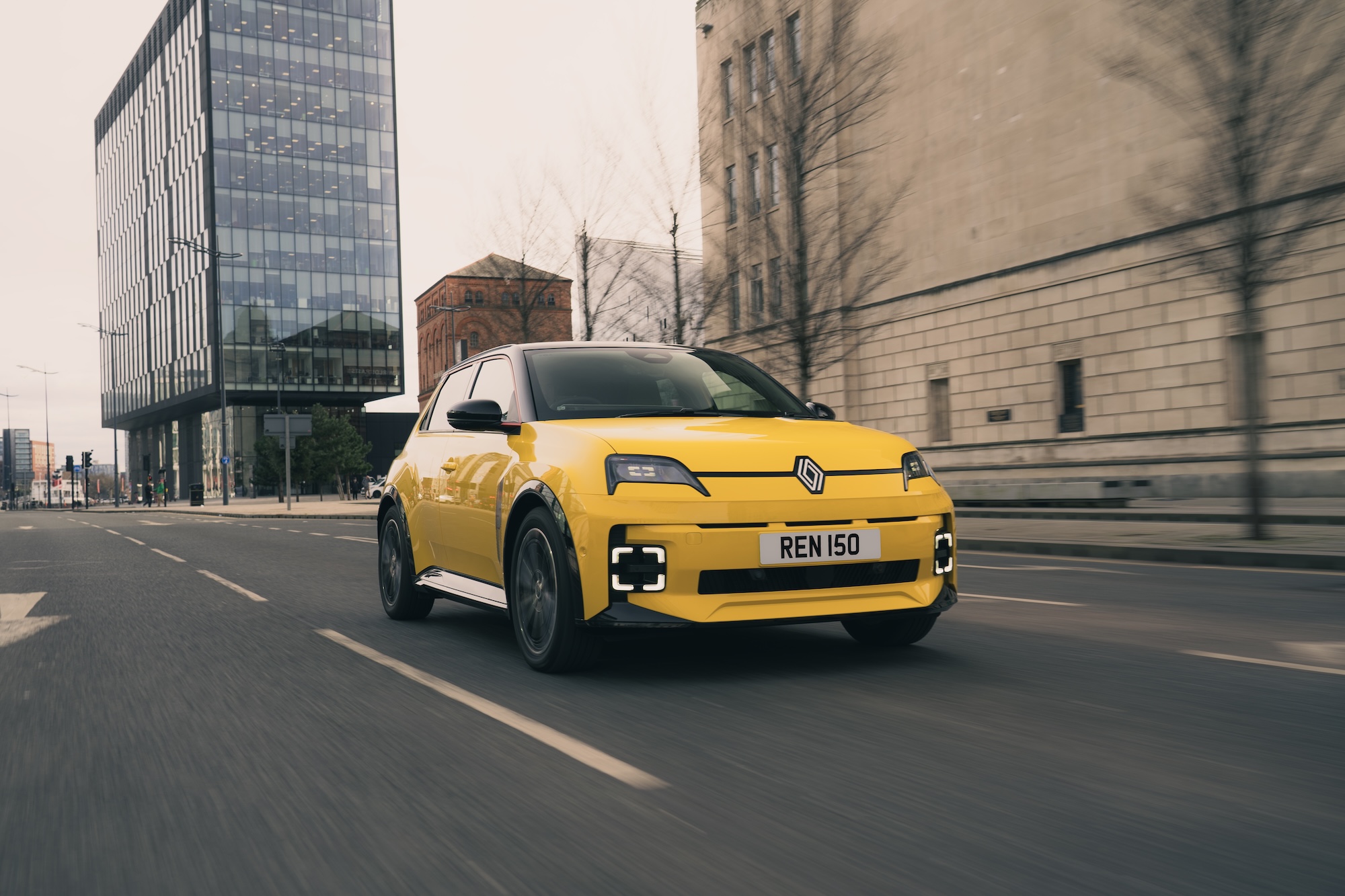
The Renault 5 E-Tech electric was Britain’s most popular electric car in April, topping the SMMT registrations charts one year after deliveries began. It is not hard to see why. At £21,495 on the road after the Electric Car Grant, it undercuts the majority of its competitors by thousands of pounds while offering up to 252 miles of range and 30-minute rapid charging from 15% to 80%.
Now Renault has added one-pedal driving as standard on the techno+ trim and above, a feature that allows drivers to slow and bring the car to a complete stop using only the accelerator pedal. For anyone who spends their commute in stop-start traffic, it removes the constant left-foot shuffle between accelerator and brake and makes urban driving noticeably less tiring.
The timing is no coincidence. Since oil prices spiked in late February, Renault says EV enquiries on its UK website have risen 42%. In April, electric vehicles accounted for just under 50% of all Renault passenger car registrations in the UK, with the Renault 5, Renault 4, Megane and Scenic all contributing.
Why Drivers Are Switching Now
The oil price surge that began in late February has changed the running cost calculation for a lot of drivers. Renault claims the average EV driver saves £650 per year on fuel compared to a petrol equivalent at current electricity and fuel prices. For a car that starts below £22,000, that saving begins to pay back the purchase price difference within a few years, particularly for higher-mileage drivers.
Adam Wood, Managing Director of Renault UK, said interest has shifted sharply since fuel costs climbed.
“Interest in electric vehicles has undergone a seismic shift upwards following the spike in oil prices at the end of February,” Wood said. “Compared to January and early February, EV enquiries on our website have grown by 42%. Already that is translating to sales, with our EVs accounting for just under 50% of our registrations in April, when most notably Renault 5 was Britain’s best-selling EV. With today’s announcement, it is an even more compelling proposition.
“In turbulent times, more and more people are realising the benefits of switching to electric. With a wider choice of more efficient, more desirable and more affordable electric cars than ever before, there’s never been a better time to make the switch.
“Not only are EVs fun to drive, they are also cheaper to fuel than petrol equivalents, by an average of £650 a year for most motorists at today’s prices. With Government grants also helping to lower upfront purchase costs, as well as a rapidly expanding charging network, EV ownership is more compelling than ever.”
What One Pedal Driving Actually Does
The system adds a fourth level of regenerative braking to the Renault 5. When engaged, lifting off the accelerator applies strong regenerative braking that slows the car progressively and can bring it to a complete stop without touching the brake pedal. The energy recovered during braking is fed back into the battery, adding a small amount of range with every deceleration.
The feature first appeared on the Renault 4 E-Tech electric and has now been carried across to the Renault 5 on techno+ and above. In practical terms, it means city driving requires almost no use of the brake pedal, reducing wear on the brake pads and discs and making low-speed manoeuvring smoother and more intuitive. On faster roads, the conventional brake pedal remains available and functions exactly as normal.
For drivers who have never used one-pedal mode before, it takes a few miles to adjust to the feel. The car decelerates more aggressively than a traditional automatic when you lift off, which can feel abrupt at first. Most drivers adapt within a day and find it difficult to go back to a conventional setup afterwards.
What Else Is New
Alongside one-pedal driving, Renault has introduced a driver attention alert system on the Renault 5 that uses an interior camera to detect signs of fatigue or distraction. If the system identifies that the driver’s eyes are closing or their attention is drifting away from the road, it delivers a warning.
New “PoweR5” decals for the rear wings have been added as a personalisation option, and a connected services package now includes up to 2GB of data per month for in-car apps, enough for over 40 hours of audio streaming.
Critically, none of these additions have changed the price. The Renault 5 E-Tech electric still starts at £21,495 on the road after the Electric Car Grant, making it one of the most affordable new electric cars on sale in the UK.
The Bigger Picture
The Renault 5 topping the April EV charts is part of a broader shift in the market. Rising fuel costs are pushing more drivers towards electric, and the cars available at the affordable end of the market have improved dramatically over the past 12 months. A year ago, finding a new EV below £25,000 with more than 200 miles of range meant very limited choice. Today, the Renault 5 offers 252 miles in its longest-range configuration, charges quickly, and costs less than many of the petrol superminis it competes against once the government grant is applied.
For drivers weighing up the switch, the combination of a £21,495 starting price, £650 annual fuel savings and now one-pedal driving for a more relaxed commute makes the case harder to argue against. The charging infrastructure is growing, the range is more than enough for the vast majority of daily journeys, and the running costs are pulling further ahead of petrol with every increase at the pumps.
The Renault 5 E-Tech electric is available in three trim levels with a choice of two powertrains. It comes with the OpenR Link infotainment system with Google built in, and can be configured at renault.co.uk.
Sources:

Leave a Comment
More in News

How to Remove Moisture From Inside Your Headlight Before It Costs You £500

What Red and Amber Warning Lights Actually Mean (and Which Fail an MOT)

How to De-Ice Your Windscreen Fast Without Cracking It (and Staying Legal)

New Cars Face Euro 7 Rules From 29 November With a £264 Price Rise
What the Traffic Penalty Tribunal’s 33 Percent Success Rate Means for Every Driver
Trending on Motoring Chronicle

Every Driver Ignores This Dashboard Light and It Costs Them Their MOT
What DVSA Data Reveals About the Postcodes With the Worst Driving Test Pass Rates
How to Check Your Car Lights Before Winter (and Avoid a £100 Fine)
What the 10 Per Cent Speed Camera Rule Actually Means and Where It Is Now Being Cut
