
2027 Toyota 4Runner Starts at $43,490 With Heated and Power Seats Standard


- The 2027 Toyota 4Runner starts at $43,490 MSRP, which is $1,920, or 4.6 percent, above the 2026 model’s $41,570 starting MSRP.
- Power-adjustable front seats are newly standard on the SR5, TRD Sport and TRD Off-Road grades, and the SR5 adds standard heated front seats.
- Toyota Safety Sense 3.0 is standard on all nine grades, with a turbocharged 2.4-liter engine as the base powertrain and the i-FORCE MAX hybrid available on select grades.
What the 4Runner’s Extra $1,920 Comes With
The 2027 Toyota 4Runner carries a starting MSRP of $43,490. Toyota put the 2026 model’s starting MSRP at $41,570, so the entry price climbs $1,920, a 4.6 percent increase. Ask the dealer whether any quote includes the destination charge before you compare sticker prices, and ask for the on-sale date on the grade you want.
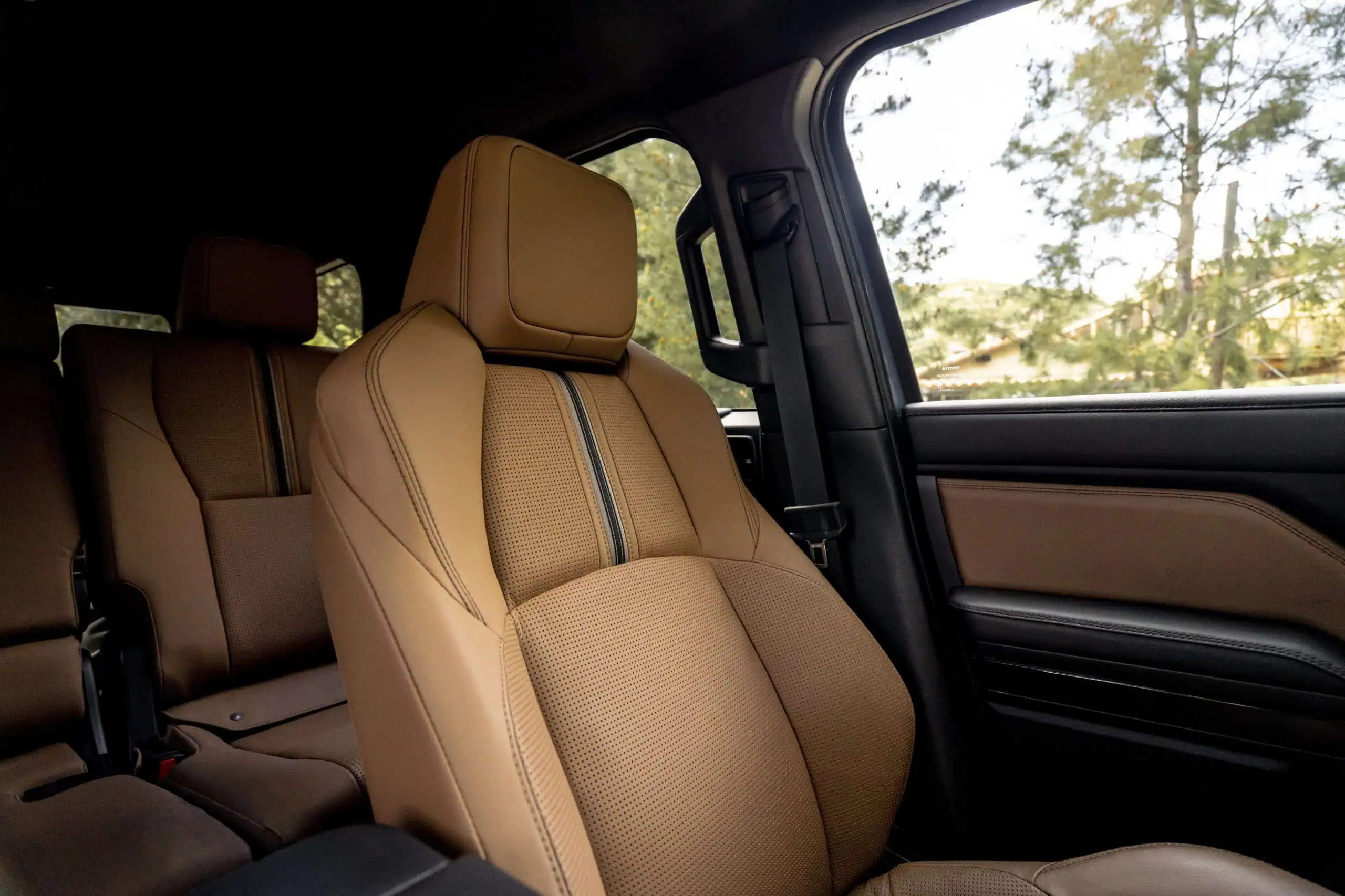
The increase lands with comfort hardware on the lineup’s foundation. Toyota made 8-way power driver and front passenger seats standard on the SR5, TRD Sport and TRD Off-Road, and the SR5 gains standard heated driver and front passenger seats. Toyota lists heated front seats and 8-way power front seats as standard across the whole range, so a buyer at any of the nine grades gets both. The grade count matches 2026, when Toyota also sold a nine-grade lineup that included the Trailhunter and Platinum.
Smaller changes round out the model year. Hot Honey is a new color that only the TRD Pro gets, and a color called Inked replaces Black on every grade. The TRD Pro now has red front recovery hooks as standard equipment. The Platinum adds front door puddle lamps with the 4Runner logo, and the TRD Off-Road grades gain weld nuts built into the chassis, so Toyota Genuine accessory rock rails can be added after production.
Nine Grades, From SR5 to Trailhunter
The SR5 is the entry point. Beyond the heated and power seats, it comes with the turbocharged engine, Toyota Safety Sense 3.0, an 8-inch touchscreen with wireless Apple CarPlay and Android Auto, the Smart Key System, Blind Spot Monitor and a tow hitch receiver. Four-wheel drive and third-row seating are available on select configurations.
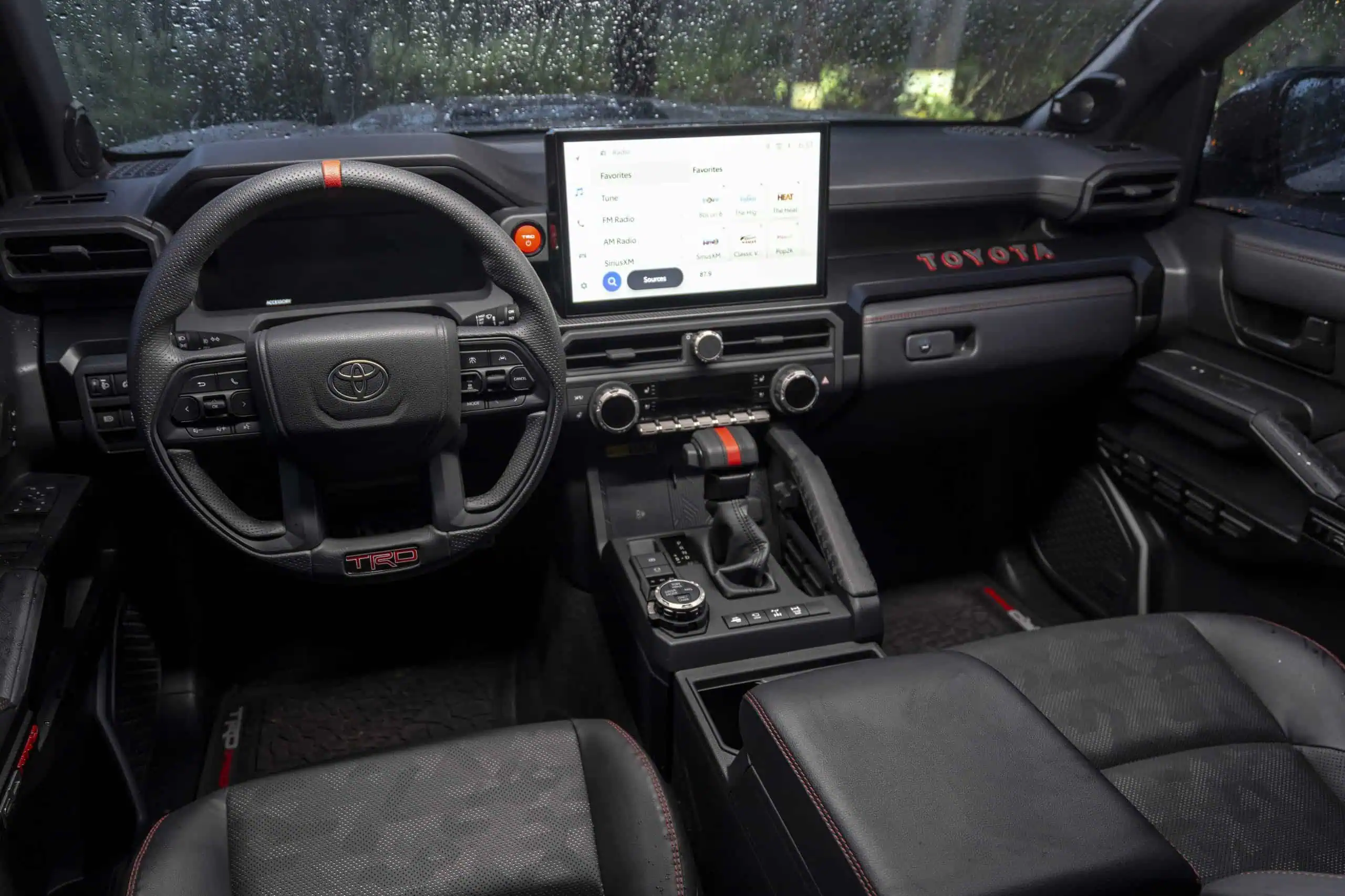
The TRD Sport builds on that with sport-tuned suspension, 20-inch machine-finished alloy wheels on all-season tires, a hood scoop, full LED headlights, a leather-wrapped steering wheel, Qi wireless charging and a 12.3-inch digital gauge cluster. The TRD Sport Premium adds SofTex-trimmed heated and ventilated front seats, a hands-free power liftgate, a 14-inch touchscreen, a 14-speaker JBL audio system with a dash-docking FLEX portable speaker, the Panoramic View Monitor and a heated steering wheel. The FLEX speaker runs for up to six hours of playback once it leaves the dash.
Trail buyers look at the TRD Off-Road and TRD Off-Road Premium. Both carry a locking rear differential, Multi-Terrain Select and Crawl Control, with a sway-bar disconnect available, and the i-FORCE MAX hybrid is available on applicable models. The Premium version stacks on the same seats, liftgate, 14-inch screen and JBL system as the TRD Sport Premium, plus a Multi-Terrain Monitor that offers selectable front, side and rear views.
The Limited goes for road-trip comfort: 20-inch alloy wheels, leather-trimmed heated and ventilated front seats, a chrome tri-bar grille, Adaptive Variable Suspension, the Panoramic View Monitor and a power tilt and slide moonroof, with third-row seating available. The Platinum sits higher with gloss-black 20-inch wheels, perforated leather seats, heated rear seats, a head-up display, a digital rearview mirror and rain-sensing wipers.
At the top, the TRD Pro and the Trailhunter both run the i-FORCE MAX hybrid. The TRD Pro wears 18-inch matte-black wheels with 33-inch all-terrain tires, FOX 2.5-inch shocks, a heritage-style TOYOTA grille, a 2400W AC power supply and the Tow Tech Package. The Trailhunter swaps in 18-inch bronze wheels with 33-inch Toyo all-terrain tires, Old Man Emu 2.5-inch shocks, an ARB roof rack, an onboard air compressor and steel skid plates and rock rails. Shoppers who like that approach on a pickup can read about the new Trailhunter package on the 2027 Toyota Tundra. Prices for these other eight grades are the figures to get from a dealer, as $43,490 covers only the lowest starting point.
Engines, Towing and Warranty
Toyota lists two powertrains. The standard i-FORCE pairs a turbocharged 2.4-liter four-cylinder with an eight-speed automatic and is rated by Toyota at up to 278 hp and 317 lb-ft of torque, depending on the grade. The grade-dependent i-FORCE MAX adds an electric motor to that engine and Toyota quotes up to 326 net combined hp with 465 lb-ft of torque.
The 4Runner tows up to 6,000 pounds, Toyota says. Hardware that helps with a trailer includes a standard tow hitch receiver on the SR5, an available trailer brake controller and an available Trailer Back-Up Guide with Straight Path Assist. In reverse, cameras and sensors help keep a trailer on a straight path, and the system also draws a simulated 360-degree bird’s-eye view around the vehicle. When a trailer is attached, the Blind Spot Monitor that comes on the SR5 is built to detect it and widen its detection zone so hazards alongside the trailer register too. A buyer who needs more truck than this can look at the 2027 Toyota Sequoia, which carries its own hybrid power and trailer assist.
The warranty package is long on the hybrid side. The basic coverage runs 36 months or 36,000 miles. The powertrain is covered for 60 months or 60,000 miles, and corrosion perforation for 60 months. Hybrid components carry 8 years or 100,000 miles of coverage, and the hybrid battery 10 years or 150,000 miles. ToyotaCare pays for factory-scheduled maintenance for one year or 10,000 miles and adds two years of roadside assistance with unlimited mileage. Connected Services trials for Safety Connect, Service Connect and Remote Connect run five years, and a Wi-Fi Connect trial runs 30 days or 3 GB. Those services depend on a 4G network.
Safety Tech Standard on Every Grade
Toyota Safety Sense 3.0 comes on all nine grades. The Pre-Collision System with Pedestrian Detection now detects motorcyclists, in addition to pedestrians and bicyclists. Lane Departure Alert adds Steering Assist, with lane recognition that includes certain 3D objects such as guardrails. The radar cruise control works at full speed range and adds a fourth following-distance setting to the previous three; it can detect more than one vehicle ahead and vehicles in adjacent lanes.
Lane Tracing Assist needs the radar cruise control switched on and detectable lane markings to work. It centers the vehicle in its lane and adds some space from vehicles being passed. The new Emergency Driving Stop System is a function of Lane Tracing Assist. It is designed to watch inputs such as steering to judge whether a driver is inattentive or non-responsive, for example in a medical emergency, and to halt the vehicle when the driver leaves its alerts unanswered. Road Sign Assist is designed to read speed limit, stop, Do Not Enter, yield and certain warning signs and show an icon of each on the multi-information display. Automatic High Beams and Hill Start Assist Control are also on the list. All of these are Toyota’s descriptions of what the systems are designed to do, so test them on a drive rather than assuming how they behave. Another Toyota that lists standard tech for 2027 is the Crown Signia.
What to Check Before You Buy a 2027 4Runner
Start with four questions for the dealer. What is the destination charge, and is it in the number on the quote? When does the grade you want reach the lot? What does that exact grade cost? The $43,490 figure is the starting point, and each step up the ladder adds hardware. And does your grade offer the i-FORCE MAX hybrid, which Toyota describes as grade-dependent?
Fuel economy is the open item. The EPA and Department of Energy site fueleconomy.gov showed no 2027 4Runner ratings on Nov. 26, so look for the EPA label on the window sticker. For reference, the same site lists the 2026 4Runner at 22 mpg combined in two-wheel drive, 21 mpg combined in four-wheel drive and 23 mpg combined for the hybrid four-wheel-drive model, with annual fuel cost estimates of $2,500, $2,600 and $2,350. Those are 2026 numbers and serve only as a reference point until the 2027 ratings appear.
Last, compare against the old model. If a dealer still has a 2026 4Runner on the lot, set its sticker next to the 2027 quote. The 2026 starting MSRP was $41,570, and the 2027 step of $1,920 arrives with heated and power-adjustable front seats on the entry grade. The verdict turns on the grade, the destination charge and any discount on leftover stock.
Want more car content? Add us as a preferred source on Google to your favourites list for the best automotive news and analysis on the internet.
If you enjoyed this article, be sure to follow us on Microsoft Start.
Reviewed by Preetam Gadekar

Leave a Comment
More in News
Maryland Fines Start at $25 for Snow and Ice Left on Your Car
Your Steering Wheel Can Move 13mm Before It Fails the MOT
You Lose Your Private Number Plate Forever If You Miss This Free Renewal

What Drivers Heading to France This Winter Must Carry or Risk a Fine

‘How useless of a man can you be?’: Woman from the Pacific Northwest goes to Costco car center. Then she asks a worker for help filling up her tire
Trending on Motoring Chronicle

Subaru and Operation Warm expand support for children in urgent need as homelessness rises

Toyota Brightens the City Streets with New GR86 Yuzu Edition [Photo Gallery]

Every UK Driver Now Risks a £442 Bailiff Bill Over One Unpaid Parking Fine

Leicestershire Council Took £900,127 in Parking Penalties as Notices Issued Rise 9.3 Percent
