Why Drug Drivers Are Five Times More Likely to Reoffend Than Drink Drivers
New data obtained through a Freedom of Information request by the RAC has exposed a drug driving reoffending crisis hiding in plain sight. More than 12,391 drivers were caught drug driving at least three times in the eleven years to July 2025, dwarfing the 2,553 repeat drink drivers caught on three or more occasions in the same period. That is nearly five times the rate, yet drug driving attracts a fraction of the public attention.
Rod Dennis, senior policy officer at the RAC, described the picture as deeply troubling. “While it’s drink driving that tends to attract most of the headlines, these figures show just how much of a problem the more under-the-radar issue of drug driving is becoming,” he said. “Drug driving reoffending rates dwarf those of drink driving, which suggests current penalties aren’t effective in preventing some drug drivers from repeating their crimes and putting everyone at risk.”
The scale of repeat offending is staggering. At least 50 individuals have accumulated more than ten drug driving endorsements on their licences. One driver has been convicted eighteen separate times for drug driving. Another has seventeen convictions. Yet most of these individuals have presumably continued to use the roads, at least in the periods between bans. For the drivers sharing those roads with them, it is a sobering statistic.
What the Law Currently Says About Drug Driving
Drug driving is governed by Section 5A of the Road Traffic Act 1988, introduced in 2015 following years of campaigning by road safety groups. The law sets out specific legal limits for seventeen different drugs. For eight illegal substances, including cannabis (THC), cocaine, MDMA, heroin and ketamine, the limits are set at near-zero, effectively making any recreational use incompatible with driving for days or even weeks after the event. A driver who smoked cannabis on a Friday night, for instance, could still be over the limit on Sunday morning.
Nine prescription drugs also fall within the regulations, including morphine, codeine, diazepam and methadone. These have higher prescribed limits designed to allow patients using them therapeutically to drive safely. However, drivers on these medications who exceed the limit, or whose impairment can be demonstrated, face the same legal consequences. Many drivers taking new or increased doses of prescription opioids or benzodiazepines are unaware they may be unfit to drive.
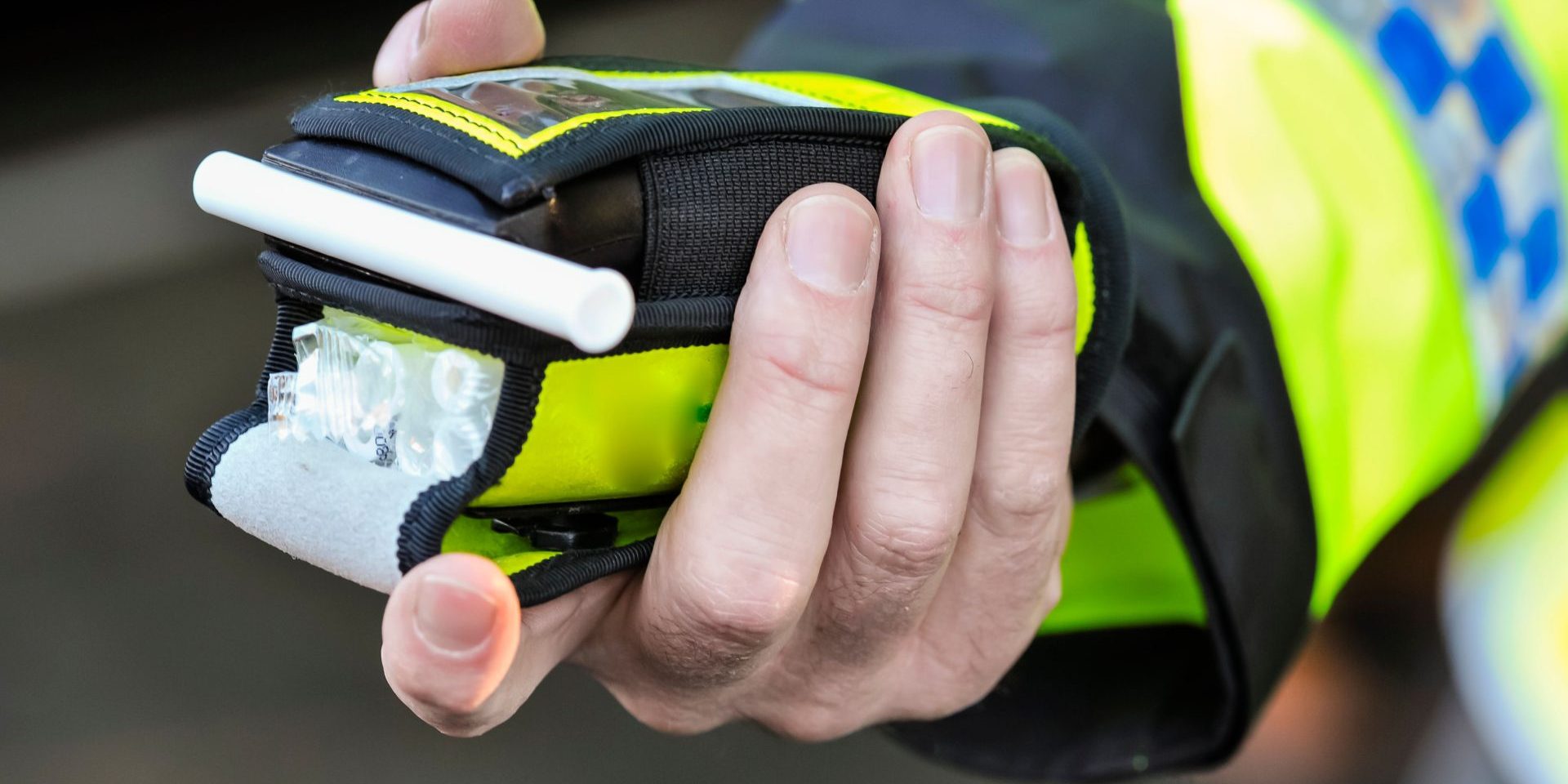
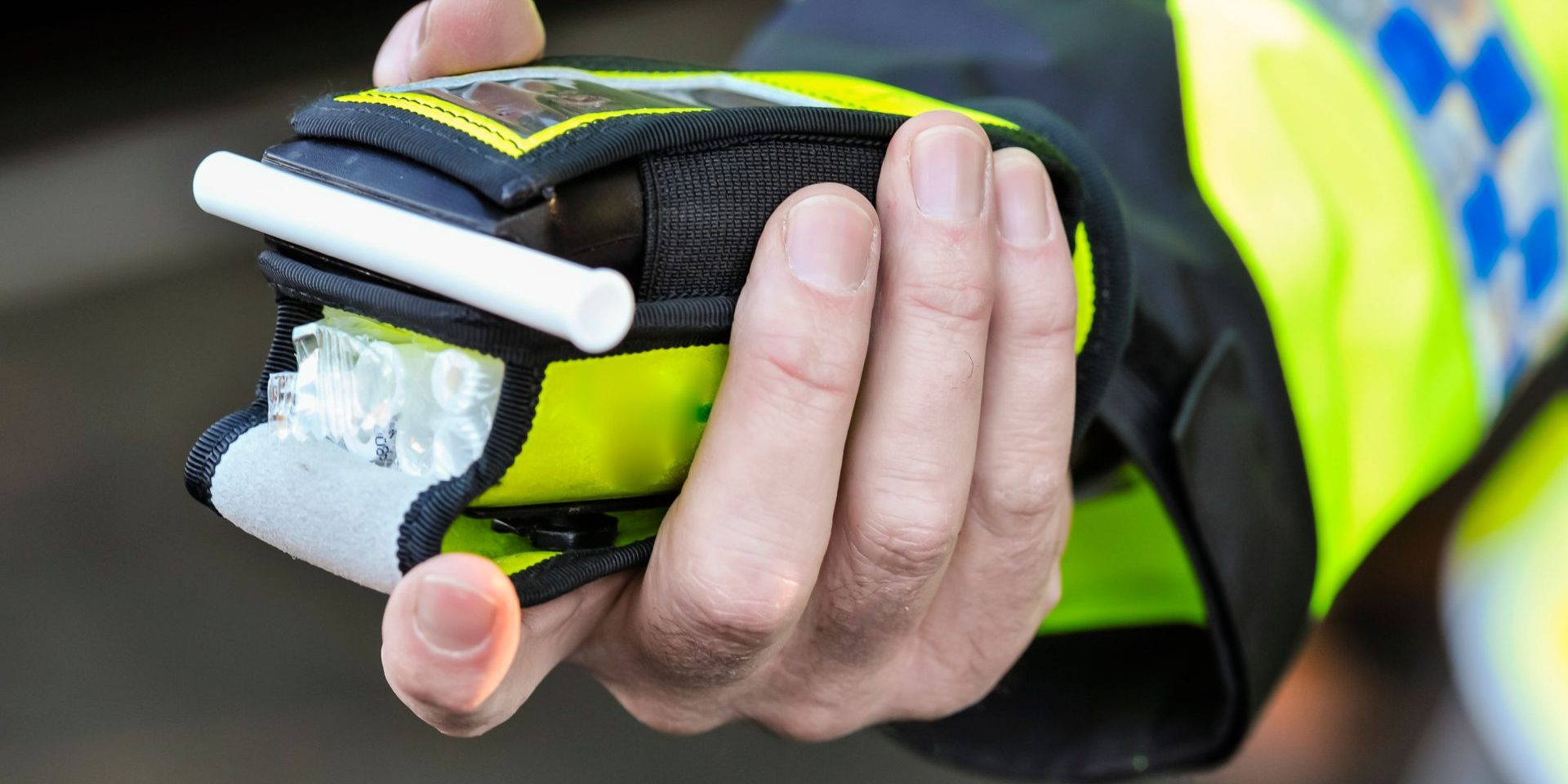
At the roadside, police use the DrugWipe device, a handheld saliva swab that can detect cannabis (THC) and cocaine in approximately eight minutes. If that test is positive, or if an officer has grounds to suspect impairment from another substance, the driver is arrested and a blood sample taken at the station. Blood analysis can identify opiates, amphetamines, benzodiazepines, and a wider range of compounds. A positive result from either test can lead to prosecution.
The penalties on conviction are a minimum twelve-month driving ban, an unlimited fine, a criminal record, and up to six months in prison. If caught twice within three years, the minimum ban rises to thirty-six months. These are the same penalties as drink driving. Yet the reoffending data suggests they are not functioning as an equivalent deterrent for drug drivers.
How Drug Driving Compares to Drink Driving
In absolute terms, drink driving remains significantly more common than drug driving. Between July 2014 and July 2025, nearly 100,000 people were convicted of drug driving offences across the UK, compared with just over 220,000 for drink driving. Drug driving accounts for roughly 45 percent of drink driving convictions in volume, but its reoffending rate is five times higher. That disproportionate gap points to a structural failure in the current approach to deterrence and rehabilitation for drug drivers specifically.
One key reason is the absence of a drug driving rehabilitation course. When a driver is caught drink driving, they are often offered the opportunity to attend a rehabilitation course in exchange for a shorter ban. Research by the Department for Transport has suggested these courses reduce reoffending by around 25 percent. No equivalent course exists for drug driving offenders. There is no structured intervention to address the underlying dependency or behaviour patterns, and drivers simply serve their bans and return to the road.
The RAC has called specifically for a national drug driving rehabilitation scheme modelled on the drink drive course. Rod Dennis said introducing such a scheme “could help drive down reoffending.” The call aligns with broader road safety consensus that penalty-only approaches are less effective than penalty combined with education and behavioural support, particularly where substance dependency is a factor.
The Most Commonly Detected Drugs and Why Testing Is Limited
Cannabis is by far the most commonly detected substance in UK drug driving cases, and its long detection window makes it particularly significant. THC, the psychoactive compound in cannabis, can remain detectable in saliva for up to twelve hours after use and in blood for days, meaning drivers who used cannabis the previous evening can test positive the next morning. The zero-tolerance limit means any detectable level is an offence, regardless of whether the driver actually feels impaired at the time of testing.
Cocaine is the second most common finding. Unlike cannabis, cocaine clears the system relatively quickly, but it is frequently combined with other substances. The current roadside DrugWipe only tests for THC and cocaine, which means drivers under the influence of MDMA, ketamine, amphetamines or prescription opioids can pass the roadside test and only be caught if an officer requests a blood sample based on observed behaviour. Critics argue this creates a significant enforcement gap, particularly as prescription drug misuse increases among older drivers.
In Australia, roadside saliva testing has been expanded to cover multiple drug types including methamphetamine, ecstasy and opiates. The state of Victoria alone conducts more than 100,000 roadside drug tests per year. The RAC has urged the UK government to follow suit. “Other countries such as Australia already routinely use roadside saliva testing of suspected drug drivers, and we urgently need a similar system in the UK,” said Dennis. The Road Safety Strategy published in January 2026 acknowledged the gap and committed to improving roadside testing capability.
What the Government Is Planning
The Government’s Road Safety Strategy, published in January 2026, set out an ambition to reduce deaths and serious injuries on UK roads by 65 percent by 2035, with drug driving identified as a specific priority. The strategy includes a commitment to review penalties for both drink and drug driving, and a consultation on the use of alcohol interlocks for drink drive reoffenders. Similar thinking is now being applied to drug driving.
The Department for Transport confirmed it intends to introduce new powers to immediately suspend the licences of drivers caught drug driving, even before a court conviction is secured. This mirrors powers that already exist in some form for drink drivers and would act as a faster-acting deterrent. The DfT said: “For too long, our enforcement system has struggled to keep pace with the scale of this problem. But those who do drugs and get behind the wheel will no longer go unpunished.”
New and improved roadside testing devices are also under consideration. The technology exists to produce a handheld device capable of testing for a much wider range of substances, including opiates and amphetamines, at the roadside without the need for a blood sample. Deploying these tools more widely could significantly increase detection rates and act as a genuine deterrent to the most persistent offenders.
What to Do if You Suspect a Drug Driver on the Road
If you believe a driver poses an immediate danger, call 999 and give the police as much information as possible, including the vehicle registration, make, colour, and direction of travel. For non-emergency concerns where you have seen behaviour that concerns you but there is no immediate threat, call 101. The THINK! campaign also operates a reporting mechanism, and local police forces actively encourage members of the public to report suspected drug driving.
If you are taking prescription medication yourself, always check with your pharmacist or GP before driving, particularly when starting a new medicine or increasing a dose. Codeine-based painkillers, sleeping pills, anti-anxiety medications and some antihistamines can all impair driving ability and some fall within the legal limits set out in the 2014 regulations. Ignorance of the law is not a defence, and the consequences of a drug driving conviction, including a minimum twelve-month ban and a criminal record, will affect your insurance, employment, and daily life for years.
The RAC data makes clear that the current system is failing to deter a significant minority of persistent drug drivers. Whether the government’s planned reforms, from new roadside tests to immediate licence suspensions and a rehabilitation course, will make a meaningful dent in those reoffending numbers remains to be seen. What is not in doubt is that drug driving is far more of a problem than most road users realise.
Sources:

Leave a Comment
More in News

How to Free a Frozen Handbrake (and What a New Cable Costs)

What Winter Tyres Actually Do for UK Drivers (and Whether You Need Them)

Renewing Car Insurance on the Day Cover Ends Costs Drivers £331 More, MoneySupermarket Shows

Every Driver Faces £500 Seatbelt Fines as AI Cameras Flag 19,145 Possible Offences

How to Remove Moisture From Inside Your Headlight Before It Costs You £500
Trending on Motoring Chronicle
DVLA Data Shows Cloned Number Plates Rose 54 Percent as Drivers Fight Fake Fines

How Can You Maximize Fuel Economy When Accelerating?

Kia EV2 Qualifies for Full £3,750 Electric Car Grant From £24,245

17-Year-Old Drivers’ Car Insurance Jumped 4 Percent This Quarter to £1,755