
What Makes a Number Plate Illegal in the UK (and the £1,000 Fine)
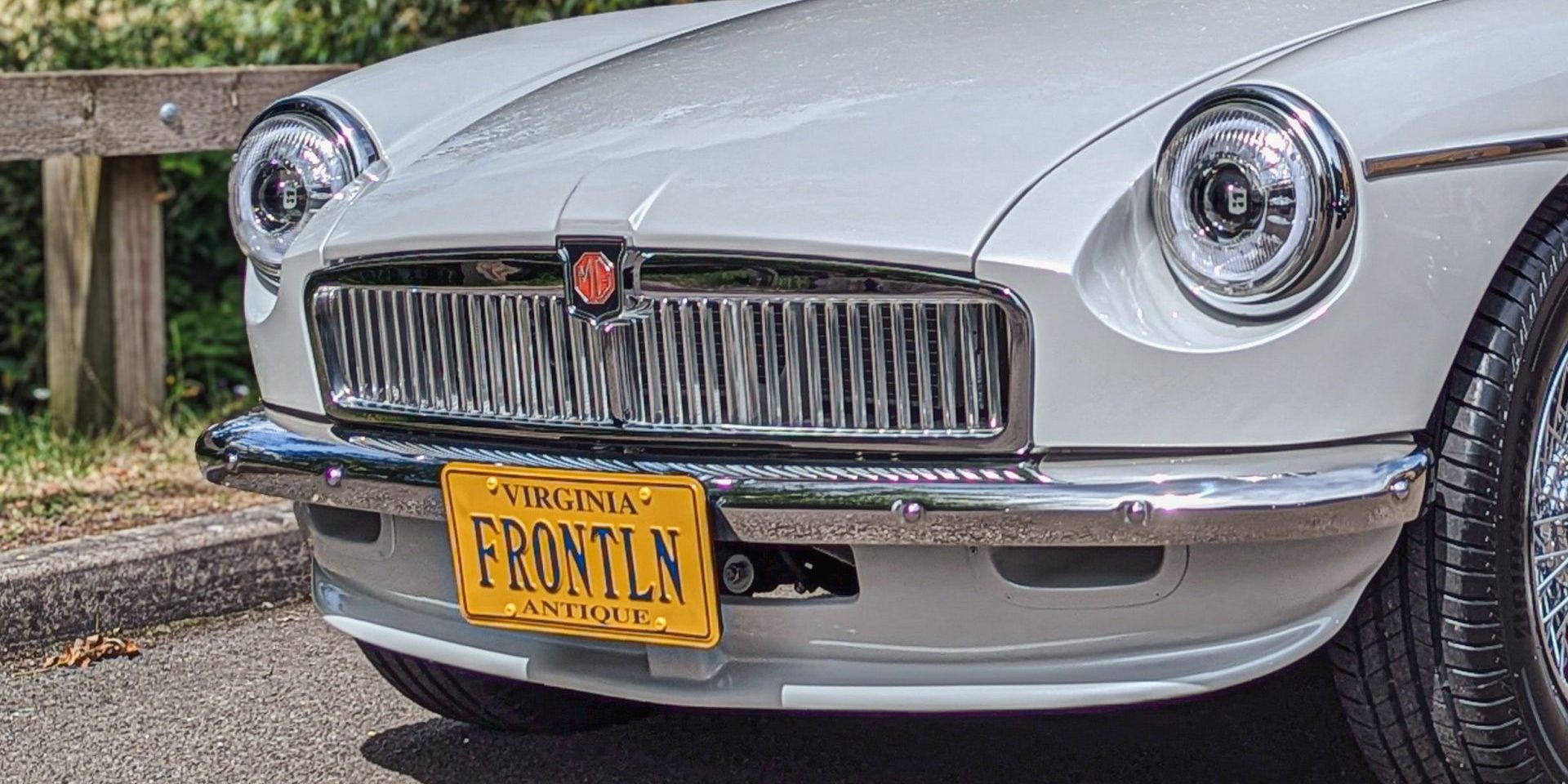

- A UK number plate is illegal if the font, spacing, colour, markings or supplier break the rules, and the penalty can reach a fine of up to £1,000 ($1,300) plus an MOT failure.
- Raised 3D characters are allowed, but tinted covers, italic lettering, background patterns and characters moved to spell a word are not.
- You can check your own plates in two minutes: the supplier mark, a single shade of black, 11mm gaps between characters and nothing covering the lettering.
Illegal Number Plates: The Rules That Fail an MOT and Risk a £1,000 Fine
A number plate is illegal if it changes how your registration reads, uses the wrong font, spacing, colour or markings, or was made by anyone other than a registered supplier. GOV.UK puts the penalty bluntly: “You could be fined up to £1,000.” That is about $1,300. The same fault also fails an MOT, and the DVLA can withdraw the registration number for good.
In practice, most drivers stopped over a plate fault are handed a £100 ($130) fixed penalty or a repair notice, according to Auto Express. The top end of the scale exists, though, and it is worth knowing exactly where the line sits before a roadside officer or an MOT tester finds it for you.
The Rules Every Plate Has to Meet
GOV.UK sets out the basics. Plates must be made from reflective material with no background pattern. The front plate carries black characters on a white background and the rear plate carries black characters on a yellow background. Each plate must be marked to show who supplied it and carry a British Standard number, which is BS AU 145e for plates fitted after 1 September 2021.
Newer plates have a stricter rule on the lettering itself. GOV.UK says “The characters must not be removable or reflective.” For plates fitted after 1 September 2021, every character must also be a single shade of black.
Size and spacing come from the DVLA leaflet INF104, and they apply to vehicles registered from 1 September 2001 onwards. Characters are 79mm tall and 50mm wide, except the number 1 and the letter I, with a stroke thickness of 14mm. The gap between characters is 11mm. The gap between the age identifier and the random letters is 33mm, and the margins at the top, bottom and sides are 11mm. When a plate is shown on two lines, the vertical gap between them is 19mm.
Motorcycles and motor tricycles follow a two line layout. Those registered on or after 1 September 2001 need a rear plate only, while older ones can also show a front plate but do not have to.
The leaflet also bans rearranging or misrepresenting characters, with fixing bolts used to form words given as one example. If a plate has been spaced out so the registration reads like a name, or a bolt has turned an 0 into an 8, it breaks the rules.
What Fails an MOT
The MOT inspection manual deals with plates in section 0.1, and it lists four Major defects. A Major defect is a fail. The plate is missing or so insecure that it is likely to fall off. The inscription is missing or illegible. The plate shows an incorrect registration. Or the plate does not conform to the specified requirements.
That last category covers most of the plates that fail. The manual names a plate that is obscured by objects or attachments, or one that is excessively damaged, deteriorated or delaminated. It names background overprinting and a honeycomb style background on vehicles first registered on or after 1 September 2001. It names tints or films that change the appearance or legibility of the characters.
Lettering is covered too. Characters that are italic, sloping, or made with broken or multiple strokes fail, as does a font that is not substantially similar to the prescribed one. Incorrect character size, stroke width or spacing fails, and so does the wrong colour. Black on white at the front and black on yellow at the rear applies to vehicles made on or after 1 January 1980.
Testers are not expected to get a ruler out. The manual says size and spacing should be rejected only when they are obviously incorrect. A plate with letters crammed together or stretched across the width of the car will not get through, while a tiny difference in a gap will not usually decide the result. A plate hidden behind a tow bar falls under a separate section of the manual, 6.1.6.
Legal Plates That Look Risky
Raised characters are the most common worry. GOV.UK says plates can have raised 3D characters, so the style is not the problem. What counts is whether the finished plate still meets every other rule: a single shade of black, no reflective or removable lettering, correct spacing and a supplier mark. Auto Express makes the same point, saying 3D raised letters are allowed if the plate meets the other rules. A plate sold as 4D has to pass the same checks as any other.
Zero emission vehicles can show a green flash on the plate, which is also permitted by GOV.UK. Flags and identifiers are allowed too, within limits. The Union flag, Cross of St George, Saltire and Red Dragon of Wales can sit on the left side of the plate, with the identifier below. The permitted identifiers are UK, GB, CYM or Cymru, ENG, SCO and WALES. The flag goes above the identifier, neither can sit on the margin, and neither can be more than 50mm wide.
Driving abroad adds one more trap. A white oval UK sticker is needed if your plate shows only numbers and letters, a GB identifier with the Union flag, an EU flag or a national flag of England, Scotland or Wales. It is not needed if the plate shows the UK identifier with the Union flag. You must display one in Spain, Cyprus and Malta whatever is on your plate, but not in the Republic of Ireland. The sticker goes on the car, never on the number plate, and any old GB sticker should be covered or removed.
Dirt is a quieter risk. A December 2025 legal briefing on Mondaq says obscured or dirty plates can bring a fine of up to £1,000, and police can also prohibit the vehicle from use until the plates are corrected. A wipe with a damp cloth before a long drive costs nothing.
What Happens If You Are Caught, and How to Put It Right
Officers have a few options. Auto Express reports that police can issue a Traffic Offence Report or a Vehicle Defect Rectification Scheme notice. A rectification notice avoids a penalty if the fault is fixed within 14 days. A fixed penalty is £100 ($130), and liability can climb to £1,000 ($1,300) for more serious or persistent offending. In extreme cases a car can be seized as evidence.
The bigger risk is to the registration itself. DVLA leaflet INF104 says the number can be permanently withdrawn, and anyone who misrepresents a number loses any money paid for it, plus any other costs. For a personalised plate that cost several hundred or several thousand pounds, that is a far heavier penalty than the fine. Auto Express adds that DVLA policy allows a registration to be rescinded, with a new random plate issued, if a vehicle is stopped more than once for a non compliant plate or if a driver stopped once does not show the problem has been fixed.
To fix a faulty plate, go to a registered number plate supplier. Only registered suppliers can make plates, and GOV.UK publishes the list. You will need to prove who you are and that you can use the number. GOV.UK accepts a driving licence, a utility or Council Tax bill from the last six months, a bank or building society statement from the last six months, or a national identity card as proof of name and address. A passport, bank card, police warrant card or armed forces identity card counts as proof of name only. For the number itself, bring the V5C log book, the green new keeper slip, or one of the other documents on the GOV.UK list.
A quick check at home covers most problems. Look at the bottom edge of each plate for the BS AU 145e mark and the supplier name and postcode. Check that every character is the same flat black, that nothing is tinted, stuck over or bolted into a different shape, and that the gaps look even. Then confirm the front plate is white and the rear plate is yellow. If a plate fails any of those points, replace it before the MOT, not after.
Sources
- GOV.UK: Displaying number plates: Overview
- GOV.UK: Displaying number plates: Rules for number plates
- GOV.UK: Displaying number plates: Flags, identifiers and stickers
- GOV.UK: Displaying number plates: Getting number plates made up
- GOV.UK: MOT inspection manual: cars and passenger vehicles – 0. Identification of the vehicle
- DVLA: Vehicle registration numbers and number plates
- Auto Express: Illegal number plates: UK rules on font, spacing and fines
- Mondaq: Illegal Number Plates And The Law (UK) (11 December 2025)

Leave a Comment
More in News

Why Gas Prices Are Falling From Their October Record High
Mercedes Recalls 30,000 Maybach and S-Class Models Over Failing Brake Hoses

How to Clear a Musty Car AC Smell Before It Costs a £300 Repair

14 Percent of Keyless Car Owners Faced a Relay Theft Attempt, DVLA Data Shows

I travelled down the Champs-Élysées and around the Arc de Triomphe in a self-driving car
Trending on Motoring Chronicle

The new BMW M2 CS [Photo Gallery]
How Much More It Will Cost to Get Your Car Back If Police Seize It

Ohio Bill Would Force Uber and Lyft to Recheck Drivers Every 6 Months

How Thieves Unlock Your Car From the Street Using Your Key Fob While It Sits Indoors
