
What Every Driver Towing a Caravan This Bank Holiday Must Know About Fines
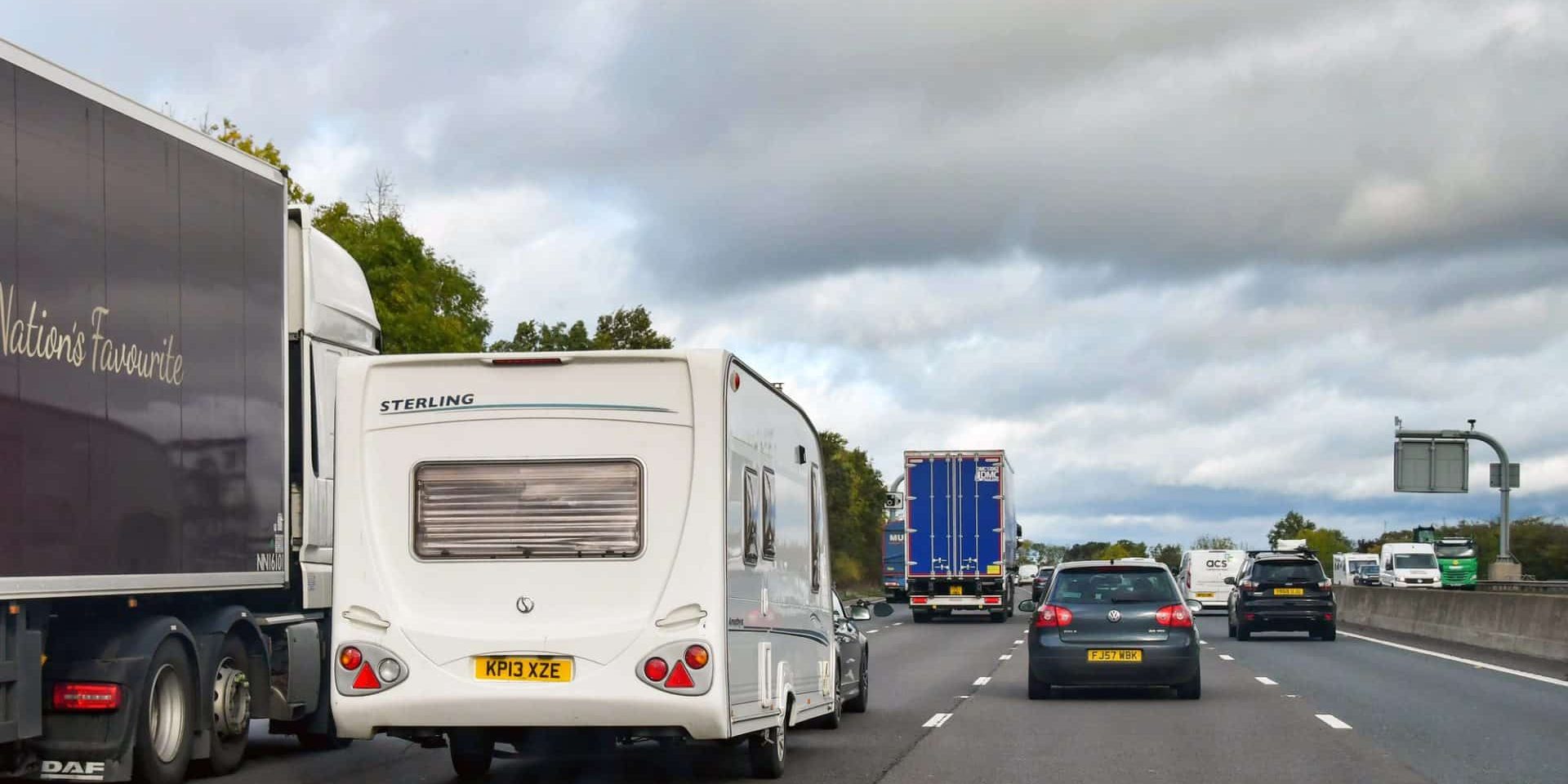
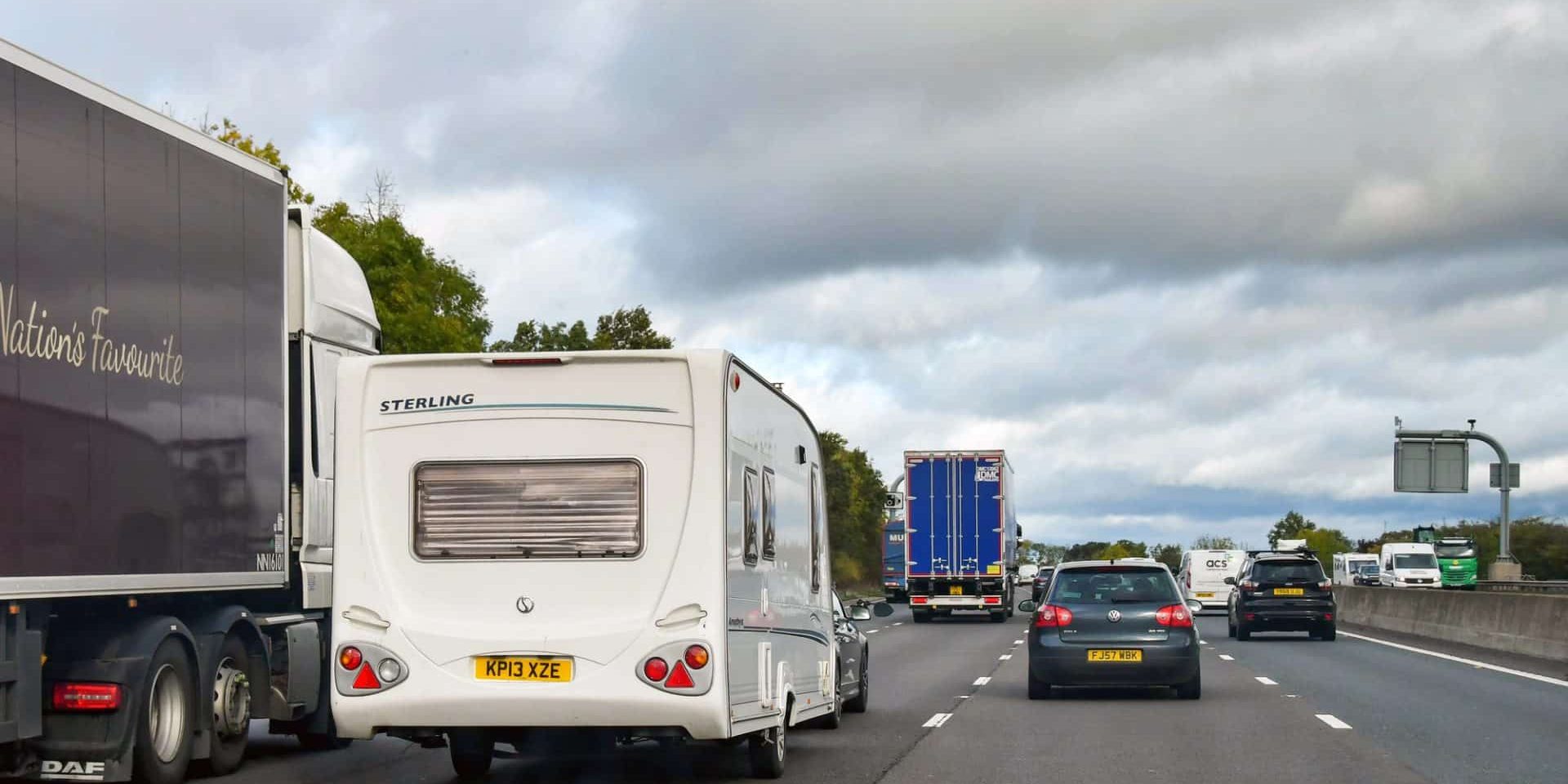
Around two million caravans and touring motorhomes are registered in the UK, and the May bank holiday weekend is one of the busiest departure windows of the year for them. Millions of drivers will be hitching up trailers and caravans today, and a significant number will be doing so without fully understanding the rules that apply the moment they leave their driveway. The penalties for getting it wrong range from £100 on the roadside to £2,500 in court, and the violations that catch drivers out are rarely the obvious ones.
Traffic law enforcement is traditionally higher during bank holiday periods, with roads policing units deploying additional resources on key routes. Officers are specifically briefed to look for overloaded vehicles, towing mirror violations, and cars pulling trailers that exceed their licence entitlement. Here is what every driver towing a caravan or trailer this weekend needs to know.
Speed Limits When Towing: Most Drivers Get These Wrong
The most commonly misunderstood rule when towing is the speed limit. Many drivers assume their normal limits apply once they are on the road with a caravan behind them. They do not.
On motorways and dual carriageways, the limit when towing drops to 60mph rather than the standard 70mph. On single carriageway roads, the towing limit is 50mph rather than 60mph. National speed limit signs showing the white circle with a diagonal black line apply differently to vehicles towing trailers, meaning a driver who passes one of those signs at 60mph on a single carriageway is speeding, even though the same sign would permit a car without a trailer to travel at 60mph.
On motorways with three or more lanes, drivers towing trailers are banned from using the right-hand lane entirely, regardless of speed. A driver who pulls out to overtake a slower vehicle in lane three while towing is committing an offence, even if they are travelling below 60mph. The penalty is a £100 fixed penalty notice and three points on the licence.
Officers regularly observe drivers towing at 65 or 70mph on motorways, often genuinely unaware that the 60mph limit applies to their combination. Speed camera systems capable of detecting vehicle type can flag these violations without direct police involvement, so the bank holiday enforcement risk is real even on stretches without active patrols.
Towing Mirrors, Lighting and Plate Checks
Towing mirrors are legally required if your caravan or trailer is wider than your car’s body, to ensure you have an unobstructed view of the road behind your outfit. “Wider than your car” means wider than the bodywork, not the door mirrors. If the caravan extends beyond your car’s sides when viewed from directly above, you need towing mirrors fitted before you move.
Failure to use legally required towing mirrors carries a fine of up to £1,000 and three penalty points. Officers will issue this at the roadside, and the vehicle can be directed to stop until mirrors are fitted, which on a busy bank holiday A-road can mean a significant delay to your journey.
All trailer lights must be working before you depart. This means brake lights, rear indicators, sidelights, and the fog light if fitted. The number plate on the trailer must be illuminated at night or in poor visibility. Displaying an obscured, damaged, or non-illuminated plate attracts a fine of up to £1,000. Before hitching up, walk around the outfit with the ignition on and check every light is functioning. Trailer light boards with quick-release connectors are a sensible investment if you only tow occasionally.
The 85 Per Cent Rule and Maximum Authorised Mass
The 85 per cent rule is not a legal requirement but a strong safety recommendation from the Caravan and Motorhome Club. It states that a caravan’s maximum technically permissible laden mass (MTPLM) should not exceed 85 per cent of the towing vehicle’s kerbweight. If you exceed that ratio, the outfit becomes increasingly prone to instability and snaking, particularly above 50mph.
You can find your car’s kerbweight in the owner’s manual, on the VIN plate inside the driver’s door frame, or by calling your manufacturer’s customer service line. The MTPLM of your caravan is marked on the caravan’s data plate and in its handbook. Divide the caravan’s MTPLM by your car’s kerbweight and multiply by 100 to get the percentage. Above 85 per cent, the Caravan and Motorhome Club advises additional caution. Above 100 per cent, you are in dangerous territory regardless of your driving skill.
The legal weight concern is the nose weight: the downward force the coupling places on the towball. Exceeding the towball’s maximum nose weight rating, which is stamped on the towball itself, can cause structural failure and loss of directional control. Most standard towballs are rated at 75kg nose weight. Some are rated lower. Overloading a towball by packing heavy items in the front of the caravan can exceed this limit even when the total caravan weight appears acceptable.
Licence Entitlement: Has the Law Changed for You
A major change to towing licence entitlement took effect in September 2021. Drivers who passed their test on or after 1 January 1997 can now tow trailers with a combined vehicle and trailer maximum authorised mass (MAM) of up to 3,500kg without needing a separate B+E licence entitlement. This reversed the pre-2021 position under which those drivers needed an additional test to tow anything above 750kg trailer MAM.
Drivers who passed their test before 1 January 1997 already had grandfather rights to tow combinations above 3,500kg MAM, and those rights remain. The 2021 change brings the two groups into approximate alignment for most practical towing purposes. However, towing a combination above 3,500kg total MAM still requires a Category C1+E licence entitlement for certain vehicle configurations, and any driver unsure about their entitlement should check the categories listed on the front of their photocard licence before towing a large American-style fifth-wheel caravan or a heavy horsebox.
If you passed your test after 1 January 1997 and want to tow heavier combinations, you will need a B+E test through the DVSA. Waiting times are currently long: the average practical test wait across all categories is 22 weeks, and specialist licence categories can take longer. Do not assume that because you towed legally last year, a heavier outfit this year falls within your entitlement without checking.
What To Check Before You Leave This Weekend
Run through this before hitching up: check your car’s towing limit in the handbook (the maximum unbraked trailer weight and maximum braked trailer weight are listed separately); check the caravan’s MTPLM against your car’s kerbweight and the 85 per cent guideline; confirm all trailer lights are working; check the tyres on the caravan or trailer for correct pressure and adequate tread depth (the minimum legal tread depth of 1.6mm applies to trailer tyres as well as car tyres); verify the coupling is securely locked on the towball and the stabiliser, if fitted, is engaged; fit towing mirrors if the caravan is wider than your car; and ensure the breakaway cable is connected to the tow vehicle.
The AA recorded more than 137,000 caravan and trailer-related call-outs in the first two months of 2026 alone, many of them involving tyre failures on trailers that had sat unused over winter. Caravan tyres degrade with age as well as use, and many industry bodies recommend replacing them after five years regardless of tread depth, as UV deterioration of the sidewall rubber can cause sudden failure under load at motorway speeds.
Driving with a faulty or dangerous trailer tyre can constitute driving a vehicle in a dangerous condition, which carries a maximum fine of £2,500, three penalty points, and in serious cases a discretionary ban. This is the same penalty band that applies to driving an unsafe car, applied to the towed unit behind you.
Sources:

Leave a Comment
More in News
How to Claim Your $2,000 Mercedes-Benz Settlement Before September 30

Tesla Recalls 20,349 Model 3 and Model Y Cars Over Illegally Bright Headlights
Car Insurance Rates Are Rising in 32 States as the Average Hits $2,237

US Gas Prices Hit a Record August High of $4.10 a Gallon
2027 Jeep Wrangler Smoky Mountain Edition Costs Just $80 More Than a Willys
Trending on Motoring Chronicle

Bentley Mulliner and Supriya Lele unveil exclusive bespoke colour ‘Nīla Blue’ in latest collaboration [Photo Gallery]

All-New LEAF hits the road – Boasting 386 mile range, top-level technology and sleek aerodynamic design

Lamborghini Revuelto Miura 60° Homage: special series pays tribute to the first super sports car

The Amelia Concours-Winning 1938 Alfa Romeo 8C Earns The Peninsula Classics Best of the Best Award 2025
