Six Cars Stolen Every Hour: The Models UK Thieves Target Most in 2026

Six cars were stolen every hour in Britain last year, and the models thieves went after most are not exotic supercars but the everyday hatchbacks and family SUVs sitting on millions of driveways. New DVLA figures obtained by What Car? show 54,830 vehicles were reported stolen across the UK in 2025, around 150 a day, or roughly one every ten minutes. The good news for owners is that the total fell from 61,343 the year before. The harder truth is that the cars topping the list are the ones most of us actually drive, and the methods used to take them have moved well beyond the smashed window and hotwired ignition.
If your car is on the list below, it does not mean you are about to lose it. It means a few cheap, practical precautions are worth taking this week. Here is what the latest data shows, why these particular models keep getting targeted, and the steps that make the biggest difference.
The cars thieves targeted most in 2025
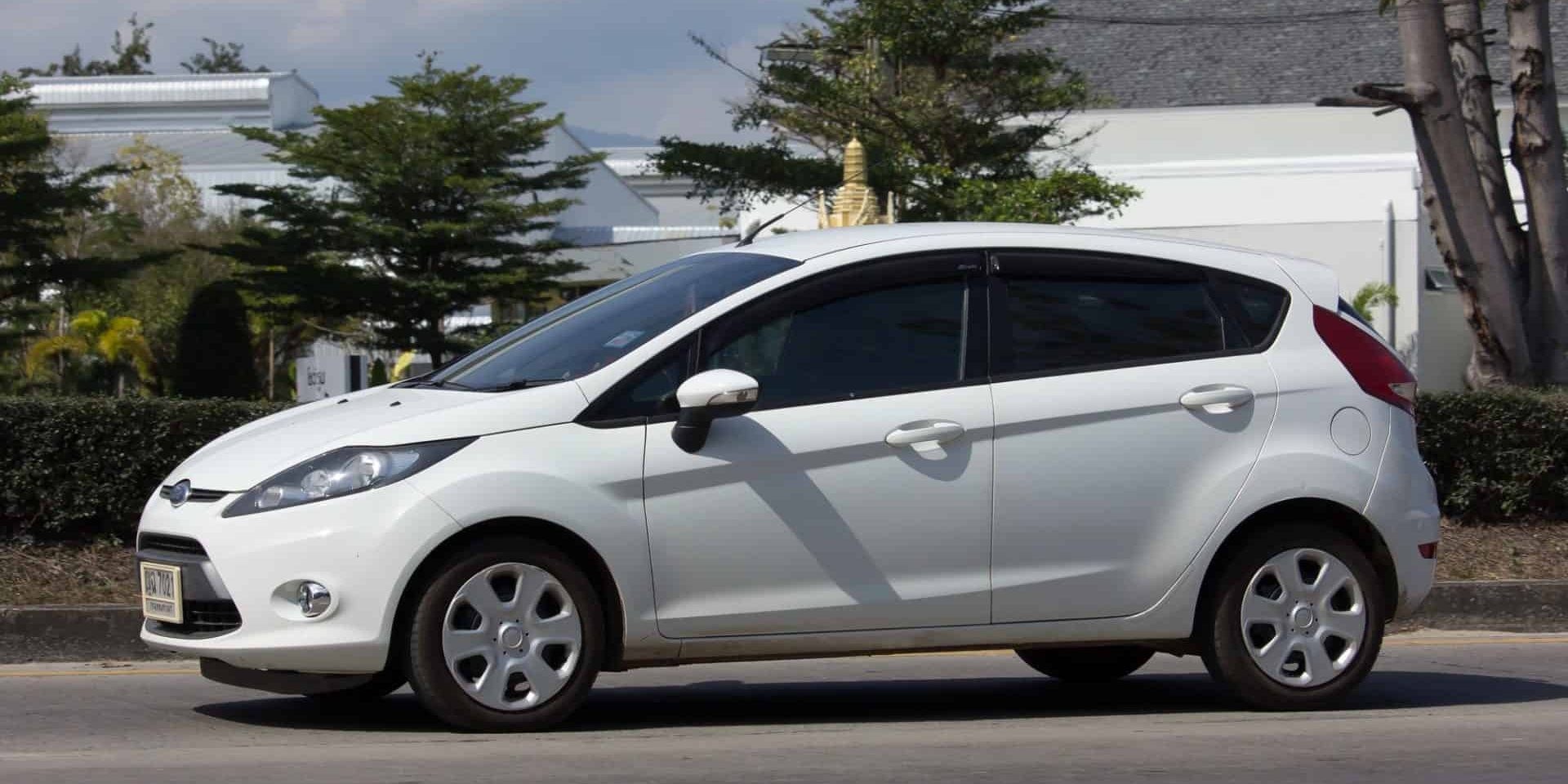
The Ford Fiesta was once again the most stolen car in Britain, with 3,511 taken over the year. That is a reflection of its popularity rather than any particular weakness: the Fiesta was the country’s best selling car for more than a decade before production ended in 2024, and around 1.4 million remain on the road. A thriving market for second hand parts keeps demand high. Encouragingly, Fiesta thefts were down 21 per cent on the 4,446 stolen in 2024, and older cars bear the brunt, with 2008 to 2017 models making up 86 per cent of all Fiestas taken.
Behind it came the Volkswagen Golf (1,625), Ford Focus (1,474), Toyota RAV4 (1,348) and BMW 3 Series (1,249). The Nissan Juke, Toyota C-HR, Lexus NX, Range Rover Evoque and Vauxhall Corsa completed the top ten. The pattern is clear: best sellers with huge numbers on the road, strong used demand and an established parts trade are the ones most exposed. The list runs through the Land Rover Discovery Sport, Ford Kuga, Vauxhall Astra, Mercedes C-Class, BMW 1 Series, Range Rover Sport, Nissan Qashqai, Audi A3, Kia Sportage and Toyota Prius.
At brand level, Ford was the most stolen marque with more than 7,600 cars taken, followed by BMW (5,489), Toyota (4,518), Mercedes (3,992) and Land Rover (3,690). The takeaway for owners of mainstream cars is worth absorbing: this is not only a problem for prestige badges. At the other end of the scale, the rarest and most valuable cars are the least likely to go. Only six McLarens, seven Aston Martins, 17 Ferraris and 18 Lamborghinis were stolen all year.
Why keyless cars keep disappearing
The reason so many late model cars feature on the list comes down to how thieves now operate. The dominant method is the relay attack, which targets keyless entry and push button start. Two criminals work together: one stands near your house with a device that detects and amplifies the signal from your key fob, even through a wall or window, while the other holds a second device by the car. The car is fooled into thinking the key is present, the doors unlock and the engine starts. The whole process can take under a minute and makes no noise.
This is why the data shows older versions of each model being taken more often than the newest ones. Manufacturers have started fighting back with technology built into recent cars. Toyota introduced Digital Key on the second generation C-HR, letting owners lock and unlock with a smartphone, and it appears to work: only 3 per cent of C-HR thefts involved the 2024 onward model, with 97 per cent hitting the first generation 2016 to 2023 car. The same pattern shows on the Range Rover Evoque, where 83 per cent of thefts were of the 2011 to 2018 original.
A second technique is the controller area network attack, often shortened to CAN injection, where thieves access the car’s wiring (sometimes through a headlight unit) and plug in a device that mimics the key. It is more involved than a relay attack but has been used against high value SUVs. Both methods share a feature that should reassure owners: they rely on speed and the assumption that nobody is watching. Anything that slows a thief down or draws attention tilts the odds back in your favour.
What you can do this week
The single cheapest defence against a relay attack costs a few pounds. A Faraday pouch is a small signal blocking wallet that you drop your key fob into when you get home. It stops the fob broadcasting its code, so there is nothing for a relay device to amplify. Keep keys well away from the front door and never on a hook in the hallway, which is the first place a relay signal will reach. Some newer fobs also have a sleep mode that switches off the signal after a few minutes of stillness, and several manufacturers, including Land Rover, have offered owners of older cars free upgraded fobs that do this.
Beyond that, visible deterrents do a lot of work. A steering wheel lock is old fashioned but effective precisely because it is obvious and slow to defeat, and most thieves will simply move on to an easier target. A driveway post, a wheel clamp, or even parking a less valuable second car so it blocks the more desirable one in all help. If your car has keyless start, ask your dealer whether a software update or a factory fitted immobiliser upgrade is available, and consider an aftermarket tracker, which will not stop a theft but greatly improves the chance of recovery.
- Store keyless fobs in a Faraday pouch and keep them away from external doors and windows.
- Fit a steering wheel lock or pedal lock as a visible deterrent.
- Park in a locked garage where possible, or in a well lit spot covered by a camera.
- Cover the on board diagnostic port with a lockable cover to frustrate CAN injection.
- Fit a Thatcham approved tracker to improve recovery odds.
- Check whether your manufacturer offers a free fob upgrade or security update for your model year.
What it means for your insurance
Theft does not only cost you a car. It feeds directly into premiums, because every payout is recovered across the wider pool of drivers. Insurers price high risk models accordingly, which is part of why some popular cars cost more to cover than their value alone would suggest. Taking documented security steps, such as fitting an approved tracker or keeping the car in a garage overnight, can sometimes reduce a quote, and it is always worth telling your insurer what protection you have. For a fuller picture of where premiums are heading this year, see our report on average car insurance costs and the rising repair bills pushing them up.
If the worst happens, report the theft to the police immediately to get a crime reference number, then tell the DVLA and your insurer. Keeping a note of your registration, VIN and any tracker account details somewhere safe will speed up both the claim and any recovery. The figures show theft is falling overall, and the cars most at risk are largely the older keyless models. A pouch, a lock and a sensible parking habit put you firmly in the lower risk group.
Sources:
- https://www.whatcar.com/news/the-most-stolen-cars-in-the-uk/n21162
- https://www.whatcar.com/advice/owning/car-security-how-to-keep-your-car-safe/n1178

Leave a Comment
More in News

2027 Nissan Pathfinder Special Edition Starts at $47,390 for 40th Anniversary

Mercedes-Benz Puts New CLA Through World-First Side-Impact Crash Test at 56km/h

Derby Council Issued 34,346 Moving Traffic Fines, Up 67 Percent, Costing Up to £70
What a Spongy Brake Pedal Means for Your Car and Your £300 Repair Bill

What Car Tax Bands Actually Mean in 2026 (and How to Find Yours)
Trending on Motoring Chronicle

How Long Does It Take to Get Your Tires Changed?
![British marque Garagisti & Co. introduce the GP1 [Photo Gallery]](https://spcdn.shortpixel.ai/spio/ret_img,q_cdnize,to_webp,s_webp/motoringchronicle.com/wp-content/uploads/2025/08/1.png)
British marque Garagisti & Co. introduce the GP1 [Photo Gallery]
Nearly Every New EV Can Now Use Tesla Superchargers in 2026
Expect motorcyclists at junctions, GEM warns drivers in bid to reduce collisions