How UK Drivers Can Keep Children Safer on the Roads This Bank Holiday Weekend


Breakdown provider Start Rescue is asking UK drivers, parents and carers to dial up their attention to children near the road over the late May Bank Holiday and the half-term break that follows. With warmer weather pulling more children out to play and a long stretch of school-free days ahead, the next ten days are statistically one of the more hazardous windows on the calendar for child pedestrians.
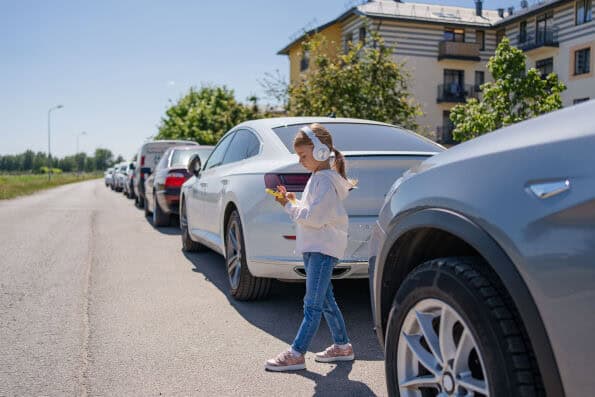
The headline figure behind the warning is the one parents will recognise instantly. Start Rescue points to research showing that one in five children aged 15 or under has been involved in a collision or near miss with a car while looking at a mobile phone. That figure does not need much commentary. Anyone who has watched a child wander into a kerb without lifting their eyes from a screen knows the moment Start Rescue is describing.
Why the phone-and-kerb combination is the real risk
Children up to the age of 12 already struggle to judge traffic speed and distance reliably. Add a phone screen into the picture and the gap between what a driver expects a child to do and what a child actually does can vanish in a second.
“Warm weather and a school holiday means many kids come out to play by the roadside. They should be able to do that in complete safety, but we also need to remind them to look up, especially from their mobile phones, when near the road or crossing it so they are not distracted.”
Lee Puffett, Managing Director of Start Rescue
The official numbers back up the warning. In 2024, 20 child pedestrians aged 15 or under were killed on UK roads, and a further 1,253 were seriously injured. Each of those is a family for whom the long weekend changed shape forever, and many of those incidents share the same set of contributing factors: a quiet residential road, a moment of distraction, a vehicle travelling at a speed the driver thought was safe.
The 10mph that changes everything
One of the most powerful pieces of data Start Rescue is highlighting is the relationship between speed and outcome. At 30mph, a child struck by a car is more than three times as likely to be killed or seriously injured as a child struck at 20mph. That is not a small difference in maths. It is the difference between a frightening near miss and a tragedy that follows a family for life.
It is why the spread of 20mph zones in residential areas across England, Wales and Scotland has been one of the more significant changes in UK road policy over the past few years, and why Start Rescue’s advice during the Bank Holiday focuses on speed control as the practical lever drivers actually have. Lee Puffett of Start Rescue summarised it: “Drivers play a crucial role in safety when kids are playing out on the street. At 30mph, a child is more than three times as likely to be killed or seriously injured than at 20mph, so it pays to foresee dangerous situations in advance when you see children not concentrating near a road, whilst slowing down to give yourself and them more time to react.”
What drivers can actually do this weekend
The practical takeaways are not surprising, but they are worth restating because most of us drive without thinking about them every trip.
- Treat residential streets in school holidays the same way you would treat a school run, even outside school hours. Children are likely to be out at times you do not normally see them.
- Drop below the limit, not just to it, when you can see children playing, scooting, cycling or grouped near a kerb. A 30mph limit is a ceiling, not a target.
- Look for the early signals. A child glancing at a phone, a ball that has bounced off a wall, a parent looking back to check on a sibling. Each of these gives you a few seconds of warning if you are paying attention.
- Talk to children before they head out. Reminders to put phones away when crossing, to look both ways, and to stop at the kerb cost nothing and stick with children who have been told the same thing a hundred times.
A long weekend that needs the most attention
Start Rescue, part of the Call Assist family and a seven-time Which? Recommended Provider, is making the case that the Bank Holiday should be treated as a higher-alert period rather than a relaxed one. With more children outside, more drivers heading somewhere different than their usual routine and more attention pulled by sunshine, music and conversations in the car, the gap between an average drive and a dangerous one narrows.
None of this needs to feel heavy. It just needs drivers to swap one moment of automatic pilot for one moment of looking ahead. For more on the road safety changes UK drivers should know about right now, see our coverage of the biggest shake-up of driving laws in years.

Leave a Comment
More in News

Autotrader Data Shows Buyers of Older Used Cars Now Pay £463 More
How to Check If a Used Car Has Outstanding Finance Before You Buy

BookMyGarage Data Shows Drivers Now Pay £425 to Fix a Failed MOT

What an MOT Advisory Actually Means (and When You Must Fix It)
Every Unpaid Car Tax Bill Risks a DVLA Clamp as 150,000 Get Caught
Trending on Motoring Chronicle

Young Drivers Make Up 7% Of Licence Holders But Nearly 20% Of Those Killed Or Seriously Injured
Five Kia models earn 2026 Car and Driver Editors’ Choice Awards
Tyre Deaths Rise 19% as Most Drivers Say Learners Aren’t Taught Tyre Safety

For 2026, Corvette’s new interior elevates driver cockpit design [Photo Gallery]