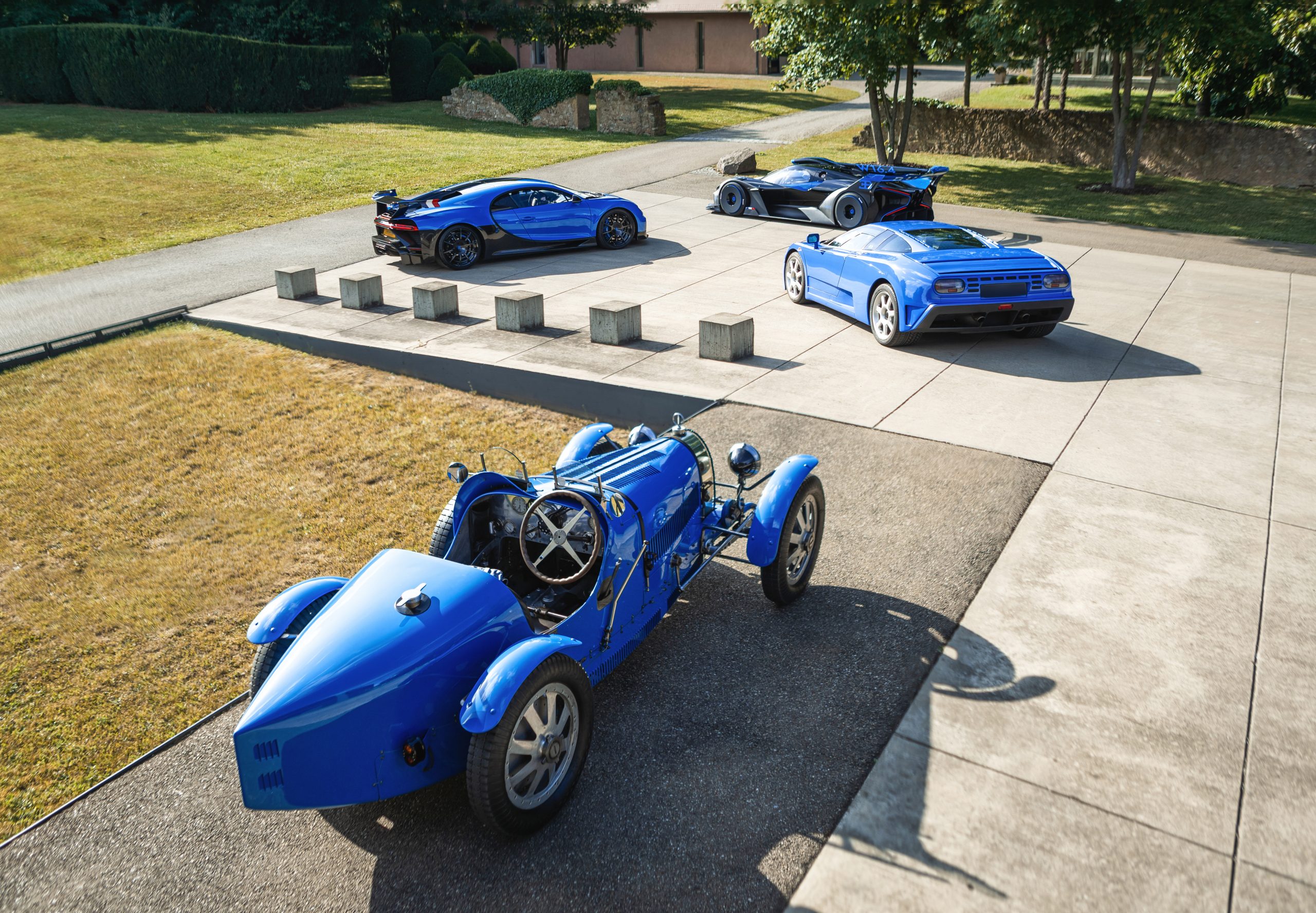
From vision to Veyron: the evolution of a Bugatti icon [Photo Gallery]


In the annals of automotive history, few names evoke the same reverence for performance, luxury, and groundbreaking engineering as Bugatti. The Veyron 16.4, unveiled in 2005, stands as a monument to this legacy, a hyper sports car born from an audacious vision that redefined the boundaries of possibility. Yet, the Veyron’s arrival was not a sudden revelation but the culmination of a remarkable conceptual journey. Between 1998 and 1999, a series of distinct design studies explored different facets of Ferdinand Piëch’s ambition, each paving the way for the final icon.
The genesis of the modern Bugatti lies in the extraordinary ambition of Ferdinand Karl Piëch, then Chairman of the Volkswagen Group. In 1997, inspired by a desire to create an automobile of unprecedented power and refinement, Piëch envisioned a revolutionary 18-cylinder engine during a Shinkansen train journey in Japan. Sketched on an envelope, this W18 configuration became the conceptual heart of Bugatti’s resurgence after Volkswagen AG acquired the brand rights in May 1998. Piëch sought not just speed, but a car capable of exceeding 400 km/h while offering the comfort, elegance, and usability expected of the marque, a challenge that demanded entirely new engineering solutions.
To bring this vision to life, Ferdinand Piëch enlisted Giorgetto Giugiaro of Italdesign to deliver a new vehicle concept. The first result of their collaboration, the EB 118, debuted at the Paris Motor Show in September 1998. Presented as an elegant, imposing two-door coupé, the EB 118 captured the essence of a grand tourer. Its design was defined by a long, sweeping bonnet – necessitated by the size of its front-mounted, 6.3-liter naturally aspirated W18 engine producing 555 PS – and featured a distinctive central bulge that paid homage to the spine of iconic Bugatti models like the Type 57SC Atlantic. Inside, the cabin embraced Art Deco influences, emphasizing luxury, comfort, and artisanal craftsmanship. Combined with the car’s advanced engineering, including its unique W18 powertrain and permanent four-wheel drive, the EB 118 stood as a bold statement of intent: a seamless blend of Bugatti’s heritage and forward-thinking innovation.
Following swiftly, the EB 218 luxury saloon debuted at the Geneva Motor Show in March 1999. Also penned by Giugiaro, the EB 218 was presented as an evolution of the earlier Bugatti EB 112 concept (from the Artioli era) but now powered by the same formidable W18 engine as the EB 118. This four-door saloon explored a different dimension of the Bugatti identity, focusing on ultimate luxury and presence. Longer than the EB 118 (at 5,375 mm), it featured subtly revised curvatures for the bumpers, lights, and bonnet, adapting the W18’s packaging requirements to a saloon format while retaining permanent all-wheel drive. The EB 218 demonstrated the potential versatility of the W18 engine and the brand’s capacity to produce not just coupés but also large, ultra-luxurious vehicles, harking back to models such as the Type 41 Royale.
A significant shift in direction occurred later that year. At the IAA in Frankfurt in September 1999, Bugatti presented the EB 18/3 Chiron. Designed by Fabrizio Giugiaro under his father’s guidance, this concept moved away from the front-engine layout of its predecessors. The EB 18/3 Chiron was a pure, two-seater super sports car study with the W18 positioned in a mid-engine layout. This change dramatically altered the car’s proportions, resulting in a more aggressive, cab-forward stance, typical of high-performance sports cars. While still featuring the 555 PS W18 and all-wheel drive, the styling became more focused on aerodynamic efficiency and dynamic prowess. Named after legendary Bugatti racing driver Louis Chiron, this concept signaled a move towards the hyper sports car territory the Veyron would eventually conquer, exploring how the W18 could function in a dedicated performance application.
Just a month later, in October 1999, the final evolutionary step before the production Veyron debuted at the Tokyo Motor Show: the Bugatti EB 18/4 Veyron. Crucially, this concept marked a change in design leadership, moving away from Italdesign. Crafted in-house by Volkswagen Group under the direction of Hartmut Warkuß, with the exterior penned by a young Jozef Kabaň, the EB 18/4 presented a much more compact, and focused mid-engine sports car silhouette. Its styling strongly foreshadowed the production car’s iconic shape, proportions, and key design elements. Although initially shown with the W18 engine, the immense challenge of reliably extracting over 1,000 PS and managing the heat and complexity of the naturally aspirated W18 led to a pivotal engineering shift. By 2000, the decision was made to develop a new engine: the 8.0-liter, quad-turbocharged W16. This engine could more efficiently achieve Piëch’s extreme performance targets of 1,001 PS and a top speed exceeding 400 km/h, albeit requiring an unprecedentedly sophisticated cooling system.
The choice of the name ‘Veyron’ for the final concept and the subsequent production car was a deliberate nod to Bugatti’s rich heritage. Pierre Veyron (1903-1970) was more than just a racing driver; he was a development engineer and official test driver for the brand during the 1930s. His crowning achievement came in 1939 when he, alongside Jean-Pierre Wimille, secured a victory for Bugatti at the prestigious 24 Hours of Le Mans, piloting a Type 57C Tank. Naming the groundbreaking hyper sports car after Veyron connected Piëch’s modern vision directly to the golden era of Bugatti’s motorsport dominance and engineering prowess, embodying the blend of performance and technical skill the new car represented.
The journey from Ferdinand Piëch’s initial W18 sketch to the world-beating Veyron 16.4 was a testament to relentless innovation, iterative design, and a deep respect for Bugatti’s heritage. The concept cars – EB 118, EB 218, EB 18/3 Chiron, and EB 18/4 Veyron – were not mere design exercises but crucial stepping stones. Each explored different styling directions (grand tourer, luxury saloon, mid-engine sports car) and tested the limits of the ambitious W18 engine, before the final convergence of design and the engineering shift to the W16 powerplant defined the Veyron. They showcased the ambition, the engineering challenges, and the evolving design language that culminated in a vehicle honoring the past while simultaneously forging an entirely new future for the automotive world.


Leave a Comment
More in News

Every Car Finance Customer Before November 2024 Could Be Owed £830 by the FCA

DfT Proposes Unlimited Fines for Removing Emissions Filters on Vehicles From 2001 Onwards

Windscreen Repairs Now Cost £283 on Average as ABI Reports Record £3.2bn Motor Payouts

What a Dangerous MOT Fail Means (and Whether You Can Drive Home)

2027 Jeep Gladiator Adds Sport S Trim and Factory 35-Inch Tire Package
Trending on Motoring Chronicle

Why a Hidden 12 Percent Tax Is Inflating Every Car Insurance Bill You Pay

What Euro 7 Emissions Rules Mean for Every Driver Buying a New Car from November
Subaru Lands Nine Models on 2026 IIHS and Consumer Reports Teen Driver List

Seat Of The Problem: 6,000 MG3 Owners Still Driving With A Known Latch Flaw