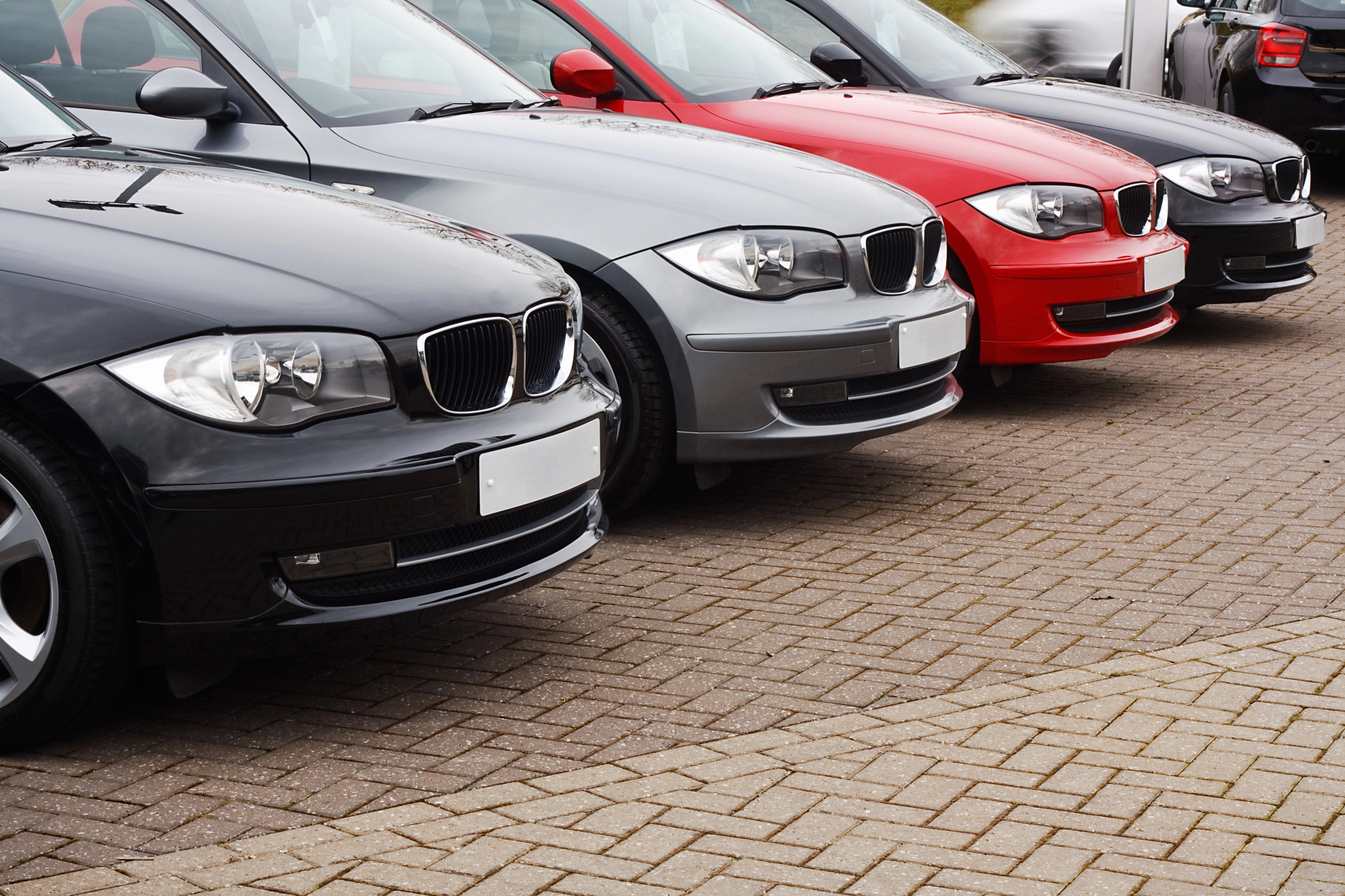
76% of Car Buyers Say the Luxury Badge Isn’t Worth the Markup. Are They Right?


A new survey of 1,000 recent vehicle buyers in the United States suggests that the traditional luxury car playbook is losing its grip. Commissioned by Mazda North American Operations and conducted by Burson Insights in February 2026, the findings paint a picture of a market where what a car does matters far more than whose name is on it.
The headline number: 76% of respondents said the premium markup charged by luxury brands is not worth the money. An even larger share, 83%, said buying a mainstream brand with a premium feel is the smarter way to get a luxury experience.
Those numbers deserve scrutiny, given that the survey was paid for by a mainstream automaker with an obvious interest in this conclusion. But the trend they describe is real and visible across the industry. The gap between a fully loaded mainstream vehicle and a base-spec luxury one has narrowed to the point where the luxury badge often buys you less equipment, not more. A top-trim Mazda CX-90 or Hyundai Palisade can match or exceed the interior quality, technology and comfort of an entry-level BMW X5 or Mercedes GLE, while costing $15,000 to $20,000 less.
The survey asked respondents what “more” means to them when choosing a vehicle. Status and social recognition came in last at 7%. The top answers were space and practicality at 40%, value combined with quality at 36%, and a three-way tie at 30% between advanced technology, driving enjoyment and performance capability.
That ranking is significant. It suggests buyers are no longer treating the car purchase as a public statement and instead evaluating it as a private calculation: what do I get for what I spend?
Safety has become a major factor in that calculation. 75% of respondents identified advanced active safety and driver-assist features as a defining marker of a high-quality vehicle. That aligns with a broader industry shift where safety technology, once a luxury differentiator, has become standard equipment across mainstream brands. Consumer Reports recently named Mazda its first-ever Safest New-Car Brand, but the pattern extends beyond any single manufacturer. Toyota, Subaru and Hyundai all offer comprehensive safety suites at price points well below the luxury segment.
“Drivers are shifting their focus to what genuinely improves their time on the road,” said Jennifer Morrison, Director of Vehicle Safety Strategy at Mazda North American Operations. “Comfort, safety, and features that support real life are winning out over labels, and people increasingly recognize they don’t need to pay luxury prices for an exceptional vehicle.”
The survey tested this idea with a hypothetical scenario. Respondents were asked how they would allocate a $75,000 cash windfall. The majority prioritized financial security: 67% would put money toward retirement, 65% toward debt reduction and 64% toward an emergency fund. A significant 61% said they would invest in a new vehicle, but only 46% would direct the windfall toward a high-end luxury car. The rest would choose a vehicle that fits their life rather than one that signals their income.
That split tells a story about where the market is heading. Even when money is no object, fewer than half of buyers would choose the prestige option. The majority would buy on substance.
The emotional connection to vehicles has not weakened, though. The survey found that respondents would give up alcohol (59%), their favorite podcast (58%), new clothes (55%), social media (54%) and even a gym membership (52%) if it meant driving their ideal car for free for a year. People care deeply about what they drive. They just define “ideal” differently than they used to.
For parents, the car has become a rare space of personal quiet. 40% of mothers surveyed described their vehicle as the only calm moment in a busy day. Among Gen Z drivers, 45% said the car is where they feel most themselves, whether that means playing music at full volume after class or sitting in silence before walking through the front door.
The survey also found that social judgment around cars has shifted. Respondents said they would not judge someone based on the brand they drive, but they would judge texting behind the wheel (75%), not wearing a seatbelt (68%) and a visibly dirty or unpleasant interior (62%). Behavior behind the wheel has replaced the badge on the hood as the measure of a driver.
“When safety, comfort, and thoughtful design take priority over image, everyone on the road wins,” Morrison added.
The broader question this data raises is whether luxury automakers can sustain their pricing models as mainstream brands close the gap in quality, technology and safety. The traditional argument for paying a $15,000 to $25,000 premium has rested on superior materials, better engineering and exclusivity. When a $45,000 vehicle matches or beats a $65,000 one on the first two counts, exclusivity is the only thing left. And according to this survey, 93% of buyers would rather have more of what they actually use than a nameplate that costs thousands extra.
That does not mean luxury brands are finished. The top end of the market, the $100,000-plus segment where vehicles offer capabilities and materials that genuinely cannot be found elsewhere, remains strong. But the $50,000 to $80,000 range, where mainstream and luxury overlap most heavily, is where the real battle is playing out. And the data suggests mainstream brands are winning that battle on the metrics buyers say they care about most.
If you enjoyed this article, be sure to follow us on Microsoft Start.

Leave a Comment
More in News

Is the Toyota Land Cruiser Worth the Price? What Buyers Need to Know for 2027
Car Prices Are About to Spike: Up to $8,900 More Per Vehicle (2026 Tariff Explained)
How Long Does Power Steering Fluid Last?

How Fast Can You Drive on a Spare Tire?
What Is The Optimal Speed For Fuel Economy?
Trending on Motoring Chronicle
Rolls-Royce presents Cullinan Cosmos: a one-of one commission that celebrates the drama of space [Photo Gallery]

Who is Mat Armstrong?

2026 Nissan Armada, Nissan LEAF named Cars.com Best of 2026 Awards winners

World premiere of the Volkswagen T-Roc: new generation of the best seller launched [Photo Gallery]