
Blue Badge Uptake Among People Entitled Without Assessment Falls From 46% to 37%
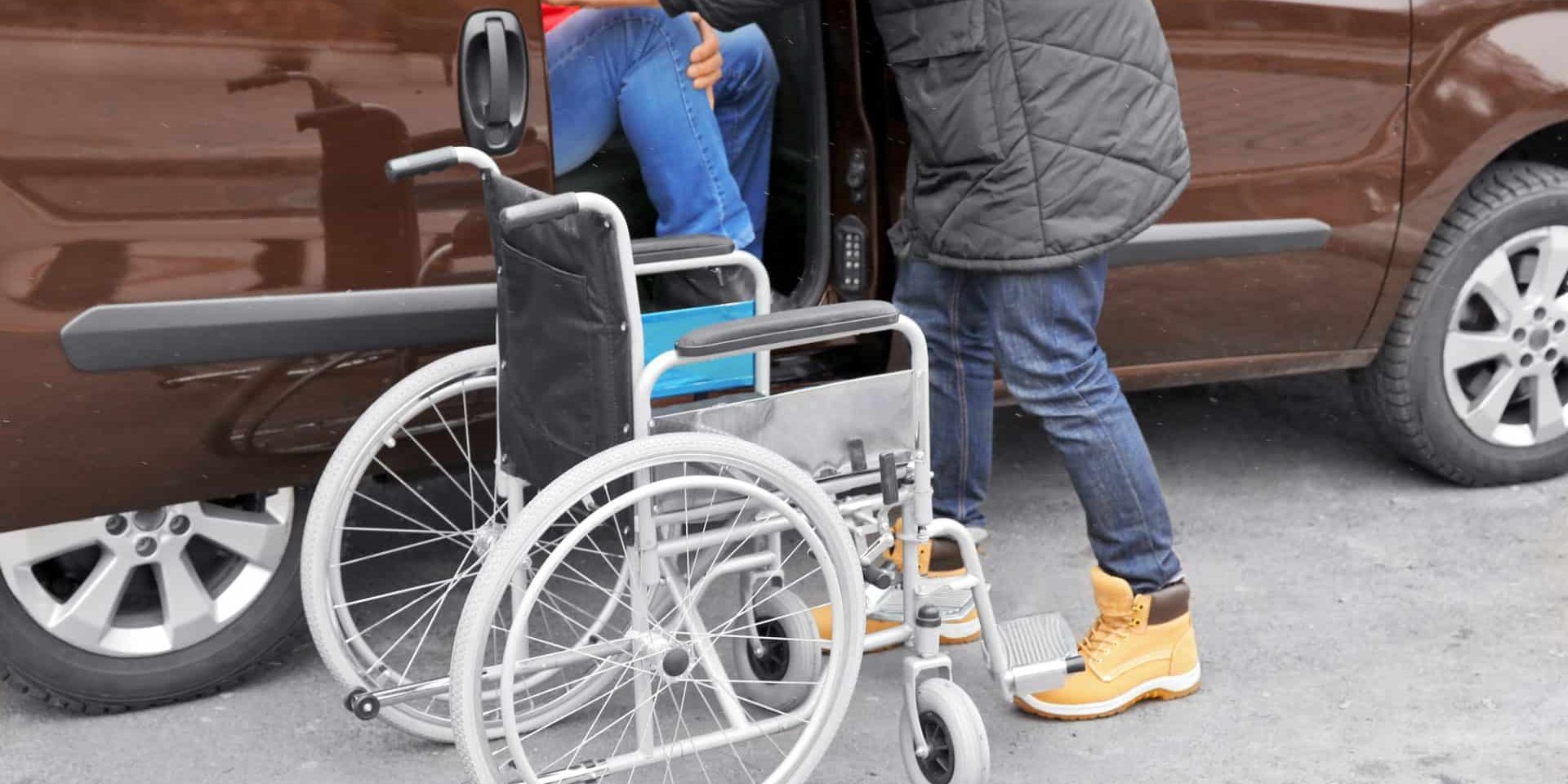
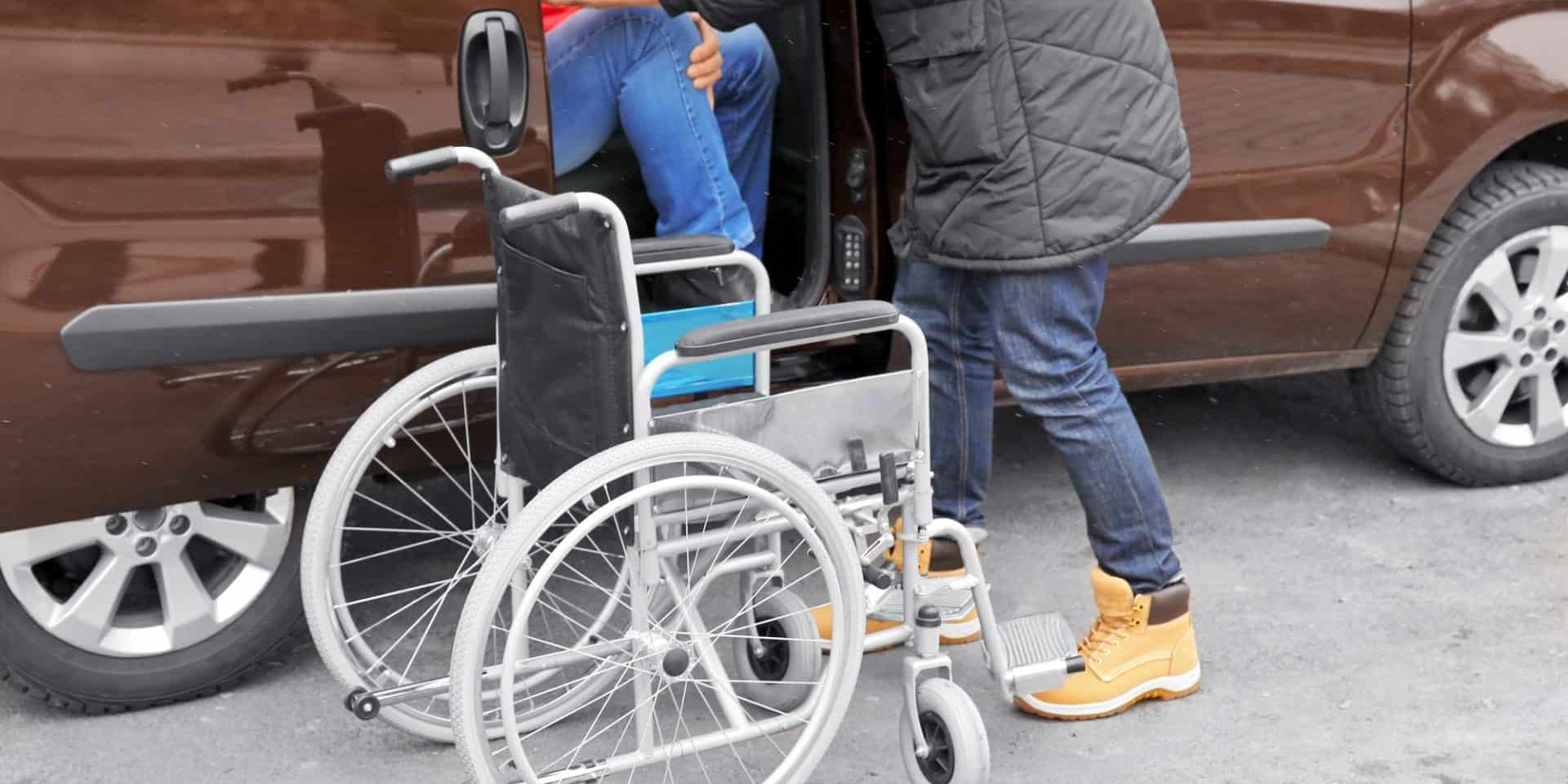
- Two Labour MPs raised Blue Badge access and refusals in the Commons in October, and the Leader of the House promised each a reply from the relevant Minister, with no rule change announced.
- Department for Transport figures show 1.20 million of the 3.22 million people entitled to a badge without assessment held one at 31 March 2025, a share of 37% that stood at 46% in 2020.
- Councils assess the applicants behind 60% of the 3.07 million valid badges in England, and a council that refuses an application must give its reasons in writing.
About Two Million People Entitled to a Blue Badge Do Not Hold One
The Department for Transport counts 3.22 million people in England, 5.5% of the population, as entitled to a Blue Badge without any further assessment. On 31 March 2025, 1.20 million of them held a badge. That is 37%. Subtract the holders and roughly 2.02 million people who qualify without assessment have no badge.
The scheme as a whole is growing. DfT recorded 3.07 million valid badges on 31 March 2025, up 228,000 (8.0%) on the year before, and 5.2% of the population held one. Councils issued 1.27 million badges in the year to March 2025, 140,000 (12.3%) more than the year before.
Who decides depends on the route in. Of the valid badges, 39% sit with people entitled without assessment, 60% with people whose eligibility a council had to assess, and 1% with organisations. For that 60% the council sets its own administrative and assessment procedures, and DfT’s guidance to councils states that the department cannot intervene in an individual application or eligibility decision.
What MPs Told the Commons
On 29 October Labour MP Cat Smith, chair of the Procedure Committee, asked for a debate in Government time on access for people with Parkinson’s. She told the Commons: “Mr Speaker, I believe that, as I did, you visited the Parkinson’s UK drop-in for MPs yesterday, where it was highlighted that across the country we have a postcode lottery on access to blue badges for people who are suffering from Parkinson’s. May we have a debate in Government time about this postcode lottery, because access to blue badges is a real enabler for people with disabilities to get out and go to work, education, appointments and so on?”
Sir Alan Campbell, Leader of the House of Commons, replied: “My hon. Friend raises important concerns. I understand that she successfully lobbied her local council not to go ahead with a proposal to scrap free blue badge parking in council car parks. If that is the case, I pay tribute to her and local campaigners for their hard work. Regarding her concerns about people with Parkinson’s having issues accessing blue badges, I will ensure she gets a response from the relevant Minister to address her points directly. Should she wish to follow that up with a meeting, I will help her to arrange that.”
Two weeks earlier, on 15 October, Labour MP Mark Sewards raised a second case, a child waiting for heart surgery: “I represent a 15-year-old constituent with a serious heart condition that he is awaiting surgery for. He has been told not to overexert himself, because even walking puts his health at risk. Sadly, his family’s appeal for a blue badge has been turned down because they cannot demonstrate that he will have the problem in three years, post-surgery. Certain individuals on qualifying benefits can get a short-term blue badge, but my constituent does not qualify, despite his health condition. Will the Leader of the House grant a debate in Government time on the need to change the scheme, so that we can help people, especially children, avoid this needless trap?”
Sir Alan answered: “My hon. Friend raises an important case regarding the gap in the provision of blue badges. I will ensure that he gets a response from the relevant Minister. If that is not a sufficiently appropriate response to his concerns, then I encourage him to seek an Adjournment Debate so that he can make his case more strongly.”
Neither reply changed the rules. The three-year test Sewards describes sits in DfT’s guidance. On the assessed route the disability must be enduring and substantial, meaning it lasts at least three years, and councils are told never to issue a badge on that route for a temporary disability. The benefit route allows a shorter badge: an applicant whose Disability Living Allowance, War Pensioner’s Mobility Supplement or Personal Independence Payment award has a short term can hold a 9 or 12 month badge to match.
Who Qualifies Without Assessment and Who Needs a Council Decision
The automatic route turns on benefits and registration. The groups in DfT’s guidance are people on the higher rate of the Disability Living Allowance mobility component, people on the Personal Independence Payment (PIP) mobility component who score 8 points or more for moving around or 10 points for being unable to undertake any journey owing to overwhelming psychological distress, the registered blind, recipients of the War Pensioner’s Mobility Supplement, and some holders of an Armed Forces Compensation Scheme award. In the year to March 2025, 531,000 badges (42% of those issued) went out this way. Of those, 94.8% rested on Disability Living Allowance or PIP, 4.7% on blindness registration and 0.5% on the War Pensioner’s Mobility Supplement or the Armed Forces and Reserved Forces Compensation Scheme.
The other route produced 730,000 badges (58%), and a further 8,000 (1%) went to organisations. Here the council decides whether the applicant is unable to walk, has very considerable difficulty walking (which can include very considerable psychological distress), or is at risk of serious harm when walking. When the answer is not self-evident from the evidence, the council refers the applicant to an expert assessor for certification. Expert assessors replaced Independent Mobility Assessors under the 2019 rule changes.
Councils run this differently, and DfT’s own case studies show how. Kent County Council uses trained administrators, two full-time occupational therapists and a part-time physiotherapist. Hampshire County Council has ten trained administrators doing mostly desk-based assessments, sends around 125 complex cases a month (about 5% of its caseload) to a weekly expert panel, and calls in an occupational therapist for an impartial assessment once a review leaves the council unconvinced that the applicant qualifies. The guidance asks for fairness and consistency between councils and says the thresholds for very considerable difficulty and serious harm apply to every applicant equally, visible disability or not.
A badge follows need and never a named condition, so a diagnosis such as Parkinson’s does not carry one by itself. Badges for people with non-visible disabilities have grown from the August 2019 extension onward: 2.2% (18,000) of badges issued in the year to March 2021, and 4.3% (55,000) in the year to March 2025, against 4.3% (49,000) in the year before. The count has more than tripled in four years.
Falling Uptake and the Regional Spread
Back in 2020 the holding rate among that group was 46%. By 31 March 2025 it stood at 37%, a fall of 9 percentage points. DfT reports two trends running together from 2020: the share of the population entitled without assessment has risen, and the share of those people holding a badge has fallen. DfT says the number and the proportion of that group holding a badge have both fallen from 2020 onward. The statistics give no reason and do not split the 2.02 million without a badge into those refused, those who never applied and those whose badge has lapsed.
Holders are spread unevenly. The North East has the highest share, with 6.1% of residents holding a valid badge, and London the lowest at 3.5%. The North East rate is about 1.7 times the London rate, a gap of 2.6 percentage points, against the England figure of 5.2%. Those numbers count badges held per head. DfT’s headline statistics carry no refusal rate for any council, so the regional figures show where badges are concentrated and cannot show where applications fail. Local authority tables accompany the release, and the next Blue Badge statistics are due in winter 2026 to 2027.
What to Do if a Council Refuses a Badge
Start with the letter. Regulation 8(3) of the Disabled Persons (Badges for Motor Vehicles) (England) Regulations 2000 requires a council that refuses an application to say in writing why. DfT strongly recommends a detailed explanation, and a bare statement that the criteria were not met falls short.
Next, ask for a review. No law requires a council to run an appeals procedure, but DfT strongly recommends an internal one that is clear, fair and signposted in the decision letter. The guidance calls it a request for review of decision and recommends that the review go preferably to someone who was not directly involved in the original decision. Bring new evidence: the Royal Borough of Kensington and Chelsea, described in a DfT case study on detailed feedback, tells refused applicants that an appeal is unlikely to succeed unless they supply further evidence or their mobility has changed significantly after the application.
DfT will not step in. The department has no power to intervene in an individual application refused on eligibility grounds. A complaint about how staff or an assessor treated you goes through the council’s standard complaints procedure and then to the Local Government and Social Care Ombudsman. Councils set their own waiting periods for a fresh application: Stoke-on-Trent City Council allows one after 3 months and the London Borough of Bromley after 6 months, and both allow an earlier one if the condition deteriorates significantly.
Two benefit rules help. A council must not refuse an applicant only for lacking the higher rate of the Disability Living Allowance mobility component or the right PIP score; it then assesses them on the further assessment route. DfT advises councils to check the validity of a PIP decision letter more than 12 months old. A council can charge a successful applicant up to £10, which works out at £3.33 a year on a full three-year badge.
Where Fraud Fits In
The same guidance tells councils that under no circumstances should anyone who satisfies none of the criteria receive a badge, and fraud control is the other side of that rule. In April the AA’s president, Edmund King, said: “The blue badge scheme is a mobility lifeline for millions of legitimate users and their families.” Misuse takes spaces from those users, and earlier reporting on Blue Badge abuse and parking spaces sets out the scale.
King also said: “Our concern is not the absolute number of badges issued but the estimates that up to one in five badges may be used by someone other than the holder or authorised user. Fraud is an issue which can include family misuse, use after death, counterfeit badges and theft and resale of badges.” He added: “We would welcome a crackdown on illegitimate use of badges to safeguard the deserving users.”
A DfT spokesperson said at the time: “Exploitation and abuse of the blue badge scheme is completely unacceptable and is a criminal offence. Local authorities have been given improved powers to crack down on fraud and misuse in their area, and work closely with the police.” The guidance sets out the penalties: using someone else’s badge or an expired one carries a fine of up to £1,000 under section 117 of the Road Traffic Regulation Act 1984, a false application can bring a fine of up to £5,000 and/or up to 12 months in prison under the Fraud Act 2006, and forging a badge can bring a fine of up to £5,000, or up to two years in prison on indictment, under section 115 of the 1984 Act. DfT counted 6,600 badges lost or stolen in the year to March 2025, 5,200 lost and 1,400 stolen. The count covers recorded cases only. Data matching is one answer: Wirral Council cancelled 459 badges still linked to residents who had died.
Want more car content? Add us as a preferred source on Google to your favourites list for the best automotive news and analysis on the internet.
If you enjoyed this article, be sure to follow us on Microsoft Start.
Sources
- Department for Transport: Blue Badge scheme statistics, April 2024 to March 2025
- Department for Transport: The Blue Badge scheme local authority guidance (England)
- TheyWorkForYou: Business of the House, 29 October 2026
- Express: Blue Badge eligibility update as MPs call for issuing rules change
Reviewed by Preetam Gadekar

Leave a Comment
More in News

Woman’s plug-in hybrid minivan is driving ‘funny.’ Then the dealership takes it for 5 months

Man buys apple pie pocket at Kwik Trip. Then he takes a bite and immediately feels ill

Used MG HS Costs $16,992 Less Than New, but Jolion Saves Only $5,495
Greenwich to Restart School Zone Cameras With $50 Fines as Suit Seeks Refunds

Maryland Residents on Out-of-State Plates Face $7 a Day Fines After 60 Days
Trending on Motoring Chronicle

Lotus honours legendary racing driver Jim Clark with exclusive Emira Clark Edition [Photo Gallery]

Why Does Your Car Shake While Driving?

How a Tribunal Defeat for HMRC Could Cut EV Drivers’ Charging Bills by £300

Why Gas Prices Are Sliding Back Below $4 as the Iran Ceasefire Cools Oil
