Automatic Emergency Braking, What It Can Miss


Automatic Emergency Braking (AEB) systems are designed to detect imminent collisions and apply the brakes, but they are not infallible and often act only as a last resort to reduce impact speed rather than prevent a crash. These systems can miss, misinterpret, or fail to react to a variety of real-world scenarios due to limitations in sensor technology and environmental interference.
Here is what Automatic Emergency Braking can miss…
Environmental and Visibility Limitations
Adverse Weather
Rain, snow, fog, and road spray change the quality of the signal that AEB relies on. A camera needs contrast and clear edges. Radar needs stable reflections. In heavy rain and thick spray, the camera view can flatten into grey, and radar returns can fill with noise from water droplets and splashes.
Snow adds another problem. Falling snow creates moving clutter across the camera image, and drifting snow can look like a shifting wall. Road salt mist can coat lenses and leave a thin film that blurs fine detail. That film can look minor to a driver, yet it can shrink detection range.
In real driving, the system response is usually one of three states. It keeps working with reduced confidence, it delays braking while it tries to confirm the threat, or it disables and warns the driver. None of those states is what people imagine when they hear “automatic braking.”
Low Light and Nighttime
Night driving removes colour and reduces contrast. A camera system still sees, yet it depends on headlights, street lighting, and reflective surfaces. Pedestrians in dark clothing and cyclists with poor lighting can be hard for the camera to classify fast enough, especially when the background is cluttered.
Headlights also create hot spots and hard shadows. The camera can get a bright glare region and a dark region in the same frame. That makes object edges harder to detect. Some systems use infrared or additional sensors, yet the detection problem does not vanish, it just changes form.
AEB also needs time. At night, the range of confident detection can shrink. A shorter confident range means less time to brake, so the system can end up reducing speed rather than preventing impact.
Glare and Sunlight
Bright low sun can wash out a camera image. Strong glare can hide a vehicle shape, hide a pedestrian silhouette, or wipe out lane edge detail that the system uses for context. Headlight glare from an oncoming vehicle can do a similar thing at night, especially on wet roads where the surface reflects light straight into the camera.
Glare also creates false edges. A shiny road sign, a reflective truck panel, or a wet surface can create highlights that look like a solid object boundary. The software then has to decide whether it is seeing an obstacle or seeing light.
When the camera struggles, radar can still help, yet radar has its own limits with smaller targets and odd angles. Glare events are a key reason why AEB performance varies across brands and across sensor layouts.
Physical and Object Limitations
This group is about what the sensors can detect reliably, and what the software expects an “obstacle” to look like.
Narrow or Small Objects
Motorcycles, bicycles, and road debris can be harder for radar to track, especially when the object presents a narrow frontal area. A small target can give weaker radar returns, and it can also sit inside clutter, like guard rails and parked cars, that produce stronger returns.
Cameras can spot a motorcycle visually, yet classification still depends on clean edges and enough pixels. At distance, a motorcycle can look like a thin vertical shape with a single light. If the system struggles to classify it as a vehicle, it can delay braking.
Debris is its own problem. A tyre carcass, a ladder, or a plastic container might be in the lane, yet the system might treat it as harmless if it looks low and soft. The software is often tuned to avoid hard braking for objects it expects a car can safely drive over. That tuning can be wrong in the real world.
Specific Vehicle Types
Some vehicle shapes create odd sensor returns. A trailer can have a high deck with open space underneath. A pickup bed can sit high relative to a small car hood line. If the sensor fusion is not robust, the system can misread the open space under the trailer as empty road.
This is the classic underride risk scenario. A camera sees the trailer body, yet at certain angles it can blend with the background. Radar can hit the trailer and return a strong signal, yet the software still has to decide what that signal means in path terms.
The key point is that AEB decisions are not only about detecting an object. They are about predicting collision with the object. Prediction is harder when the object does not fit the expected vehicle profile.
Speed Disparities
AEB is strongest in lower speed conflicts, especially city driving, where there is time to detect, decide, and brake to a full stop. As speed rises, the stopping distance rises sharply, and the time available for the system shrinks.
At higher speeds, the system can still brake hard, yet it often cannot eliminate the crash. The practical outcome is speed scrubbing. Even a reduction of a few miles per hour can change injury severity, yet it will not always prevent contact.
This is why drivers should treat AEB as a late safety layer rather than a primary braking plan. The physics of stopping does not bend for software.
Obstructions on Sensors
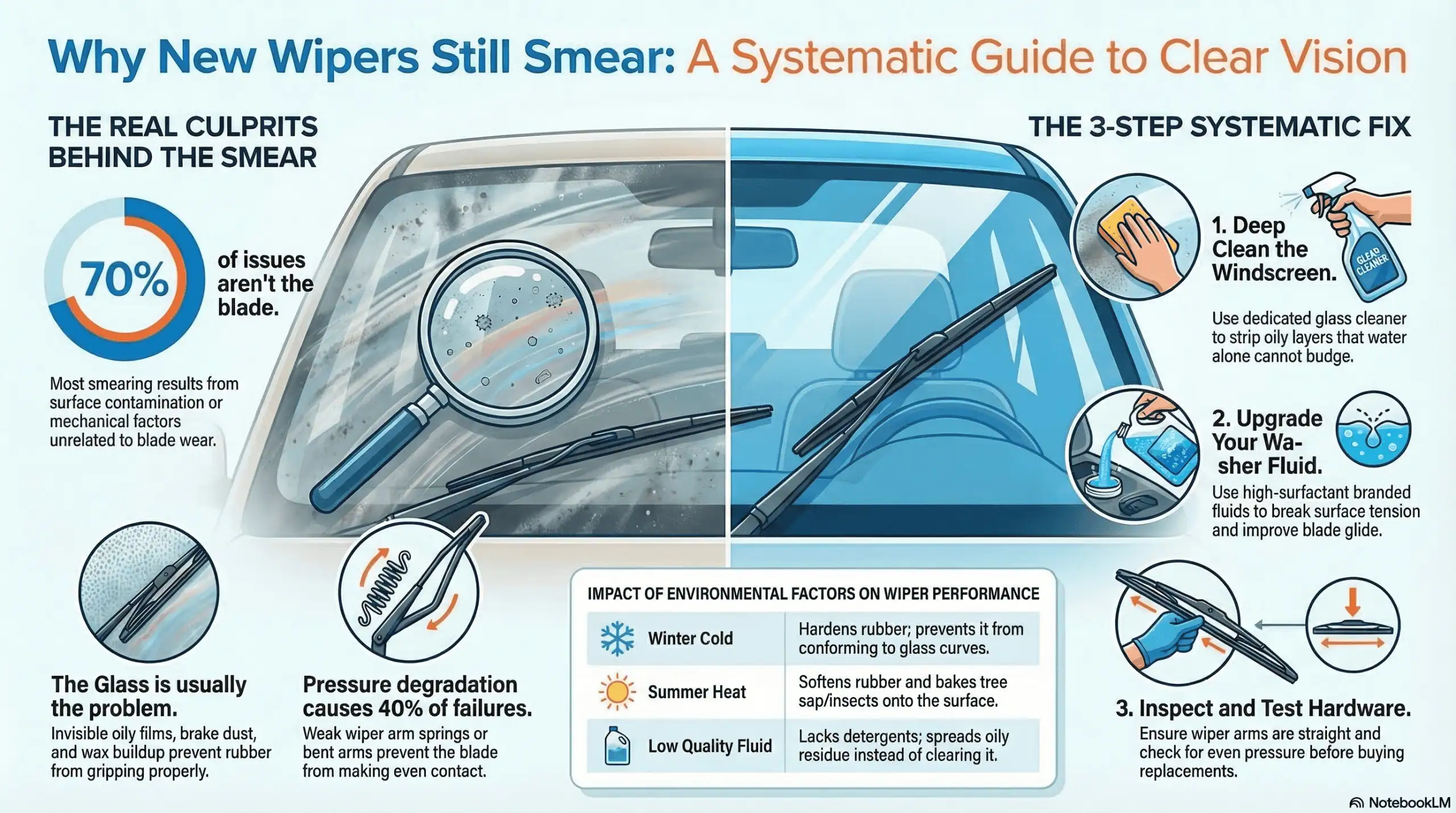
AEB only works when the sensors can see. Snow packed into a grille badge, mud on a camera housing, ice on a bumper radar panel, or a thin layer of road grime can reduce range or break tracking entirely.
Some cars warn the driver when a sensor is blocked. Some do not warn until the system is already degraded. Even when there is a warning, many drivers ignore it because the car still drives fine, right up until the moment it needs the system.
A simple routine helps. Check the front badge area, lower bumper, and windscreen camera zone in winter. Clean them at the same time you clean your lights.
Operational and Environmental Failures
Sharp Turns and Curves
Curves change what the sensors see. On a bend, the camera looks ahead into a different direction than the car will occupy a second later. Radar aims forward, yet the predicted collision path is still a calculation. On a sharp curve, an object can sit near the edge of sensor view, then enter the lane line late.
Curves also create roadside clutter. Guard rails, sign posts, and parked vehicles can sit close to the driving line. The system has to filter those out without missing a true hazard. That filtering is one reason false braking can occur on some roads.
Drivers experience this as a system that feels confident on straight roads, then cautious or inconsistent on tight bends.
Complex Scenarios
Real roads have parked cars, turning traffic, multi-lane merges, and irregular junction geometry. AEB logic can struggle when objects cross the path at an angle, or when the “threat” is not directly ahead.
Turning across traffic is a classic edge case. Some systems prioritise straight-ahead rear-end conflicts, which means turning conflicts can rely more on driver action and less on automatic braking.
Complex scenarios also include a stopped vehicle that is partially occluded. A car stopped behind a crest, or a car stopped behind a larger vehicle, can appear late. When it appears late, the system has less time to act, and its action becomes speed scrubbing rather than prevention.
Unusual Objects
AEB software is trained around common objects. Cars, trucks, pedestrians, cyclists. Unusual shapes can confuse classification. Cones, barrels, a low-hanging sign, or a partially collapsed barrier can be hard to interpret as “collision object” fast enough for the brake command.
Some objects also sit at heights that make radar returns inconsistent. A low object can be missed if radar filtering treats low returns as road noise. A high object can be missed if it sits outside the usual collision plane.
This is one reason construction zones demand more manual control. The scene is full of non-standard shapes and moving workers, and the road layout changes daily.
Times When AEB May Not Activate
This group is about system logic choices. The car sometimes chooses not to brake even when a collision risk exists.
Driver Intervention
AEB logic tries to avoid fighting the driver. If it detects strong steering input, strong throttle input, or a clear driver reaction, it can delay or cancel automatic braking. The system assumes the driver is taking evasive action.
That assumption can be wrong in two ways. The driver can react in the wrong direction. Or the driver can react too late, so the system cancels when it is still needed.
This creates a practical rule. If you are braking, brake firmly and commit. If you are steering, steer with intent and do not mix inputs in a way that signals confusion.
Sudden Obstacle Appearance
AEB needs detection time, classification time, and braking distance. When an obstacle appears suddenly, a car pulls out from a side road, a pedestrian steps out from between parked cars, a vehicle cuts into your lane close, the system can run out of time.
This is not a software flaw, it is timing. Sensors have scan rates. The ECU has processing time. Brakes have pressure build time. At speed, those fractions of a second matter.
This is why drivers should treat following distance as the first safety system. AEB cannot create time that you removed by tailgating.
False Positives (Phantom Braking)
This group is about the opposite failure mode. The system brakes when it should not.
Shadows, reflections, and overhead structures
Phantom braking can be triggered by hard shadows, contrast changes, metal bridge structures, or overhead signs. The system can interpret a sharp contrast edge as an object in the lane, then apply braking.
Some roads amplify this. Two-lane roads with frequent overhanging trees can create flickering light patterns. Wet roads can create reflections that look like solid blocks. A bright sign can create a glare bloom that masks the real scene.
Phantom braking is dangerous because it is unexpected and it can provoke a rear-end collision. It also trains drivers to distrust the system, which can lead them to switch it off entirely.
Why it happens and what to do about it
AEB works by balancing sensitivity and selectivity. High sensitivity catches more real threats. Low sensitivity reduces false braking. Manufacturers tune that balance differently, and updates can change behaviour.
Drivers can reduce triggers by keeping sensors clean and keeping windscreens free from haze that changes camera contrast. They can also keep in lane and avoid weaving near roadside clutter, which reduces ambiguous scenes.
If phantom braking happens repeatedly in the same area, treat the road feature as the trigger and plan a steadier approach through that segment.
Key Takeaway
AEB is a late-stage safety net that aims to reduce impact speed when a crash is imminent. In higher speed conflicts, it is often a speed scrubbing tool rather than a full crash prevention tool, with real-world outcomes commonly limited to partial speed reduction rather than a complete stop. Treat it as backup braking, then drive in a way that keeps time and space on your side.

Leave a Comment
More in News

Why a Grinding Noise From Your Wheel Could Cost You £250 and Fail Your MOT
What a £10 Per Kilogram Car Tax Could Cost Drivers if Treasury Adopts It
What the Frozen £40,000 Car Tax Threshold Means for Almost a Million UK Drivers
DfT Asks Whether Fake Number Plates and Untaxed Cars Should Mean Points and Seizure

Every Driver Faces Higher Crash Risk After Clocks Go Back as AA Claims Jump 8%
Trending on Motoring Chronicle
Four People Are Killed or Seriously Injured by Drink-Drivers Every Day, New Government Data Shows

How to Spot a Clocked Car Before You Lose Thousands in Mileage Fraud
Virginia County Launches School Zone Speed Cameras With $100 Fines Starting in August
Why Rural Drivers Will Pay Three Times More Than Londoners Under the New Pay-Per-Mile Car Tax