Automatic Braking Deadline for New Cars Would Slip Two Years to 2031


- NHTSA proposed on Nov. 24 to move the automatic emergency braking deadline for major automakers from Sept. 1, 2029 to Sept. 1, 2031, and for small-volume makers from Sept. 1, 2030 to Sept. 1, 2032.
- The agency says current systems still struggle to avoid contact at high speed and in low light, and it wants public comment and data on false braking.
- NHTSA says automatic emergency braking is already standard on almost all light-duty vehicles, so the practical step is to check the exact trim you plan to buy.
The Deadline for Braking Help on Every New Car Would Move to 2031
Automakers would get until Sept. 1, 2031 to build automatic emergency braking, known as AEB, to the federal performance standard in every new car and light truck. The 2024 version of the rule set the date at Sept. 1, 2029. The National Highway Traffic Safety Administration (NHTSA) put the two year delay out on Nov. 24 as a Notice of Proposed Rulemaking, so nothing is final.
Small-volume manufacturers, final-stage manufacturers and alterers would get the same two years. Their date would move from Sept. 1, 2030 to Sept. 1, 2032.
For a shopper in a showroom today, little changes. Most new cars carry some form of AEB already. “Automatic emergency braking is standard on almost all light-duty vehicles today and prevents countless crashes. As we look to establish more stringent performance requirements to prevent even more crashes, it is crucial that we get this rule right,” said NHTSA Administrator Jonathan Morrison.
What the delay moves is the date on which every maker must meet one specific, tested level of performance. Under the 2024 rule, that date applies to vehicles manufactured on or after Sept. 1, 2029. Under the proposal, the same requirement would start two years later, which means two more years of production with no federal requirement for the full standard.
What the Proposal Changes
Besides the new dates, the proposal clarifies the allowable tolerances on test speeds and adds procedures to verify that an AEB system can detect its own malfunction and alert the driver. Both are technical fixes to how the standard, Federal Motor Vehicle Safety Standard No. 127, is tested and enforced.
Morrison gave the reason for the extra time. “The technology has not progressed as much as expected, and providing automakers with this additional lead time will ensure that these systems are thoroughly tested, reliable, and trusted by American drivers.”
The delay is the latest in a string of dates. In 2016, NHTSA added AEB to its list of recommended technologies, starting with model year 2018 vehicles, and automakers committed to making it standard in all vehicles by 2022. The Bipartisan Infrastructure Law then called for minimum AEB performance standards, and NHTSA finalized FMVSS No. 127 in 2024 with a 2029 deadline. The proposal pushes the mandatory date to 2031, nine years after the 2022 commitment.
The comment period runs 60 days from the notice’s publication in the Federal Register. NHTSA wants public comment and performance data on three things: whether the rule is practicable, how often systems brake when nothing is there, and the safety risk of unexpected braking.
What the 2024 Standard Requires
NHTSA finalized FMVSS No. 127 on April 29, 2024. It covers nearly all light vehicles rated at 10,000 pounds gross or less.
A car must stop and avoid contact with a vehicle ahead at speeds up to 62 mph. Braking has to start on its own at speeds as high as 90 mph when the car ahead is about to be hit, and as high as 45 mph when a pedestrian is in the path. The pedestrian sensing works in daylight and in darkness. The rule also includes two tests for false activations and requires a warning light when the system detects a fault.
NHTSA projected the standard would save at least 360 lives and prevent at least 24,000 injuries a year. “The new vehicle safety standards we finalized today will save hundreds of lives and prevent tens of thousands of injuries every year,” said then Transportation Secretary Pete Buttigieg.
Buttigieg tied the rule to the infrastructure law. “The Bipartisan Infrastructure Law is not only making historic investments in transportation, it’s also ushering in a new era of safer travel by ensuring new cars and light trucks are equipped with automatic emergency braking, making our roads safer for drivers and pedestrians alike.”
NHTSA Deputy Administrator Sophie Shulman said many makers would reach the line early. “Most new vehicles already come with AEB, and we expect that many cars and light trucks will be able to meet this standard ahead of the deadline, meaning even more lives will be saved thanks to this technology.”
Why NHTSA Now Says Systems Are Not Ready
The agency’s case rests on its own New Car Assessment Program tests. Preliminary NCAP testing of model year 2025 vehicles found that current systems face challenges in consistently avoiding contact at high speed and in low light.
That is a different reading from 2024. When NHTSA finalized the rule in April 2024, Shulman said: “Automatic emergency braking is proven to save lives and reduce serious injuries from frontal crashes, and this technology is now mature enough to require it in all new cars and light trucks. In fact, this technology is now so advanced that we’re requiring these systems to be even more effective at higher speeds and to detect pedestrians,”
NHTSA backed that view with data in its November 2024 reply to automaker petitions. It cited IIHS testing that showed large gains from model year 2023 to model year 2024 in a test against a parked target at 43.5 mph, and it noted the share of vehicles avoiding the target in every run rose from 10 percent to 56 percent. The same figure leaves 44 percent that did not avoid it in every run. NHTSA also pointed to a vehicle priced below the market average that met the requirements without being designed for them.
Three groups petitioned NHTSA to reconsider the 2024 rule: the Alliance for Automotive Innovation, Toyota Motor North America and Volkswagen Group of America. Volkswagen and Toyota asked NHTSA to allow low speed contact of up to 10 km/h (6.2 mph) in testing, and all three argued that the no contact requirement could raise false positives, meaning braking with no real obstacle ahead. The Alliance said NHTSA “should have attempted to quantify this risk,” and Volkswagen asserted that “no contact” “will undoubtably lead to higher false positive rates” when a pedestrian changes path after braking starts.
NHTSA rejected the request. It estimated that allowing low speed contact in pedestrian braking would cost 2,192 more minor injuries, 31 moderate ones, 3 serious ones and 1 death a year, a loss of $179.1 million in economic benefits.
On false braking, NHTSA called the petitioners’ statements largely speculative in 2024, while acknowledging from its own testing that results vary between systems and that false activations already happen. The Alliance argued that after the new standard, “[i]t is not sufficient, or fair,” to continue to “address `false positives’ through [NHTSA’s] safety defect authority.” NHTSA answered that false activation scenarios vary too much for a test to cover them all, and that its defect authority, the route for investigations and manufacturer recalls, suits that individual review. It noted that makers have filed recalls over a risk described as: “[i]f the AEB system unexpectedly activates while driving, the risk of a rear-end collision from a following vehicle may increase.” The 2026 proposal now asks the public and industry for performance data on false-positive braking activations and the risk of unexpected braking.
What Automatic Braking Still Misses Today
A federal deadline also says little about crashes the standard does not test. DOT expected FMVSS No. 127 to cut rear-end and pedestrian crashes, and AAA says U.S. test protocols have historically focused on rear-end crashes. NHTSA drafted an Intersection Safety Assist procedure in 2019 as a research tool, and no final intersection test standard has followed.
On Nov. 12, AAA published the results of its intersection braking test on four 2026 model year vehicles, run with a Southern California auto club. All four cars avoided a crash in the standardized test where the car turns left across oncoming traffic. In the side road test, the test car drove straight at 30 mph while a target turned into its lane at 5 mph, and three of the four failed to prevent the crash. AAA ran 74 closed course runs in controlled daytime conditions.
“Intersections are some of the most dangerous places on the road,” said Greg Brannon, who directs automotive engineering and research at AAA. “AEB is making progress in the limited intersection scenarios it is tested to handle. Unfortunately, performance outside those scenarios is spotty.”
AAA tells drivers to use intersection AEB as an extra layer while staying attentive. At an intersection, hover your right foot over the pedal with the heel on the floor, which AAA calls covering the brake, and watch for nearby drivers who could turn across your lane.
What to Do Before You Buy and What Comes Next
Do not assume two cars from different brands name the same feature the same way. NHTSA says manufacturers use different names for the same technologies and tells drivers to read the owner’s manual for their vehicle’s features. Before you sign, ask the dealer to show you the exact trim’s AEB and pedestrian detection in writing, and read the feature section of the manual for that model year.
NHTSA’s 5-Star Safety Ratings pages have carried a list of recommended technologies from 2010 onward. The list covers forward collision warning, lane departure warning and two types of automatic braking, all features that have met NHTSA performance tests. Pedestrian braking is described separately on NHTSA’s technology page, so ask about it by name. NHTSA’s 2027 crash test list names 10 vehicles for driver assistance tests that include automatic emergency braking and pedestrian braking, and results post at nhtsa.gov/ratings once testing is complete.
If your car brakes hard with nothing in the road, report it at nhtsa.gov/report-a-safety-problem or by calling 888-327-4236. NHTSA has said it handles false activations through its defect authority, and a report is how a pattern gets noticed. A June recall of 421,000 Hyundai SUVs covered Tucson and Santa Cruz vehicles whose camera software could trigger hard braking with no obstacle.
To comment on the proposal, go to regulations.gov and file under Docket No. NHTSA-2026-2476 within 60 days of the Federal Register notice. NHTSA is asking specifically for performance data, so a documented false braking event carries more than an opinion.
Next, NHTSA reviews the comments and decides whether to issue a final rule. Until then, the 2029 and 2030 dates remain in the standard and the 2031 and 2032 dates remain a proposal.
Want more car content? Add us as a preferred source on Google to your favourites list for the best automotive news and analysis on the internet.
If you enjoyed this article, be sure to follow us on Microsoft Start.
Sources
- NHTSA: Extends Automatic Emergency Braking Mandate by Two Years
- Federal Register: Automatic Emergency Braking Systems for Light Vehicles
- US DOT: NHTSA Finalizes Key Safety Rule to Reduce Crashes and Save Lives
- AAA: Intersection AEB May Help Prevent Some Crashes, but Limitations Remain
Reviewed by Preetam Gadekar

Leave a Comment
More in News
Every Driver Turning 70 Must Renew Their Licence Free (and Avoid Paid Sites)

What makes you think that that’s acceptable’: Detroit DoorDash driver accepts order of 17 Little Caesars pizzas. Then he sees the tip—and crashes out

Genesis GV80 and G80 Hybrids Debut With 347 HP and a 500-Mile Estimate

What You Must Tell DVLA After Moving House or Risk Up to £1,000

2028 Mercedes-Benz GLA Hybrid Arrives in 2027, Electric Follows in 2028
Trending on Motoring Chronicle
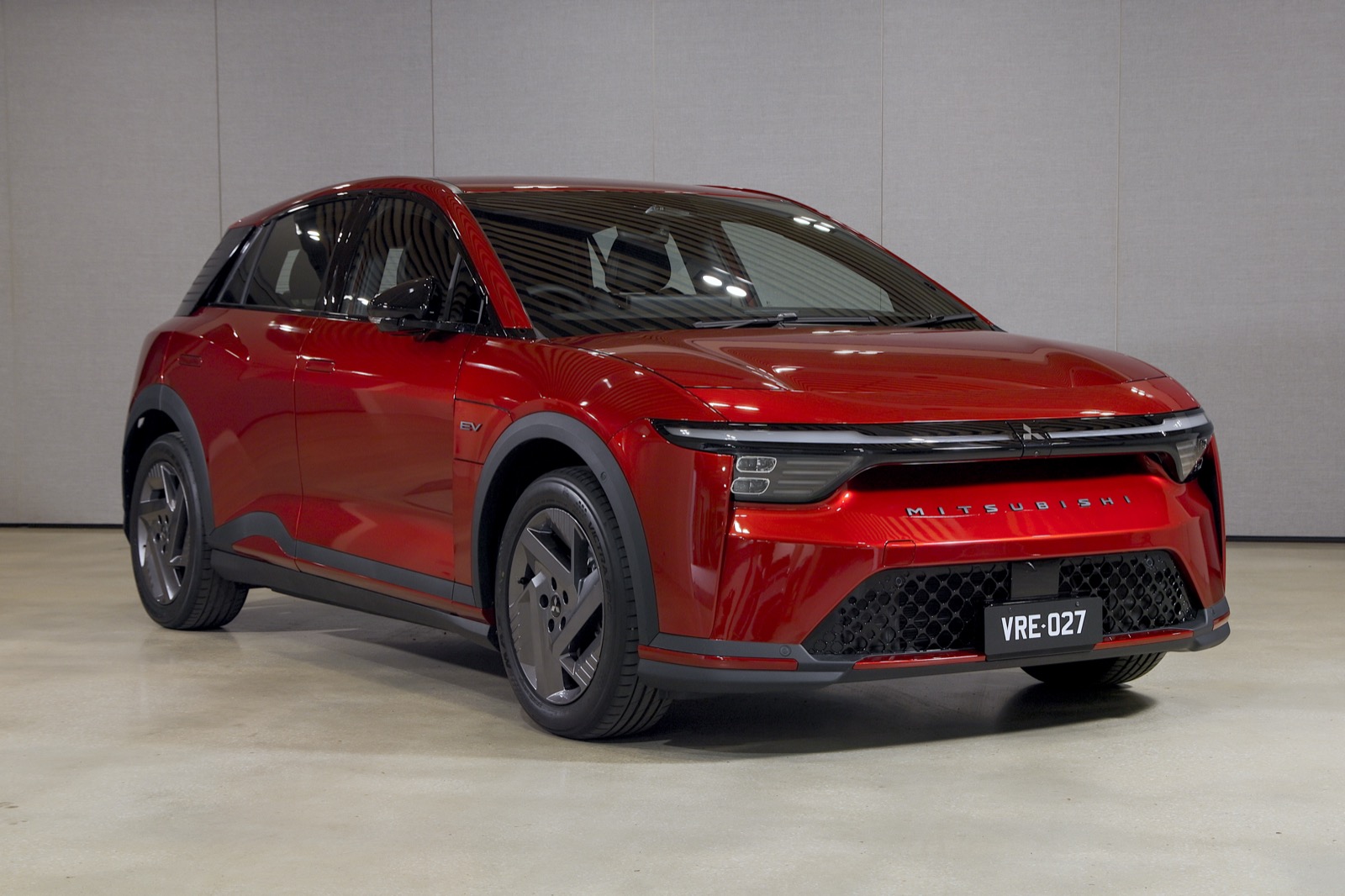
Mitsubishi ASX VR-e Electric Car From $46,740 RRP, $45,990 Drive-Away

Aion V review: Promising debut EV from a new brand to the UK

Car Insurance Rates Are Rising in 32 States as the Average Hits $2,237
DVSA Fines a Berkshire Garage £1,600 for Pops and Bangs