
Hempstead Drivers Can Sue Together for Refunds of $250 Bus Camera Tickets

- A Nassau County judge ruled Nov. 10 that three groups of motorists can pursue refunds of Town of Hempstead school bus camera fines, Herald Community Newspapers reported.
- The claims center on tickets of at least $250 issued in and around Hempstead, Baldwin, Lawrence and Valley Stream, four school districts that did not take part in the program.
- The ruling does not decide that any ticket was illegal and does not promise a refund, so drivers who paid still have to wait for the case to be resolved.
What the Judge’s Ruling Does and Does Not Mean for Your Ticket
On Nov. 10, Justice Leonard D. Steinman of Nassau County Supreme Court ruled that three groups of motorists ticketed under the Town of Hempstead’s School Bus Stop Arm Enforcement Program can proceed together as classes. As classes, the groups can seek their money back from the town and from the Nassau County Traffic and Parking Violations Agency as a group rather than one driver at a time. Each citation in the program starts at a $250 fine.
The order lets the case move forward as a class action, and its limits matter as much as the headline. It settles nothing about whether the tickets were unlawful, and it promises no refund. The underlying claims still have to be resolved through the litigation. A driver who paid $250 has no refund coming from this order alone.
The case centers on four school districts: Hempstead, Baldwin, Lawrence and Valley Stream. Plaintiffs say the town administered the program improperly and ticketed drivers without enough legal authority or protection in the hearing process. The reports on the ruling do not spell out how the three classes are defined, so a driver who got a ticket should read the court’s class description before assuming it covers that notice. “The town does not comment on ongoing litigation,” Hempstead town spokesman Brian Devine said.
How the Hempstead School Bus Camera Program Works
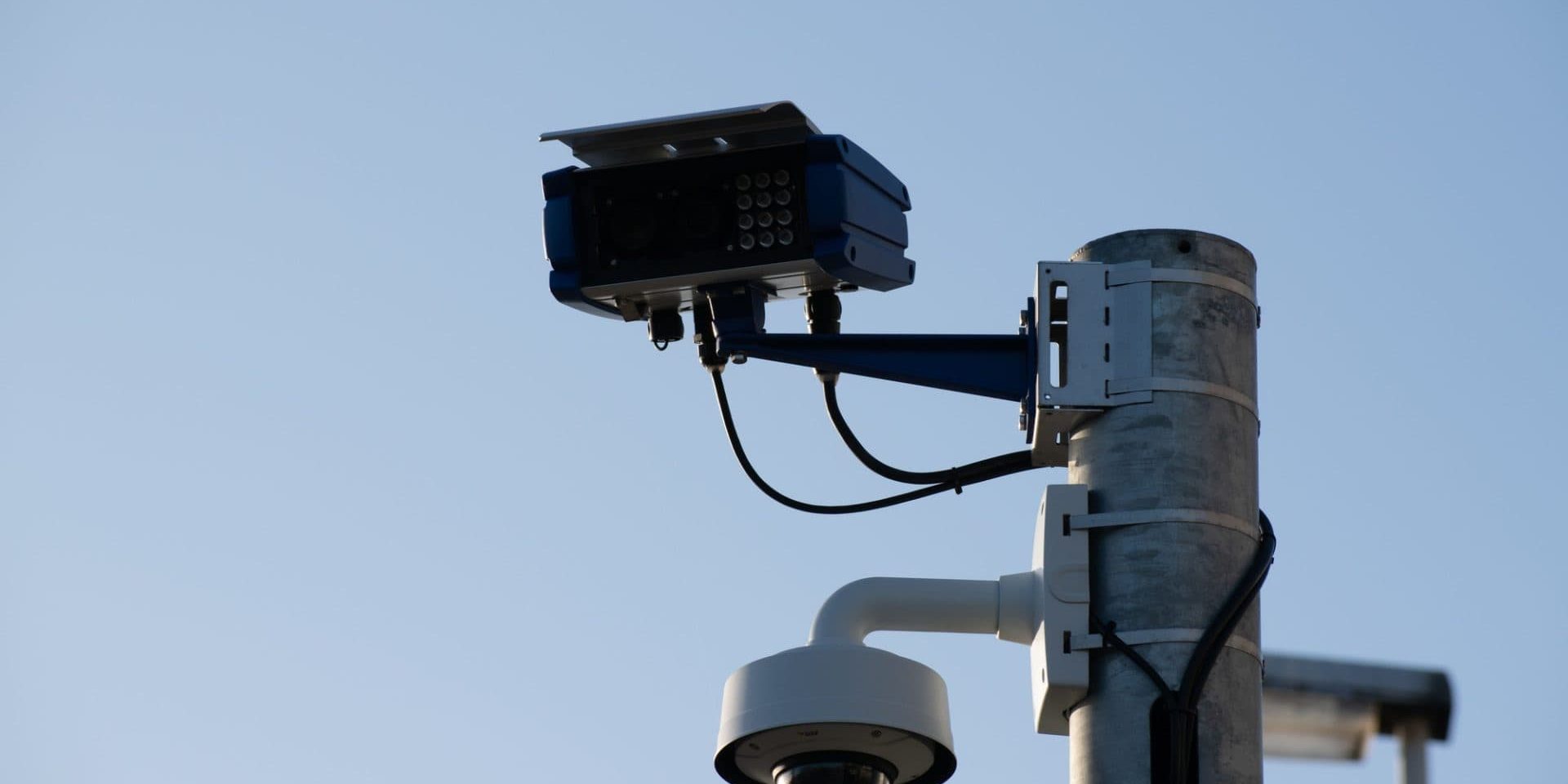
Cameras mounted on school buses flag vehicles that drive past a stopped bus. Hempstead began working with the vendor BusPatrol in 2022. Under the contract, the town keeps 55 percent of the ticket money and BusPatrol takes the other 45 percent. On a minimum $250 fine, that works out to $137.50 for the town and $112.50 for the company.
New York State authorizes this kind of enforcement under Vehicle and Traffic Law Section 1174-a. Under the statute, a local government can pass its own law holding the vehicle’s owner responsible when the vehicle passes a school bus showing a deployed stop arm and flashing red lights. The fine schedule is $250 for a first violation, $275 for a second and $300 for a third or later violation, when the repeat violations fall within 18 months. A local law can add up to $25 for failing to answer a notice on time.
The statute also sets the guardrails drivers hear about in court. Liability under this section does not count as a conviction of the driver, stays off the driving record and cannot be used for insurance purposes. Recordings used as evidence have to show the outside of the vehicle, its plate, a deployed stop arm and an electronic sign that the red lights were flashing. A sworn certificate from a municipal technician serves as prima facie evidence, and footage that meets those standards creates a rebuttable presumption that the bus had stopped for passengers. The posted statute text carries a note that the section is repealed on December 1, 2029.
The Four Districts at the Center of the Dispute
State law ties the cameras to local agreements. The statute provides that a mobile camera system cannot be installed or operated on school buses unless the municipality and the school district enter into an agreement. Hempstead’s 2022 ordinance calls for those agreements to be in writing. Tickets issued in four districts that had not signed on are the heart of the dispute.
The scale is large. Press investigations found roughly 36,000 citations in and around the four districts in 2025, worth more than $9 million in potential fines. Nearly 80,000 tickets had gone out in those districts across 2023 and 2024, with another $20 million in potential fines. A June 2026 local report cited records showing roughly 36,000 tickets issued in 2025 in districts that say they never formally signed up.
The town itself later questioned the practice. In January 2025, Town Attorney John Maccarone wrote to BusPatrol CEO Karoon Monfared, raising concern that ticketing in those districts could go beyond what the program was legally allowed to do and clash with state and town law. Donald Clavin, then the town supervisor, called for dismissals and refunds of any improperly issued tickets. The town turned around months later and announced that BusPatrol’s own review had turned up no wrongly issued citations. Maccarone argued that the review settled the matter, so his earlier concerns about the program “overreaching its legal authority” were allayed, and he defended the program in a statement in 2025: “The Town remains steadfast in its commitment to this critical child safety program,” Maccarone said.
Nassau County, which handles the hearings, paused them early in 2025 “to ensure proper procedures were followed.” By June 2025, some drivers said their court dates were being rescheduled, and it remained unclear whether hearings would cover tickets from the four districts.
What the Plaintiffs Say Is Wrong With the Tickets
One class action against the program was filed in November 2023 by Sergey Kadinsky, a West Hempstead history teacher who paid $250 over an alleged pass of a stopped school bus and demanded a refund. Reports on the Nov. 10 ruling do not name the plaintiffs, and a June 2025 report described several class actions pending against the program, so it is not clear which suit the order covers. As described in January 2024, Kadinsky’s suit attacks the proof. It contends the evidence behind the tickets is “invalid and legally insufficient,” and that it never shows a marked bus loading or unloading, which state law requires.
Kadinsky laid out the argument in January 2024. “I’m sure many of us have seen buses stop, pull out the stop sign paddle, but where are the children?” he said. “Children can be on the bus, but are they getting on or off the bus? Because that’s what the law was designed for,” Kadinsky said. He also questioned the purpose of the program: “It feel like it’s more about revenue than safety, because the intended beneficiaries of safety, the children, are not always there when the bus stops,” Kadinsky said. He said then that he wants the law repaired, not scrapped.
Another driver fighting a ticket, a Garden City resident, described the video this way in January 2024: “I didn’t see anybody getting off. I didn’t see no lights, I didn’t see the stop sign,” the Garden City resident said.
The current litigation also challenges hearing procedures. Plaintiffs allege that drivers who contested tickets did not receive enough of the evidence ahead of hearings and had too little chance to answer the town’s case.
A second line of attack involves privacy. A March 2025 account of the November 2023 filing says it alleges that windshield cameras record continuously and capture students, pedestrians and bystanders, and that the BusPatrol contract separates a “Student Safety Solution” package from the official “Stop Arm Enforcement Solution.” The filing invokes two student privacy laws: the federal Family Educational Rights and Privacy Act and the New York State Student Data Protection Act. That account quotes Bientock, with no role given, on the video that accompanies a ticket: “The Town is systematically sending out videos of children to complete strangers, in violation of the Legislature’s strict rules protecting the privacy of students and other citizens. The images are helpfully accompanied by a map, GPS location, and the time of day at which the children might be found.” These are allegations, and a town spokesman declined to comment on the litigation at the time. State law also requires school bus cameras to face outward at passing vehicles, bars any other use of the images and orders them destroyed after 90 days when no notice of liability is issued, or once a notice that was issued reaches final disposition.
The Defense and the Open Legal Questions
BusPatrol, the company that runs the camera program, said in a January 2024 statement that the original suit “lacks merit.” The statement reads: “It is unfortunate that an individual who admitted to illegally passing a stopped school bus is taking this approach to skirt accountability. Since New York State enacted this program in 2019, no court or government authority has challenged the validity or necessity of the school bus camera safety program,” the statement continued. “Sadly, in the past month, two children have been hit by reckless drivers around their school buses and countless other close calls have happened throughout the state of New York, which is why BusPatrol remains committed to delivering technology that empowers local law enforcement across the country to enforce state safety laws that protect children.”
Not every lawyer thought the challenges would succeed. Paul Sabatino, a former counsel to the Suffolk County legislature, said in January 2024: “Whether someone was getting on or off, if the arm was extended and it said ‘stop,’ and it’s coming from a school bus and you drove passed it, unfortunately, you committed a violation,” Sabatino said. He believed the video would hold up in court. “The law is solid, as long as the video is not defective,” Sabatino said. By then, a Suffolk County driver had already won on a similar argument: a state appeals court threw out the ticket, finding the proof did not show the vehicle was a school bus.
What Drivers Can Do Now
The reports on the ruling describe no change for open tickets, so the first step is to answer any notice on time. Under the statute, a notice of liability must tell the driver how and by when to contest it, and must warn that missing that window counts as admitting liability and can lead to a default judgment. Contested Hempstead tickets go to hearings run by that county agency.
Keep every record. That means each notice of liability, the video link or stills that came with it, the date, the location and the proof of any payment. The location shows whether a ticket came from one of the four districts at the center of the dispute, and a payment record shows whether a driver paid a fine of the kind the plaintiffs say was unlawfully imposed.
The statute also lists defenses worth checking against a ticket: the vehicle was reported stolen before the violation and not yet recovered, the operator drove without the owner’s consent, or the bus stop arm was malfunctioning at the time. A leased vehicle follows its own rules: a lessor must send the lease to the hearing bureau within 37 days of notice to pass liability to the lessee.
None of the reports on the ruling mentions a sign-up deadline, opt-out step or claim form for the three classes, so none is stated here. Drivers who paid a Hempstead school bus camera fine should keep their paperwork and watch for any official notice tied to the case. Refund fights over camera tickets are playing out in other states too, including a suit over Greenwich school zone cameras in Connecticut.
A different outcome came on I-25, where Colorado is voiding 15,870 work zone tickets worth $1.1 million. Hempstead drivers have no such order yet.
Want more car content? Add us as a preferred source on Google to your favourites list for the best automotive news and analysis on the internet.
If you enjoyed this article, be sure to follow us on Microsoft Start.
Sources
- Herald Community Newspapers: Hempstead bus camera tickets face class action lawsuit
- NewYork.Public.Law: N.Y. Vehicle & Traffic Law Section 1174-A
- Long Island Press: Privacy concerns in Hempstead school bus tickets lawsuit
- CBS New York: Drivers file class action lawsuit against Town of Hempstead over school bus safety camera tickets
Reviewed by Preetam Gadekar

Leave a Comment
More in News

2027 Acura Integra Type S Starts at $54,600, Heritage Edition $56,900

What an Open Safety Recall Means (and How to Check Your Car Now)

Bay Area Bridge Tolls Rise Jan. 1 to $9 With FasTrak, $10 on Invoice

How to Appeal an MOT Fail Within 14 Working Days (Before You Repair)

New Lexus NX Plug-in Hybrid Gets 292bhp, 23kWh Battery and 1,500kg Towing
Trending on Motoring Chronicle

Why Every Learner Driver Needs to Know About the June 9 Test Booking Rule

Ford Recalls 47,587 F-150 and Super Duty Trucks Over a Hidden Backup Camera Glitch

2027 Toyota Crown Signia Adds Standard Tech, Starts at $44,890
DVLA Data Shows Cloned Number Plates Rose 54 Percent as Drivers Fight Fake Fines
