
What to Ask Your Garage After DVSA Failed 7 of 9 Replacement Exhaust Parts

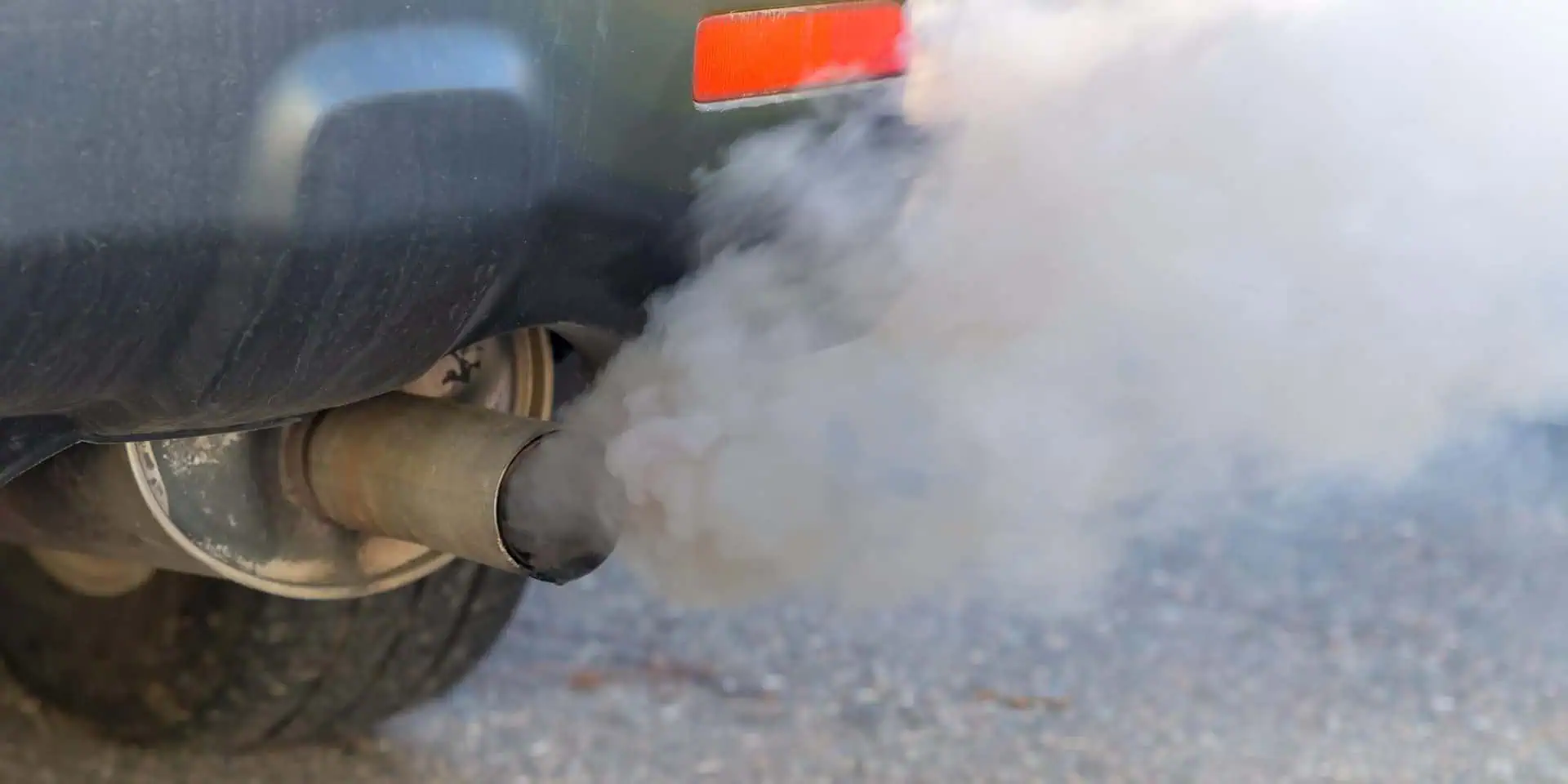
- DVSA tested nine replacement catalytic converters and diesel particulate filters for three popular cars, and seven of the nine models failed to meet legal emissions standards.
- The UK makers of the failing parts have taken up DVSA’s recommendation to end production and sales of those parts, and DVSA has reported the non-UK makers to their type approval authorities.
- Regulations that came into force on 13 August 2009 make it an offence for a business to supply a replacement part without the required approval marking and paperwork, or to fit one without the required marking, so ask for both before you pay.
Three Popular Cars, Nine Replacement Parts and Seven Failures in DVSA Testing
Seven of the nine replacement exhaust parts that DVSA tested for three popular cars failed to meet legal emissions standards. The Driver and Vehicle Standards Agency released the findings on 21 October 2026. Every catalytic converter tested on the Fiat 500 failed. Two of the three diesel particulate filters tested on the Ford Fiesta failed, and so did two of the three catalytic converters tested on the Renault Clio.
Two parts passed every test: the BM Catalysts BM11244H filter for the Fiesta and the AS 30225 catalytic converter for the Clio. Carbon monoxide and hydrocarbons appear in the failure list of all seven failing models, nitrogen oxides in five and particulate number in one. A brand name settles nothing. BM Catalysts and AS each supplied one part that passed and two that failed.
The offence under the law falls on the business that supplies or fits a replacement part without the required approval marking and paperwork. Under these regulations a driver who pays for the work commits no offence. DVSA’s results carry no recall, no refund route and no prosecution, so the practical step belongs to the buyer: get the part number and the approval paperwork from the garage before the work starts.
What DVSA Bought and Why Nine Models Is Not the Whole Market
DVSA’s market surveillance unit chose three vehicle models with large aftermarket sales of catalytic converters and diesel particulate filters, then bought a used example of each car to fit the parts to. The cars were the Fiat 500 Twin Air 0.9 petrol, the Ford Fiesta 1.5D diesel and the Renault Clio 0.9 petrol. Each car received three different replacement parts. The Fiat and Clio converters were tested against the Euro 6 standard, and the Fiesta filters against Euro 5.
Testing followed United Nations Economic Commission for Europe Regulation No. 103, which covers replacement catalytic converters, and Regulation (EC) No. 715/2007 on the type approval of motor vehicles with respect to emissions. The stated aim was to assess aftermarket components against their type-approved emission standards, which includes testing for breaches of the 2009 replacement parts regulations.
Four manufacturers supplied the nine parts. BM Catalysts and EEC are UK manufacturers. Walker and AS are non-UK manufacturers.
The sample was built for popularity, which limits what it proves. Nine part numbers on three cars cannot show how many replacement parts fitted to cars on the road fail, and the results carry no sales or fitment figures for any of the nine, so the data gives no count of cars that carry one of the seven failing parts.
Seven Failures, Part by Part
On the Fiat 500 Twin Air 0.9, the BM Catalysts BM91759H failed the total hydrocarbons and carbon monoxide limits. The EEC FI6062T and the AS 55326 failed those two limits and the nitrogen oxides limit as well. No Fiat part passed.
The Fiesta diesel filters split. The BM Catalysts BM11244H passed. The AS FD5103 failed total hydrocarbons, carbon monoxide and nitrogen oxides. The EEC FR6133T was tested on three units: two failed total hydrocarbons, carbon monoxide, nitrogen oxides and particulate number, and the third failed on carbon monoxide alone. A diesel particulate filter exists to trap the particulate matter in a diesel engine’s exhaust. Soot builds up in the filter and burns off in a process called regeneration. Diesel particulate burns at about 600 degrees Celsius, and a fuel additive can lower that to between 350 and 450 degrees. A particulate number failure goes to the core job of the part.
On the Renault Clio 0.9, the AS 30225 passed on all three units tested. The BM Catalysts BM92271H was tested on four units. One passed and three failed on hydrocarbons and carbon monoxide. The Walker 28879 was tested on three units. One passed and two failed on total hydrocarbons, non-methane hydrocarbons, carbon monoxide and nitrogen oxides. Both Clio parts that failed also produced a passing unit, so a part number that failed in testing did not fail on every sample, and the results offer no explanation for the spread.
The aftermarket results print no measured values, which leaves the size of each miss unknown.
What the Law Says About Supplying and Fitting These Parts
The Motor Vehicles (Replacement of Catalytic Converters and Pollution Control Devices) Regulations 2009, SI 2009/1899, came into force on 13 August 2009. The text on legislation.gov.uk, read on 29 October 2026, shows amendments in 2011 and 2020 and no known outstanding effects. The regulations are in force.
For vehicles first used on or after 1 March 2001 that left the factory with a catalytic converter, regulation 4 bars anyone from supplying a replacement converter unless it carries the required permanent marking and comes with the required information, and regulation 5 bars anyone from installing one unless it carries the required marking and is approved for that type of vehicle, with an exception for replacement converters of a type approved before 31 October 2002. Regulations 6 and 7 apply the same supply and installation tests to pollution control devices, the category that includes diesel particulate filters, on vehicles that meet Regulation (EC) No. 715/2007 and have a reference mass of up to 2,840kg. A part with no type approval can still be supplied, but regulation 8 requires a label and accompanying information. A catalytic converter must read “ILLEGAL TO SUPPLY FOR TYPE-APPROVED VEHICLES FIRST USED ON OR AFTER 1/3/01”, and a particulate filter must read “ILLEGAL TO SUPPLY FOR VEHICLES APPROVED TO EC REGULATION 715/2007”. Second-hand parts fall outside these prohibitions under regulation 3.
Contravening any of those regulations is an offence only when it happens in the course of the person’s business. On summary conviction the fine can reach level 5 on the standard scale. A business has a defence if it shows that it took all reasonable steps and exercised all due diligence, and a second business whose act or default caused the offence is guilty too. The Secretary of State is the enforcement authority, and only that authority can bring proceedings, except in Scotland. Enforcement officers can inspect parts, make test purchases and enter any premises other than one used only as a dwelling.
The regulations turn on marking and information, while DVSA’s tests measure what leaves the tailpipe. The results do not say whether any supplier or garage broke the regulations by selling or fitting one of the seven failing models, and they report no prosecution. Taking a filter off a car is a separate matter, and the Department for Transport has proposed unlimited fines for removing emissions filters on vehicles from 2001 onwards.
What Happens Next to the Failed Parts
DVSA wrote to the UK makers of the failed parts and asked them to explain the failures and bring the components into compliance. DVSA states: “All UK manufacturers informed us they have taken up our recommendation to end production and sales in the UK market.” The makers are working with the relevant type approval authority on an explanation, and the authorities will arrange in-service conformity checks of the components. DVSA also states: “All non-compliant components have been removed from production and sale.”
The failures by the non-UK makers, AS and Walker, went a different way. DVSA reported them to the relevant granting type approval authorities. Of the seven failures, four came from UK makers and three from non-UK makers. DVSA is carrying its surveillance of aftermarket catalytic converters and diesel particulate filters into the 2025 to 2026 programme.
The results say nothing about parts already fitted. A car with one of the seven part numbers under it stays on the road with it, and the results announce no recall or refund route.
Factory-built vehicles went through a separate round of DVSA emissions testing. DVSA tested 18 of them: two diesel cars, six petrol cars, two light vans, five self-charging hybrids and three motorcycles. It sourced them from hire fleets and dealers rather than from manufacturers, and it used laboratories that no vehicle manufacturer owns. The vehicles were tested between July 2024 and January 2025. For each of the 18, DVSA states that it “does not have reason to believe” the vehicle was non-compliant with its legal emissions performance requirements.
What to Ask Your Garage Before You Pay
Ask for the part number before the work starts and check it against the seven that failed. On the Fiat 500 Twin Air 0.9 they were the BM Catalysts BM91759H, the EEC FI6062T and the AS 55326. On the Ford Fiesta 1.5D they were the AS FD5103 and the EEC FR6133T. On the Renault Clio 0.9 they were the BM Catalysts BM92271H and the Walker 28879. The two that passed were the BM Catalysts BM11244H and the AS 30225. A match ties your car to a test finding. No match leaves the question open. DVSA tested only these nine parts on these three cars.
Ask to see the approval marking on the part and the paperwork that comes with it. The regulations require both when a replacement part is supplied, so a garage should be able to produce them. A label carrying the regulation 8 wording means the part is not approved for a car first used on or after 1 March 2001, or for a filter, a car approved to Regulation (EC) No. 715/2007.
Keep the invoice with the part number written on it. DVSA names every part by number, which makes the number the link between your car and the findings. If a warning light started the job, the guide to a flashing engine management light covers the catalytic converter costs behind it.
A clogged filter is a separate expense, covered in the guide to a blocked DPF and the MOT. Ask before the work starts, while the box is still in the garage.
Want more car content? Add us as a preferred source on Google to your favourites list for the best automotive news and analysis on the internet.
If you enjoyed this article, be sure to follow us on Microsoft Start.

Leave a Comment
More in News
Three of Five Vehicles Failed DVSA Emergency Braking Checks Ahead of an Undated Mandate
What DfT’s January 2027 Pavement Parking Ticket Plan Means for Every Driver

How a Fault Claim Cuts Your No Claims Discount (and What Protects It)
Why Relying on Public Charging Costs 17p to 20p a Mile (and What Helps)

Zapmap Counts 3.4 Percent Fewer Rapid Chargers in Three Months as Ultra-Rapid Ones Overtake
Trending on Motoring Chronicle

BMW Adds M340i and M440i Black Editions for Summer 2026 From £66,475

Latest Corvette concept car is inspired by Southern California [Photo Gallery]
Why Petrol Drivers Have Already Spent a Year’s EV Charging Costs by 9 June
The all-new 2027 Kia Telluride Hybrid meets the Pacific Coast while Telluride X-Pro tackles the trail
