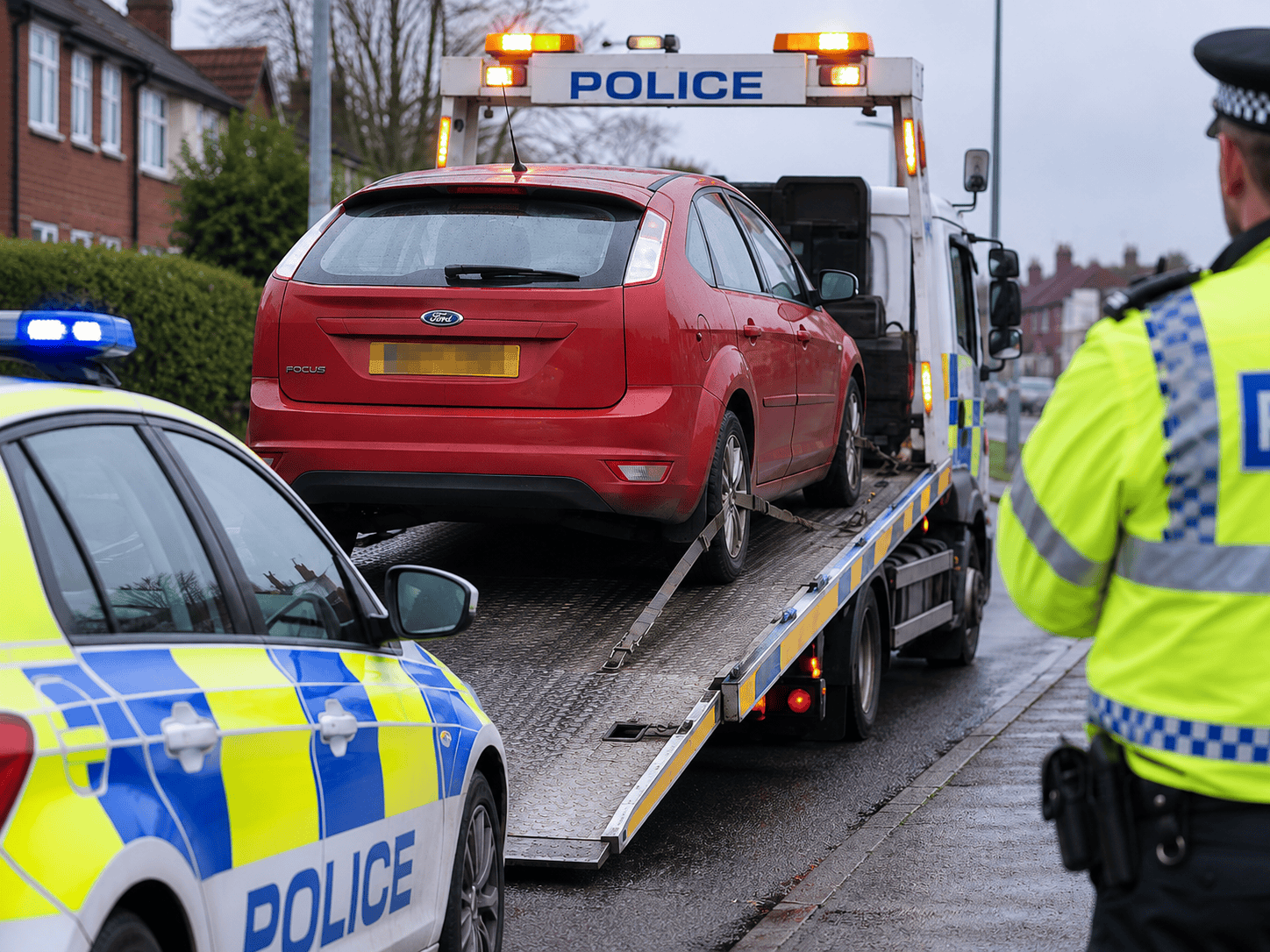
Fife and Dundee Cars Fail 38.6% of First Attempt MOTs, Nearly Double Sutton’s 20.3%


- CarCostCheck’s analysis of DVSA test records for 2025 puts the age adjusted first attempt MOT fail rate at 38.6% in both the Kirkcaldy (Fife) and Dundee postcode areas, against 20.3% in Sutton, the lowest of 118 areas.
- Across Britain, 9,193,623 of 33,210,951 class 4 tests failed at the first attempt in 2025, a rate of 27.7%, down from 28.3% in 2024.
- The maximum fee for a car MOT is £54.85, and a failed car taken away for repair can face a partial retest fee, or a full second fee, unless it stays at the test centre.
An MOT failure costs most drivers more than the test fee. It brings a repair bill, a second visit and, in some cases, a second fee. New analysis of the Driver and Vehicle Standards Agency (DVSA) test records for 2025 shows how unevenly that risk is spread across Britain. CarCostCheck, which published its MOT Failure Rates 2025 ranking on 14 October 2026, found that a car tested in the Kirkcaldy or Dundee postcode areas is far more likely to fail at the first attempt than a car tested almost anywhere else, even after allowing for the age of the cars on the road.
The age adjusted first attempt fail rate is 38.6% in both KY (Kirkcaldy, covering Fife) and DD (Dundee). Aberdeen comes next at 36.0%, then Shetland at 35.3% and Paisley at 34.8%. At the other end of the ranking, Sutton has the lowest rate of the 118 postcode areas, at 20.3%. Fife and Dundee are 1.9 times the Sutton figure, a ratio we have calculated from the published rates. The national rate for class 4 vehicles, which covers cars and light vans, is 27.7%.
Why a Postcode Can Add 18 Points to Your MOT Fail Risk
The gap between the top and bottom of the table is 18.3 percentage points. In practical terms, that is the difference between roughly four in ten cars failing at the first attempt and roughly two in ten. CarCostCheck counts first attempts only, so a car that fails and then passes a retest is still counted as a fail. The figures cover class 4 vehicles, which means cars and light vans.
The rate that CarCostCheck ranks areas by is age adjusted, which means it allows for how many older cars an area tests. Older cars fail more often, so an area full of old cars would otherwise rank badly for that reason alone. The raw rates tell the same story, though more mildly. In KY the raw first attempt fail rate is 36.2% across 186,846 tests. In DD it is 34.9% across 136,142 tests. In AB (Aberdeen) it is 32.0% across 254,223 tests. In Sutton it is 21.0% across 74,585 tests. Adjusting for age moves the Scottish areas up and Sutton down, so the age of the local fleet does not explain the gap.
The data does not say why. CarCostCheck publishes rates and test counts, not causes, and nothing in the dataset points to a single reason, such as road conditions, test centre practice or the type of vehicle driven. It would be a guess to name one, so this article does not. What the figures do show is that the same car, at the same age, has a different chance of passing first time depending on which postcode area it is tested in.
The bottom of the table is dominated by outer London and its edge. The ten lowest rates belong to Sutton at 20.3%, Southall and Uxbridge at 20.5%, Slough at 21.1%, Ilford at 21.2%, Romford at 21.3%, Harrow at 21.6%, Kingston upon Thames and Twickenham, both at 22.1%, Enfield at 22.3% and Croydon at 22.6%.
Which Makes Fail Most, and When
Make counts alongside place. CarCostCheck’s table for first MOTs, which most cars face at three years old, ranks brands with at least 5,000 first tests. Across all of them, cars fail their first MOT 10.8% of the time. Tesla has the highest rate at 15.9%, ahead of MG at 14.3%. At the other end, Lexus has the lowest at 4.8% and Honda the next lowest at 6.0%.
The order changes as cars age. For cars tested at ten years old, the all car failure rate is 29.3%, nearly three times the first MOT rate. Dacia has the highest rate of the brands with enough tests, at 43.1%, with Renault at 41.5%. Porsche has the lowest at 12.1%, followed by Lexus at 15.6%. A ten year old Dacia is more than three and a half times as likely to fail as a ten year old Porsche, a ratio we have calculated from the published rates.
The national trend is improving slowly. The 2025 rate of 27.7% compares with 28.3% for 2024. DVSA’s own figures for January to June 2026 put the class 3 and 4 fail rate at 27.0%, against 27.6% for the same months of 2025, as reported in CarCostCheck’s analysis.
What a Failed MOT Costs You
The government sets a maximum fee for the test. For a car it is £54.85, and no VAT is charged on it. Garages can charge less, but not more. That fee buys the test, not the repair, and the retest rules decide whether a failure adds a second charge.
Under the GOV.UK rules on retests, a car left at the test centre for repair and retested within 10 working days needs only a partial retest, and there is no fee for it. A car taken away for repair and brought back within 10 working days also needs only a partial retest, but the garage can charge a partial retest fee, and GOV.UK does not state an amount. A car brought back to the same test centre before the end of the next working day for a partial retest on a listed set of items, which includes lamps, mirrors, seatbelts, the horn, number plates, wheels and tyres, does not have to pay again for those items. Anything outside those windows needs a full retest at the full test fee, up to £54.85 for a second time.
Put against the rates above, a Fife or Dundee driver has roughly a 39 in 100 chance of failing at the first attempt and meeting those retest rules, against roughly 20 in 100 for a Sutton driver. The extra fee is only part of the cost. The repair is the larger one, and its size is set by the fault.
Can You Avoid It? Steps That Cut the Fail Risk and the Retest Fee
The fail rate cannot be changed by a driver, but the cost of a fail can. Three steps count most, and each comes straight from the retest rules.
First, decide where the repair happens before the test day. If the garage can do the repair at the test centre, leaving the car there and having it retested within 10 working days carries no retest fee. Taking the car away to a cheaper repairer is allowed, but the partial retest fee can then apply, so ask the test centre what it charges before you decide.
Second, fix the simple items before the test. The listed partial retest items, such as lamps, mirrors, the horn, seatbelts, number plates, wheels and tyres, are mostly the things a driver can check in ten minutes in a driveway. A blown bulb or a worn wiper is cheap to fix beforehand and costly to fix after a failure, as a failure that is not fixed on the spot can mean a second visit.
Third, if your car is ten years old or more, treat the test as a likelier fail than the national average suggests. At ten years old, 29.3% of all cars fail at the first attempt, and some brands in the table are above 40%. Booking the test early in the month, rather than on the last day of your current certificate, leaves time for a repair and a retest without the car being off the road.
The CarCostCheck figures give an idea of the odds for a typical car. The condition of your own car tells you more.
CarCostCheck’s own page notes that its figures are an analysis of DVSA open data rather than an official DVSA publication. The underlying 2025 test results come from DVSA, and the full table of all 118 postcode areas and the brand rankings are on the CarCostCheck page listed below.
Want more car content? Add us as a preferred source on Google to your favourites list for the best automotive news and analysis on the internet.
If you enjoyed this article, be sure to follow us on Microsoft Start.
Sources:

Leave a Comment
More in News

Are There Warning Signs Before a Cam Belt Breaks? Usually One, and It Is Not the Belt

How to Tell If Rust Will Fail Your MOT (and What a Repair Costs)

Why Your Car Clicks But Won’t Start (and What to Do)
Diesel Drivers Pay £31 More Per Tank Than a Year Ago, DESNZ Data Shows

Dodge Extends Durango Taillamp Warranty to Five Years, Unlimited Miles
Trending on Motoring Chronicle

These Councils Rejected 99 Percent of Drivers’ Pothole Compensation Claims Last Year

How Oxfordshire’s New ‘Quiet Lanes’ Plan Could Cut Off Rural Villages

Used Car Complaints to the Motor Ombudsman Jumped 14 Percent Last Year

Aston Martin DBX GT Adds Ultra-Luxury Trim to 727PS Super-SUV Range