
How to Tell When Your Cabin Filter Needs Replacing (and What It Costs)
- Replace your cabin filter about once a year, or sooner if airflow weakens, the vents smell damp or the windows mist up faster than they used to.
- A garage fit costs £25 to £55 (about $33 to $73), while the part alone is £10 to £30 (about $13 to $40) if you fit it yourself.
- On most cars the filter sits behind the glovebox, and the swap takes 15 to 30 minutes.
Replace a Cabin Filter Once a Year, or Sooner When Airflow Drops and the Vents Smell Damp
Your cabin filter needs replacing about once a year for most drivers, and sooner if the fan sounds louder, the air from the vents feels weaker or a damp smell appears when you switch on the heater or air con. Fitting one yourself costs £10 to £30 (about $13 to $40) for the part. A garage charges £25 to £55 (about $33 to $73) fitted, according to the Renault Group-backed garage network Motrio, and the job takes 15 to 30 minutes.
That is the short answer. The rest of this guide covers what the part does, how to spot a clogged one before the smell sets in, how often to change it for the way you drive, and what to do if a new filter does not fix the problem.
What a Cabin Filter Does and How It Differs From the Engine Air Filter
The cabin filter cleans the air that comes through your vents. Kwik Fit explains that it filters particles out of the air for the air con system, both for air drawn in from outside and for air that circulates inside the car. It also catches dust and mould that builds up in the cabin, for example from the moisture of passengers breathing or from open windows. That is why many people call it a pollen filter, yet it traps much more than pollen.
It is a different part from the engine air filter. The engine filter makes sure only clean air reaches the engine, which supports clean combustion and fuel economy. The cabin filter looks after the people in the car and the ventilation system itself.
Where it sits depends on the model. Motrio says it is behind the glovebox on the passenger side in most cars, or under the windscreen near the base of the wipers. Your handbook shows the exact spot and the correct part number.
Leaving it too long has a cost. Kwik Fit says a blocked filter means dirtier air in the cabin at best. Motrio adds that a clogged filter reduces airflow, makes the fan work harder and encourages mould on the evaporator, the part of the air con system that cools the air. The result is bad smells and weaker cooling, usually just when summer arrives.
The Signs a Cabin Filter Has Clogged
Motrio lists six signs. Airflow drops even with the fan on full. A damp or stale smell appears when the system starts. The windows mist up or ice over more quickly. The fan gets noisier as it works harder. Heating or cooling feels weaker. Allergy symptoms get worse inside the car.
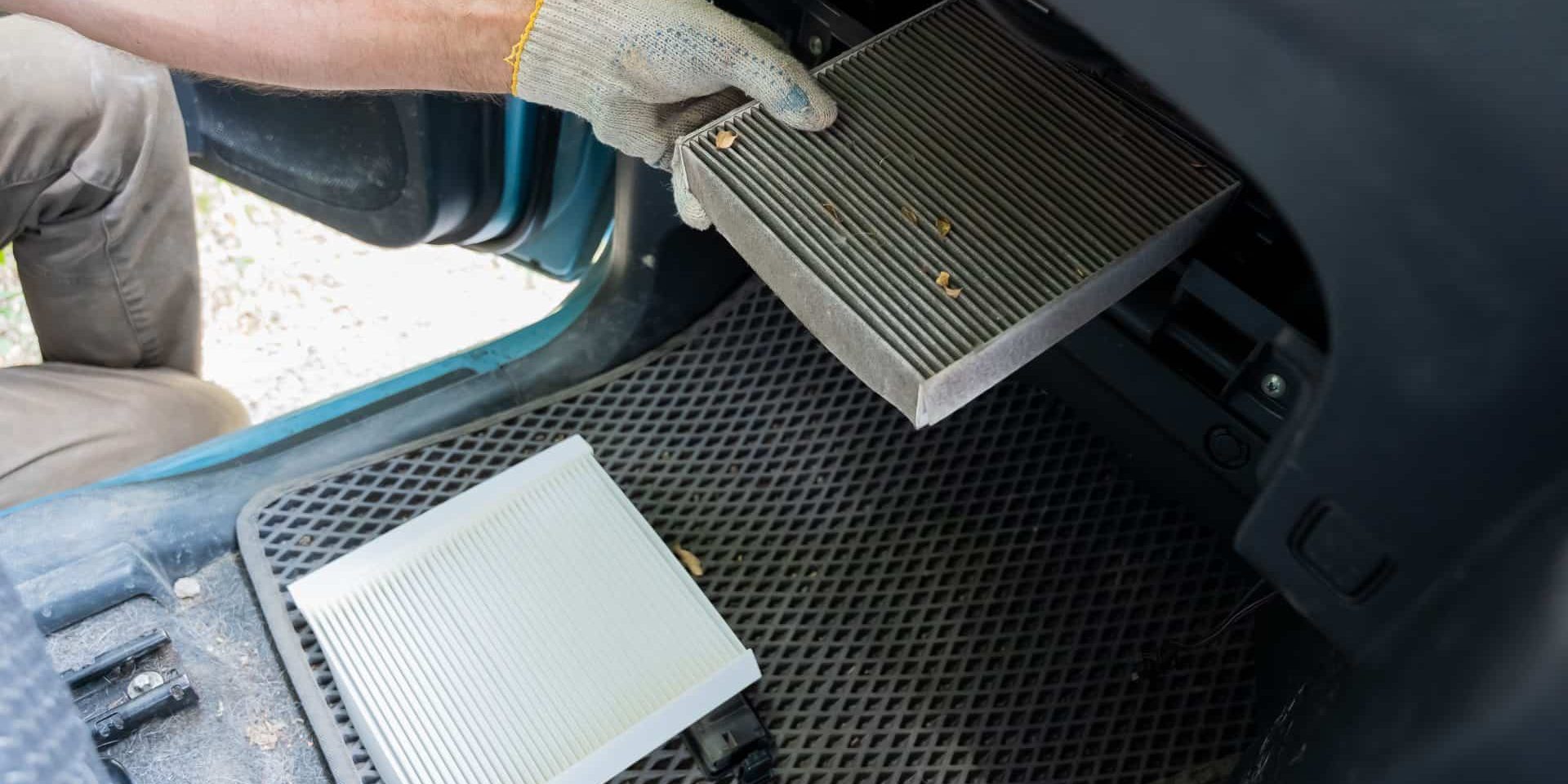
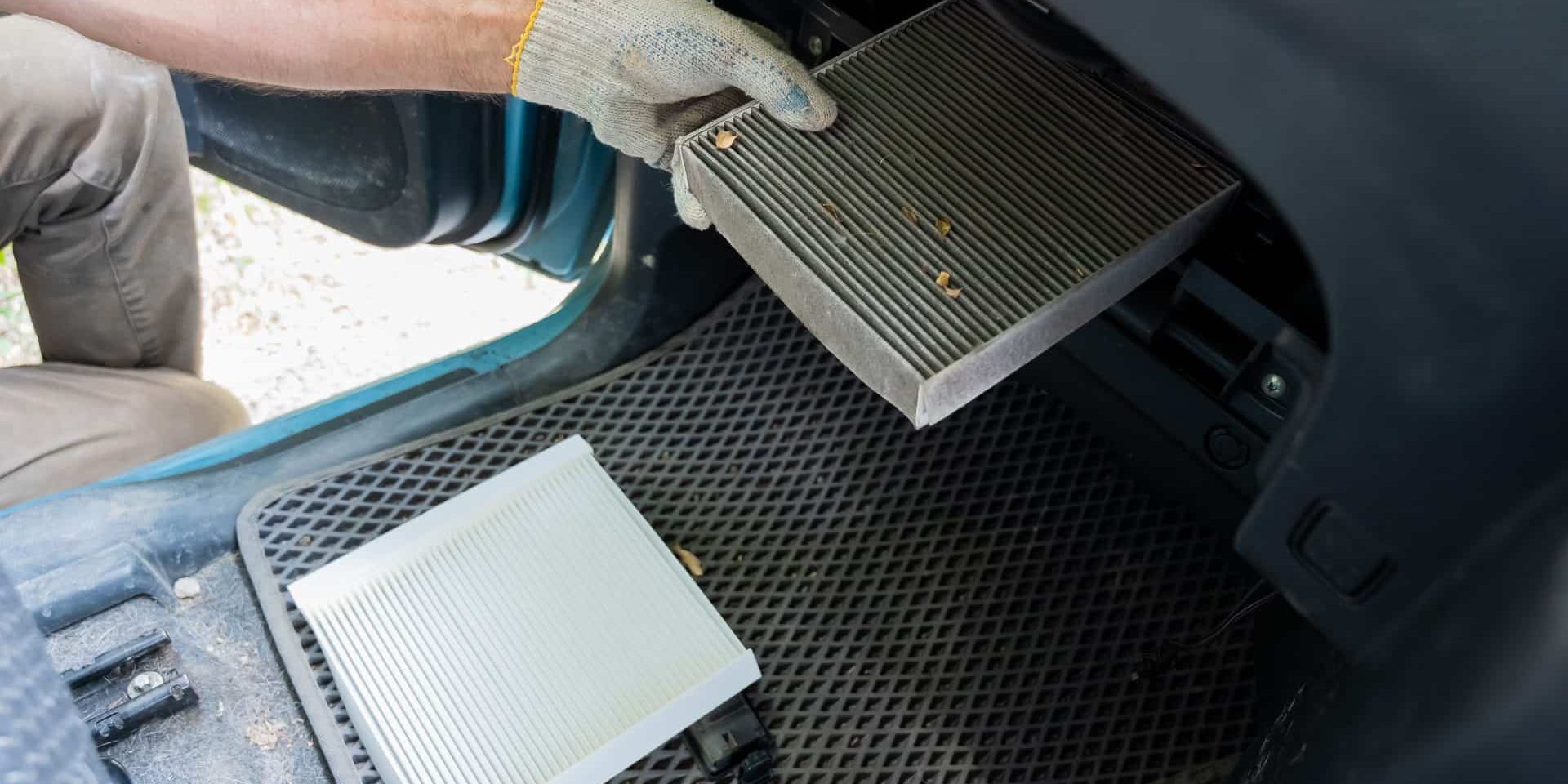
You can test before buying a part. Run the fan on its highest setting and hold a hand near the vents, then switch between fresh air and recirculation. Weak flow in every mode is a sign worth acting on. Next, open the housing and look at the filter. According to Motrio, one that has turned dark grey or filled with leaves and dust needs replacing.
Misting windows deserve a second look. A tired filter can slow how quickly the glass clears, but damp carpets or worn door seals can cause the same symptom, so treat misting as one clue rather than proof. If the filter is new and the glass still fogs, check those next.
A smell follows the same logic. Motrio says that if odours linger after a new filter goes in, the filter was not the cause, and an air conditioning clean is usually what clears them.
How Often to Replace It Depending on How You Drive
Kwik Fit gives the widest range: every 15,000 to 30,000 miles. That works out at about once a year for daily commuters and every two years for people who do few miles. Motrio sets a tighter general rule of every 15,000 km (about 9,300 miles) or once a year, whichever comes first. The handbook for your car shows the manufacturer figure, and that is the interval to follow.
Where you drive changes the answer. Motrio says town driving, dusty roads and areas with high pollen shorten the life of a filter, as it clogs faster. Someone who does short town trips every day should sit at the once-a-year end of the range.
Timing helps too. Kwik Fit recommends changing the filter just before pollen season, which for hay fever sufferers is the point where a fresh filter pays back fastest. Motrio suggests pairing the change with your annual service, or with an air con recharge in summer.
Check what your last service actually covered. Kwik Fit says it replaces the cabin filter as part of any Full Service. If your invoice does not list a cabin or pollen filter, it is safest to assume it has not been changed.
Second-hand cars are the other edge case. With no service history, a new filter is one of the cheapest ways to reset the ventilation system to a known starting point.
What It Costs and Whether to Fit It Yourself
Motrio puts the part at £10 to £30 (about $13 to $40), depending on the model and whether it is a standard or activated carbon filter. With labour, a garage replacement comes to £25 to £55 (about $33 to $73) and takes between 15 and 30 minutes. Doing it yourself saves the labour charge.
A standard filter holds back dust and pollen and is the cheapest option. Motrio says an activated carbon filter costs a few pounds more but also absorbs smells and exhaust gases, which helps in town and heavy traffic.
Match the part to your car. Motrio recommends a filter that matches the manufacturer’s original equipment reference, as one that does not seal properly lets unfiltered air slip past the edges. Enter your registration with the parts seller, or check the number in the handbook, and avoid universal filters cut to size.
Do not try to wash it. Kwik Fit says a few cabin filters are made to be reusable, but they are very much in the minority. Most have pores so fine that cleaning damages the mesh and ruins the filter, so buy a new one.
How to Swap a Glovebox Filter in Four Steps
The exact steps differ by model, so check the handbook first. On a typical glovebox-mounted filter the job runs like this.
Step one: empty the glovebox, then release the stops or side clips so it swings fully down. Step two: unclip the cover over the filter housing and slide the old filter out, taking a photo first so you know which way it faces. Step three: vacuum any loose dirt from the housing, then slide in the new filter with the airflow arrow pointing the same way as the old one. Step four: refit the cover and glovebox, run the fan on high and check the airflow and the smell.
If your filter sits under the windscreen near the wipers, as Motrio notes some do, the job is fiddlier and a garage fit might be the better choice.
A cabin filter is one of the cheapest parts on a car and one of the few where the symptoms tell you straight away it needs changing. Check it at your next service, swap it before pollen season, and do not rely on a mild smell clearing by itself.
Sources:

Leave a Comment
More in News

Why Your Car’s Stop-Start System Stops Working (and What a New Battery Costs)
What a Red X Actually Means on the Motorway (and What to Do)

Five Classic Cars Tipped to Rise in Value Next Year, and One Costs Under £15,000

Why Every New Car Buyer Could Pay More as Manufacturers Chase a £12,000 EV Fine

DWP Can Now Ask Courts to Ban Drivers Who Owe £1,000 in Benefit Debt
Trending on Motoring Chronicle

Dipped in black: New Range Rover Sport SV Black edition gets monochrome treatment for ultimate sporting luxury [Photo Gallery]

Pope Francis receives first electric “Popemobile” from Mercedes-Benz [Photo Gallery]
Pack vital medication to avoid breakdown emergencies

The new Elroq vRS: The sportiest version of Škoda’s electric compact SUV [Photo Gallery]
