How Virginia’s New AI Crosswalk Cameras Could Cost Drivers $100


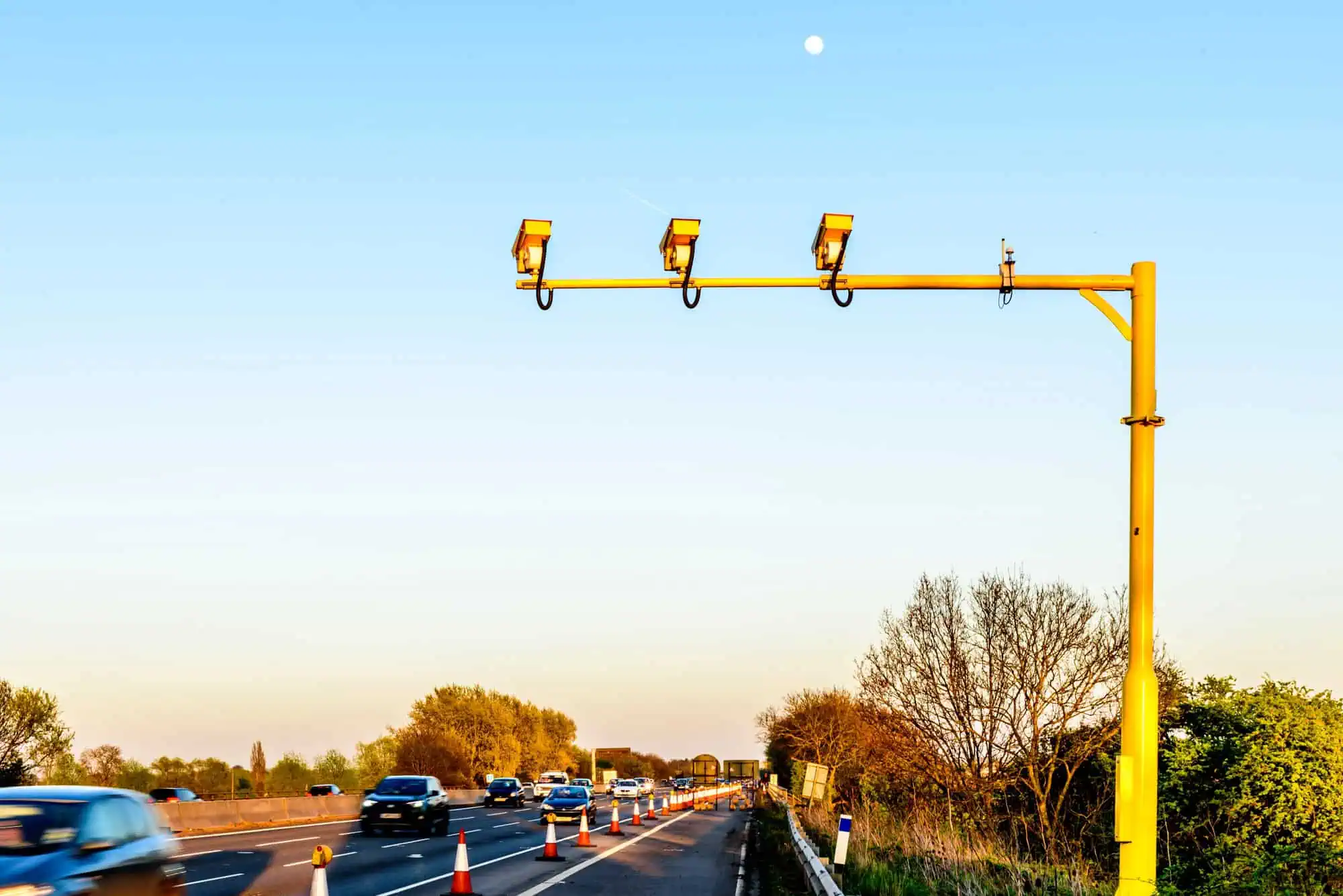
Virginia drivers who roll through a stop sign or ignore a pedestrian in a crosswalk near a school or work zone now risk a citation from a camera rather than an officer. House Bill 994 took effect July 1, 2026, letting Virginia localities install AI-powered cameras that monitor crosswalks and stop signs in school and work zones and issue a $100 civil penalty to drivers caught failing to yield.
The new camera law arrives alongside a second Virginia traffic law taking effect the same day, House Bill 2096, which creates the state’s Intelligent Speed Assistance Program for repeat serious speeders. The two laws share a goal, cutting the crashes tied to aggressive driving and pedestrian right-of-way violations, but they work in different ways. One puts a monitoring device in a specific driver’s car after a conviction. The other watches every driver who passes through a marked location, all the time.
How the Crosswalk Cameras Work
Under House Bill 994, cameras equipped with artificial intelligence software monitor designated crosswalks and stop signs inside school zones and work zones. A driver who fails to yield to a pedestrian, or who runs a stop sign the camera covers, triggers a $100 civil penalty rather than a criminal traffic citation carrying points against a license. That civil framing changes the stakes for drivers: a civil penalty does not add points to a driving record the way a citation issued by an officer typically does, though it still costs real money and still shows up as an unpaid fine if ignored.
Citations from the new camera system go to the registered owner of the vehicle, not necessarily the person driving at the time of the violation. Sgt. Wayne Westfall of the Harrisonburg Police Department, who worked with the new law locally, said that detail carries real consequences for anyone who lends a car to a family member, friend or teenage driver. The registered owner receives and remains responsible for the fine even when someone else was behind the wheel when the camera captured the violation.
Why Virginia Added AI Camera Enforcement
Westfall described the goal behind House Bill 994 as voluntary compliance rather than pure revenue generation. The theory: a driver who knows a camera system covers a specific crosswalk or stop sign thinks twice before rolling through it, and that awareness itself reduces violations even for drivers who never actually get a citation. Westfall also said the cameras give police and local governments a tool for pedestrian safety that does not require an officer physically present at every school crossing or work zone on every shift.
Speeding sits behind a large share of Harrisonburg’s crashes. The city’s roads carry design speeds close to posted limits, according to Westfall, leaving little margin for driver error near crosswalks. School and work zones concentrate pedestrians in predictable locations at predictable times, which makes camera enforcement a more direct fit there than on a highway stretch with no fixed pedestrian crossing point.
How Virginia Fits Into a National Camera Enforcement Trend
Virginia joins a growing list of states turning to camera-based enforcement for violations that used to require an officer present in person. School zone speed cameras have operated in parts of Maryland, Illinois and New York for years. AI-assisted systems that flag pedestrian right-of-way violations at crosswalks represent a newer layer, one that pairs a traditional camera with software trained to recognize a pedestrian entering a crosswalk and a vehicle failing to stop.
Supporters point to reduced staffing needs and consistent, round-the-clock coverage as the core advantages of automated enforcement over relying solely on an officer’s presence. Critics raise separate concerns about accuracy, appeals and the incentive a camera vendor or local government has to maximize citation volume rather than purely reduce violations. Virginia’s law sidesteps some of that criticism by framing the penalty as civil rather than criminal and by capping it at $100, a lower figure than some jurisdictions charge for camera-issued citations elsewhere in the country.
The Companion Law: Speed Limiters for Repeat Offenders
House Bill 2096 takes a different approach aimed at a smaller group of drivers already convicted of serious speeding offenses. Judges can now order a driver convicted of an egregious speeding violation into Virginia’s Alcohol Safety Action Program instead of an automatic license suspension. Before receiving a restricted license under the program, a driver completes education on the dangers of speeding and has a GPS-based speed monitoring device installed in their vehicle. The device matches the car’s speed against the posted limit and prevents the vehicle from exceeding it.
Westfall said the speed limiter option gives judges a tool that keeps a convicted speeder able to drive to work and support a family while still protecting other road users from a repeat pattern of dangerous driving. The alternative, an outright license suspension, often does not stop someone who needs a vehicle for work from driving anyway, only now without a license or insurance. A restricted license paired with a hardware speed cap gives the court a middle option between full suspension and no consequence at all.
What Virginia Drivers Should Know Now
Both laws apply statewide, though individual localities decide where and whether to deploy the AI crosswalk cameras covered under House Bill 994. Drivers cannot assume every school or work zone in Virginia has a camera installed, and they also cannot assume none do. The practical rule going forward: treat every marked crosswalk and posted stop sign in a Virginia school or work zone as though a camera could be watching. In a growing number of locations, one is.
Anyone who receives a citation from the new camera system should check whether they were the registered owner at the time of the alleged violation and confirm the date, time and location match against their own records before paying. Vehicle owners who regularly lend a car to a teenager, a roommate or a family member should have a direct conversation about crosswalk and stop-sign behavior. Any fine from the camera system lands on the registered owner’s account regardless of who was actually driving.
Drivers convicted of an egregious speeding offense under House Bill 2096 should ask their attorney or the court directly whether the Intelligent Speed Assistance Program applies to their specific case before assuming an automatic license suspension is the only outcome available. The program requires completing Virginia’s Alcohol Safety Action Program education component before a restricted license and speed monitoring device installation move forward.
The Case for and Against Camera Enforcement
Pedestrian safety data gives camera supporters a real argument to stand on. School and work zones concentrate exactly the conditions where a moment of driver distraction turns into a serious injury: children moving unpredictably near a curb, workers stepping in and out of a lane, reduced sightlines around parked equipment or buses. A civil penalty that arrives days after a violation cannot prevent that specific incident, but the threat of one showing up in the mail can change how a driver approaches the same intersection the next time.
Opponents of automated enforcement typically raise three objections regardless of the state. First, a camera cannot always distinguish context an officer would judge on the spot, like a driver easing forward past a stop sign with clear sightlines in every direction versus one blowing through it at speed. Second, billing the registered owner rather than the actual driver creates disputes in households with multiple drivers sharing a vehicle. Third, any system that generates revenue for a local government or a private vendor invites scrutiny over whether enforcement decisions, like camera placement, get made with safety or revenue as the primary goal. Virginia lawmakers addressed the second and third concerns partially through the $100 cap and the civil rather than criminal classification, though the first concern remains largely a software and calibration question that will play out as more cameras go live across the state.
Sources:
- WHSV, “New Virginia laws aim to increase safety on the road,” June 30, 2026
- Virginia House Bill 994, Virginia General Assembly
- Virginia House Bill 2096, Virginia General Assembly

Leave a Comment
More in News

How Kentucky’s New School Bus Law Now Requires Stops in Both Directions
How Massachusetts Speed Cameras Could Start Fining Drivers This Fall

McMurtry Speirling PURE Track Car Debuts in the US With 1,000bhp for $1.3 Million

Honda Passport TrailSport Gains More Ground Clearance and Off-Road Tech for 2027
How to Claim Up to $4,500 From the New Kia and Hyundai Theft Settlement
Trending on Motoring Chronicle

California Orders 11,000 Drivers to Retake Written Tests Over Testing Irregularities

Automobili Lamborghini sets new record for deliveries in 2025 despite headwinds

UK Airports Now Charge Up to £1.60 a Minute to Drop Off a Passenger
Millions of Drivers Owe More Than Their Car Is Worth as Used Values Tumble