2027 VW Atlas Gets 282 HP, Seven Airbags and Standard Power Liftgate
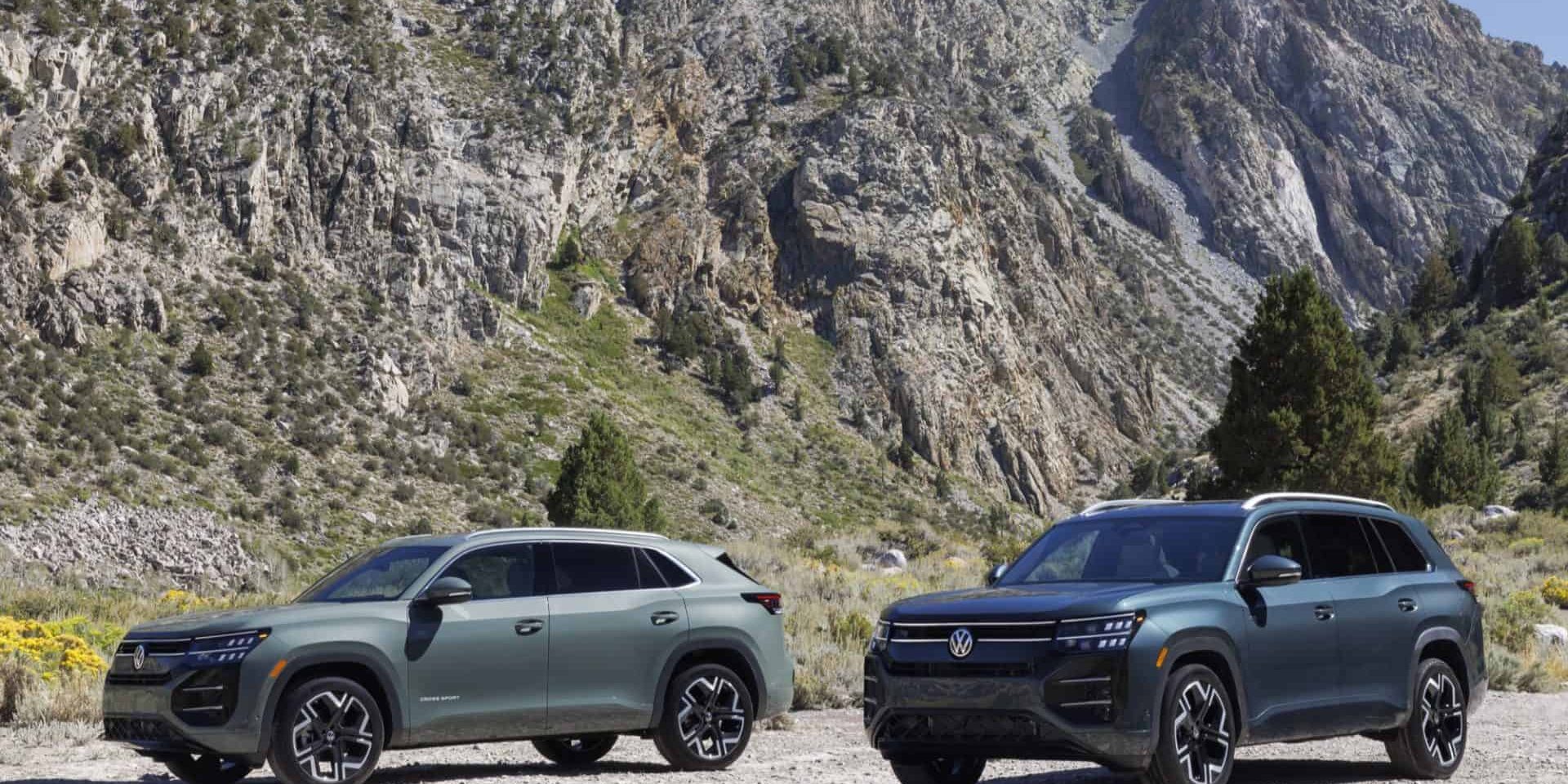
- A 282-horsepower turbo four-cylinder, 13 hp stronger than the engine it replaces, powers both the 2027 Volkswagen Atlas and Atlas Cross Sport, and a front center airbag takes the airbag count to seven.
- Standard equipment on the three-row Atlas now covers a power liftgate, rear sunshades, dual hatch lights, an auto-dimming mirror on the driver side and parking sensors at both ends.
- Both SUVs appear together for the first time when the Los Angeles Auto Show opens to the public on November 20, and Volkswagen has attached no price or EPA mileage ratings to the debut.
Before You Shop Three-Row SUVs, Here Is What Changed on the Atlas
The all-new 2027 Atlas, the second generation of Volkswagen’s seven-seat SUV, went on sale in October. Volkswagen puts it in front of the public for the first time next to the five-seat Atlas Cross Sport at the 2026 Los Angeles Auto Show, open to visitors from November 20 to November 29. The Volkswagen booth is in the convention center’s South Hall.
Both SUVs share one drivetrain: a 2.0-liter turbo four-cylinder rated at 282 hp and 258 lb-ft of torque, the strongest engine the Atlas family has carried. Both also gain a front center airbag, and the standard equipment list is the longest an Atlas has had.
Two numbers are missing. Volkswagen has not attached an MSRP or EPA mileage ratings to the show announcement, and it labels all specifications preliminary and subject to change. In May, Volkswagen said trims and pricing would be revealed closer to the fall launch, as set out in its 2027 lineup announcement, so ask a dealer for the trim-by-trim price sheet before you compare the Atlas with a rival.
The stakes are real for Volkswagen. Atlas sales began in 2017 and have reached more than 630,000 U.S. buyers, and the Atlas and Cross Sport together account for roughly one in three Volkswagens sold in the U.S.
282 Horsepower, Eight Gears and a Fuel Economy Claim Without Numbers
The engine is the latest evo5 version of Volkswagen’s EA888, a turbocharged, direct-injection 2.0-liter four-cylinder TSI that VW describes as close to all-new. It makes 282 hp and 258 lb-ft of torque, a gain of 13 hp over the engine it replaces. An eight-speed automatic with a Tiptronic manual shift mode handles the gears. Front-wheel drive is standard, and Volkswagen’s 4Motion all-wheel drive can be added on every version.
Volkswagen also says fuel economy improves across all versions even with the added power. The company has published no mpg figure to back that up, so treat it as a claim until the EPA label appears. The baseline is easy to find: the EPA rates the 2026 Atlas with front-wheel drive at 20 mpg city, 27 highway and 23 combined on regular gasoline, which works out to 4.3 gallons per 100 miles. The 4Motion versions of the 2026 Atlas are rated 21 to 22 mpg combined, or 4.5 to 4.8 gallons per 100 miles.
Put that in gallons. A driver covering 15,000 miles a year burns 645 gallons in a front-wheel-drive 2026 Atlas (15,000 miles at 4.3 gallons per 100 miles) and 720 gallons in the thirstiest 2026 4Motion rating (4.8 gallons per 100 miles). Those two totals are the baselines the 2027 EPA labels must improve on if Volkswagen’s fuel economy claim holds.
Seven Airbags, a Smarter Travel Assist and Where the Safety Record Stands
A front center airbag is new, raising the count to seven in both SUVs. Volkswagen has also refined the standard IQ.DRIVE driver assistance suite. Travel Assist, which gives semi-automated hands-on driving, can now change lanes when the driver starts the maneuver. Emergency Assist can steer the vehicle onto the road shoulder when its sensors detect a medical emergency.
Parking aids move down the range. Entry trims gain Park Distance Control at the front and rear, and the top trim of each vehicle receives the newest Park Assist Plus. Volkswagen’s own fine print says these systems do not replace attentive driving, and that the driver stays responsible for collision avoidance and for pulling in and out of parking spots, even when Park Assist handles the steering.
Independent crash scores for the redesign are not out yet. The Insurance Institute for Highway Safety named the 2025 Atlas a Top Safety Pick, but its crash ratings for the model apply to 2018 through 2026 vehicles, the outgoing design. The National Highway Traffic Safety Administration put the Atlas on its model year 2027 test list on October 15 for frontal, side and rollover crash tests, the new pedestrian protection check and driver-assistance evaluations covering automatic emergency braking, pedestrian emergency braking, lane keeping assist and blind spot systems. The agency has set no date for the results, which post at NHTSA.gov/ratings and appear on window stickers of new vehicles. The full NHTSA 2027 crash test list names the 23 vehicles chosen, and the Atlas appears on all three tracks.
Cabin and Standard Equipment: What Each Trim Gets
The 2027 Atlas rides on the upgraded MQB Evo architecture. Overall length grows by about 2 inches over the outgoing Atlas while the wheelbase stays put, and Volkswagen says that keeps the generous third row intact. Every model has real wood decor, and buyers pick from two leather choices.
Screen size splits the range. The available large free-standing screen measures 15 inches on every trim except the base model, which gets a 12.9-inch display. Behind the wheel, every Atlas has a configurable gauge cluster called Digital Cockpit Pro, 10.25 inches across. The base Atlas moves up to nine speakers, and the top trim can have a 14-speaker Harman Kardon system.
The family-oriented additions are standard now: a power liftgate, dual hatch lights, rear sunshades, an auto-dimming driver-side mirror, parking sensors at the front and rear, and dual wireless charging. Check that the quote you receive for a 2027 Atlas lists them as included. Park Assist Plus and the 14-speaker audio stay limited to the top trim, and the larger screen skips the base model.
The Atlas Cross Sport and What to Do Before You Sign
Sales of the Atlas Cross Sport began in 2020, and U.S. buyers have taken more than 230,000. Volkswagen aims it at couples and empty nesters who want a midsize SUV for up to five occupants without giving up space and utility. At 196.6 inches overall, it is 6.5 inches shorter than the seven-seat Atlas, and it sits 2.2 inches lower. Inside, a black roof lining and optional olive-green contrast stitching set it apart, and every trim except the entry model gets gray wood.
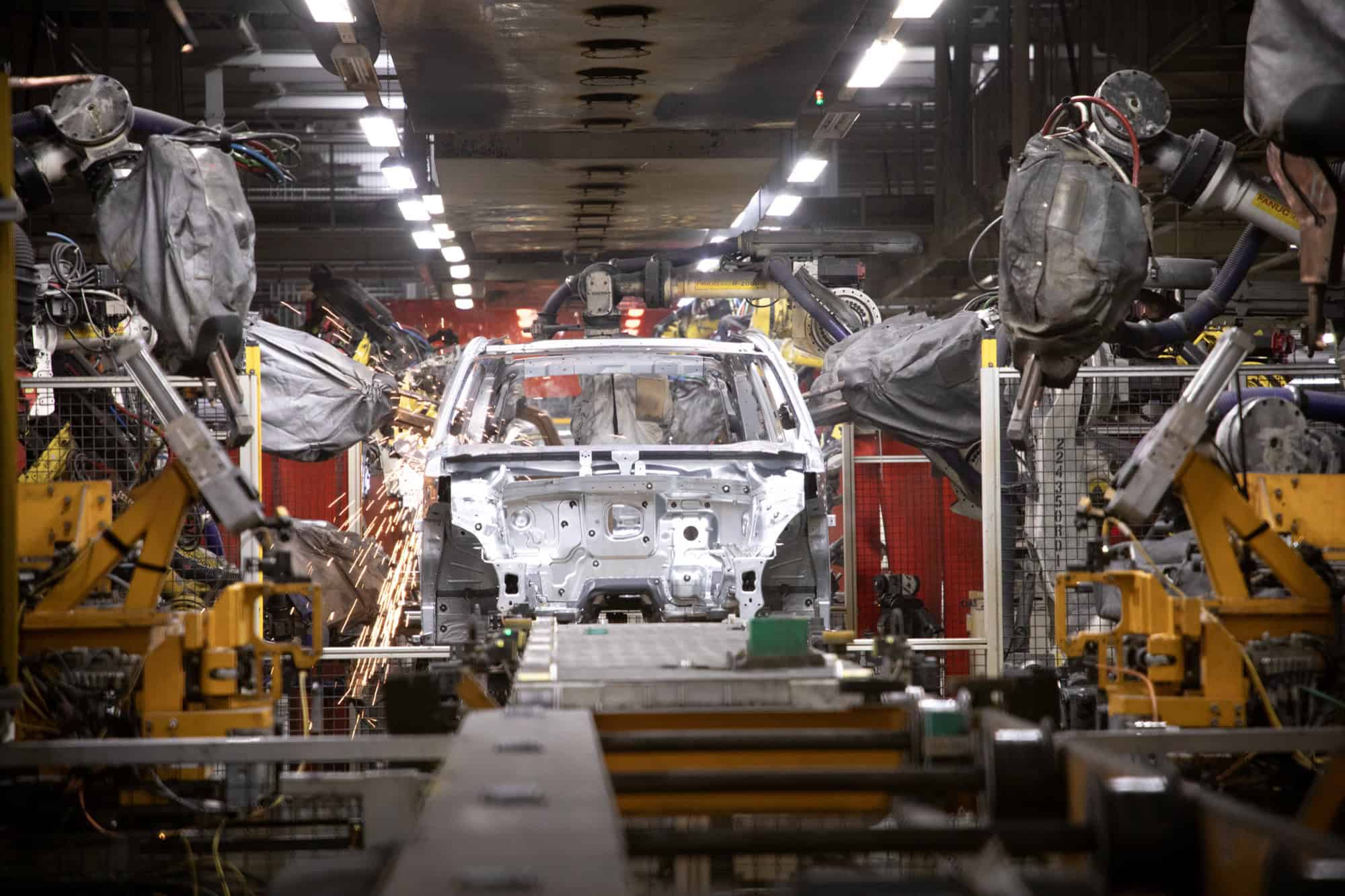
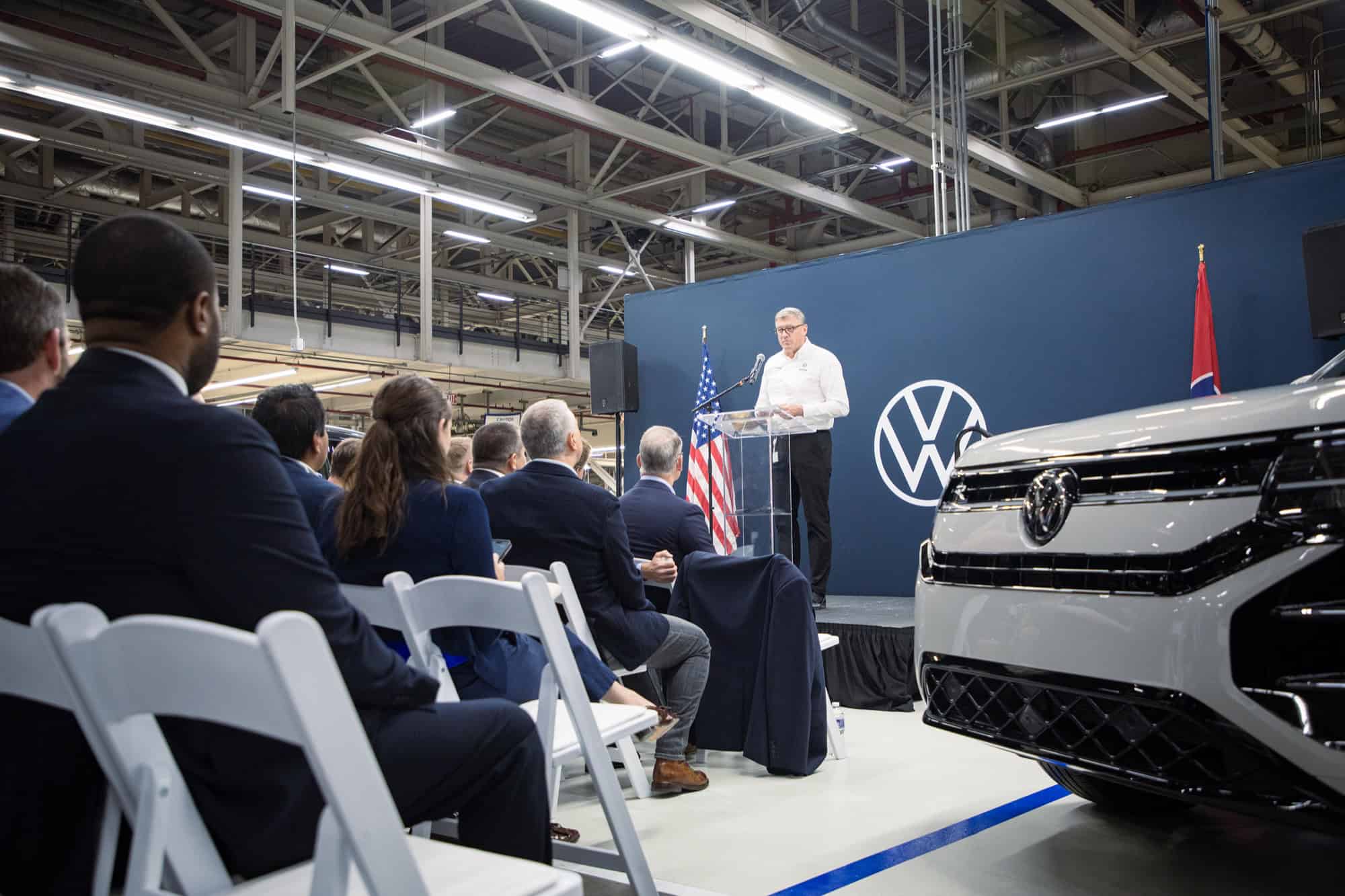
Both models are built in Chattanooga, Tennessee, home to about 4,000 Volkswagen employees. The Atlas reached the Chattanooga line in December 2016 and set off a $900 million first-phase plant expansion. The factory has turned out over one million units of the two models, and assembly of the second generation began there in the summer. “Starting assembly of the all-new 2027 Atlas is an exciting milestone for our Chattanooga team,” Henning Habicht, Head of Volkswagen Chattanooga Operations, said. “This achievement reflects the skill, dedication, and commitment of our workforce, whose craftsmanship and attention to detail are at the heart of every vehicle we assemble.”
For shoppers, the order of operations is short. Walk around both SUVs at the Los Angeles show between November 20 and 29, or visit any of the more than 600 independent Volkswagen dealers in the U.S. Ask for the out-the-door price by trim, the EPA label for the version you want, and written confirmation of which of the new standard features come on the trim you are quoted. If a used 2024 to 2026 Atlas or Atlas Cross Sport is on your list instead, run its VIN at nhtsa.gov/recalls first: Volkswagen recalled 57,851 of those SUVs in August over backup cameras that go dark in reverse, and the fix is a free software update at a dealer.
Want more car content? Add us as a preferred source on Google to your favourites list for the best automotive news and analysis on the internet.
If you enjoyed this article, be sure to follow us on Microsoft Start.
Reviewed by Preetam Gadekar

Leave a Comment
More in News

Car Repair Prices Rose 0.9% in October After Gains of 1.4% and 0.6%

2026 Recalls Reach 34.8 Million Vehicles, 19% Above All of 2025

What Lenders Tell Car Finance Complainants on 18 November as 37 Percent of Agreements Qualify
Theon Design Reveals Its 419bhp Air-Cooled Porsche 911 With Commissions From £435,000
Peugeot Adds ENVY Trim to the 208 From £23,115 and the 2008 From £26,165
Trending on Motoring Chronicle
Why Fake QR Code Parking Scams Have Soared 1,300 Per Cent in Three Years
Mazda CX-5 review: New, improved bestseller needs a full hybrid boost

Over 1 Million Honda Hybrids Recalled as Tire Repair Kit Bottles Can Burst

New Jersey E-Bike Riders Face a July 19 Registration Deadline