How ANPR Cameras Are Now Catching Drivers With No MOT, Tax or Insurance
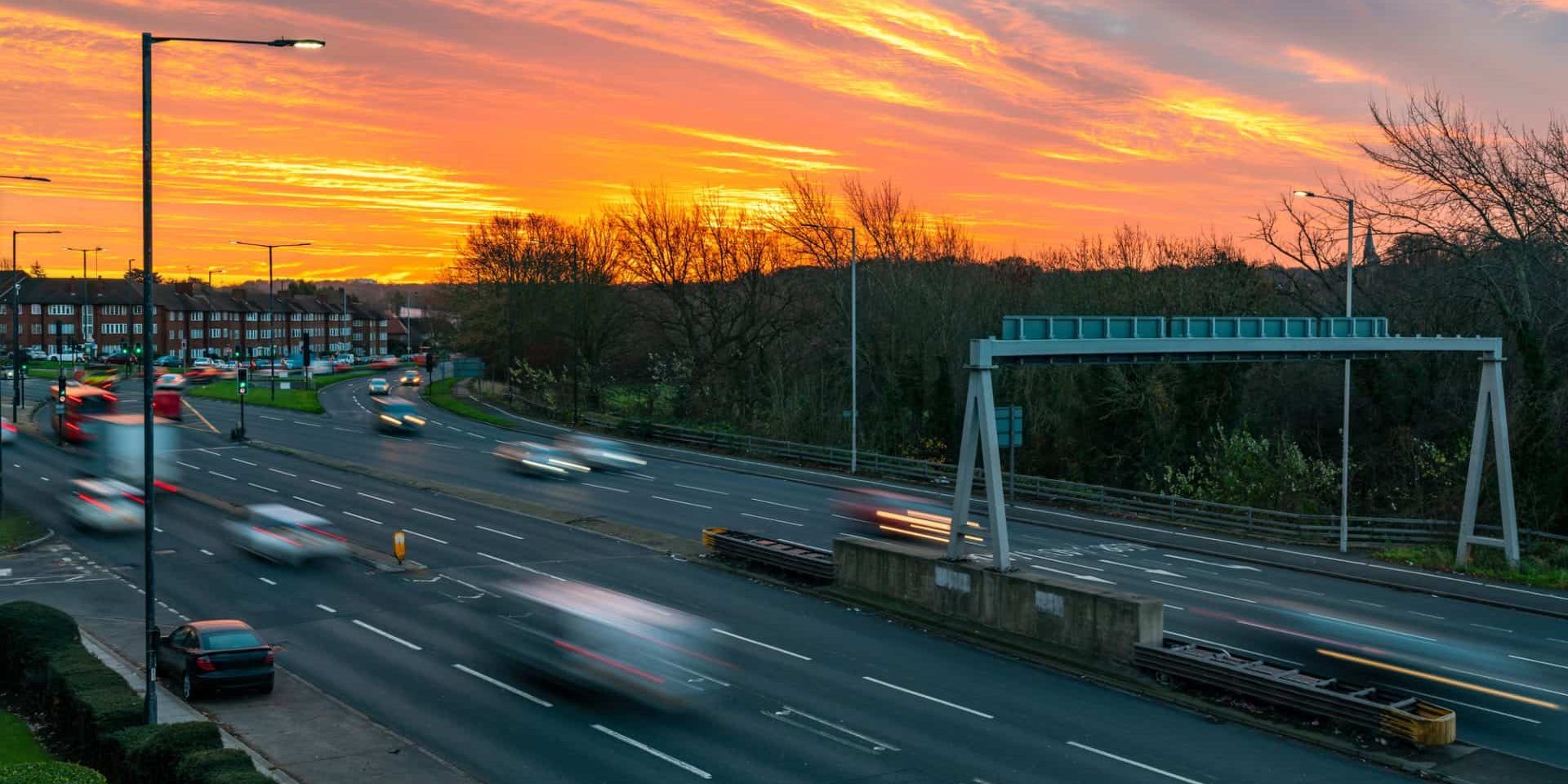

ANPR cameras have become one of the most powerful tools in UK traffic enforcement, and their capabilities have grown significantly in recent years. What many drivers do not realise is that these cameras no longer just spot stolen vehicles or assist in criminal investigations. They now check, in real time, whether every vehicle that passes them carries a valid MOT certificate, current road tax, and active insurance cover.
The technology is linked directly to DVLA, DVSA, and the Motor Insurance Database, meaning a single camera read can trigger enforcement action without any officer being present at the scene. For drivers who assume that compliance checks only happen when they are pulled over, the reality is quite different. Here is how the system works, what it can now detect, and what the consequences are for drivers who fall foul of it.
What Are ANPR Cameras and How Do They Work?
ANPR stands for Automatic Number Plate Recognition. Each camera photographs passing vehicles and uses optical character recognition software to convert the number plate into a readable text string. That string is then run through a series of databases within milliseconds, returning a compliance result before the vehicle has even moved out of the camera’s field of view.
The cameras are mounted at fixed points across the road network: on gantries above motorways, at roundabouts and junctions, on lamp posts in town centres, and on police vehicles for mobile deployment. Each read is time-stamped and location-tagged, creating a log of where a vehicle was and when. That data is retained and can be used to build a picture of a vehicle’s movements over time, not just at a single point.
The system was initially developed for crime detection, helping police to identify stolen cars, trace suspects, and gather intelligence on the movements of vehicles of interest. Over time, its integration with government licensing and compliance databases has turned it into a far broader enforcement tool, one that runs continuously and without the need for human intervention at the point of capture. The camera reads every plate; the database decides whether that plate belongs to a compliant vehicle.
What Can ANPR Cameras Now Check?
Each time a plate is read by a police-operated ANPR camera, it is automatically checked against several databases simultaneously. These include the Police National Computer for crime-related flags, the DVLA’s vehicle excise duty records to confirm whether road tax is current, the Motor Insurance Database to verify whether a live insurance policy covers the vehicle, and DVSA records showing MOT test history and certificate validity.
The check takes place without any officer having to manually input the registration. Results are returned in seconds, and if a vehicle comes back as untaxed, uninsured, or without a valid MOT, an alert is sent to nearby enforcement units or to the relevant agency for follow-up action. In many cases, this means a patrol car can be directed to intercept the vehicle within minutes of the initial camera read.
Crucially, drivers do not need to be stopped at the roadside for enforcement to follow. The DVLA and the Motor Insurers’ Bureau both use ANPR data to pursue registered keepers by post. A camera read on a Monday morning can result in a penalty letter arriving later in the week, with no interaction at the roadside required at all. Many drivers first discover they have been caught only when the notice lands on their doormat.
What Happens If You Are Caught Without MOT, Tax or Insurance?
The penalties differ by offence, but none of them are trivial, and the financial consequences of being caught can stack up quickly if more than one check fails simultaneously.
Driving without valid road tax carries a fine of up to £1,000. The DVLA runs its own continuous enforcement programme using ANPR data and has the power to clamp or remove untaxed vehicles from public roads. Release fees and storage charges apply, adding considerably to the cost of a lapse that could have been avoided with a straightforward online renewal.
An expired MOT means you are driving a vehicle that has not been certified as roadworthy. The standard penalty for this is a fine of up to £1,000. If the vehicle is found to be in a dangerous condition, the fine can rise to £2,500 and three penalty points can be added to your licence. A further complication arises from the relationship between your MOT and your insurance: many policies require the vehicle to be roadworthy and legally compliant, meaning that driving on an expired MOT could void your cover entirely. If you are involved in an accident without valid insurance, the financial and legal consequences are severe.
Driving without insurance is among the most serious outcomes a camera check can produce. Fixed Penalty Notices carry a £300 fine and six penalty points. If the case goes before a court, the fine is unlimited and a driving disqualification is possible. Police have the power to seize the vehicle immediately, and in some cases it can be disposed of if the registered keeper does not claim it and pay the applicable release fees. The Motor Insurers’ Bureau can also pursue the registered keeper for any third-party claims arising from an accident caused by an uninsured driver, meaning the liability can extend well beyond the initial fine.
Where Are ANPR Cameras Located?
There is no official comprehensive public map of all ANPR camera locations. The authorities deliberately do not publish this information in full, since doing so would enable drivers to plan routes that avoid camera coverage, undermining the deterrent effect that widespread deployment is designed to create.
What is known is that fixed cameras are concentrated at key points: motorway entry and exit sliproads, busy A-road junctions, borders between police force areas, town centre approach roads, and locations with a history of vehicle crime. Mobile ANPR units, fitted to police vehicles and static trailers, can be deployed anywhere on the network at short notice, meaning that even roads without fixed cameras are not necessarily free from ANPR coverage.
Average speed camera systems, now widespread in roadworks zones and on certain routes, also collect number plate data. While their primary purpose is speed enforcement, the data gathered can feed into broader compliance checks. The growing use of cameras by petrol stations, supermarkets, and car parks adds further read points, though the rules on how private operators share data with enforcement agencies are more restricted than for police-operated systems.
The Expansion of the ANPR Network in 2026
The Department for Transport has confirmed ongoing investment in expanding the number of ANPR reads across the UK road network as part of wider efforts to improve compliance with vehicle tax, MOT, and insurance requirements. Funding has been directed at both new camera installations and upgrades to existing infrastructure to support higher read accuracy and faster integration with DVLA and DVSA systems.
The scale of non-compliance in the UK makes the case for expansion clear. The Motor Insurers’ Bureau estimates there are around one million uninsured vehicles on UK roads at any given time. DVLA enforcement data shows persistent levels of untaxed vehicles, while DVSA records indicate that large numbers of drivers continue to operate vehicles on expired MOT certificates each year.
A denser camera network leaves fewer gaps in coverage and makes it considerably harder for a non-compliant vehicle to complete even a short journey without being detected. The enforcement consequence is not always immediate, but the data is retained and can be acted upon at any point. Drivers who have been counting on a low volume of cameras to avoid detection are facing a road network where that assumption is becoming increasingly unreliable.
How to Make Sure You Stay on the Right Side of ANPR Cameras
The reassuring aspect of ANPR enforcement is that all three of the main checks the cameras run relate to obligations that are entirely straightforward to manage. None of them require specialist knowledge or significant effort to keep in order.
Road tax can be renewed online through the DVLA website, by phone, or at a Post Office. The DVLA’s free vehicle enquiry service allows any driver to enter a registration number and immediately see the current tax and MOT status of any vehicle registered in the UK. Using it to check your own vehicle before a long journey takes a matter of seconds and removes any uncertainty about your status.
MOT renewals should be booked before the existing certificate expires. Driving to a pre-booked MOT appointment on an expired certificate is legal, but the vehicle must not be used for any other journey before it has passed the test. If you have recently acquired a used vehicle, verify the MOT expiry date independently through the DVLA service, and do not rely solely on what the previous owner has told you.
Insurance must cover the vehicle at all times it is on a public road, including when it is parked and not in use. The Continuous Insurance Enforcement scheme means that declaring a vehicle uninsured is not enough on its own: a Statutory Off Road Notification (SORN) must be filed with the DVLA if the vehicle is genuinely taken off the road permanently. Setting renewal reminders in your calendar, enabling DVLA text alerts for MOT expiry, and keeping your insurer’s contact details current are simple habits that ensure you are never caught out by a camera network that is watching, every day, on every covered road across the UK.
Sources:

Leave a Comment
More in News

How to Remove Moisture From Inside Your Headlight Before It Costs You £500
What Red and Amber Warning Lights Actually Mean (and Which Fail an MOT)

How to De-Ice Your Windscreen Fast Without Cracking It (and Staying Legal)

New Cars Face Euro 7 Rules From 29 November With a £264 Price Rise
What the Traffic Penalty Tribunal’s 33 Percent Success Rate Means for Every Driver
Trending on Motoring Chronicle

What July 1 Brings for Drivers in Virginia, Florida, Indiana and Illinois

2027 Toyota Sequoia Adds Trailhunter Package and 14-Inch Touchscreen

Tesla Recalls 20,349 Model 3 and Model Y Cars Over Illegally Bright Headlights

Watchdog Investigates Parking Firm Fining Drivers for Queuing at Petrol Stations