Five Brake Discs on Familiar Cars Have Only 2 to 3mm to Lose Before Replacement
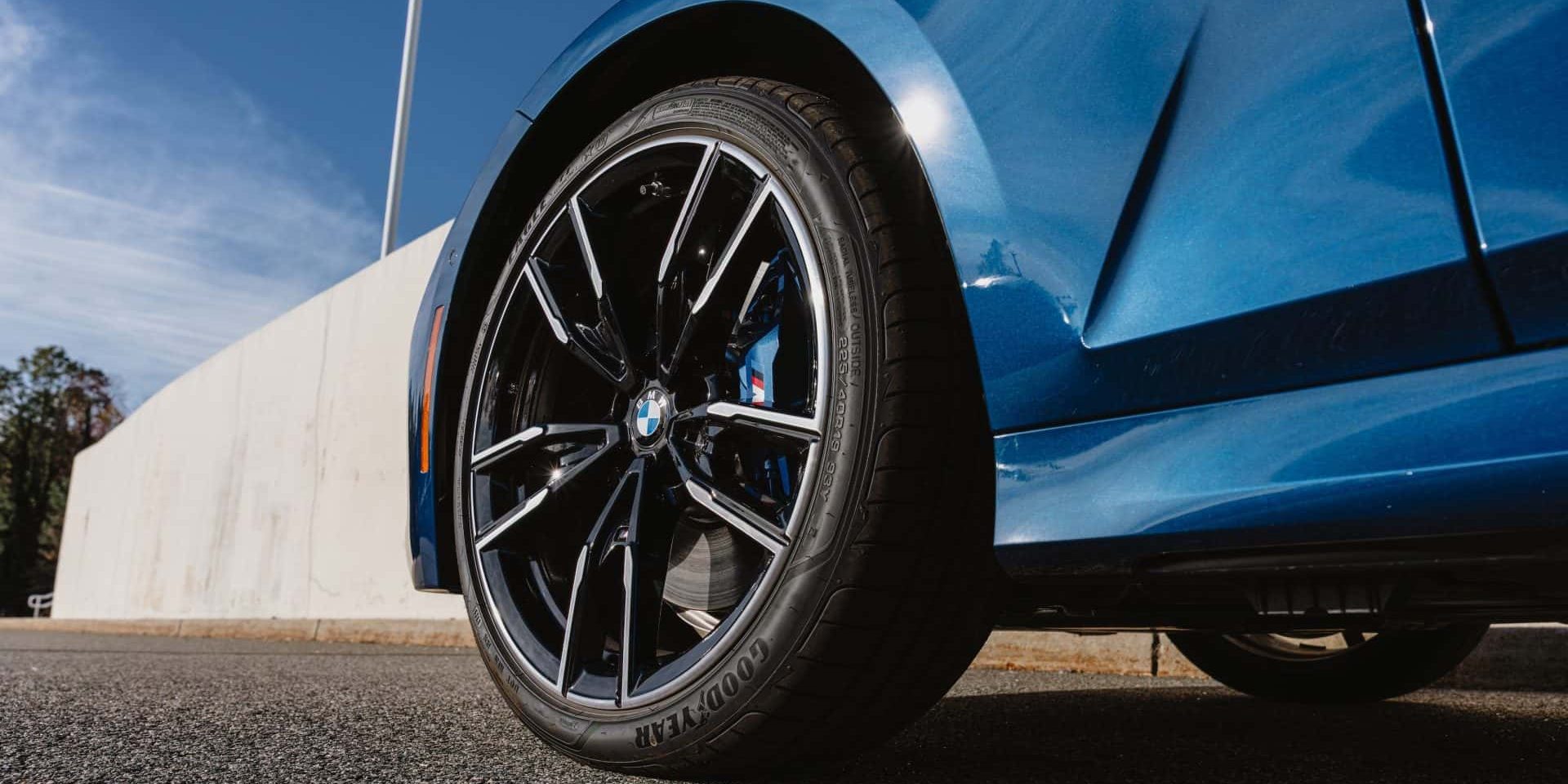

A brake disc is finished when its thickness falls to the minimum stamped on it, and no mileage sets that point. None of the car-maker and parts-maker documents read for this piece gives a distance for a disc, and the parts makers give a measurement in millimetres. On five front discs from one German disc maker, the allowance between new and the stated minimum is 2 to 3mm.
Key takeaways:
- No maker document read for this piece puts a mileage on a brake disc; the parts makers point to a thickness stamped on it.
- On five common front discs the gap between new and the stated minimum is 2 to 3mm.
- An MOT pass sets a lower bar than the maker’s limit, so a disc that passes can already be due.
Why a Mileage Is the Wrong Question
Search results quote a mileage. The maker documents read quote a measurement.
What Makers Publish Instead of Miles
Volkswagen UK’s current warranty terms list brake discs among the fair wear and tear items excluded from cover. Škoda UK’s warranty document, last modified in 2023, names brake discs and drums among components normally subject to wear. The Nissan Care extended warranty booklet, dated 2019 on its pages, excludes discs and drums. All three treat a disc as a consumable and none states a life.
Hella, an automotive parts maker, points to the figure that does exist. The car maker’s minimum thickness defines the wear limit of a disc, in millimetres, and it is stamped on the edge of the disc or on its chamber, where the abbreviation MIN TH stands for minimum thickness. Ferodo, a brake friction maker, points owners to the same figure in the car maker’s recommendations or on the disc’s own edge.
These are warranty terms and parts-maker guidance. Owner handbooks and service schedules were not read, so the finding covers the documents read and nothing wider. A handbook could carry a figure these pages lack. What the documents share is a thickness, which a disc gauge reads.
Why the Quoted Ranges Run So Wide
Roughly 50,000 to 80,000 miles is a range widely repeated online for a set of discs. None of the maker documents read for this piece carries it. A range that wide covers many cars driven in many ways.
Textar, a brake friction maker, shows the spread in a technical manual dated 2008. Assuming the friction product itself works properly, it says, the life of friction material on passenger cars is a statistical factor, and the longest lives run 10 to 15 times the shortest. That covers pads, not discs, but it shows why one mileage cannot fit every car.
The same manual groups the influences on friction material wear into the material itself, the operating conditions and the condition of the brake system. Driving style, traffic, terrain and climate have the greatest influence. It also counts the condition of the disc, minimum thickness included, as a decisive factor in how the brakes function and wear.
What a Disc Actually Has to Lose
One disc maker’s catalogue shows how much room a disc has.
The Gap Between New and Minimum on Five Discs
Zimmermann, a German brake disc maker, lists a new and a minimum thickness for each disc in its catalogue. The five listings read on 22 November 2026 are the standard front disc for one engine each on the Fiesta, Focus, Qashqai and Yaris. All five come from one maker, and larger or heavier cars can differ. The car maker’s own figure, or the one stamped on the disc, governs.
The Fiesta (2017 on, 1.5 TDCi) front disc measures 23mm new against a stated minimum of 21mm. The Focus Turnier (2018 on, 1.0 EcoBoost mild hybrid) runs from 27mm to 25mm, and the Qashqai (2013 on, 1.6 DIG-T) from 26mm to 24mm. The Yaris (2010 on) 1.4 diesel goes from 22mm to 19mm, and the Yaris 1.5 Hybrid from 22mm to 20mm.
Four of the five gaps are 2mm and the Yaris diesel’s is 3mm, an average of 2.2mm. Each is 7.4 to 13.6 per cent of the new thickness, our arithmetic from the listed figures. If both faces wear evenly, which is an assumption, each gives up about 1mm, or 1.5mm on the Yaris diesel. The minimum applies to the whole disc, not to each face.
Hella’s guidance is to check the wear limit with a disc gauge. No source read here converts the gap into a wear rate, so this piece gives no mileage per millimetre. The gauge reading against the stamped figure is the measure the documents point to.
What Spends That Gap Faster Than Miles
Textar’s 2008 technical manual lists these causes of heavy disc wear that apply to a car: unsuitable pad or disc material, hot spots and thermal overloading, too little clearance, a defective calliper or calliper guide, poor ventilation after modifications, debris getting in, and erratic driving with too many brakings at high temperature. Most follow from use and upkeep, which an odometer records poorly.
Ferodo describes how one of them works. Rusted calliper guides can leave a calliper unable to release, so the pads stay in contact, friction is constant and the disc overheats. If overheating reaches around 650 degrees Celsius, the cast iron surface changes structure and braking turns uneven. Pads run down to the backing plate are a further route to a scored disc: grinding means the pads are gone, and the metal then cuts into the disc.
A parked car shows a normal effect. Overnight moisture leaves a thin rust film on the disc face, and overnight rust on the disc rubs off in the first few stops.
The Maker’s Limit and the MOT Pass Mark
Two rulers apply to one disc: the maker’s and the tester’s.
Why a Disc Can Pass an MOT and Still Be at Its Limit
The DVSA’s MOT inspection manual for cars sets no thickness figure for a disc and tells testers: “A brake disc or drum must be significantly worn before you should reject it. Being worn below the manufacturer’s recommended limits is not a reason in itself.” Discs carry four defect lines, Major or Dangerous, and what makes a disc fail the MOT runs through them.
The maker’s rule is stricter and rests on physics. Ferodo, a brake friction maker, says a disc under its minimum thickness cannot dissipate the heat of braking or keep its strength. Its advice: “Change brake discs as soon as they reach the recommended minimum thickness.” The MOT sets a floor and the maker sets an engineering limit; the two agree on a dangerous disc and differ on the disc between.
Ferodo describes a second school of thought, fitting new pads to a disc already at its minimum and replacing both when the pads wear out, and calls it incorrect and unsafe. Its rule for a disc within specification but close to the minimum: replace it when new pads go on. A garage quote for discs on a car that would still pass the MOT can be sound; ask for the measurement against the maker’s figure.
What to Ask for at the Next Pad Change
Ask the garage for two numbers: the disc thickness in millimetres and the maker’s minimum, marked MIN TH. Hella’s repair notes say to replace discs in pairs. Ferodo adds that a disc near the limit is replaced along with the new pads, and pads left to wear to metal turn a pad-only job into a pads-and-discs job.
Two signs justify an earlier look. Vibration through the pedal or steering wheel under braking is one; Ferodo lists six causes of the run-out behind it: overheating, a worn disc, dirt between hub and disc, uneven disc thickness, incorrect fitting and poor-quality discs. Scoring, cracks, distortion or other damage on a disc is the other, and Textar’s manual says to replace the discs.
On the five discs checked, the gap is 2 to 3mm. A reading at the pad change shows how much is left, and a second at the next change shows how fast this car spends it. No document gives that rate in advance.
The MOT can pass a disc the maker says to replace, and a mileage never says which discs those are. The number that decides is a thickness, 2 to 3mm from new on the five discs checked, and a gauge reads it at any pad change. Ask for the figure and compare it with the stamped minimum; those two numbers settle it.
Want more car content? Add us as a preferred source on Google to your favourites list for the best automotive news and analysis on the internet.
If you enjoyed this article, be sure to follow us on Microsoft Start.
Reviewed by Preetam Gadekar

Leave a Comment
More in News

Ambulance Authority Urges Car Seat Checks Before Thanksgiving Drives

California DMV Bars Waymo From All Freeways Citing an Imminent Hazard

2022 Explorers Are Named in 24 Recalls, F-150s in 23, Camrys in Just 1

Honda Recalls 810,592 Civics, CR-Vs, Accords and Acuras Over Takata Airbags
Woman finds note stuck on her windshield. It just may have saved her—and others’—lives: ‘That was somebody’s dad’
Trending on Motoring Chronicle

72.9 Million Thanksgiving Drivers Face Jams From 2 P.M. on Tuesday, Nov. 24

The beginning of a new era: fully electric BMW M models set unrivalled high-performance standards

Plate Inflation: April’s VED Hike Pushes Some Drivers’ Road Tax Past £790 A Year

Private Parking Tickets Set to Hit a Record 17 Million as Drivers Confuse the Charges