
Feds Offer $100 Million in Congestion Grants, With Applications Due Dec. 17

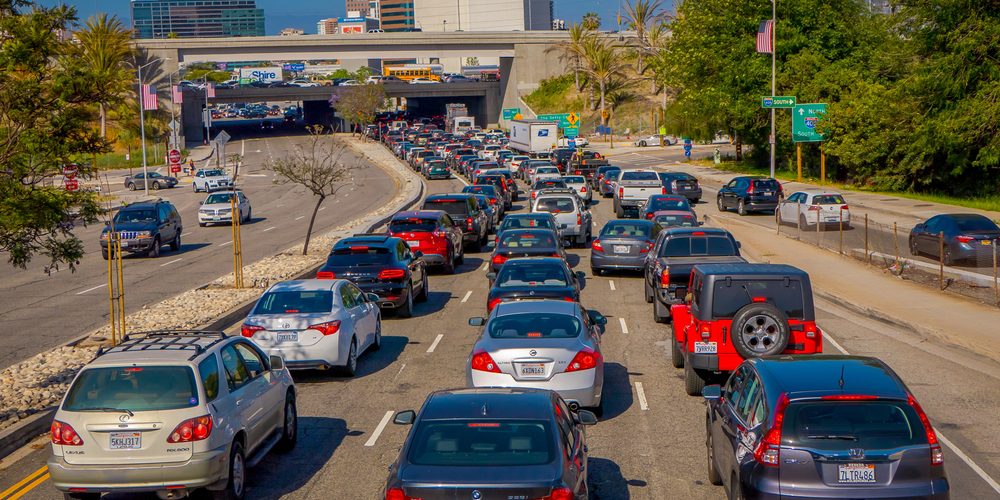
- The Federal Highway Administration (FHWA) is offering $100 million to metro areas above 1 million people for projects that cut highway congestion, with applications due Dec. 17, 2026.
- Eligible projects include traffic monitoring systems, HOV lanes, parking pricing, commuter buses and vans, and under federal law also congestion pricing and toll lanes.
- Only a state, a regional planning body, a city or a municipality can apply, so nothing about your commute or your tolls changes until one of them wins money and acts.
What $100 Million Could Change on Your Commute
The Federal Highway Administration announced on Nov. 18, 2026 that it has $100 million for projects that reduce congestion in the nation’s largest urban regions. Applications close Dec. 17, 2026, and the agency asks applicants to file early. The money flows through the Congestion Relief Grant Program, and only areas with a population above 1 million qualify.
You cannot apply as a driver. A winning project reaches you as a new bus line, a smarter signal system, a priced parking zone or, in some places, a toll. What you pay depends on what your state or regional agency asks for and what the federal government approves.
“Gridlock is costing Americans time with their families and money from their wallets,” said FHWA Administrator Sean McMaster. “This program brings much-needed relief to our most congested metropolitan areas. Alongside building new capacity, the program uses cutting-edge technology to maximize the efficiency of our highways.”
The announcement ties the grants to the administration’s Freedom to Drive initiative, which aims to save families time and money by getting more out of existing road capacity and fast-tracking projects at chokepoints. Congestion Relief Program funds target the same goal through demand management and road or parking pricing.
What the Grant Pays For
FHWA’s announcement lists three kinds of projects. The first is a combined system that watches traffic and manages congestion as it builds. The second is HOV lanes, meaning high occupancy vehicle lanes reserved for cars with more than one rider, along with parking pricing programs. The third is everyday transit: buses and vans for commuters, express routes, paratransit, on-demand microtransit and account-based payment systems.
The federal fact sheet for the program goes further and reproduces the list written into the law. Eligible work covers planning, design, implementation and construction, and includes four categories under 23 U.S.C. 129(d)(4):
A congestion management system that ties several tools together. A system that runs or enforces HOV toll lanes, cordon pricing, parking pricing or congestion pricing. Mobility services, including account-based payment systems, commuter buses and vans, express operations, paratransit and on-demand microtransit. And incentive programs that reward carpooling, use of nonhighway travel modes at peak times, or travel at off-peak hours.
That last category is the one a commuter feels most directly. An incentive to carpool or to leave at off-peak hours is an eligible use of the grant, as is the technology that charges a price for driving into a priced zone.
Where Tolls and Pricing Fit In
The program does not impose tolls. It pays a share of what a state or city chooses to build, and the law gives the federal government a say over the most sensitive piece. Under 23 U.S.C. 129(d)(6), a funded project can charge tolls on an Interstate highway once it meets the law’s listed requirements, yet the Secretary of Transportation cannot approve that in more than 10 urbanized areas.
That cap limits how far this program can spread Interstate tolling: no more than 10 urbanized areas nationwide. A toll, a cordon charge or a parking price appears only if a local agency proposes it and wins an award.
Road pricing already exists in some places. Manhattan’s congestion toll rises in 2028, when the $9 peak E-ZPass toll for cars entering the zone becomes $12. These grants could help pay for similar systems elsewhere, but only where a qualifying area applies for one.
The law adds a protection for lower-income drivers. Each project must study, if appropriate, the likely effects on low-income drivers, and it can include steps to offset any financial harm to them. The fact sheet leaves the details to the project, so a discount or credit program is a question to put to your local agency when a plan goes public. Drivers already facing higher road charges, covered in our look at why 8 states are raising tolls, will want to see that review.
Who Can Apply, How Much Is at Stake and How Big the Bets Are
Four kinds of applicant qualify: a state, a metropolitan planning organization (the regional body that plans transportation spending), a city or a municipality. Each must run its project inside an urbanized area of more than 1,000,000 residents. FHWA must give priority to areas with a high degree of recurrent congestion, meaning the daily rush hour jams rather than one-off events.
Three limits in the statute shape what the $100 million buys. Grants must be at least $10,000,000. The federal share cannot exceed 80 percent of total project cost. And the funding is contract authority drawn on the Highway Trust Fund’s Highway Account.
The arithmetic is simple. At the $10 million floor, $100 million funds at most 10 awards if every dollar goes out as grants at that size. A $10 million grant covering the full 80 percent federal share backs a $12.5 million project and leaves $2.5 million for the local side. Larger awards mean fewer winners.
The program is not new. FHWA opened its first round on Feb. 21, 2024, calling it a $250 million program over five years, with $150 million of it in that first round, covering fiscal 2022 through fiscal 2024. The Federal Highway Administrator at the time, Shailen Bhatt, described the aim this way.
“Traffic congestion without multimodal options is a major problem throughout America, especially in large metro areas, significantly limiting mobility and reducing clean air quality in our cities — while diminishing productivity nationwide because of higher costs when people and goods are delayed in traffic,” said Federal Highway Administrator Shailen Bhatt. “With this program, we’re aiming to tackle congestion and provide a higher standard of living and greater multimodal options and working for the people in populated areas.”
A Federal Register notice from April 10, 2026 gives a sense of the field. FHWA expects an average of 20 applicants a year, estimates 24 hours of work per application, and describes a one-time application for fiscal year 2024 to 2026 program funds, followed by agreement execution, reimbursement and semiannual reporting. Twenty applicants chasing a possible 10 awards at most would leave at least half of them without money, if FHWA’s estimate holds.
What You Can Do Now
Start with the agency that would apply. In a metro area that is the state department of transportation, the metropolitan planning organization or the city. Ask whether it plans to file by Dec. 17 and, if so, what the project would change on your route.
Look for three things in any project: whether it adds a price to a road or a parking space, who pays it and when, and what relief exists for lower-income drivers. The law calls for the low-income study where appropriate, so you can ask to see it. If the answer is that no study exists, that is worth raising at the next public meeting, as the statute expects one wherever it fits the project.
Watch for public meetings. Any pricing plan would come from the local agency, so its meetings are the place to ask about discounts, exemptions and where the revenue goes. If your area is below the 1 million mark, this program does not apply to projects there.
For anyone who drives in a large metro area, the next milestone is the filing deadline on Dec. 17. FHWA has not stated a selection date in its announcement, so winning projects, and any new tolls or charges attached to them, are not yet known.
Want more car content? Add us as a preferred source on Google to your favourites list for the best automotive news and analysis on the internet.
If you enjoyed this article, be sure to follow us on Microsoft Start.
Sources
- FHWA: Trump’s Transportation Department to Invest $100 Million to Tackle Congestion, Deliver Safer U.S. Roads
- FHWA: Congestion Relief Program fact sheet
- FHWA: Biden-Harris Administration Opens First Round of Applications for $250 Million to Reduce Traffic in Urban Areas
- Federal Register: Agency Information Collection Activities, Request for Comments for a New Information Collection, Congestion Relief Program (Docket FHWA-2026-0464)
Reviewed by Preetam Gadekar

Leave a Comment
More in News

Flooded Florida Cars Get a Flood Title Only If Declared a Total Loss

New York Insurers Need State Approval for Any Auto Rate Hike From Nov. 27

‘I ended up calling GMC and asking’: Woman says her GMC truck has a factory malfunction. Then she tries to use the warranty

What HMRC’s Fuel Rates Rising Up to 3p a Mile Mean for Company Drivers

Every Repeat Drink Driver Could Face an Alcolock as RAC Cites 67% Fewer Re-Arrests
Trending on Motoring Chronicle

Why Every Used Car Buyer Should Check Which Models Cost £44,401 to Repair
Georgia Extends Its Gas Tax Pause to Nov. 30 as North Carolina Polices Pumps

The Tacoma Makes History … Again!

Why Motorway Services Charge Drivers £9.41 More for a Tank of Fuel
