
GM’s New 6.6L V8 Makes 481 Horsepower for 2027 Silverado and Sierra


- GM’s new 6.6L V8 produces 481 horsepower and 501 lb.-ft. of torque, making it the most powerful naturally aspirated V8 in the full-size truck class.
- A second new engine, the 5.7L V8, makes 402 horsepower and helps the Silverado 1500 reach a class-leading 13,700-pound tow rating.
- Both engines arrive in the redesigned 2027 Chevrolet Silverado 1500 and GMC Sierra 1500 later this year, joining a four-engine lineup that includes a turbo four-cylinder and a diesel.
The Small Block Gets Bigger Again
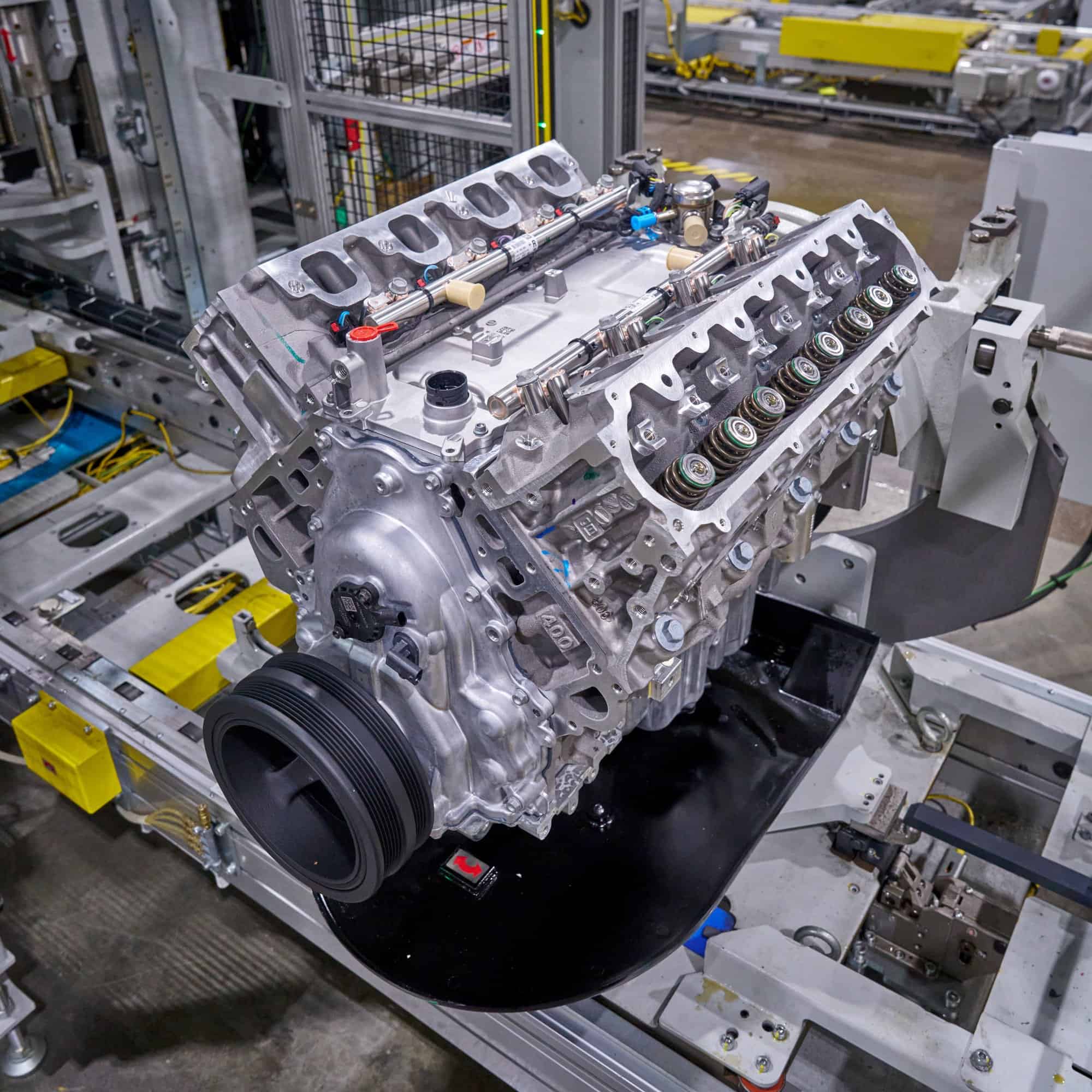
General Motors has built more than 100 million Small Block V8 engines dating back to 1955, and the next two carry the biggest displacement jump the architecture has seen in years. The new L76 5.7L and L78 6.6L V8s power the redesigned Chevrolet Silverado 1500 and GMC Sierra 1500, and both bring back cubic-inch figures GM buyers haven’t seen in decades: 350 for the 5.7L, 400 for the 6.6L.
GM engineers got there by stretching piston stroke 6mm, raising the compression ratio, widening the throttle body, and fitting new intake manifolds tuned for the added airflow. The result: the 5.7L makes 402 horsepower and 428 lb.-ft. of torque, up from the outgoing 5.3L’s output, and the 6.6L makes 481 horsepower and 501 lb.-ft., a figure that beats every other naturally aspirated V8 in the segment.
What It Means for Towing and Payload
Paired with the 5.7L V8, the Silverado 1500 reaches a maximum tow rating of 13,700 pounds and the Sierra 1500 reaches 13,500 pounds, both class-leading figures. The 6.6L carries more horsepower but a lower tow rating, at 9,700 pounds for Silverado and 9,400 pounds for Sierra, with payload up to 1,510 pounds; GM tuned it more for payload and throttle response than for outright towing.
Both V8s pair with a 10-speed automatic transmission. A new fuel system combines direct and port injection, and a redesigned oil pump and cooler target more consistent oil pressure under load, a change owners will notice most when towing heavy trailers in hot weather or on steep grades.
Not the Only Engine Option
The two new V8s join an Enhanced TurboMax four-cylinder, now rated at 350 horsepower and 455 lb.-ft. of torque after GM added 40 horsepower and 25 lb.-ft. over the outgoing version, and a carryover 3.0-liter Duramax turbo-diesel rated at 305 horsepower and 495 lb.-ft. A new 34-gallon fuel tank pairs with the diesel for a highway range GM estimates above 900 miles.
That four-engine spread gives Silverado and Sierra buyers a wider set of choices than most rivals offer: a turbo four for buyers who want lower running costs, two V8s split between towing and payload strength, and a diesel for long-haul range. GM has not released MSRP figures for the new engines; pricing will follow closer to the trucks’ on-sale date later this year.
Built in Flint, Backed by Testing
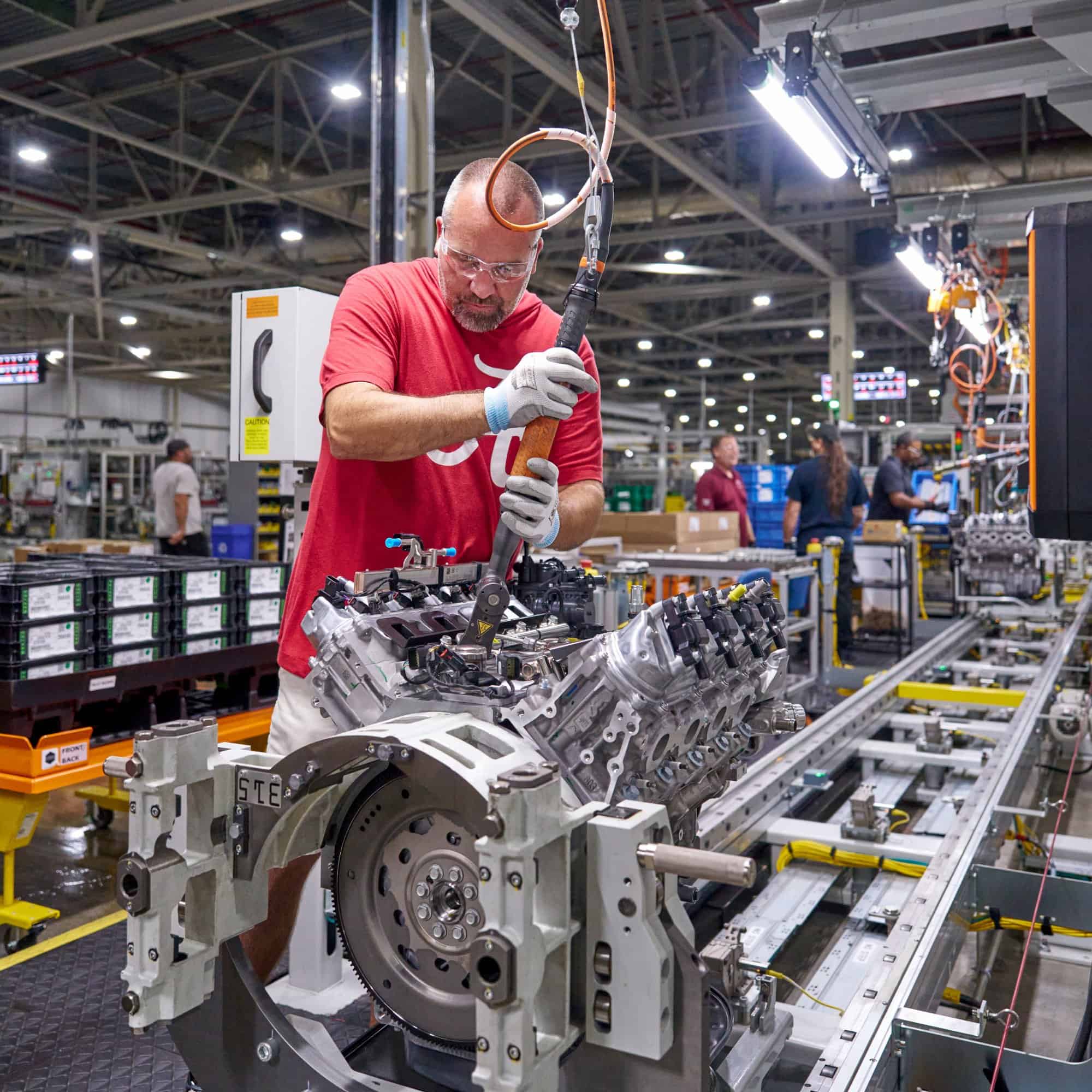
Initial production of the L76 and L78 runs through GM’s Flint Engine Operations plant in Michigan, with Tonawanda Propulsion in New York and St. Catharines Propulsion in Ontario adding capacity behind an announced $9 billion North American manufacturing investment. GM says the engines have logged more than 1.5 million miles of real-world validation testing ahead of the redesigned trucks’ launch.
What This Means for Buyers
Full-size trucks live and die on towing and payload numbers, and GM’s engineering choices here read as a direct response to what Ford and Ram offer on the F-150 and 1500. A 13,700-pound tow rating on the 5.7L-equipped Silverado puts real distance between it and rivals whose base V8s tap out several thousand pounds lower. Buyers who tow campers, boats, or car trailers on weekends stand to notice that gap most directly.
The four-engine spread also means the choice isn’t just about horsepower. A buyer who mostly commutes and tows occasionally will likely find the turbo four-cylinder’s 350 horsepower and lower running costs a better fit than either V8. Someone hauling a heavy trailer every week gets more use out of the 5.7L’s tow rating than the 6.6L’s extra horsepower. GM has not confirmed fuel economy figures for either new V8.
How the Numbers Compare to the Outgoing V8s
The jump from the current 5.3L to the new 5.7L, and from the 6.2L to the new 6.6L, marks the first displacement increase for GM’s light-duty V8 lineup in more than a decade. The extra 0.4 liters on each engine came from a longer piston stroke rather than a wider bore, a choice that let GM keep the same 4.40-inch bore spacing that has defined the Small Block from the original 1955 engine onward. That shared architecture means the new engines can draw on decades of aftermarket parts and service knowledge, a real advantage for owners who keep trucks well past the warranty period.
Chevrolet Performance and GM Powered Solutions, the brand’s crate-engine and marine divisions, are expected to eventually offer versions of the L76 and L78 for engine swaps and repowers, following the pattern set by earlier Small Block generations. Neither division has announced specific crate-engine plans for the sixth-generation V8s.

Leave a Comment
More in News

2027 Lexus RX Priced from $55,450 with Four Powertrain Choices

2027 Subaru Forester Holds $29,995 Starting Price, Adds Wilderness Hybrid

What Connecticut’s New Highway Safety Law Means for Your Phone and Your Wallet

How Maryland’s New Car Law Lets Dealers Legally Advertise Below Sticker Price
Why Gas Prices Have Climbed 16 Cents in a Week to Hit $4.43 a Gallon
Trending on Motoring Chronicle

Nine London Boroughs Roll Out No-Flash Radar Speed Cameras That Catch Drivers in Both Directions

Why Public EV Charging Now Costs Up to 79p per kWh as Prices Climb Again

Honda Recalls 880,514 Pilots, Ridgelines and Acura MDXs Over Rust That Can Break the Rear Suspension
Why Is My Fuel Economy Getting Worse?
