More Than Half of Glasgow’s Clean Air Zone Fines Are Overturned on Appeal
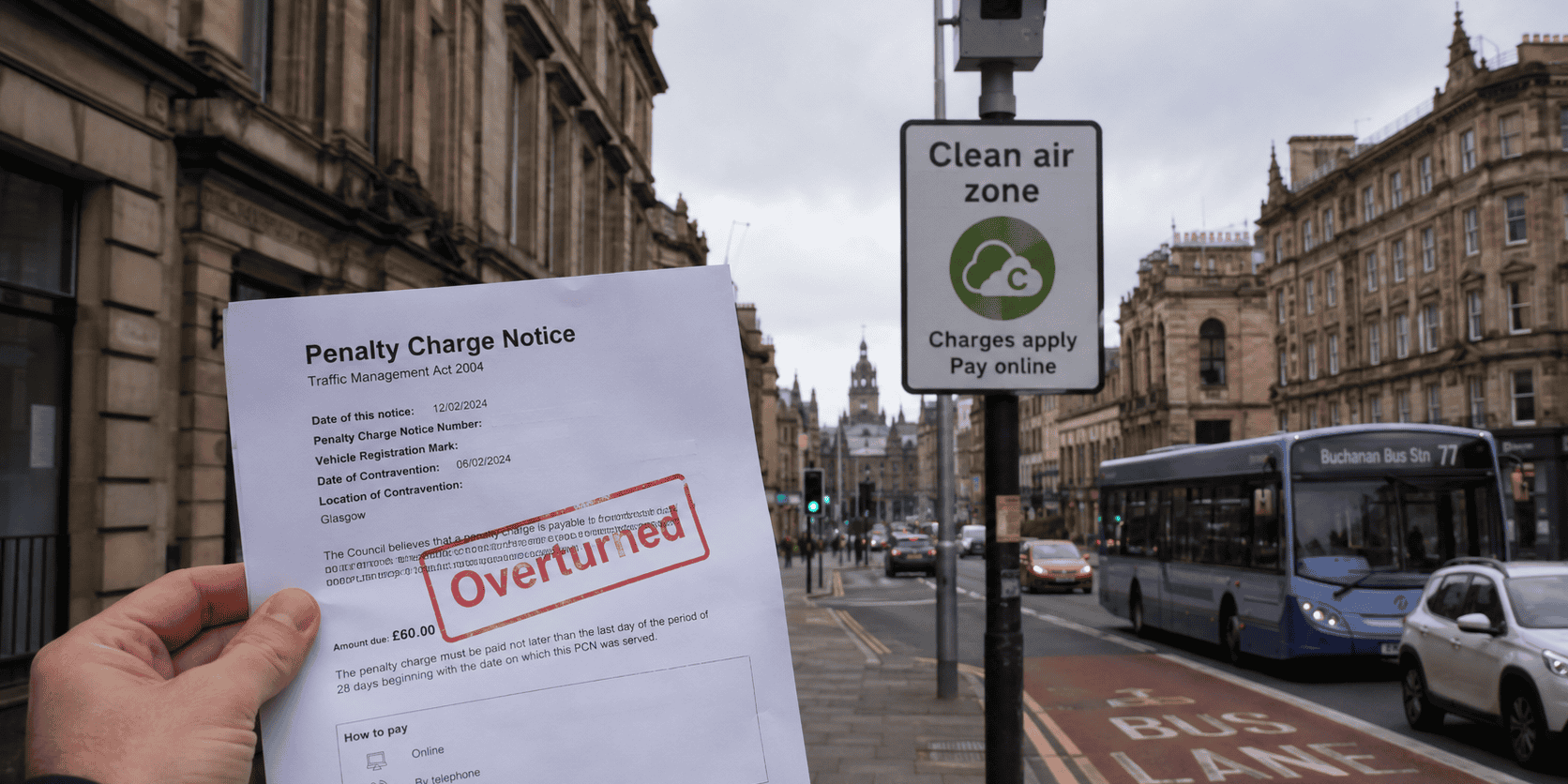
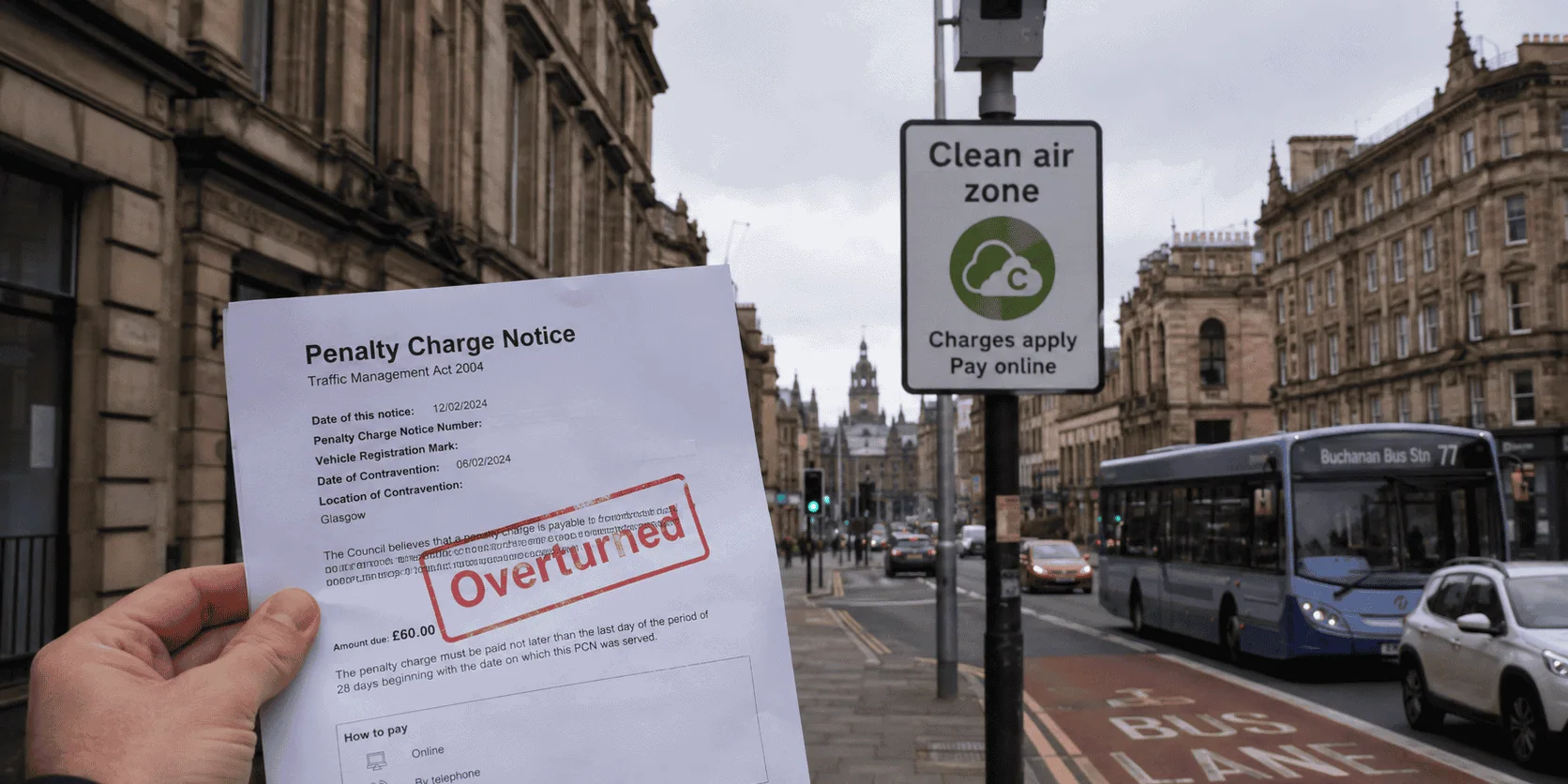
Glasgow City Council’s own enforcement figures show that more than half of the drivers who formally appealed a Low Emission Zone fine in the scheme’s second year won their case. Of 4,468 appeals lodged, 2,383 succeeded, a 53.3 per cent success rate on a penalty that starts at £60 and doubles with every repeat breach within 90 days.
The council still issued 29,838 penalty charge notices in that second year, down from more than 38,000 in the LEZ’s first twelve months, and collected £764,580 from drivers who paid rather than appealed. The question the figures raise is uncomfortable: if the council gets more than half of contested cases wrong, how many of the drivers who simply paid up, rather than going through a formal appeal, were fined by mistake too?
How Glasgow’s LEZ Actually Works
Glasgow’s Low Emission Zone came into force on 1 June 2023, covering a square mile of the city centre between the River Clyde and the M8. Any vehicle that does not meet the zone’s emissions standard is automatically fined by camera, with no option to pay a daily charge to enter, unlike London’s ULEZ. Blue Badge holders and a small number of other categories are exempt, but everyone else needs a compliant vehicle or a route around the zone.
Scotland’s four Low Emission Zones, in Glasgow, Edinburgh, Aberdeen and Dundee, all operate on the same camera-and-fine model. Get flagged once and the penalty is £60, reduced to £30 if paid within 14 days. Get flagged again within 90 days and it doubles, up to a maximum of £480 for cars and light vans.
Why So Many Fines Do Not Survive an Appeal
An automated camera system checks a number plate against a national vehicle emissions database and issues a penalty if no match for compliance is found. That process breaks down in ordinary, predictable ways: a vehicle sold or scrapped but not updated on the database, a genuine exemption not correctly logged, a temporary permit issued but not synced in time, or a simple camera misread of a number plate obscured by weather, mud or a trailer.
None of those errors are exotic edge cases. They are the everyday reasons more than half of Glasgow’s appellants won their case in year two of the scheme, and they are the same reasons that ought to worry any driver who assumes a camera fine is automatically correct.
The Gap Between What Councils Collect and What They Should
Glasgow’s LEZ generated £764,580 from paid fines in its second year alone, on top of whatever was collected in year one when penalty volumes were even higher. Money from unsuccessful appeals and unpaid fines pursued through further enforcement adds to that total. None of it is refunded automatically to drivers who paid a fine they might have successfully challenged, as refunds only happen if a driver actually lodges an appeal.
That creates a lopsided incentive. The council’s enforcement costs are covered whether or not a given fine was correctly issued, while the burden of proving an error falls entirely on the driver, who must find the penalty notice, gather evidence and lodge a formal challenge within a set deadline or lose the right to contest it at all.
Not Just a Glasgow Problem
Edinburgh, Aberdeen and Dundee run near-identical camera enforced zones under the same national framework, and all three have published their own rising and falling penalty totals over the past two years. Edinburgh’s transport convener has attributed recent increases in fines partly to tourist traffic unfamiliar with the zone, while Transport Scotland says breach numbers across all four cities remain below the levels recorded when each scheme first launched. None of the four councils has published an appeal success rate as detailed as Glasgow’s, which makes Glasgow’s 53.3 per cent figure the clearest public evidence so far of how often camera-issued fines do not hold up once a human actually reviews them.
Opposition politicians have seized on the figures. Scottish Conservative transport spokesperson Sue Webber has argued that low emission zone fines have become “another tax on struggling motorists,” pointing out that drivers who cannot afford to replace an older vehicle have no option to pay a daily charge to enter, unlike London’s ULEZ. Councils counter that the schemes are already delivering measurable air quality gains. Glasgow City Council has reported a fall in nitrogen dioxide levels of around 20 per cent in parts of the city centre in the years after the LEZ came into force, even as pollution remains high on the busiest streets.
How the Appeal Process Actually Works
A driver who receives a Glasgow LEZ penalty charge notice has 28 days to pay at the reduced rate of £30, or to lodge a formal representation disputing the fine before that reduced rate expires. A representation must set out the specific grounds for the challenge, such as a database error, a valid exemption, or a mechanical fault with the camera or number plate recognition system, and should include supporting evidence such as a receipt, a permit certificate, or photographs of the vehicle. The council must respond in writing, either accepting the representation and cancelling the fine, or rejecting it and confirming the driver’s right to escalate the case further. Only drivers who go through this formal process, rather than simply paying or ignoring the notice, ever get their case reviewed by a human, which is precisely why the 53.3 per cent success rate among the 4,468 drivers who did appeal raises the question of how many of the tens of thousands who paid without appealing had an equally strong case they never got the chance to make. Consumer advice groups routinely tell drivers that a camera-issued fine is not automatically correct just for arriving on official letterhead, and Glasgow’s own figures back that advice up more clearly than almost any other UK enforcement scheme currently publishing its appeal data. The lesson for drivers anywhere in Scotland is the same regardless of which of the four zones issued the notice: a penalty generated by an automated camera system is a starting position for the council, not a final verdict, and only a driver who formally challenges it ever finds out which one it actually is.
What Happens If You Ignore It
Unpaid Glasgow LEZ fines escalate in the same way as other penalty charge notices. An unpaid or unsuccessfully appealed fine can be increased, referred to a sheriff officer for enforcement, and recovered through the courts, adding further costs on top of the original £60 to £480 penalty. Drivers who ignore a fine in the belief it is a mistake, rather than formally appealing it, risk turning a winnable case into a much larger bill.
What You Can Do
- Check your vehicle against Transport Scotland’s official vehicle checker at vehicleemissionscheck.service.gov.scot before assuming a fine is correct; database mismatches are one of the most common reasons appeals succeed.
- If you hold an exemption, such as a Blue Badge, or a time-limited exemption certificate, confirm it was logged with the council before the date of the alleged breach, not just applied for.
- Appeal in writing within the deadline stated on the penalty notice rather than paying first. Paying can be treated as accepting the fine, while an appeal keeps your case open and costs nothing to lodge.
- Request the camera image used to issue the fine, which the council must be able to produce on request. A blurred, mud-obscured or misread plate is grounds for a direct challenge to the council before the case goes any further, and a clear image that plainly shows a compliant vehicle is often enough on its own to have a fine cancelled.
- If the council rejects your appeal, Scotland’s LEZ scheme allows a further review through an independent process; check the specific route listed on your rejection letter, as it differs from the Traffic Penalty Tribunal used in England and Wales.
Sources:
- https://www.glasgow.gov.uk/article/5719/Pay-Appeal-a-LEZ-Penalty-Charge
- https://www.mygov.scot/low-emission-zones/fines
- https://vehicleemissionscheck.service.gov.scot/

Leave a Comment
More in News

What Happens Next in the Fight Over Mandatory Eye Tests for Over-70s
Honest Drivers Are Paying for a Billion Pound Insurance Fraud Bill
Why Learner Drivers in Some Postcodes Are Far More Likely to Fail
DVSA Photo Checks Begin at 2,500 More Garages to Catch Fake MOT Passes
Why Drivers Are Ditching Claims Firms to Fight Insurers Themselves
Trending on Motoring Chronicle

Driving Test Waits Range From 5 to 24 Weeks in New DVSA Centre Data

2026 INFINITI QX80: Cutting-edge flagship boldly elevated with first-ever SPORT grade [Photo Gallery]
New Driving Test Booking Rule From 9 June Limits Where Learners Can Move Tests

Hybrid high performer: the new Audi RS 5