
Honest Drivers Are Paying for a Billion Pound Insurance Fraud Bill


Somewhere in RM9, the postcode covering Barking and Dagenham, a driver is about to be waved into the wrong lane on a busy roundabout by another car that has no intention of giving way. The collision that follows will be blamed entirely on the innocent driver, and the fraudsters staging it will walk away with a payout funded by every other motorist’s premium.
The Insurance Fraud Bureau has analysed 3.3 million motor insurance claims and published, for the first time in this detail, the specific postcodes where fraud is most concentrated across England, Scotland, Wales and Northern Ireland. Barking and Dagenham tops the English list, followed by Birmingham and Central London, with Bradford, Manchester, Oldham and Halifax all featuring heavily in the top 30.
Where the fraud is happening
The IFB’s England list runs RM9 (Barking and Dagenham), B10, EC1 (Central London), B24, BD7, B8, BD8, BD9, BD3 and B18 as its top ten postcodes for motor insurance fraud, with Birmingham postcodes appearing eleven times in the top 30 alone. In Scotland the worst-affected areas are PH5 (Crieff), G23 (Glasgow) and IV55 (Isle of Skye). Wales is led by LL67 (Cemaes Bay) and SY18 (Llanidloes), while Northern Ireland’s top postcode is BT29, covering Crumlin.
The concentration of hotspots in specific inner-city postcodes is not an accident. Areas with dense traffic, frequent stop-start junctions and high volumes of short local trips give fraudsters more opportunities to engineer a plausible-looking collision, while busy roundabouts and unfamiliar one-way systems make it easier to convince an innocent driver, and later an insurer, that the crash was their fault.
Cases of detected fraud are rising sharply. The ABI reported a 12% increase in fraudulent claims worth more than £1 billion iqan a single year, and the IFB’s CheatLine received more than 9,400 reports from members of the public last year, the highest annual figure on record. Every one of those fraudulent payouts gets recovered from honest policyholders through higher premiums, at a time when the average motor premium already sits close to £560.
The new scams to watch for
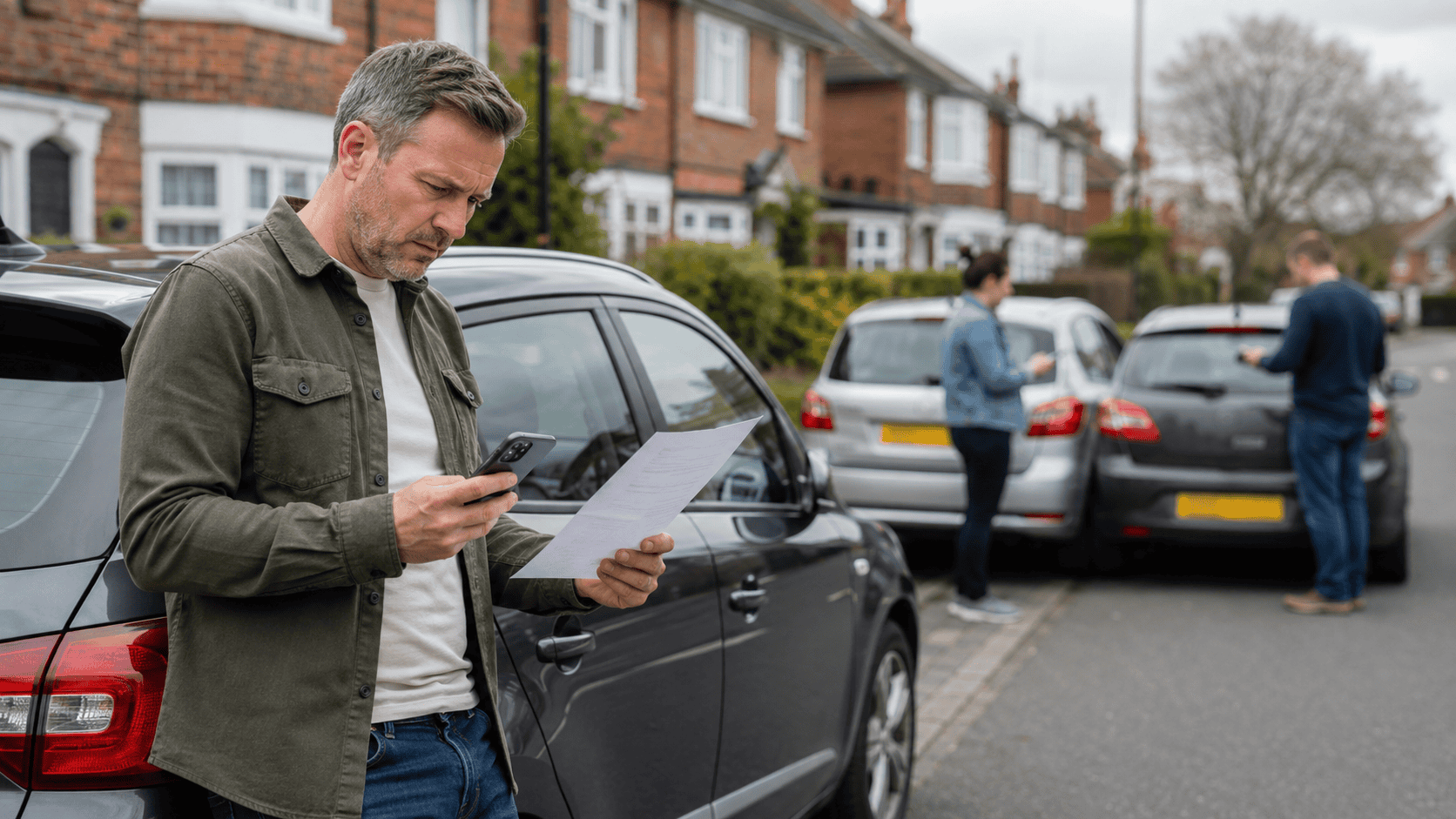
Deliberate crashes remain the biggest single problem. Sudden, unnecessary braking to force the car behind into a collision is still the most common trick, but the IFB has identified more specific local patterns. Roundabout traps are a growing issue in Dagenham, where fraudsters deliberately move into the wrong lane at busy junctions to force a collision. In Birmingham, sideroad setups see fraudsters wave genuine drivers out of side roads without right of way, then steer into the side of them, with a cluster of reports near restaurants and nightlife venues in the West Midlands. In London and the Home Counties, moped and motorbike riders have been recorded driving deliberately into oncoming traffic with an accomplice on hand to blame the other driver for the collision.
Warning signs include a following car with disabled brake lights or damage that looks older than the crash it is supposedly linked to, passengers who exaggerate injuries far beyond what the collision would cause, and other drivers who hand over pre-written insurance details before you have even asked for them. Anyone caught up in a suspicious collision should photograph the scene, all vehicles involved and any passengers, before agreeing to exchange details verbally.
Staged collisions are not limited to busy cities. Rural crash for cash rings have also been uncovered on quiet A-roads, where a car will brake sharply for no apparent reason on a stretch with no junction, camera or witness nearby, banking on the following driver being unable to prove otherwise months later at a tribunal.
Why these particular postcodes keep reappearing
Insurers and the IFB both note that hotspot rankings tend to persist year on year once a postcode gains a reputation among organised fraud rings: the same road layouts, junctions and CCTV blind spots that made one collision profitable remain in place for the next one. Breaking that pattern usually needs a combination of targeted policing, better street lighting and camera coverage at known trouble spots, and insurers refusing to settle small claims quickly without at least a basic check against known fraud indicators.
How your own details get stolen
Identity theft linked to insurance fraud has nearly doubled in two years, and the tactics have moved online. New drivers celebrating a theory test pass on social media, sometimes posted proudly by a parent, have had their details lifted and used to generate bogus claims in their name. Fake delivery driver job adverts have been used to harvest driving licence and insurance details from jobseekers who believe they have landed a role. Anyone who has already been targeted in a crash for cash scam, or bought a policy through an unauthorised “ghost broker,” could find their information has already been compromised and used again elsewhere.
Many victims only learn of the fraud months later, when a letter arrives about a claim they never made or their renewal premium jumps for no obvious reason. By that point, unpicking the damage to a credit file or a no-claims history can take weeks of calls and paperwork, and insurers will not always volunteer every detail until a formal complaint is raised.
How insurers try to stop the losses spreading
Insurers are not standing still either. Several large motor insurers have started sharing suspicious claim patterns with the IFB in near real time rather than waiting for a quarterly review, and a number now flag policies where a new driver has posted a theory test pass publicly on social media within days of taking out cover, treating it as an early warning sign rather than proof of anything on its own. None of this replaces vigilance from the public, as fraudsters adapt their tactics as fast as detection improves.
How to protect yourself and report it
Jon Radford, head of intelligence, investigations and data services at the IFB, said fraudsters’ tactics “are evolving fast” and that revealing the UK’s fraud hotspots is intended to help protect people most at risk, working closely with police and insurers to stop the activity before it spreads further.
Drivers in or near a hotspot postcode should stay extra alert at roundabouts and junctions, keep a dashcam running and save footage from the moment of any collision, and avoid sharing theory test certificates, licence numbers or insurance documents on social media or with unverified job adverts. Anyone who suspects they have witnessed or been targeted by a crash for cash scam can report it free and in confidence to the IFB’s CheatLine on 0800 422 0421, run in partnership with Crimestoppers. Mark Allen, head of fraud and financial crime at the ABI, said insurers are “stepping up intelligence-sharing and deploying new tools” to catch scams before they cause harm, but stressed that every report from the public helps protect communities and hold criminals to account.
Being caught making a fraudulent claim, or knowingly helping stage one, is a criminal offence that can carry a prison sentence as well as a lifetime record with insurers that makes future cover far more expensive to find. For genuine victims, the message from the IFB and ABI is the opposite: report early, keep evidence and do not assume a suspicious collision is too small to flag.
Sources:
- Insurance Edge: IFB reveals UK’s top car insurance fraud hotspots
- ABI: motor premiums remain stable but cost of repairs still high
- Motoring Chronicle: some insurers have raised car insurance prices by nearly 12 percent this year
- Motoring Chronicle: one in 11 used cars sold in Britain has a faked mileage

Leave a Comment
More in News

Why Drivers Over 70 Pay £480 for Car Insurance While Everyone Else’s Bills Fall

Gas Prices Hit a Record High for October as California Tops $6.34 a Gallon

How Ford’s Recall of 41,748 Trucks and SUVs Could Leave Your Headlights Dark

Why 265,512 Ram ProMaster Vans Could Lose Power Steering Without Warning

Volkswagen Recalls 22,524 ID.4 EVs Over Battery Fire Risk, Caps Charging at 80%
Trending on Motoring Chronicle

A 10mm Windscreen Chip in the Wrong Spot Will Fail Your MOT
Tyre Deaths Rise 19% as Most Drivers Say Learners Aren’t Taught Tyre Safety

Porsche Cayenne Electric Gets Auto-Opening Doors for 2027, Starts at $109,000

Plug In, Pay Less: BMW and MINI EV Drivers Get 20% Off IONNA Charging Until September
